
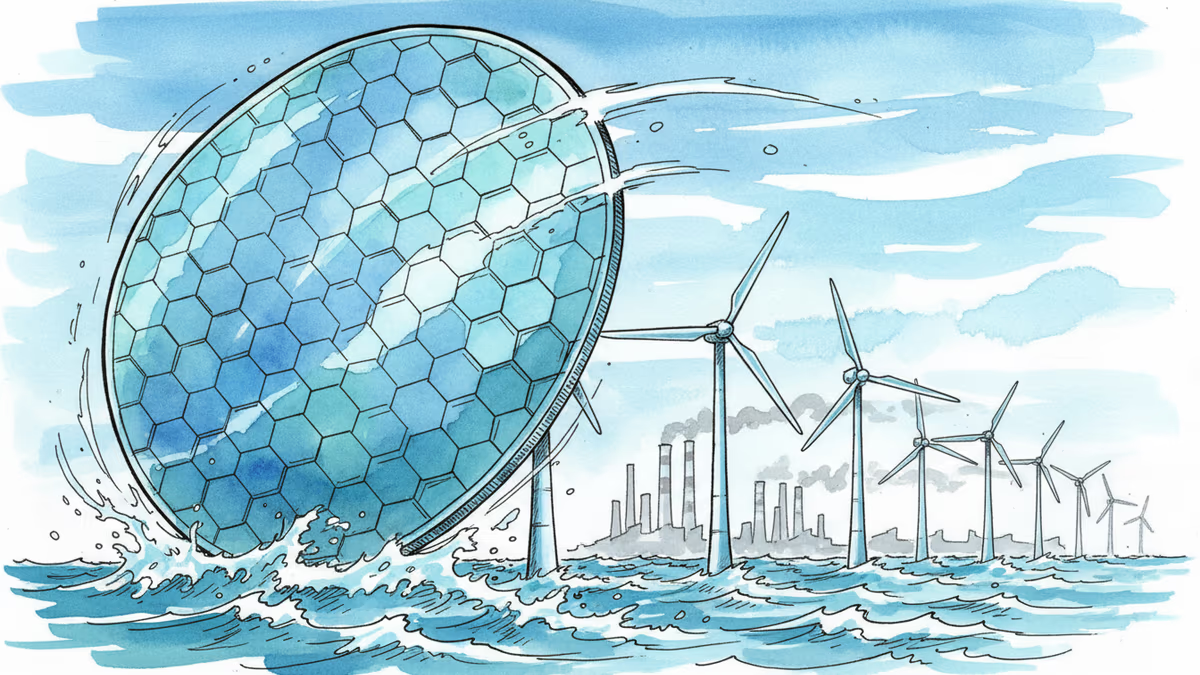
TSMC Is Buying the Wind for 30 Years
TSMC has signed a 30-year power purchase agreement for 100% of output from Taiwan's Hai Long offshore wind project. The 1GW deal reveals how chipmakers are quietly becoming energy companies.
What does it take to build the chips powering the AI revolution? Apparently, a 30-year lease on the wind.
The Deal
On April 30, TSMC announced it had signed a 30-year corporate power purchase agreement (PPA) with Northland Power, a Canada-based global energy producer, to purchase 100% of the output from the Hai Long offshore wind project. The deal covers more than 1 gigawatt of capacity across three offshore wind sites in the Taiwan Strait, off the western coast of central Taiwan.
To put that in perspective: 1GW is enough to power over 1 million Taiwanese households. The wind farms began feeding Taiwan's grid in 2025 and are scheduled to reach full operation by 2027.
This isn't a green PR gesture. It's a procurement decision made by the world's most advanced chipmaker—and the logic behind it says something important about where the semiconductor industry is heading.
Why a Chip Company Is Buying Wind
The short answer: TSMC needs enormous amounts of electricity, and it needs that electricity to be both reliable and clean.
Manufacturing leading-edge semiconductors is extraordinarily energy-intensive. Cleanrooms must be maintained at precise temperatures and pressures around the clock. Lithography machines, chemical vapor deposition systems, and etching equipment run continuously. TSMC already accounts for a significant share of Taiwan's total electricity consumption—and as AI chip demand accelerates, that share is growing.
At the same time, TSMC's biggest customers—Apple, Nvidia, AMD—are under pressure from investors and regulators to clean up their supply chains. Carbon disclosure requirements in Europe and the US increasingly make a supplier's energy mix a commercial variable, not just an ethical one. A chipmaker that can't demonstrate renewable energy use risks losing contracts.

But there's a third pressure that gets less attention: energy security. Taiwan imports the vast majority of its energy—primarily natural gas and coal. As an island, it can't connect its grid to neighboring countries for backup. The combination of growing AI-driven electricity demand and heavy fossil fuel dependence creates a structural vulnerability. For a company whose fabs must never go dark, that's an existential concern.
Taiwan's Unusual Geography Becomes an Asset
The Taiwan Strait is one of the windiest bodies of water in the world. Consistent, strong winds make it highly suitable for offshore wind generation—and unlike solar, offshore wind produces power around the clock, which matters for industrial users who can't tolerate intermittency.
Taiwan's government has been aggressively pushing offshore wind development partly for this reason. The Hai Long project is one of several large-scale offshore wind initiatives designed to reduce fossil fuel dependence and meet the energy needs of a semiconductor industry that is, effectively, a national strategic asset.
TSMC's 30-year commitment to Northland Power is significant precisely because of its length. It signals that TSMC views offshore wind not as a transitional experiment but as a long-term pillar of its energy strategy—and it provides the revenue certainty that makes large capital investments in offshore infrastructure viable for developers.
The Stakeholder Divide
Not everyone sees this as straightforwardly positive. Environmental groups in Taiwan have raised concerns about the ecological impact of large-scale offshore wind development on marine habitats and local fisheries. Fishing communities near the wind farm sites have been among the most vocal critics, arguing that the infrastructure disrupts traditional fishing grounds.
For investors watching TSMC, the deal reduces one category of long-term risk—energy cost and availability—while adding another: a 30-year fixed obligation in a sector where energy markets and technology could shift substantially. What looks like a hedge today could look like an overcommitment in 2045.
For Northland Power, the contract is a near-ideal outcome: a creditworthy, strategically motivated anchor customer locked in for three decades. The deal de-risks the project financing and accelerates construction timelines.
And for Taiwan's government, TSMC's commitment functions as a private-sector subsidy for national energy infrastructure—one that doesn't require public funds.
This content is AI-generated based on source articles. While we strive for accuracy, errors may occur. We recommend verifying with the original source.
Related Articles

Five stories from late September, traced to where the paper trail stops: Korea's export record, Nvidia's Hugging Face 8-K, a US-China AI channel, the UN on AI, and rising births.
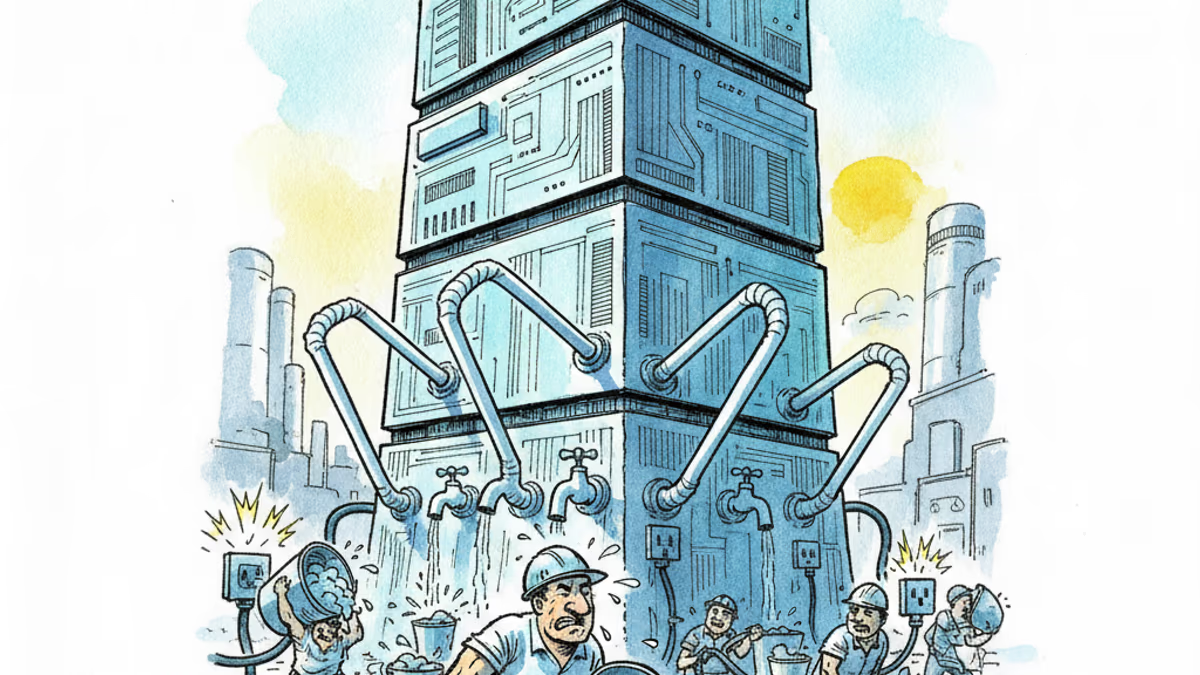
Samsung and SK unveiled a chip and AI investment package worth thousands of trillions of won on June 29. The headline number swings wildly by outlet, but the real contest isn't capital — it's water and power.

The US government invested $2 billion in quantum computing startups, but Congress says the money was never authorized for that purpose. The fate of IBM-backed Anderon hangs in the balance.

SolarSquare is raising $55-60M at a $450-500M valuation, more than doubling its worth in 18 months. Here's what's driving investor conviction in India's residential solar market.
Five stories from late September, traced to where the paper trail stops: Korea's export record, Nvidia's Hugging Face 8-K, a US-China AI channel, the UN on AI, and rising births.
Samsung and SK unveiled a chip and AI investment package worth thousands of trillions of won on June 29. The headline number swings wildly by outlet, but the real contest isn't capital — it's water and power.
The US government invested $2 billion in quantum computing startups, but Congress says the money was never authorized for that purpose. The fate of IBM-backed Anderon hangs in the balance.
SolarSquare is raising $55-60M at a $450-500M valuation, more than doubling its worth in 18 months. Here's what's driving investor conviction in India's residential solar market.
Thoughts
Share your thoughts on this article
Sign in to join the conversation