
Samsung's Strike Threat Could Push Your Phone Price Higher
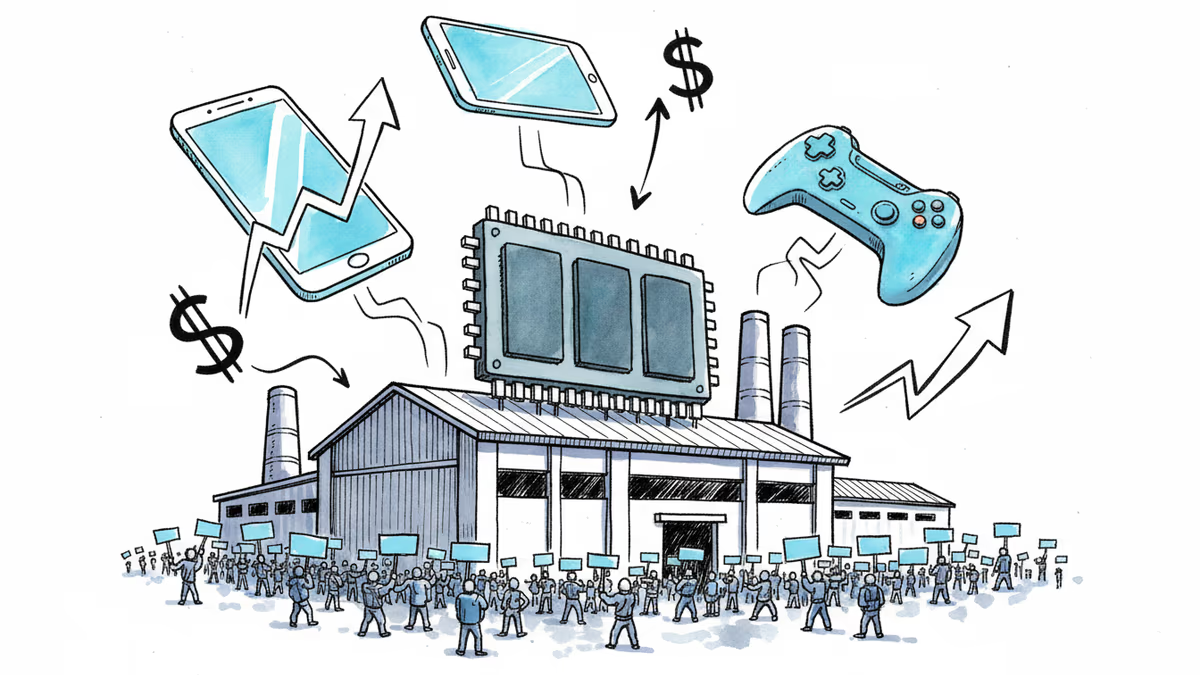
40,000 Samsung union workers rallied at its Pyeongtaek chip plant, threatening an 18-day strike over wages. With AI-driven RAM shortages already lifting consumer prices, the timing couldn't be worse.
Your next phone upgrade is already getting more expensive. A strike at the world's largest memory chip maker could make it worse.
On Thursday, an estimated 40,000 union members rallied outside Samsung's semiconductor facility in Pyeongtaek, South Korea. Their demands: wages competitive with rival chipmaker SK Hynix, removal of a cap on bonus pay, and higher base salaries. If management and the union can't reach a deal, workers are planning an 18-day strike — a timeline that could ripple far beyond the factory gates.
The Market Was Already Fragile
This isn't happening in a vacuum. The global DRAM market has been under pressure for months, squeezed by an unlikely culprit: AI data centers. The insatiable appetite for high-bandwidth memory (HBM) — the specialized chips that power Nvidia's AI accelerators — has pulled production capacity away from conventional DRAM. The result? Prices on phones, PS5s, and even Raspberry Pi single-board computers have already started climbing.
Now layer a potential strike on top of that. Samsung supplies roughly 40% of the world's DRAM. Its Pyeongtaek campus is one of the most critical chip production sites on the planet. Eighteen days might sound short, but semiconductor fabrication doesn't pause and resume like a light switch. Restarting a halted production line can take weeks, meaning the actual supply disruption could outlast the strike itself by a significant margin.
Why Now? The SK Hynix Effect
The union's choice of comparison is telling. A few years ago, SK Hynix was firmly Samsung's runner-up in the memory market. Then it became Nvidia's primary HBM supplier, profits surged, and employee compensation followed. Samsung workers are watching that play out in real time — same industry, same country, widening pay gap.

From the union's perspective, the frustration is understandable. Samsung remains the world's largest memory chipmaker by volume, yet its stumble in the HBM race has dented both its financial performance and internal morale. The rally isn't just about numbers on a paycheck; it's a signal of deeper discontent about where the company is headed.
Management's counter-argument has its own logic. Catching up in HBM requires massive capital expenditure. Aggressive wage increases at the same moment strain the balance sheet. The bonus cap exists precisely to maintain financial flexibility during investment cycles — or so the argument goes.
Who Wins, Who Loses, Who's Watching
The stakes look different depending on where you sit.
For consumers, the concern is straightforward: electronics prices that were already creeping up could accelerate. Anyone planning to buy a flagship smartphone, a gaming console, or upgrade their PC in the next six to twelve months may want to factor this in.
For investors, the picture is more nuanced. Short-term supply disruption is a negative for Samsung's production volumes, but a tighter DRAM market could paradoxically lift average selling prices — benefiting Samsung's revenue per chip. The real risk is a prolonged standoff that damages customer relationships with major buyers like Apple, Qualcomm, and PC manufacturers.
For competitors, this is an opening. Micron Technology, which has been aggressively expanding U.S.-based production with federal CHIPS Act subsidies, gains negotiating leverage the moment Samsung supply looks uncertain. Expect Micron's sales teams to be making calls.
For the South Korean government, the calculus is political as much as economic. Semiconductors account for a disproportionate share of South Korean exports. A prolonged strike at Samsung would be a macroeconomic event, not just a labor dispute — which raises the question of how long Sejong stays on the sidelines if talks stall.
Authors
Related Articles
Samsung and SK unveiled a chip and AI investment package worth thousands of trillions of won on June 29. The headline number swings wildly by outlet, but the real contest isn't capital — it's water and power.

Snowflake's new $6 billion AWS contract is about more than cloud spending. It signals a shift in AI infrastructure—away from Nvidia GPUs and toward cheaper, homegrown chips for the agent era.

The US government invested $2 billion in quantum computing startups, but Congress says the money was never authorized for that purpose. The fate of IBM-backed Anderon hangs in the balance.
Beijing added an Nvidia gaming chip to its customs ban list the same week Jensen Huang visited China with Trump. Here's what it means for the chip war—and who actually wins.
Samsung and SK unveiled a chip and AI investment package worth thousands of trillions of won on June 29. The headline number swings wildly by outlet, but the real contest isn't capital — it's water and power.
Snowflake's new $6 billion AWS contract is about more than cloud spending. It signals a shift in AI infrastructure—away from Nvidia GPUs and toward cheaper, homegrown chips for the agent era.
The US government invested $2 billion in quantum computing startups, but Congress says the money was never authorized for that purpose. The fate of IBM-backed Anderon hangs in the balance.
Beijing added an Nvidia gaming chip to its customs ban list the same week Jensen Huang visited China with Trump. Here's what it means for the chip war—and who actually wins.
Thoughts
Share your thoughts on this article
Sign in to join the conversation