
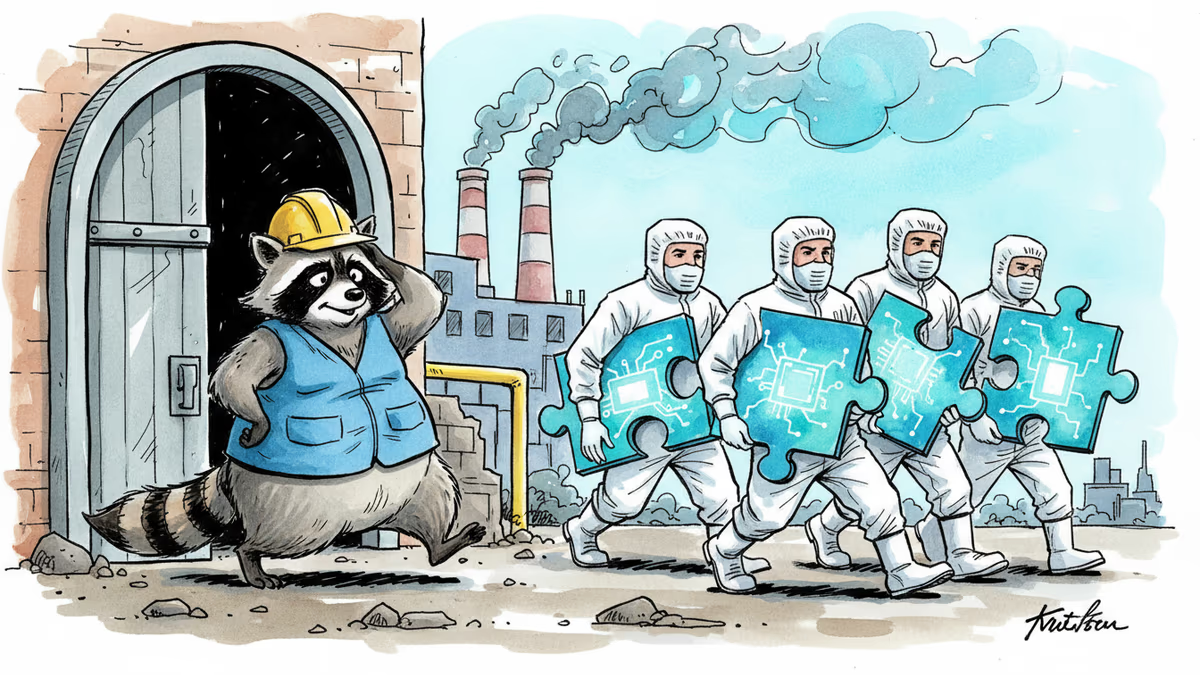
The Raccoon Factory That Could Reshape AI Chips
Intel's revived New Mexico fab is betting on advanced chip packaging to challenge TSMC and capture AI market share. Here's why this quiet technology could matter more than the chips themselves.
For nearly two decades, the most sophisticated residents of Intel's Fab 9 in Rio Rancho, New Mexico, were a family of raccoons and a badger. The 200-acre facility, built partly atop a sod farm in the 1980s, went dark in 2007 when Intel's business stumbled. The animals moved in. The engineers moved on.
In January 2024, the lights came back on.
What Intel Is Actually Building Here
Intel poured billions back into the site, including $500 million from the US CHIPS Act, reactivating Fab 9 alongside its neighbor, Fab 11X. But this isn't a story about Intel trying to out-fabricate TSMC on process nodes. The mission is narrower—and, some argue, smarter.
The fabs are now dedicated to advanced chip packaging: the art of combining multiple smaller chips, called chiplets, into a single, high-performance package. Think of it less like baking a cake from scratch and more like assembling a precision mosaic—each tile made elsewhere, the final picture assembled here.
The timing is deliberate. Every major tech company—Google, Amazon, Microsoft, Meta—is now designing its own custom AI chips. They don't all need a fab. But they all need someone to put the pieces together, expertly, at scale. That's the gap Intel is positioning itself to fill.
The TSMC Problem—and the TSMC Opportunity
Let's be direct about the competitive reality: TSMC dominates advanced packaging. Its CoWoS technology is the backbone of Nvidia's H100 and B200 GPUs—the chips powering most of today's AI infrastructure. Demand so outstrips supply that Nvidia has reportedly struggled to get enough CoWoS capacity to meet orders.
Intel's packaging scale is nowhere near TSMC's. Not yet. But Intel has one structural advantage that TSMC cannot manufacture: its fabs are on American soil.

In a policy environment defined by tariffs, export controls, and bipartisan anxiety about Taiwan Strait risk, "made in America" is no longer just a marketing line—it's a procurement criterion. The US government has signaled it wants domestic alternatives for critical semiconductor processes. Intel, for all its recent struggles, is the only company with the footprint to credibly offer one.
Why Packaging Is the New Battleground
For decades, the semiconductor industry's central competition was about shrinking transistors—smaller nodes, faster chips, more power efficiency. That race isn't over, but it's hitting physical and economic walls. At 2nm and below, each new generation costs exponentially more to develop and yields diminishing returns for many applications.
Advanced packaging is the industry's answer to that wall. By connecting chiplets from different manufacturers—a logic chip from one fab, memory from another, a networking component from a third—designers can build systems that outperform what any single monolithic chip could achieve. It's less about raw fabrication and more about integration intelligence.
This shift has real investment implications. Companies that once competed purely on process technology now need packaging expertise. Intel's bet is that this expertise, combined with US-based capacity, is worth more than the market currently prices in.
The Skeptic's View
Not everyone is convinced. Intel's foundry business has posted significant losses in recent years, and the company has undergone painful restructuring. Critics argue that reviving aging fabs and betting on a segment where TSMC, Samsung, and specialized players like Amkor already have deep footholds is a long shot.
There's also a customer trust problem. Fabless chip designers have historically been reluctant to hand sensitive designs to Intel, which competes with many of them in the chip market. Packaging work requires deep collaboration on chip architecture—the kind of relationship that demands trust Intel hasn't always earned.
What This Means Beyond the Factory Floor
For investors, the question is whether Intel's packaging pivot is a genuine growth engine or a capital-intensive distraction from deeper structural problems. The CHIPS Act funding provides a cushion, but government subsidies don't guarantee customers.
For the broader AI industry, Intel's move adds a potential alternative node in a supply chain that is dangerously concentrated. A single typhoon, a geopolitical incident, or a production stumble at TSMC can ripple through every AI data center on the planet. Redundancy has value—even if it's more expensive.
For consumers and businesses downstream, the implications are slower to materialize but real: more domestic packaging capacity could eventually mean more stable supply, less price volatility, and faster iteration cycles for AI hardware.
Authors
Related Articles

Five stories from late September, traced to where the paper trail stops: Korea's export record, Nvidia's Hugging Face 8-K, a US-China AI channel, the UN on AI, and rising births.

Huawei's CANN is open source under a license barring software for non-Ascend chips. Inside China's second CUDA, and the two links still outside it: pre-training compute and 5nm capacity.
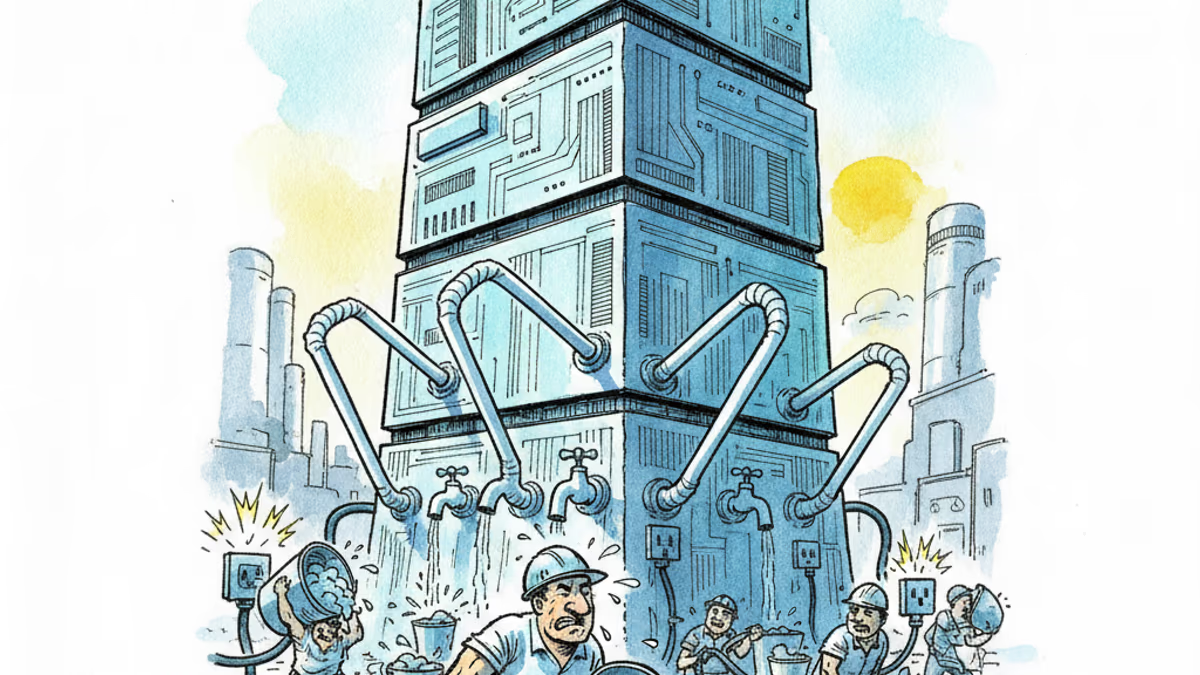
Samsung and SK unveiled a chip and AI investment package worth thousands of trillions of won on June 29. The headline number swings wildly by outlet, but the real contest isn't capital — it's water and power.

The US government invested $2 billion in quantum computing startups, but Congress says the money was never authorized for that purpose. The fate of IBM-backed Anderon hangs in the balance.
Five stories from late September, traced to where the paper trail stops: Korea's export record, Nvidia's Hugging Face 8-K, a US-China AI channel, the UN on AI, and rising births.
Huawei's CANN is open source under a license barring software for non-Ascend chips. Inside China's second CUDA, and the two links still outside it: pre-training compute and 5nm capacity.
Samsung and SK unveiled a chip and AI investment package worth thousands of trillions of won on June 29. The headline number swings wildly by outlet, but the real contest isn't capital — it's water and power.
The US government invested $2 billion in quantum computing startups, but Congress says the money was never authorized for that purpose. The fate of IBM-backed Anderon hangs in the balance.
Thoughts
Share your thoughts on this article
Sign in to join the conversation