

China Banned an Nvidia Chip While Jensen Huang Was in the Room
Beijing added an Nvidia gaming chip to its customs ban list the same week Jensen Huang visited China with Trump. Here's what it means for the chip war—and who actually wins.
What do you do when the workaround gets banned?
That's the question Nvidia is now sitting with, after Beijing quietly added one of its gaming chips to a customs ban list last Friday—the same week CEO Jensen Huang was standing on Chinese soil as part of Donald Trump's trade delegation.
The Timing Wasn't Subtle
According to a document reviewed by the Financial Times and confirmed by two people with knowledge of the matter, Chinese customs authorities added the Nvidia chip to a list of prohibited imports while Huang was still in the country. Whether that timing was deliberate signaling or bureaucratic coincidence, the effect is the same: a pointed message delivered at maximum visibility.
The chip in question isn't one of Nvidia's flagship AI accelerators. It's a downgraded gaming GPU—a product Nvidia specifically engineered to stay within the bounds of US export controls while still reaching Chinese customers. When Washington blocked the H100 and its successors, Nvidia responded with stripped-down alternatives: the H800, the A800, and consumer-grade chips repositioned for a market hungry for compute. Beijing just closed that door.
This Is Industrial Policy, Not Just Retaliation
Reading this as simple tit-for-tat misses the more important story. China's chip ban isn't primarily about punishing Nvidia—it's about creating the market conditions that Huawei and Cambricon need to grow.

Domestic chipmakers can't compete on performance yet. Huawei's Ascend 910B has made real progress, and by 2024 it was powering parts of Chinese cloud infrastructure that previously ran on Nvidia hardware. But the gap remains significant. The only reliable way to close it is through volume—real deployments, real workloads, real feedback loops. You don't get that if a better foreign alternative is still available.
Banning Nvidia's downgraded chips forces Chinese AI developers and gamers alike to either wait or switch. For the government, that's not a cost—it's the point.
Three Ways to Read the Same Event
The stakeholders here see very different pictures.
For Nvidia, China represented somewhere between 20–25% of total revenue before export controls began biting. The downgrade strategy was a calculated attempt to preserve a shrinking slice of that market. With gaming chips now banned, the addressable market in China contracts further, and Huang's visit—whatever diplomatic goodwill it generated—didn't prevent the regulatory blow from landing.
For the US government, there's an uncomfortable irony embedded in this moment. Export controls were designed to slow China's AI capabilities by cutting off access to advanced chips. But every new restriction also hands Beijing a cleaner justification for subsidizing domestic alternatives. The policy may be achieving its short-term goal of limiting Nvidia's reach while simultaneously accelerating the long-term goal Beijing has always had: a self-sufficient semiconductor industry.
For Chinese AI developers and enterprises, the transition is real and disruptive. Nvidia's CUDA ecosystem isn't just hardware—it's years of software tooling, developer workflows, and institutional knowledge. Switching to Huawei's Ascend or other domestic alternatives means re-engineering pipelines, retraining teams, and accepting performance trade-offs. That friction is real, even if the direction of travel is now mandatory.
This content is AI-generated based on source articles. While we strive for accuracy, errors may occur. We recommend verifying with the original source.
Related Articles

Five stories from late September, traced to where the paper trail stops: Korea's export record, Nvidia's Hugging Face 8-K, a US-China AI channel, the UN on AI, and rising births.
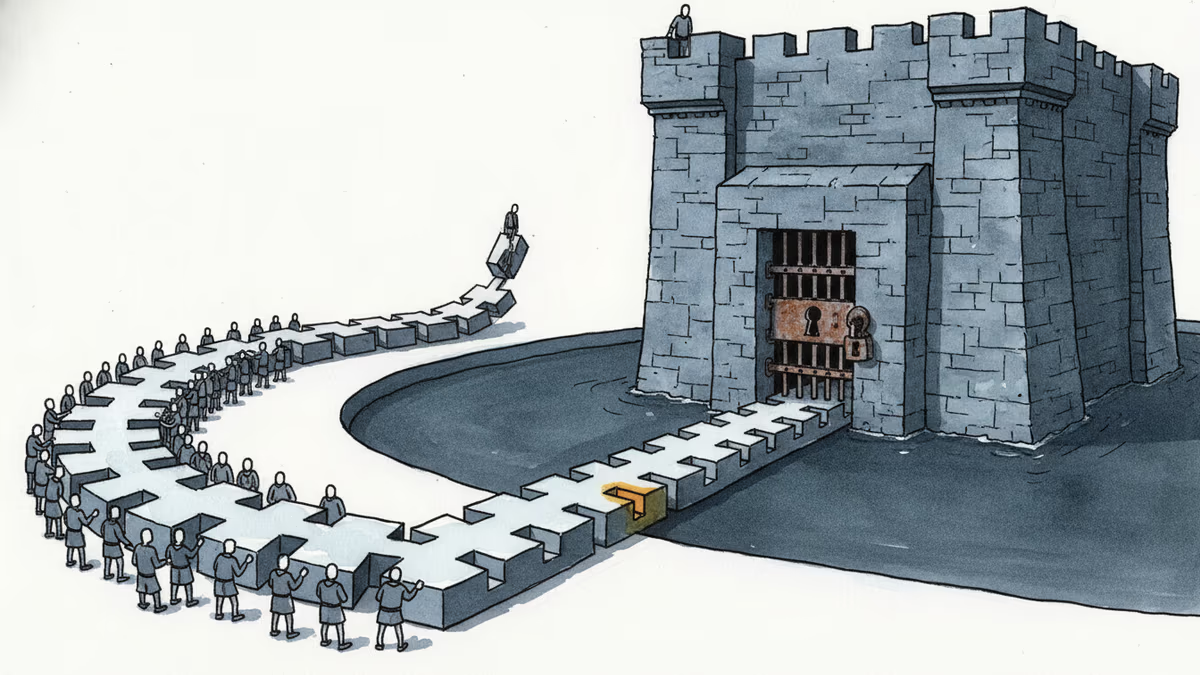
Nvidia shipped roughly a billion RISC-V cores in 2024, then announced it would run CUDA on the open standard. We break down how royalty-free instruction sets and open software stacks are trying to route around CUDA's lock-in. Part 2 of the Semiconductor Sovereignty series.
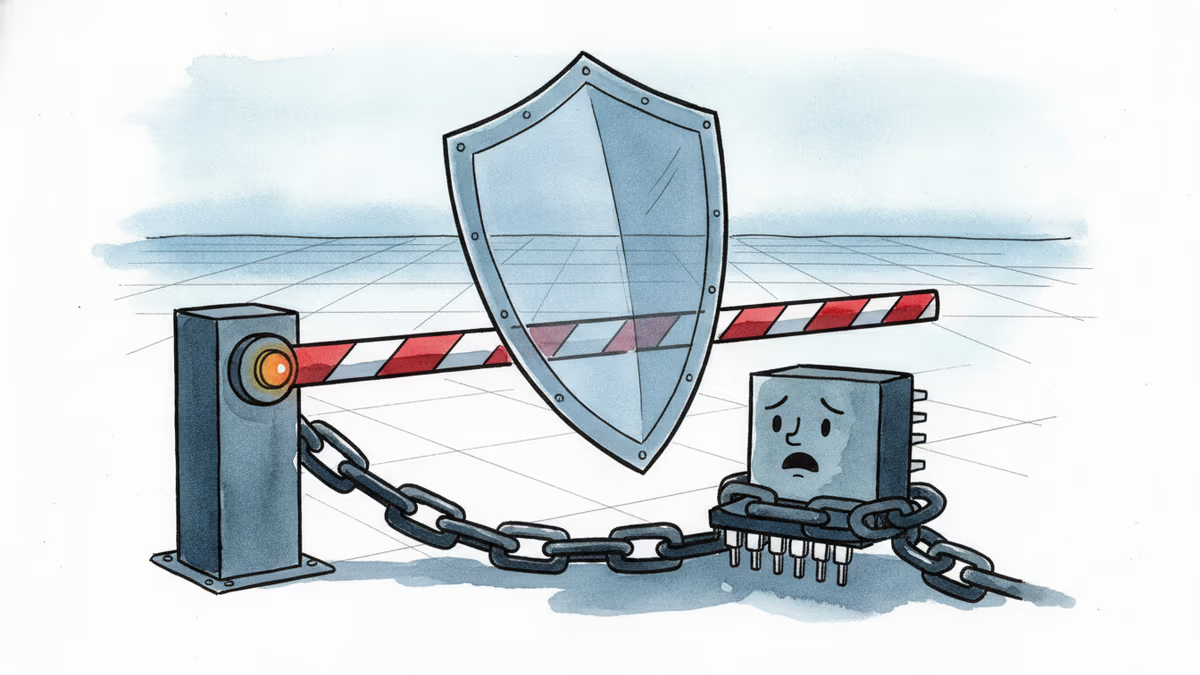
US AI-chip export controls split into three layers in the first half of 2026 — January easing, a May crackdown on circumvention, and a pending bill. Nvidia erased China from its guidance and still posted a record $81.6 billion quarter. A look at the export policy that both shields and cages it.
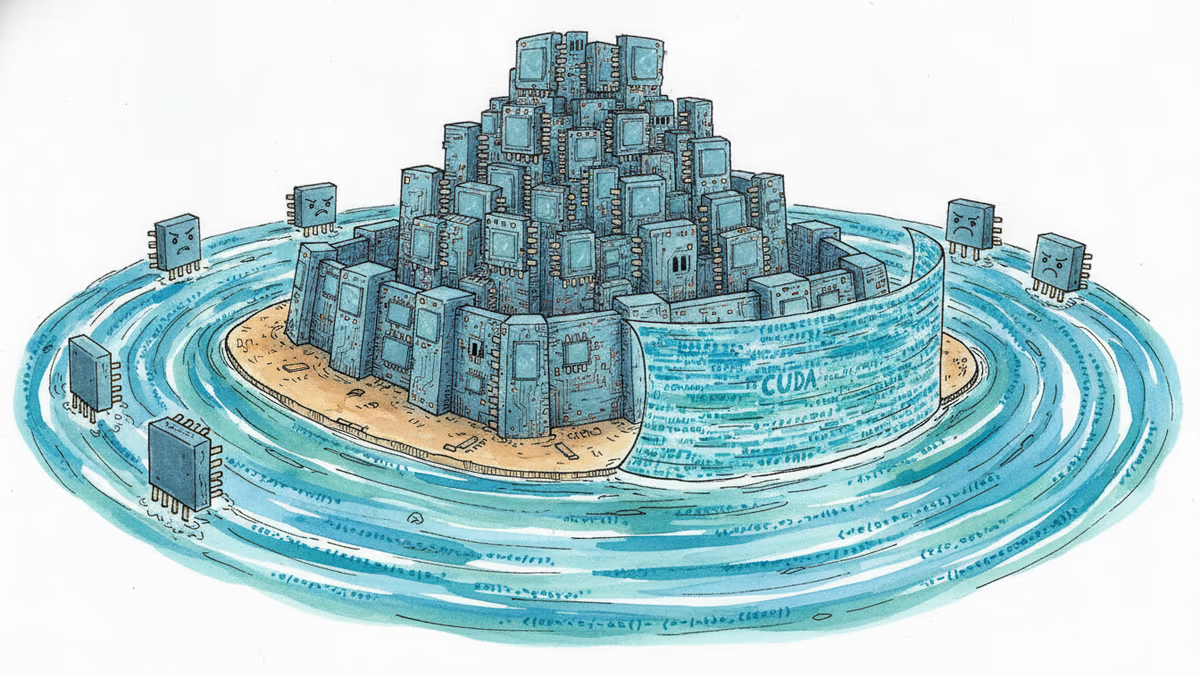
AMD's MI325X matches or beats Nvidia on memory and bandwidth — yet Nvidia's 86-92% share holds. The real moat is CUDA, 20 years in the making. Part 1 of 4.
Five stories from late September, traced to where the paper trail stops: Korea's export record, Nvidia's Hugging Face 8-K, a US-China AI channel, the UN on AI, and rising births.
Nvidia shipped roughly a billion RISC-V cores in 2024, then announced it would run CUDA on the open standard. We break down how royalty-free instruction sets and open software stacks are trying to route around CUDA's lock-in. Part 2 of the Semiconductor Sovereignty series.
US AI-chip export controls split into three layers in the first half of 2026 — January easing, a May crackdown on circumvention, and a pending bill. Nvidia erased China from its guidance and still posted a record $81.6 billion quarter. A look at the export policy that both shields and cages it.
AMD's MI325X matches or beats Nvidia on memory and bandwidth — yet Nvidia's 86-92% share holds. The real moat is CUDA, 20 years in the making. Part 1 of 4.
Thoughts
Share your thoughts on this article
Sign in to join the conversation