
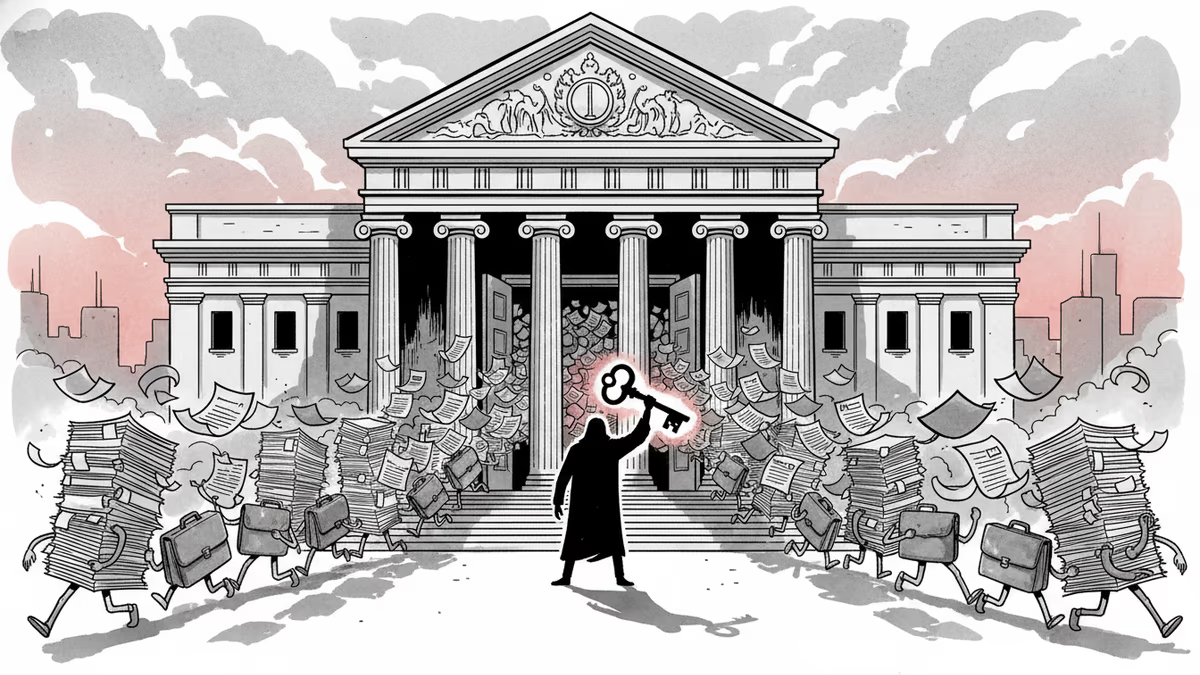
The Lawyers Who Protected Voting Rights Are Gone
The Trump administration has gutted the DOJ's Voting Section, pushing out two dozen experienced lawyers and replacing them with loyalists. With 2026 midterms approaching, what does this mean for American democracy?
You don't have to repeal a law to make it meaningless. You just have to remove the people who enforce it.
That appears to be what's happening inside the Department of Justice's Voting Section—the unit established after the landmark Voting Rights Act of 1965 to ensure every American's equal right to vote. Over the past 12 months, the Trump administration has pushed out more than two dozen experienced lawyers from the section, replacing them with what former colleagues describe as loyalists aligned with the White House's political agenda. The law hasn't changed. The enforcement has.
What the Voting Section Actually Did
David Becker remembers the day he got the job. He'd applied knowing thousands of others had too. "It was one of the most in-demand jobs," he tells WIRED. "I knew there were going to be thousands of people applying." He got it anyway, and spent seven years there, from 1998 to 2005. "I felt incredibly privileged, and I was working with some of the best lawyers I had ever seen in my life."
The work wasn't glamorous by Washington standards. Voting Section lawyers enforced the National Voter Registration Act and the Help America Vote Act. They represented the United States in court to block discriminatory voting practices. Much of the caseload involved small communities most Americans will never hear of—the kind of work, as Becker puts it, that "affected a tiny fraction of the population" but that no one else was willing or capable of doing.
One former Voting Section lawyer, speaking anonymously after being pushed out last year, described a case in a small Southern town where Black residents lived on unpaved, neglected roads and had never seen a person of color elected to city government because of how elections were structured. After DOJ intervention, that changed. "Now there's a person of color in the city government," they told WIRED. "I just don't know if that type of work will ever come back, and it's deeply depressing."
One expert called the Voting Section "the crown jewel of the Civil Rights Division." That crown is now, by most accounts, in pieces.
The New Direction
The section hasn't just been hollowed out—it's been redirected.

Over the past year, lawyers within the Voting Section have been filing suits against states to access unredacted voter rolls. Critics see this as groundwork for large-scale voter purges. Courts have pushed back so far, but the administration and its allies show no sign of relenting. The legal strategy appears designed to keep pressure on state election systems regardless of individual court outcomes—each lawsuit creating uncertainty, administrative burden, and political signal.
The timing is not incidental. The 2026 midterm elections are approaching.
Former DOJ lawyers warn that even if courts continue to block the administration's moves, the damage may already be accumulating in ways that are harder to see: local election officials uncertain of their legal obligations, a chilling effect on voter registration drives, and the erosion of the institutional knowledge that once allowed the Voting Section to intervene before discriminatory practices took hold rather than after.
What Institutional Memory Actually Means
Here's what gets lost when experienced lawyers are forced out of a place like this: not just expertise, but context.
Which county used which tactic to suppress turnout in which election cycle. Which consent decrees came from which negotiations. Which local officials have a history of finding creative workarounds. None of this lives in a database. It lives in the heads of people who spent decades doing the work. When those people leave, that knowledge doesn't transfer to their replacements—it disappears.
The lawyers being installed in their place may be competent attorneys. But competence and institutional memory are different things, and in civil rights enforcement, the difference can be measured in communities that never get representation.
Becker and the other former Voting Section lawyers WIRED spoke with aren't just mourning an institution. They're watching what they describe as a deliberate strategy: use the machinery of the state to reshape what the state does, without ever having to change the underlying law.
Three Ways to Read This
From the administration's perspective, this is exactly what elections are for. Voters chose a president who campaigned on election integrity and distrust of existing government structures. Reshaping federal agencies to reflect that mandate is democratic accountability in action, not subversion of it.
From civil rights advocates' perspective, what's being dismantled is precisely the infrastructure that makes formal legal rights meaningful for people who lack the resources to enforce those rights themselves. A law on paper without an agency willing to enforce it is, functionally, no law at all.
From election administrators' perspective—the county clerks and state officials who run elections on the ground—the uncertainty may be the most corrosive element. When the federal agency that used to provide legal guidance is now filing suits against states instead, the practical question of what's legally required becomes genuinely harder to answer.
This content is AI-generated based on source articles. While we strive for accuracy, errors may occur. We recommend verifying with the original source.
Related Articles
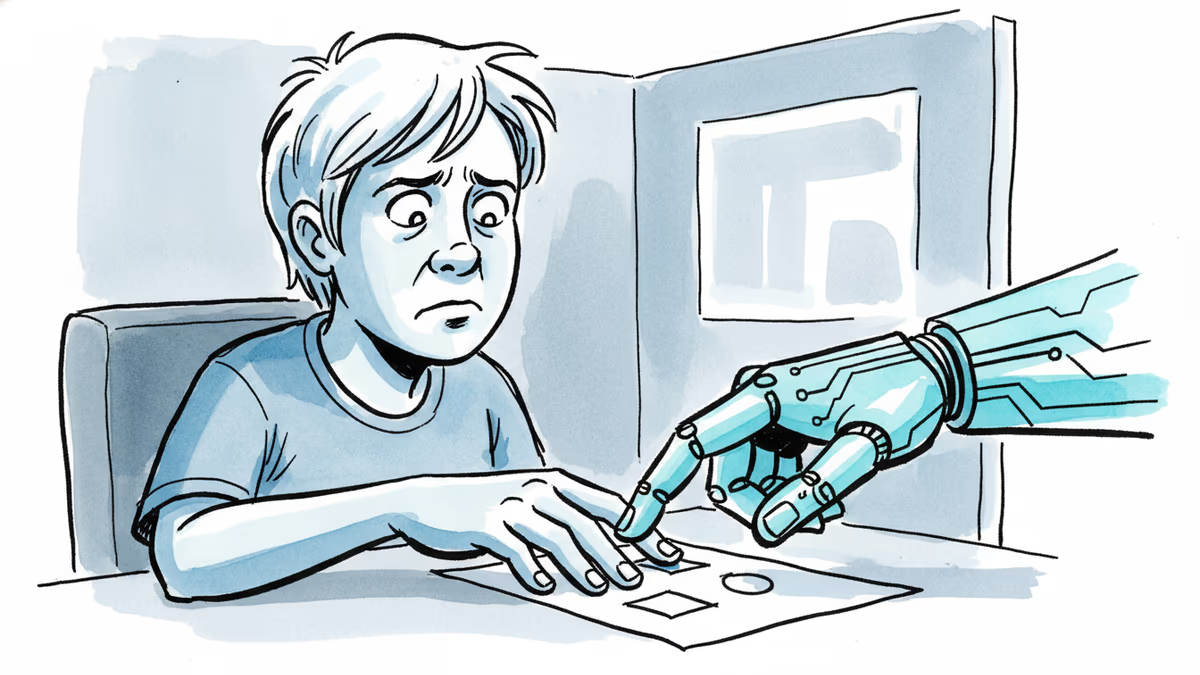
AI is reshaping how citizens know, act, and deliberate together. Three researchers argue democracy's infrastructure wasn't built for this—and the design choices are already being made.
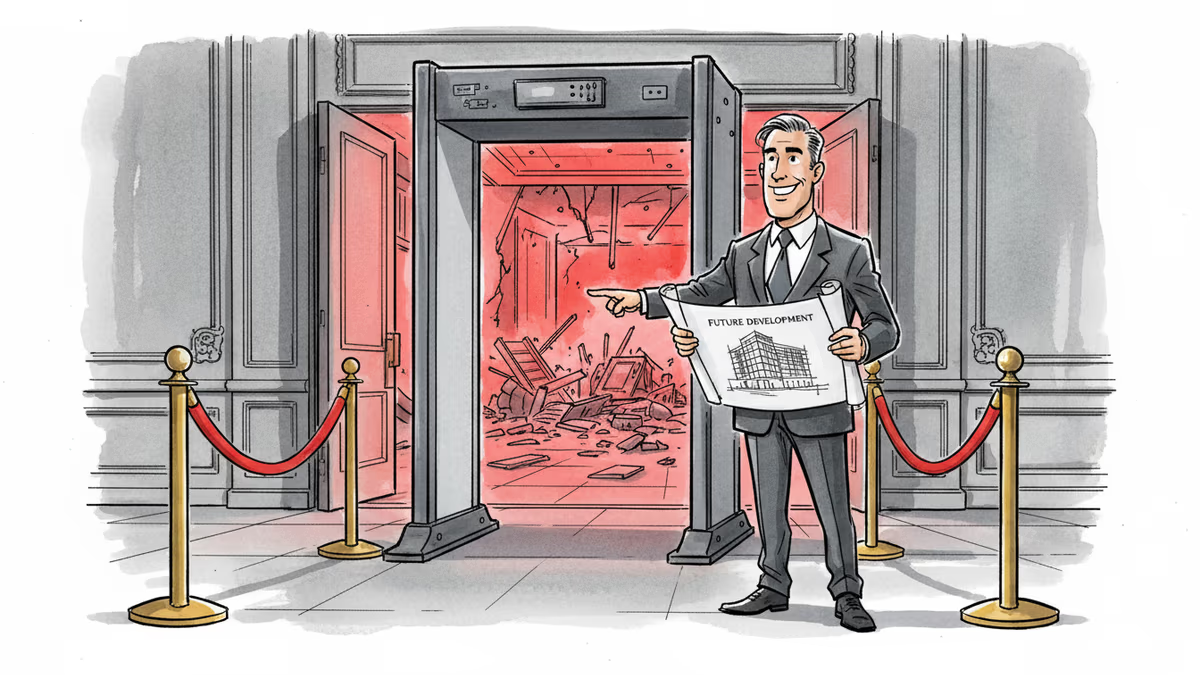
A gunman attacked a Secret Service checkpoint at the White House Correspondents' Dinner. Trump's first public reaction wasn't about security. It was about his $400M ballroom project.
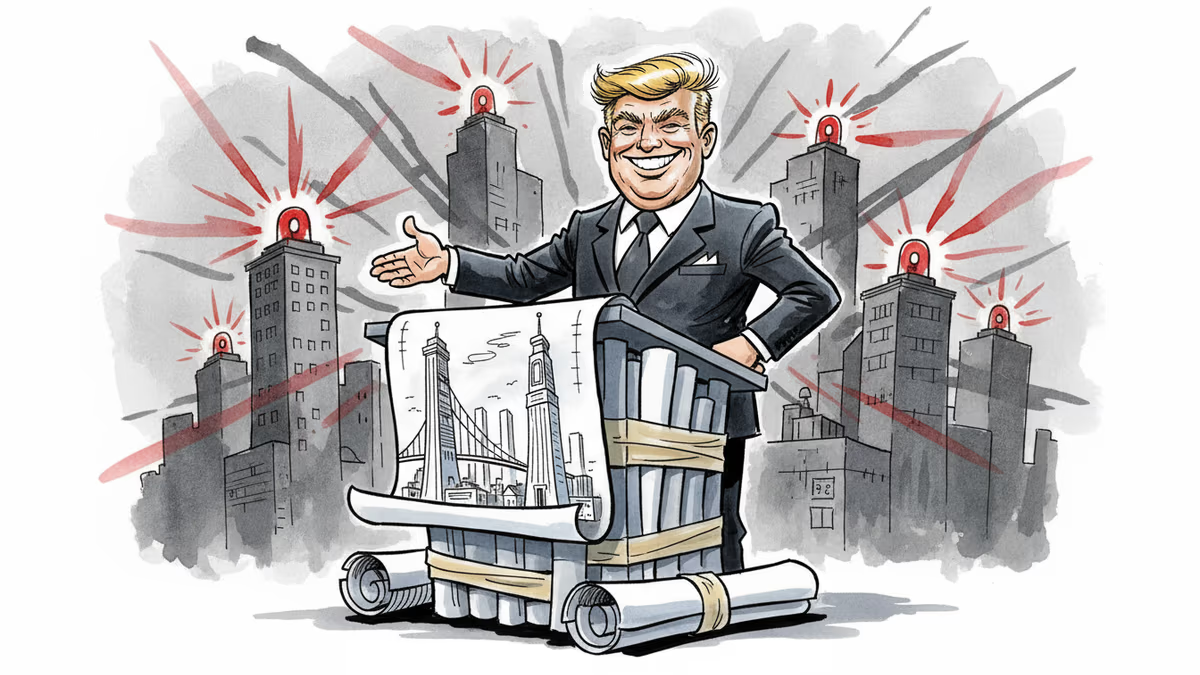
Hours after an armed suspect attempted to breach the White House Correspondents Dinner, Trump used the security scare to publicly defend his White House ballroom project. What does that tell us?
Dr. Erica Schwartz, a pro-vaccine physician with an unimpeachable public health résumé, is Trump's third CDC director nominee—a quiet but pointed rebuke of RFK Jr.'s agenda.
AI is reshaping how citizens know, act, and deliberate together. Three researchers argue democracy's infrastructure wasn't built for this—and the design choices are already being made.
A gunman attacked a Secret Service checkpoint at the White House Correspondents' Dinner. Trump's first public reaction wasn't about security. It was about his $400M ballroom project.
Hours after an armed suspect attempted to breach the White House Correspondents Dinner, Trump used the security scare to publicly defend his White House ballroom project. What does that tell us?
Dr. Erica Schwartz, a pro-vaccine physician with an unimpeachable public health résumé, is Trump's third CDC director nominee—a quiet but pointed rebuke of RFK Jr.'s agenda.
Thoughts
Share your thoughts on this article
Sign in to join the conversation