
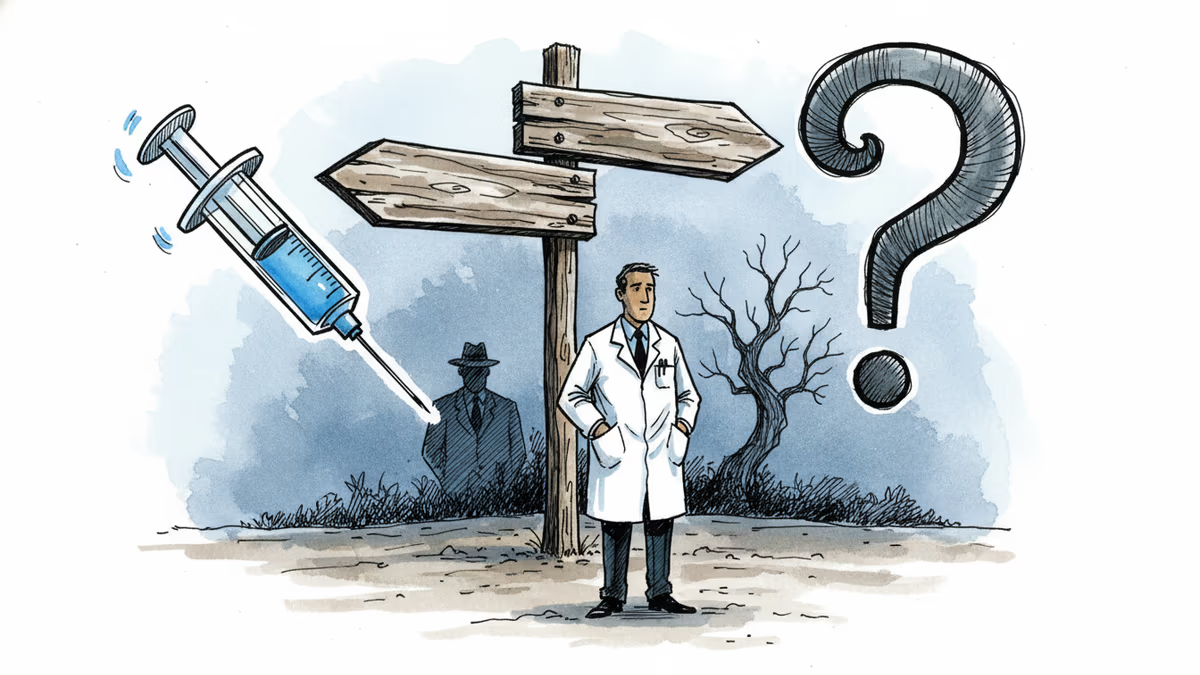
Trump's Third CDC Pick Signals a Vaccine Policy Pivot
Dr. Erica Schwartz, a pro-vaccine physician with an unimpeachable public health résumé, is Trump's third CDC director nominee—a quiet but pointed rebuke of RFK Jr.'s agenda.
The same administration that handed the Department of Health and Human Services to a vaccine skeptic just nominated a pro-vaccine physician to run the CDC. That tension isn't accidental—it's the point.
The Third Name on the List
President Trump has nominated Dr. Erica Schwartz as CDC director, his third attempt to fill the role. Her credentials are hard to argue with: an M.D. from Brown University, a master's in public health, and a law degree from the University of Maryland. She served as a Navy officer, rose to Chief Medical Officer of the US Coast Guard, and retired as a rear admiral in the US Public Health Service Commissioned Corps. During Trump's first term, she served as Deputy Surgeon General. During the pandemic, she was directly involved in the federal rollout of COVID-19 vaccines. She is board-certified in preventive medicine and has publicly supported vaccination throughout her career.
This is, by any conventional measure, an uncontroversial pick. That's precisely what makes it notable.
Reading the Political Clock
The nomination doesn't exist in a vacuum. Inside the administration, there is growing concern that RFK Jr.'s aggressive anti-vaccine posture—pursued from the Secretary's chair at HHS, a position he holds without any medical, scientific, or public health training—is becoming an electoral liability. The 2026 midterms are now less than 18 months away.

Nominating Schwartz sends a message without requiring anyone to say it out loud: the administration wants a credentialed, evidence-based physician at the helm of the country's top public health agency. Whether that's a genuine course correction or a strategic optic is the question worth sitting with.
Two Visions Under One Roof
The structural tension here is real. The CDC director reports up through HHS—meaning Schwartz, if confirmed, would ultimately operate within the policy framework set by RFK Jr. A pro-vaccine CDC director and an anti-vaccine HHS secretary are not a contradiction the org chart resolves on its own.
For public health professionals, the reaction is cautious optimism at best. Schwartz's résumé signals competence and scientific integrity. But competence at the agency level doesn't automatically translate into policy independence when the department above is pulling in a different direction.
For vaccine-skeptic constituencies who backed Trump and RFK Jr., the nomination may read as a retreat. For mainstream Republicans anxious about being painted as anti-science heading into a competitive midterm cycle, it's a rational hedge.
For the broader public health community—domestically and internationally—the more pressing question is institutional: can the CDC rebuild credibility that eroded during the pandemic years, and does this nomination help or simply paper over deeper structural problems?
Authors
Related Articles
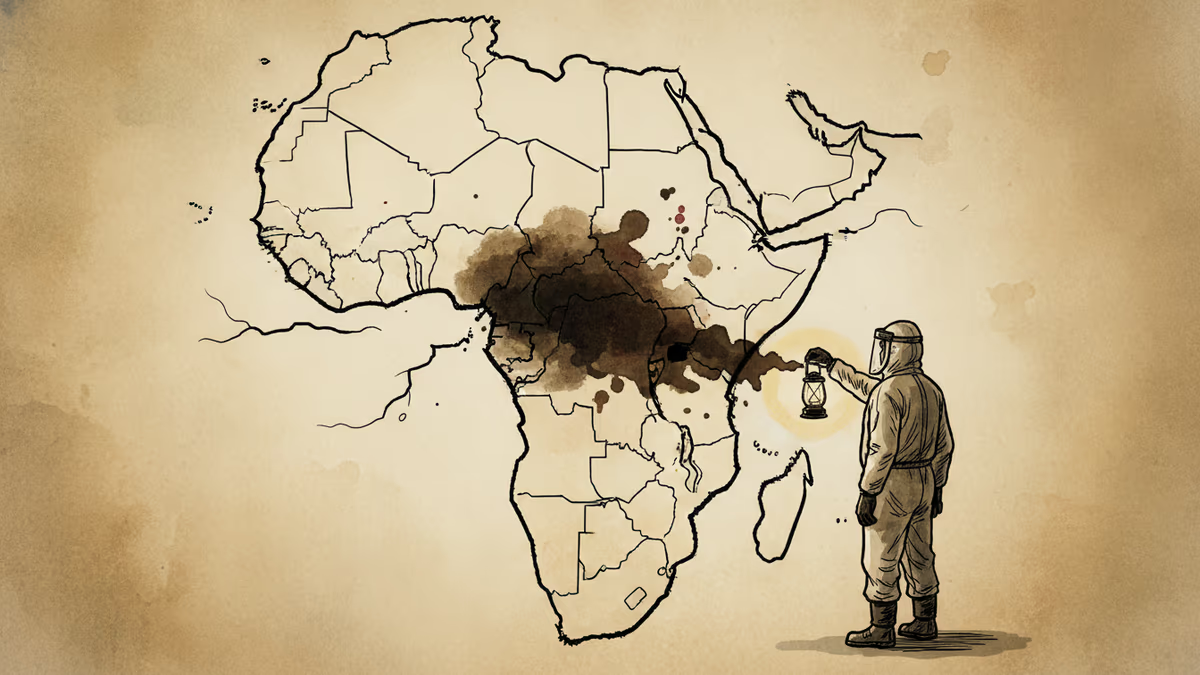
The DRC Ebola outbreak has already crossed into Uganda and earned a WHO emergency declaration. The case count isn't the alarming part—the gaps in detection are.
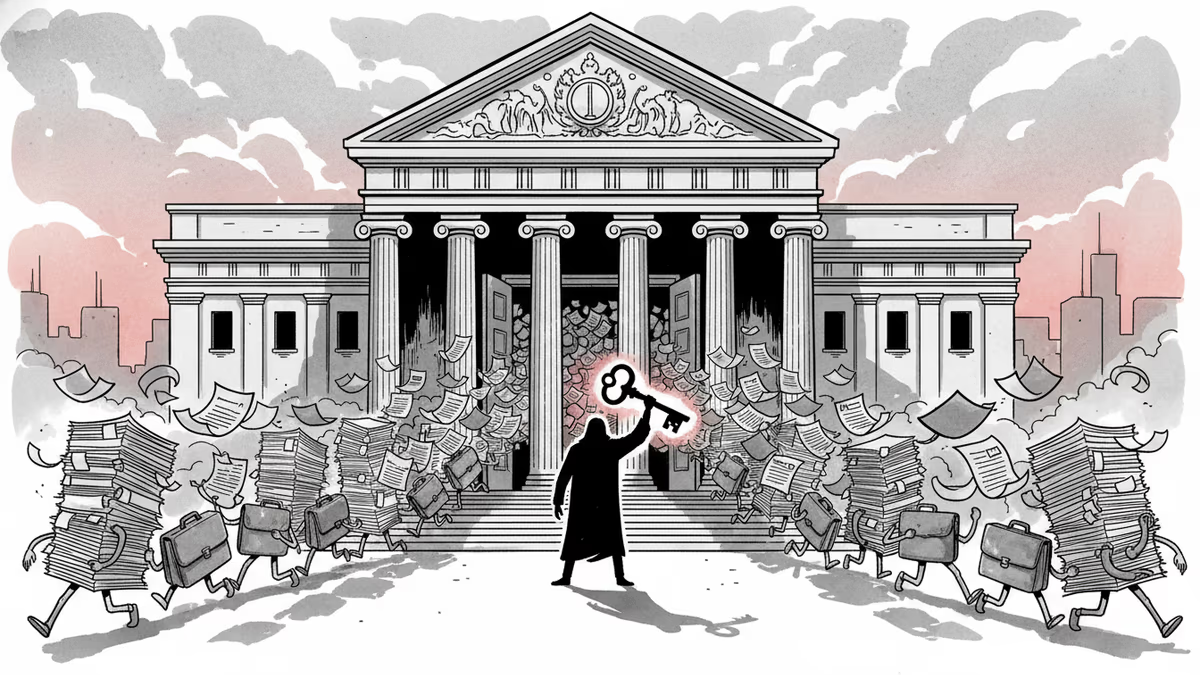
The Trump administration has gutted the DOJ's Voting Section, pushing out two dozen experienced lawyers and replacing them with loyalists. With 2026 midterms approaching, what does this mean for American democracy?
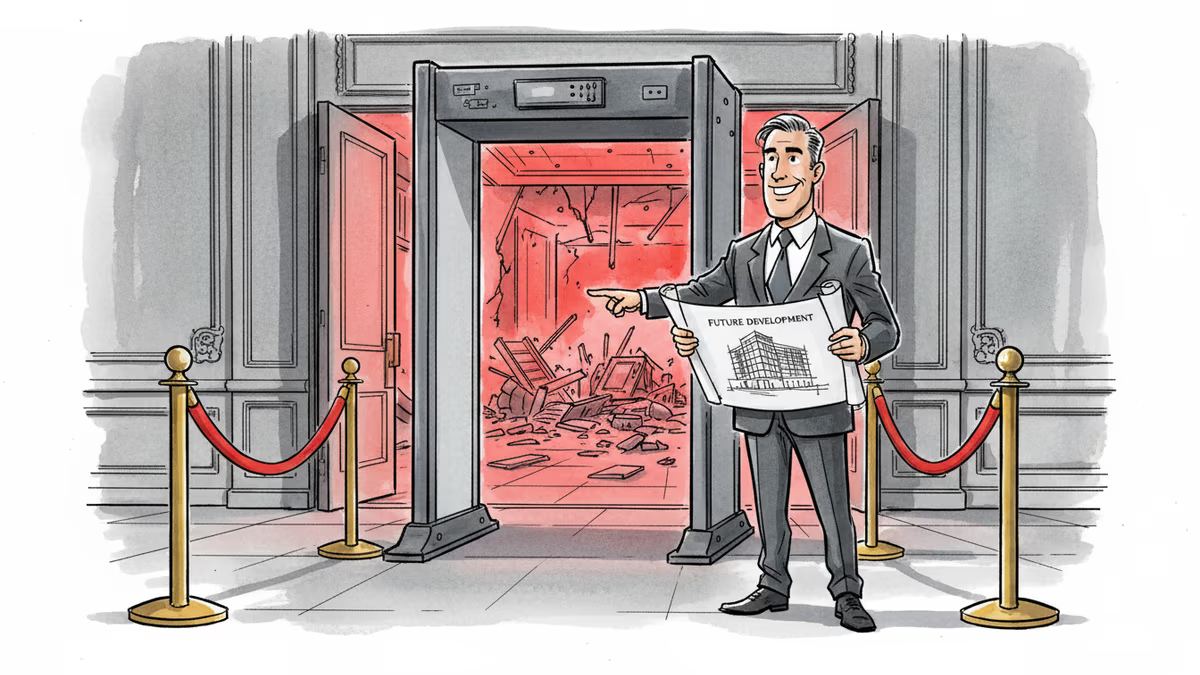
A gunman attacked a Secret Service checkpoint at the White House Correspondents' Dinner. Trump's first public reaction wasn't about security. It was about his $400M ballroom project.
Hours after an armed suspect attempted to breach the White House Correspondents Dinner, Trump used the security scare to publicly defend his White House ballroom project. What does that tell us?
The DRC Ebola outbreak has already crossed into Uganda and earned a WHO emergency declaration. The case count isn't the alarming part—the gaps in detection are.
The Trump administration has gutted the DOJ's Voting Section, pushing out two dozen experienced lawyers and replacing them with loyalists. With 2026 midterms approaching, what does this mean for American democracy?
A gunman attacked a Secret Service checkpoint at the White House Correspondents' Dinner. Trump's first public reaction wasn't about security. It was about his $400M ballroom project.
Hours after an armed suspect attempted to breach the White House Correspondents Dinner, Trump used the security scare to publicly defend his White House ballroom project. What does that tell us?
Thoughts
Share your thoughts on this article
Sign in to join the conversation