
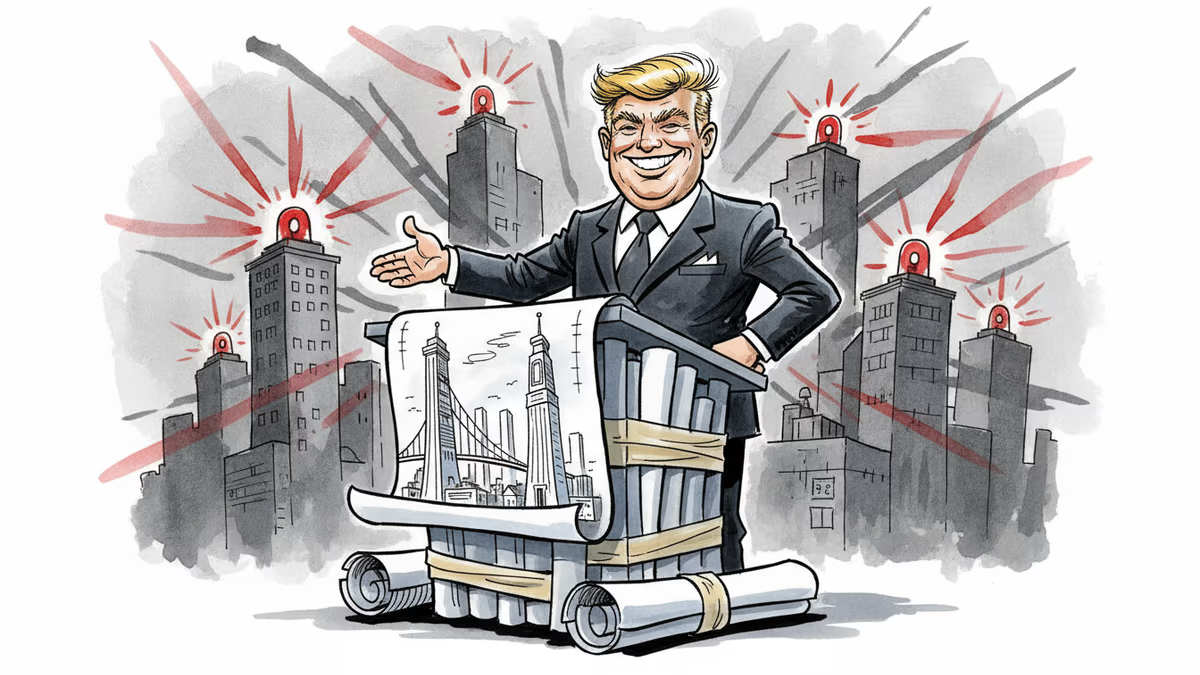
A Gunman at the Dinner, a Blueprint in the Briefing
Hours after an armed suspect attempted to breach the White House Correspondents Dinner, Trump used the security scare to publicly defend his White House ballroom project. What does that tell us?
The evacuation was barely over.
On the night of April 25, 2026, an armed gunman attempted to enter the Washington Hilton — the venue hosting the White House Correspondents' Dinner — where senior administration officials and hundreds of journalists had gathered. President Trump and multiple cabinet members were evacuated. Within hours, Trump stood before reporters at the White House.
What came next wasn't a security briefing. It wasn't a message of reassurance to the press corps that had just been threatened. It was a pitch.
The Pivot
"It's not a particularly secure building," Trump said of the Washington Hilton. "And I didn't want to say this, but this is why we have to have all of the attributes of what we're planning at the White House."
The "planning" he referenced is a project that has already drawn scrutiny: a proposal to build a large-scale ballroom and event space within the White House complex. Critics have questioned whether the initiative amounts to privatizing or commercializing the people's house. Supporters frame it as a practical upgrade to a facility that hosts major state functions.
What's notable isn't the project itself — it's the timing. Within the same news cycle as a genuine security threat to top officials and journalists, the president's public remarks centered not on the threat, but on the solution he'd already been selling.
Who Was in That Room
The WHCD is more than a dinner. It's one of the few annual moments where the press and the executive branch occupy the same physical space — a tradition rooted in the idea that a free press and a functioning government must at least be able to sit across from each other.

This year's event included FBI Director Kash Patel and Secretary of Homeland Security Markwayne Mullin, two of the most powerful figures in the U.S. security apparatus. The fact that a gunman got close enough to trigger an evacuation isn't a minor footnote — it's a significant security failure involving the highest levels of government.
Yet the post-incident press conference produced almost no public accounting of how the threat materialized, what intelligence may have been missed, or what the suspect's motivations were. Instead, the dominant headline became the president's remarks about his construction plans.
Two Readings of the Same Moment
Depending on where you stand, Trump's comments read very differently.
For his critics — particularly in the press — the response felt tone-deaf at best, opportunistic at worst. Journalists who had just been evacuated under armed threat were watching the president use that threat to advocate for moving future events to a venue he controls. The conflict-of-interest implications are not subtle.
For his supporters, the framing is simpler: the president identified a real security gap and proposed a real solution. The Washington Hilton is a large, semi-public hotel. A purpose-built White House event space would be easier to secure. The logic isn't inherently wrong — it's the context that makes it uncomfortable.
Security analysts might raise a third question entirely: if the Hilton is inadequate, was that known before the event? And if so, why was it chosen? That line of inquiry — which points toward institutional responsibility rather than venue architecture — has been largely absent from public discussion.
The Longer Pattern
This isn't the first time Trump has used a crisis moment to advance a pre-existing agenda. Across both terms, the pattern has been consistent: an external threat emerges, existing systems are framed as inadequate, and the president's preferred alternative is presented as the obvious fix. The formula works because it's not entirely wrong — crises do reveal gaps. The question is always whether the proposed solution actually addresses the gap, or simply benefits from being associated with it.
The WHCD has its own fraught history with Trump. He boycotted the dinner throughout his first term. He didn't attend this year's event either. The dinner has long symbolized a relationship between the press and the presidency that Trump has explicitly rejected. That the event's security failure became, in his telling, an argument for bringing future events under White House control is a detail worth sitting with.
Authors
Related Articles
Josh D'Amaro took over Disney with a bold Disney Plus vision. Days later, he's in a First Amendment fight with the Trump administration over The View. What does this mean for media freedom?
The Trump administration has gutted the DOJ's Voting Section, pushing out two dozen experienced lawyers and replacing them with loyalists. With 2026 midterms approaching, what does this mean for American democracy?
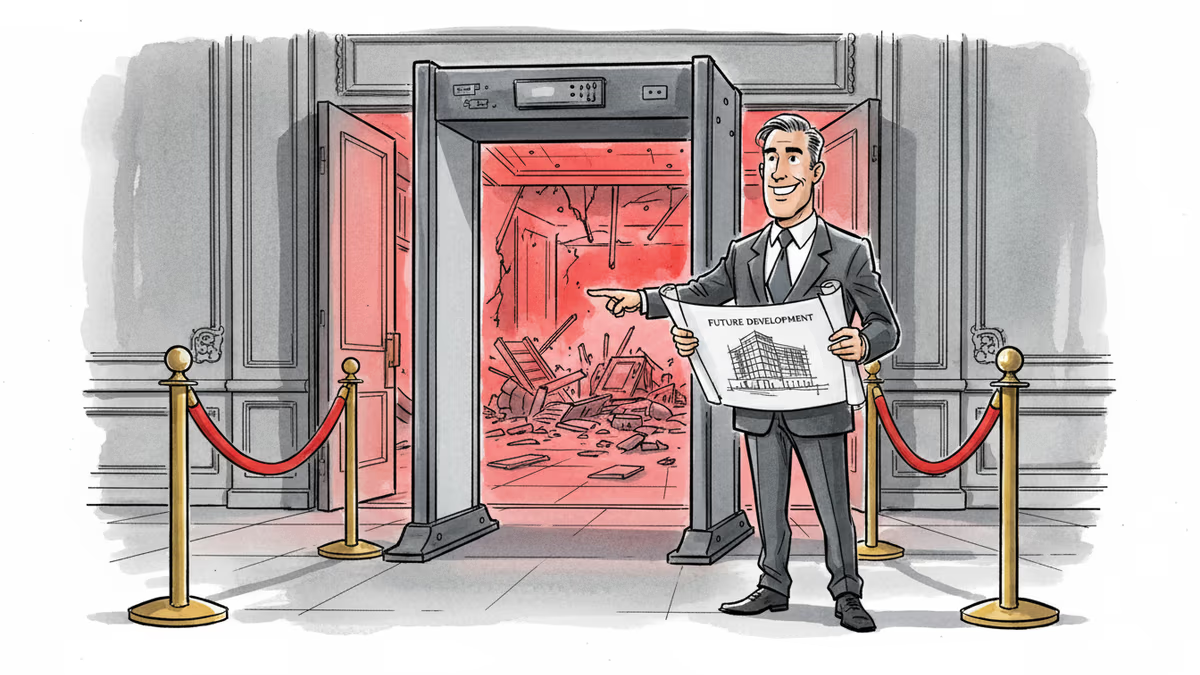
A gunman attacked a Secret Service checkpoint at the White House Correspondents' Dinner. Trump's first public reaction wasn't about security. It was about his $400M ballroom project.
Dr. Erica Schwartz, a pro-vaccine physician with an unimpeachable public health résumé, is Trump's third CDC director nominee—a quiet but pointed rebuke of RFK Jr.'s agenda.
Josh D'Amaro took over Disney with a bold Disney Plus vision. Days later, he's in a First Amendment fight with the Trump administration over The View. What does this mean for media freedom?
The Trump administration has gutted the DOJ's Voting Section, pushing out two dozen experienced lawyers and replacing them with loyalists. With 2026 midterms approaching, what does this mean for American democracy?
A gunman attacked a Secret Service checkpoint at the White House Correspondents' Dinner. Trump's first public reaction wasn't about security. It was about his $400M ballroom project.
Dr. Erica Schwartz, a pro-vaccine physician with an unimpeachable public health résumé, is Trump's third CDC director nominee—a quiet but pointed rebuke of RFK Jr.'s agenda.
Thoughts
Share your thoughts on this article
Sign in to join the conversation