
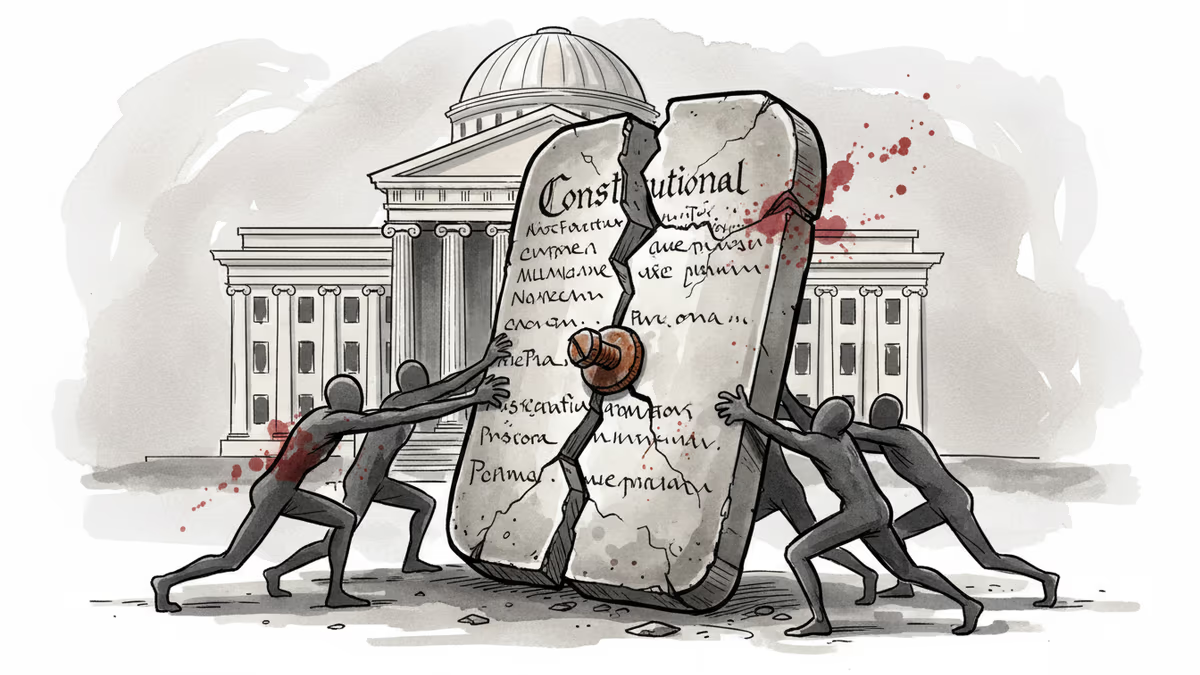
The 14th Amendment Goes on Trial
The Supreme Court heard arguments over Trump's birthright citizenship order. The justices seemed skeptical—but the fact that this case made it to the highest court signals something bigger.
For 158 years, being born on American soil meant being American. On Wednesday, that premise walked into a courtroom.
The Supreme Court heard oral arguments in Trump v. Barbara, a direct challenge to President Trump's 2025 executive order restricting birthright citizenship. Under the order, children born in the United States to undocumented immigrants or temporary visa holders would no longer automatically receive citizenship. Federal courts blocked the order almost immediately after it was signed. Now the nation's highest court is weighing in.
What the Constitution Actually Says
The text of the 14th Amendment is not ambiguous: "All persons born or naturalized in the United States, and subject to the jurisdiction thereof, are citizens of the United States." Ratified in 1868 to guarantee citizenship to formerly enslaved people, the clause has remained largely unchallenged for a century and a half.
The administration's legal theory hinges on four words: "subject to the jurisdiction thereof." Its argument is that undocumented immigrants and visa holders are not under the full jurisdiction of the United States, and therefore their children are not entitled to automatic citizenship. Most constitutional scholars find this reading historically thin. The Supreme Court addressed a closely related question in United States v. Wong Kim Ark back in 1898, ruling that a child born in the US to Chinese immigrants was indeed a citizen.
During Wednesday's arguments, the justices—including several conservatives—appeared skeptical of the administration's position. But skepticism is not a ruling.
Why This Moment Matters
The case reaching the Supreme Court is itself the story.

During Trump's first term, ending birthright citizenship was campaign rhetoric. It never became policy. In the second term, it became an executive order on day one. That shift—from political talking point to legal action—marks how much ground immigration hardliners have covered in less than a decade.
Even if the court strikes down the order, the legal arguments are now on the record. The 30-plus years of legal groundwork laid by restrictionist organizations has produced a case that the highest court agreed to hear. That doesn't go away.
According to the Migration Policy Institute, between 150,000 and 250,000 children born in the US annually could be affected if the order were upheld. Without citizenship in the country of their birth—and potentially without citizenship anywhere—they would exist in a legal gray zone that international law calls statelessness.
Three Ways to Read This
The administration frames this as a border security issue. Birthright citizenship, in their view, creates an incentive for illegal entry and undermines the integrity of immigration law.
Civil rights and immigration advocates argue the framing misses the point entirely. This isn't a policy tweak—it's an attempt to rewrite constitutional rights through executive action, bypassing Congress and the amendment process entirely.
International observers note the irony: the US has long positioned itself as a beacon of civic nationalism, where belonging is defined by commitment to shared ideals rather than bloodline. Retreating from jus soli—birthright citizenship—would align America more closely with the blood-based citizenship models dominant in Europe and Asia. Whether that's a convergence or a retreat depends on who you ask.
The Stakes Beyond the Courtroom
There's a procedural question embedded in this case that may matter as much as the citizenship question itself. The lower courts issued nationwide injunctions blocking the order before it could take effect. Part of what the Supreme Court is examining is whether those sweeping injunctions were appropriate—a question with implications for how quickly any future administration can be stopped by a single federal judge.
If the court narrows the scope of nationwide injunctions while also leaving the citizenship question unresolved, the practical effect could be that the order takes effect in some states before a final ruling arrives. Legal experts describe this as a scenario with no clean precedent.
Authors
Related Articles
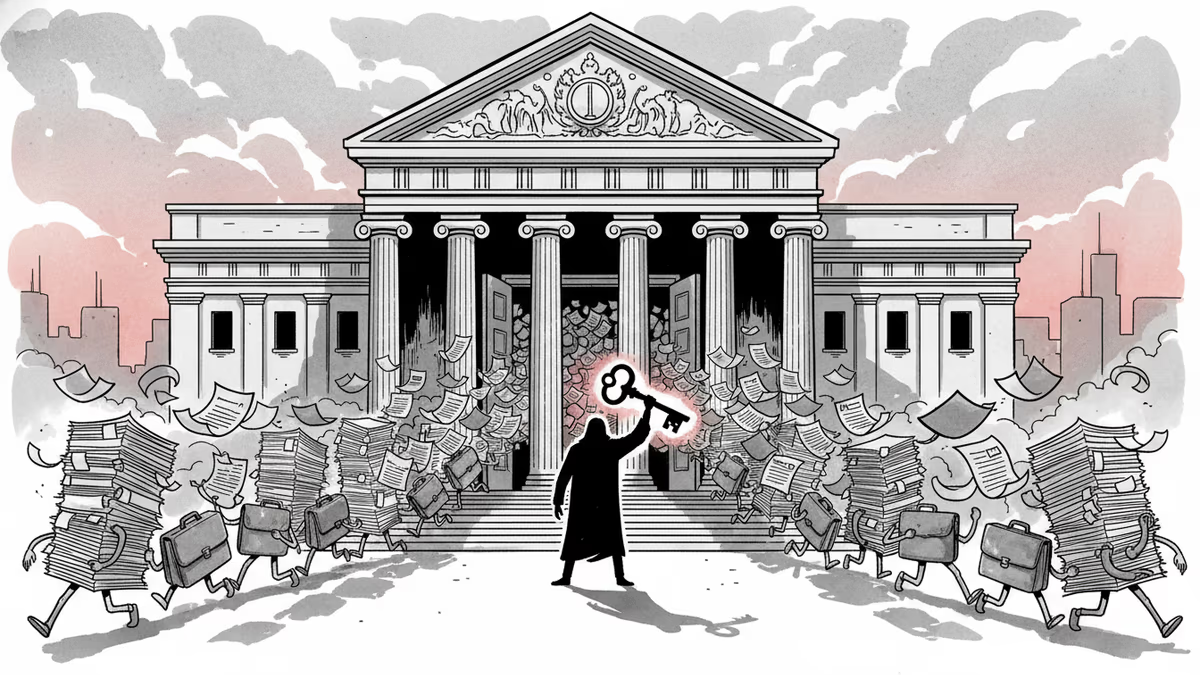
The Trump administration has gutted the DOJ's Voting Section, pushing out two dozen experienced lawyers and replacing them with loyalists. With 2026 midterms approaching, what does this mean for American democracy?
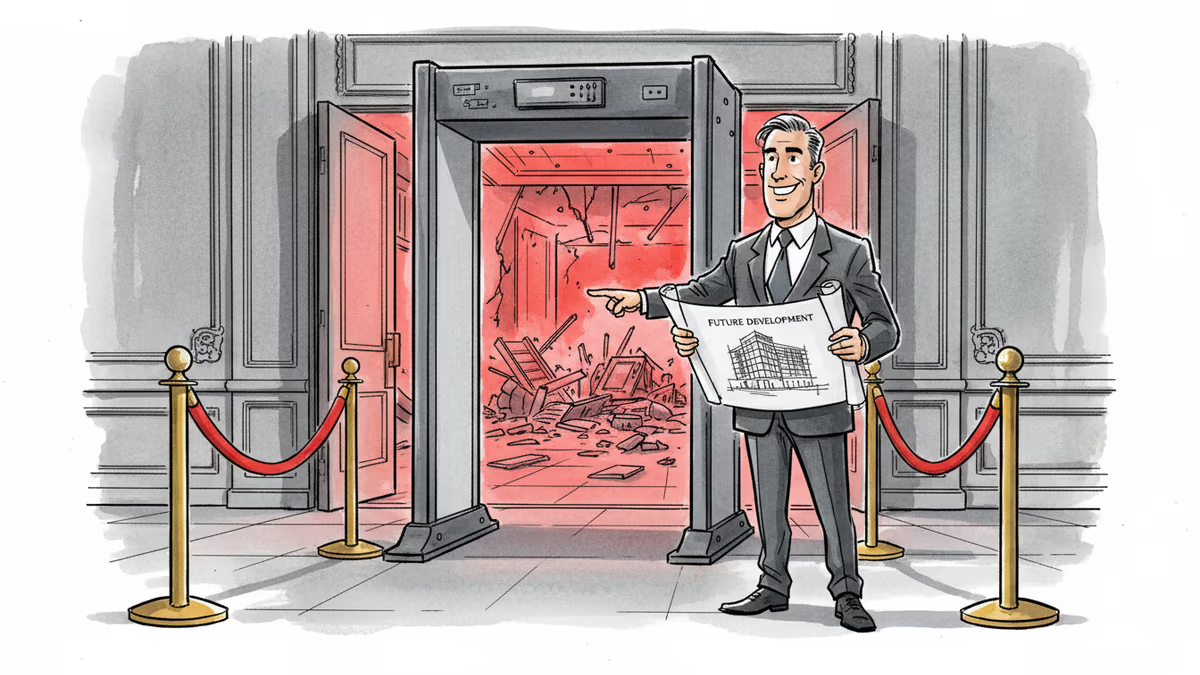
A gunman attacked a Secret Service checkpoint at the White House Correspondents' Dinner. Trump's first public reaction wasn't about security. It was about his $400M ballroom project.
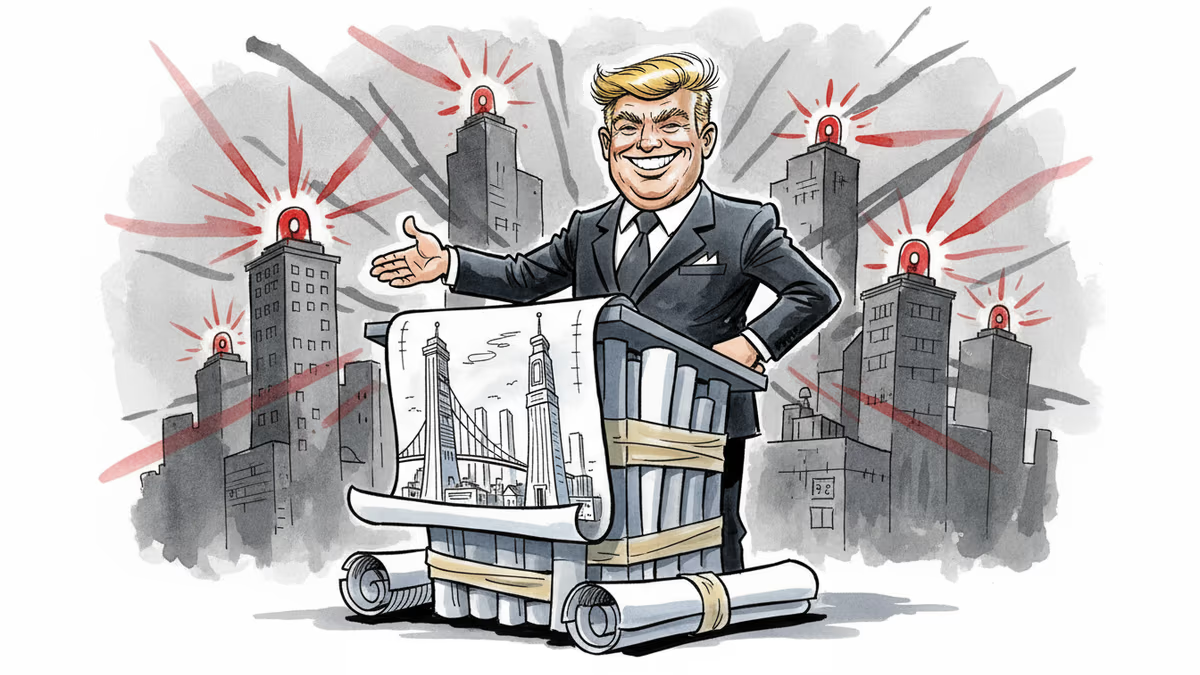
Hours after an armed suspect attempted to breach the White House Correspondents Dinner, Trump used the security scare to publicly defend his White House ballroom project. What does that tell us?

Palantir has become the tech backbone of Trump's immigration enforcement. Former employees are calling it a 'descent into fascism.' What happens when the people who build surveillance tools start asking uncomfortable questions?
The Trump administration has gutted the DOJ's Voting Section, pushing out two dozen experienced lawyers and replacing them with loyalists. With 2026 midterms approaching, what does this mean for American democracy?
A gunman attacked a Secret Service checkpoint at the White House Correspondents' Dinner. Trump's first public reaction wasn't about security. It was about his $400M ballroom project.
Hours after an armed suspect attempted to breach the White House Correspondents Dinner, Trump used the security scare to publicly defend his White House ballroom project. What does that tell us?
Palantir has become the tech backbone of Trump's immigration enforcement. Former employees are calling it a 'descent into fascism.' What happens when the people who build surveillance tools start asking uncomfortable questions?
Thoughts
Share your thoughts on this article
Sign in to join the conversation