
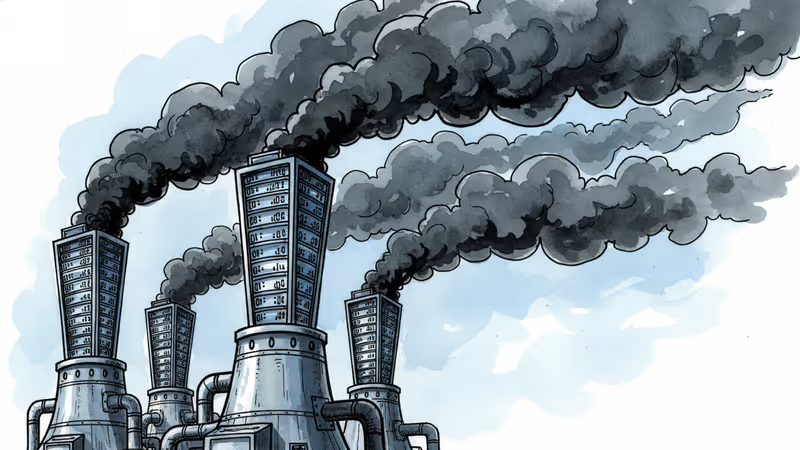
America's AI Gold Rush Is Powered by Gas—And That's a Climate Problem
The US leads a global 31% surge in gas power plants, with over a third directly powering data centers. What does this mean for climate goals and energy independence?
31%—that's how much global gas-fired power generation jumped in 2025. But here's the kicker: the United States, not China, is now leading this fossil fuel surge, and it's not for manufacturing or traditional industry. It's for artificial intelligence.
The numbers tell a stark story. Nearly a quarter of all new gas capacity worldwide is headed to American soil, with more than a third of that growth specifically designed to power data centers, according to analysis by Global Energy Monitor. While tech companies tout their renewable energy commitments, the reality on the ground looks decidedly different—and dirtier.
The Data Center Dilemma
The explosion in AI computing power has created an energy paradox. Training large language models like ChatGPT or Claude requires massive computational resources, and those servers need electricity—lots of it, and reliably. Unlike a factory that can adjust production schedules, data centers demand 24/7 power with virtually zero downtime tolerance.
This reliability requirement is driving utilities and tech companies toward natural gas plants, which can ramp up quickly when renewable sources falter. Solar doesn't shine at night, wind doesn't always blow, but gas turbines can fire up in minutes. For companies racing to deploy AI services before competitors, that reliability is worth the environmental cost.
The Stargate AI data center in Abilene, Texas, exemplifies this trend. The facility comes with its own on-site natural gas plant, ensuring power independence but also guaranteeing carbon emissions for decades to come. It's a microcosm of America's broader energy strategy: prioritize tech dominance first, worry about climate later.
Beyond Silicon Valley's Green Promises

Tech giants have spent years promoting their renewable energy initiatives. Microsoft claims to be carbon negative by 2030. Google touts running on 100% renewable energy. Amazon promises net-zero emissions by 2040. Yet these same companies are driving demand for gas-fired power that will lock in emissions for 20-30 years—the typical lifespan of a power plant.
The disconnect isn't necessarily hypocrisy; it's physics. Current battery technology can't store enough renewable energy to power massive data centers through cloudy, windless periods. Grid-scale storage solutions exist but remain expensive and limited in duration. Gas plants fill this gap, but they also fill the atmosphere with CO2.
This creates a fascinating tension between two of America's most important 21st-century priorities: technological leadership and climate action. The country that dominates AI development may well determine global standards for everything from autonomous vehicles to medical diagnosis. But achieving that dominance appears to require significant short-term increases in fossil fuel use.
The Global Stakes
America's gas plant surge has implications beyond its borders. Other countries are watching closely, and some are making different choices. China, despite its massive manufacturing energy needs, has been overtaken by the US in new gas capacity additions. European nations are pushing harder on renewable alternatives, though they're also grappling with AI energy demands.
The timing is particularly awkward. Just as international climate negotiations call for rapid fossil fuel phase-outs, the world's largest economy is doubling down on gas to power its digital future. This sends mixed signals to developing nations, which might reasonably ask: if America needs gas for its tech sector, why shouldn't we use it for basic electrification?
Investment markets are taking notice too. Energy companies see data center demand as a goldmine, with predictable, long-term customers willing to pay premium prices for reliable power. This economic incentive could accelerate gas plant construction even faster than current projections suggest.
Authors
Related Articles
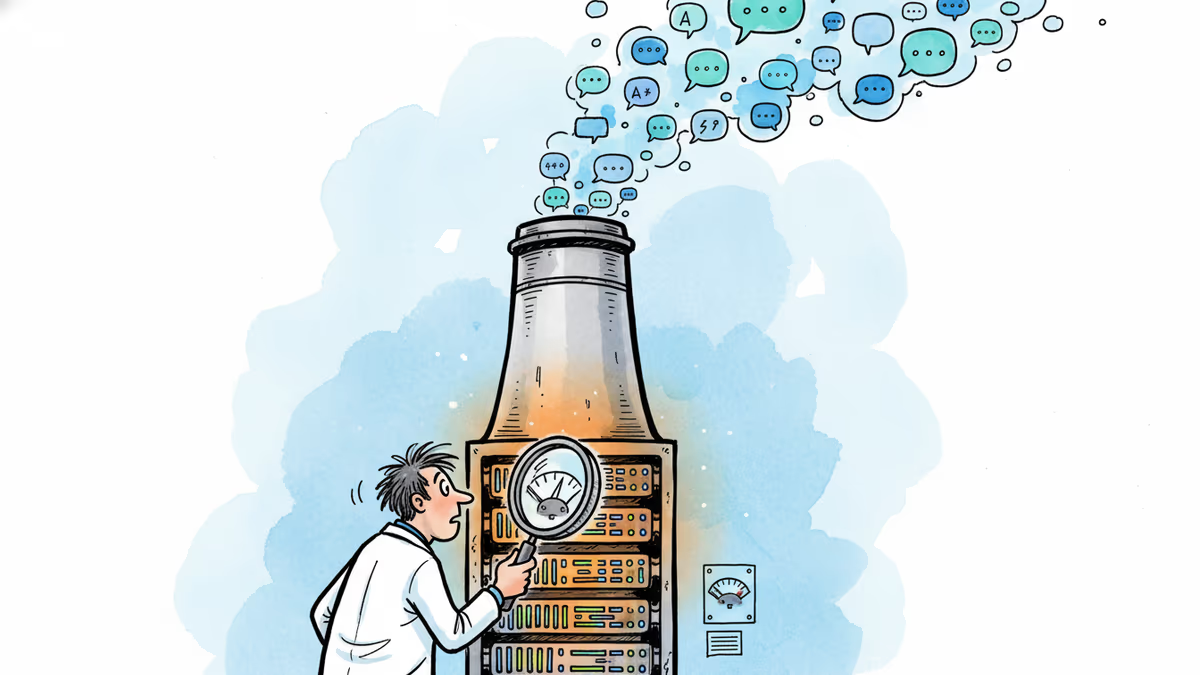
AI sustainability researcher Sasha Luccioni is launching a new venture to push for energy transparency in AI. Here's why Big Tech keeps the numbers hidden—and what's starting to change.
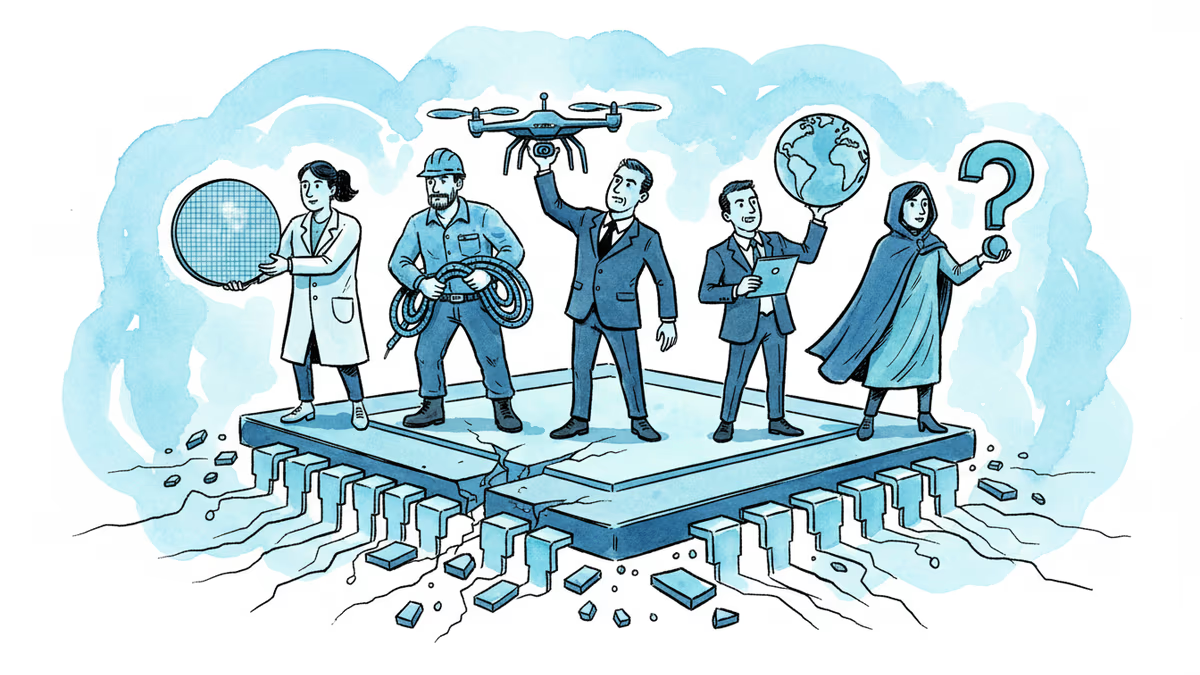
At Milken 2026, five AI insiders—from the CEO of ASML to a quantum physicist challenging LLMs—laid out the physical, energy, and geopolitical limits the AI boom is running into.
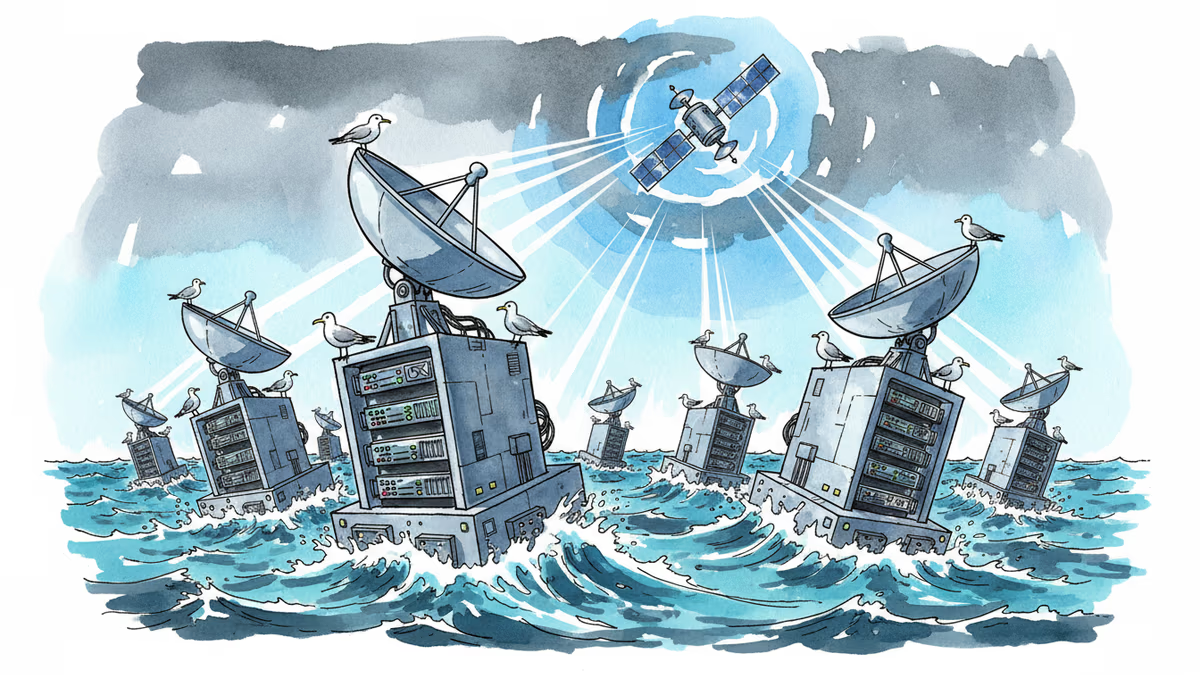
Palantir co-founder Peter Thiel and other Silicon Valley investors have poured $140 million into Panthalassa, a startup building wave-powered floating AI data centers in the open ocean. Here's what that actually means.
Nuclear power is winning fans across the political spectrum—and Big Tech is pouring billions in. But America still has no permanent home for the 2,000 metric tons of high-level waste its reactors produce every single year.
AI sustainability researcher Sasha Luccioni is launching a new venture to push for energy transparency in AI. Here's why Big Tech keeps the numbers hidden—and what's starting to change.
At Milken 2026, five AI insiders—from the CEO of ASML to a quantum physicist challenging LLMs—laid out the physical, energy, and geopolitical limits the AI boom is running into.
Palantir co-founder Peter Thiel and other Silicon Valley investors have poured $140 million into Panthalassa, a startup building wave-powered floating AI data centers in the open ocean. Here's what that actually means.
Nuclear power is winning fans across the political spectrum—and Big Tech is pouring billions in. But America still has no permanent home for the 2,000 metric tons of high-level waste its reactors produce every single year.
Thoughts
Share your thoughts on this article
Sign in to join the conversation