
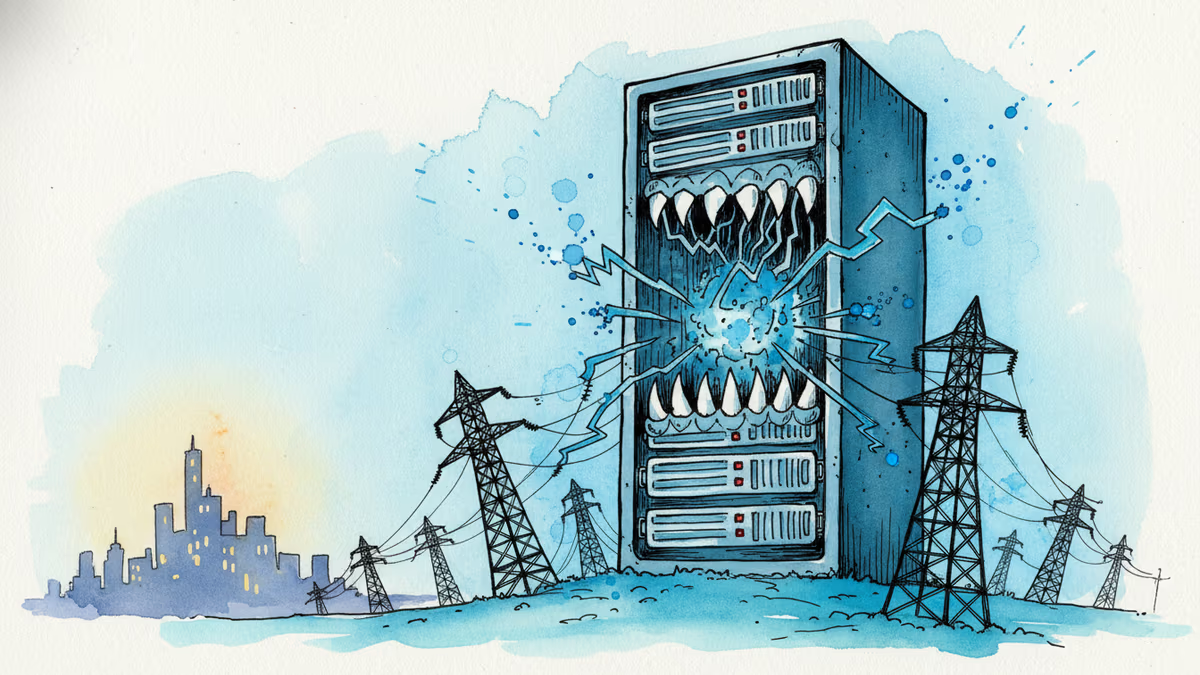
AI Is Eating the Grid — And the Bill Is Coming Due
US data centers could consume 12% of national electricity by 2028. A new MIT Tech Review survey of 300 executives reveals energy costs are now the top threat to AI innovation.
One data center. 80,000 homes' worth of electricity. And the ones being built right now are ten times larger.
That's not a climate activist's talking point. That's the engineering reality quietly reshaping how companies think about their AI ambitions — and how much they can actually afford.
From Pastures to Power Drain
Loudoun County, Virginia, sits about 30 miles from Washington, DC. A decade ago, it was horse country. Today, it holds the highest concentration of data centers anywhere on Earth. The local utility, Dominion Energy, is struggling to keep up. The situation has gotten acute enough that Dulles International Airport is now building the largest airport solar installation in the United States — not to go green, but simply to help keep the lights on for the server farms next door.
This is what AI demand looks like on the ground: airports becoming power plants, pastoral counties becoming industrial zones, and utility companies running to stand still.
The Numbers That Should Focus Every Executive's Attention
In December 2025, MIT Technology Review Insights surveyed 300 executives across industries to gauge how companies are grappling with the energy demands of AI. The findings are blunt.
US data centers consumed roughly 4% of national electricity in 2024. By 2028, that figure is projected to hit 12% — a tripling in four years. For context, that's more electricity than many mid-sized countries consume in total.
The financial pain is already landing. 68% of surveyed executives said their companies faced energy cost increases of 10% or more in the past 12 months, directly attributable to AI and data workloads. And 97% expect those costs to climb further in the next 12 to 18 months.

Here's the number that cuts through the noise: 51% of executives ranked rising energy costs as the single greatest threat to their AI and digital initiatives. Not regulation. Not talent shortages. Not geopolitical risk. The electric bill.
What Companies Are Actually Doing
The survey maps out four main responses. Three in four leaders (74%) are optimizing existing infrastructure. 69% are shifting toward energy-efficient cloud and storage partnerships. 61% are implementing AI workload scheduling — essentially deciding when to run heavy computations based on energy pricing and grid availability. And 56% are investing in more efficient hardware.
But there's a structural problem underneath all of these efforts. Companies report that 71% of their rising consumption-based costs originate with third-party cloud providers and managed services. Yet energy metrics from those providers are notoriously opaque. You know the bill went up. You don't know exactly why, or where, or what you could do differently.
This is the gap that a discipline called energy intelligence is trying to close — understanding not just how much energy an organization uses, but where, when, and why, with enough granularity to act on it. Every single executive surveyed (100%) expects this capability to become an important business metric within two years.
Three Very Different Stakeholders, Three Very Different Problems
For enterprise technology leaders, this is a budgeting crisis dressed up as an infrastructure question. The ROI calculations for AI deployments are quietly being recalculated as energy costs eat into margins. A model that looked cost-effective at last year's electricity prices may not look the same today.
For communities near data center clusters — Loudoun County, the Phoenix suburbs, rural Georgia — the calculus is different. Local residents are watching their grid strain, their water tables stressed by cooling systems, and their property taxes complicated by massive industrial neighbors. The economic benefits (jobs, tax revenue) are real, but so is the pushback. Loudoun County has seen vocal opposition to further data center development, a dynamic playing out in dozens of jurisdictions across the US.
For climate advocates and policymakers, the timing is awkward. Many of the same tech companies that made ambitious net-zero pledges are now scrambling to secure fossil fuel-backed power to feed their AI infrastructure. Microsoft, Google, and Amazon have all, in various ways, walked back or complicated earlier sustainability commitments as data center demand surged. The gap between corporate climate narratives and grid-level reality is widening.
The Uncomfortable Question Nobody Wants to Answer
The industry's implicit bet is that efficiency gains will eventually catch up with demand growth — that better chips, smarter cooling, and more renewable energy will bend the curve. That bet may be right. But it's a bet, not a plan.
Meanwhile, the buildout continues. Gigawatt-scale campuses — enough to power a mid-sized city, remember — are under construction or in permitting across the US, Europe, and Southeast Asia. The energy intelligence discipline the survey describes is real and growing. But measuring consumption more precisely is not the same as reducing it.
Authors
Related Articles

Samsung and SK unveiled a chip and AI investment package worth thousands of trillions of won on June 29. The headline number swings wildly by outlet, but the real contest isn't capital — it's water and power.
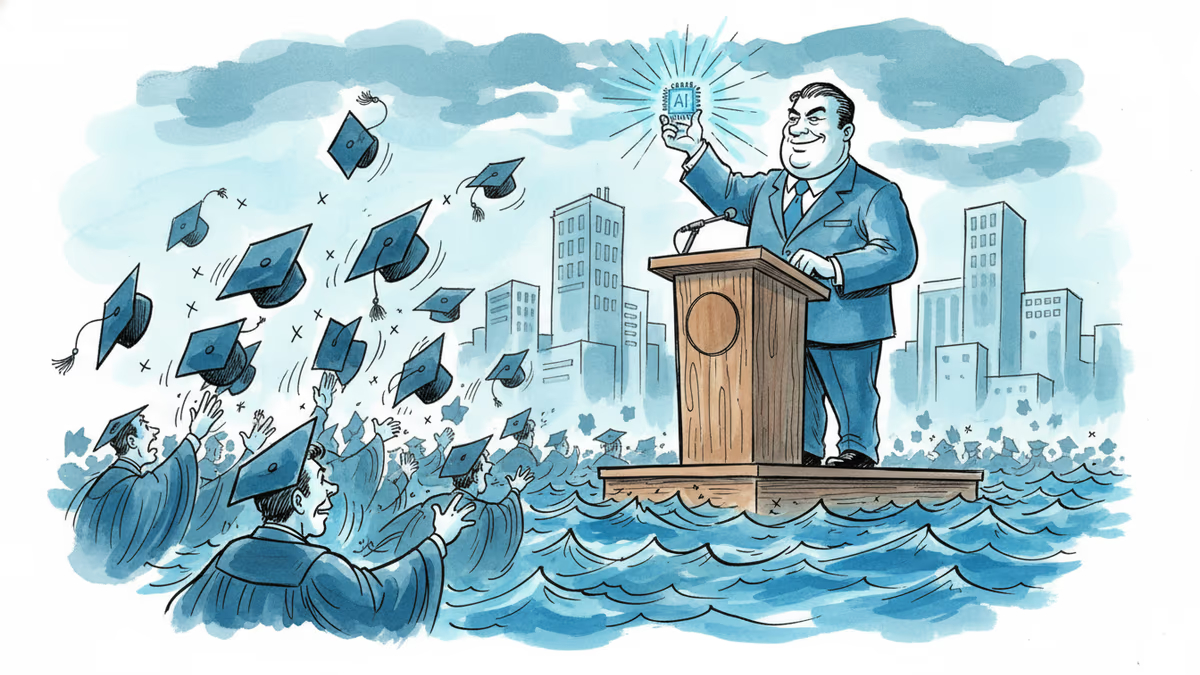
Viral videos show 2026 graduates jeering executives who praise AI at commencement ceremonies. It's not just rudeness — it's a signal about who pays for technological optimism.
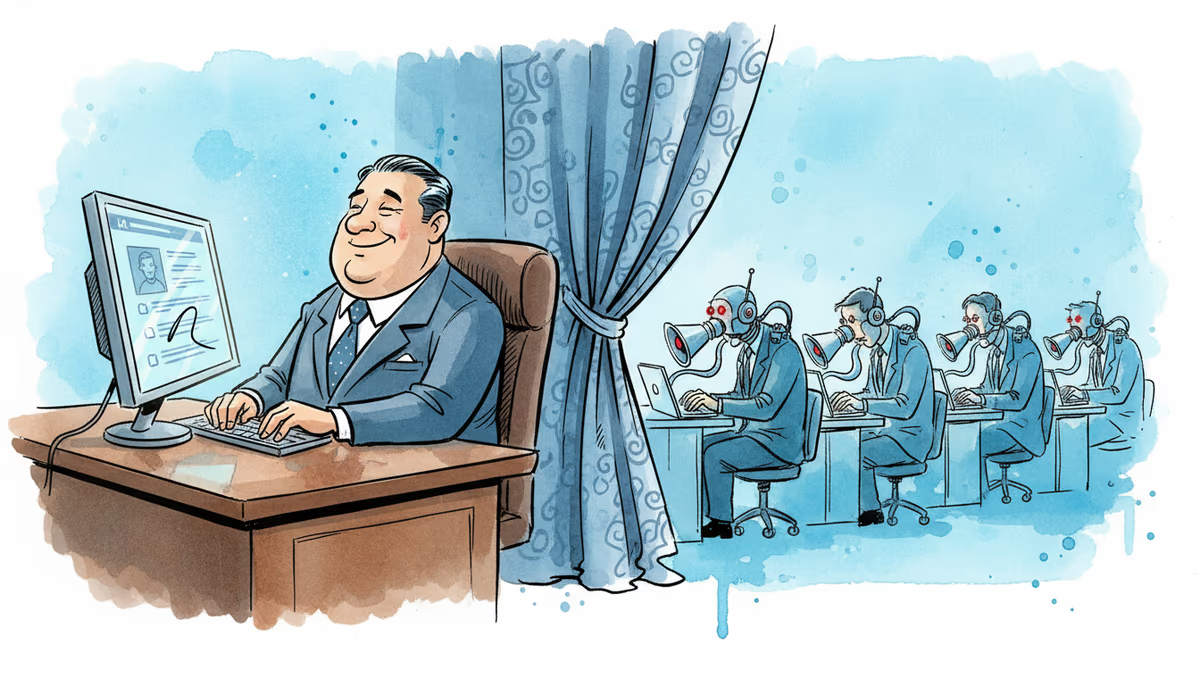
Filipino virtual assistants using AI to ghost-manage LinkedIn profiles for executives is now a structured industry. 30 comments a day, fake engagement rings, and a platform struggling to tell real from fabricated.
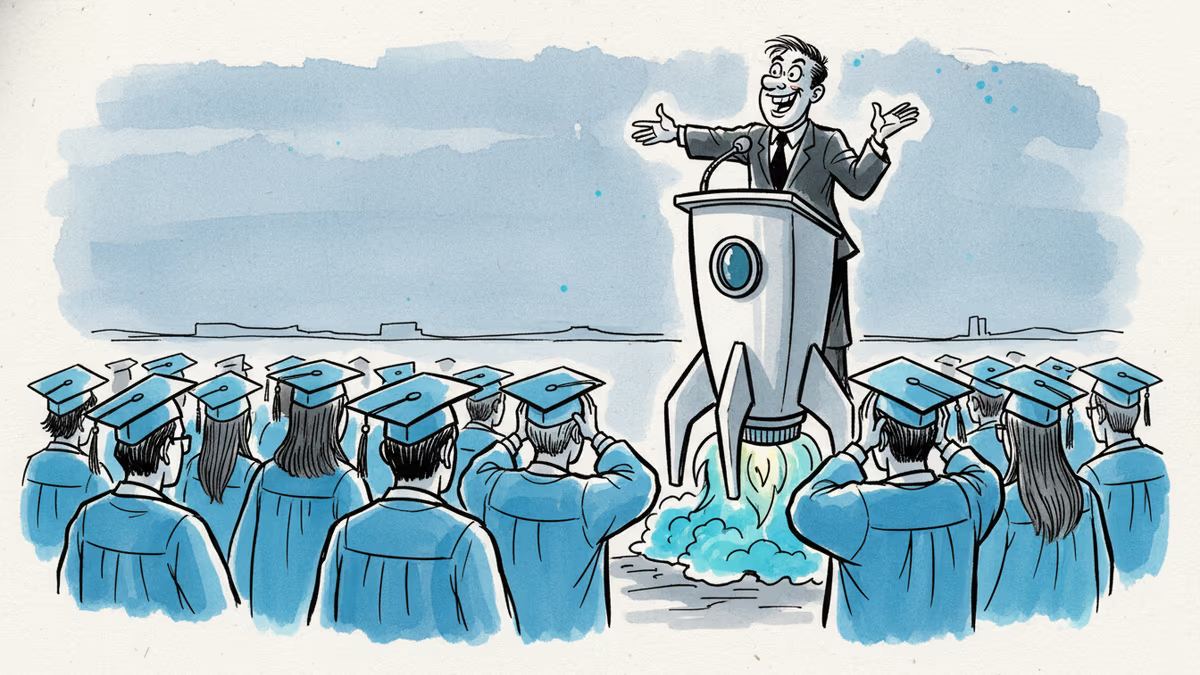
Two commencement speakers learned the hard way that AI enthusiasm doesn't land well with today's graduates. The backlash reveals a widening gap between tech optimism and Gen Z's economic reality.
Samsung and SK unveiled a chip and AI investment package worth thousands of trillions of won on June 29. The headline number swings wildly by outlet, but the real contest isn't capital — it's water and power.
Viral videos show 2026 graduates jeering executives who praise AI at commencement ceremonies. It's not just rudeness — it's a signal about who pays for technological optimism.
Filipino virtual assistants using AI to ghost-manage LinkedIn profiles for executives is now a structured industry. 30 comments a day, fake engagement rings, and a platform struggling to tell real from fabricated.
Two commencement speakers learned the hard way that AI enthusiasm doesn't land well with today's graduates. The backlash reveals a widening gap between tech optimism and Gen Z's economic reality.
Thoughts
Share your thoughts on this article
Sign in to join the conversation