
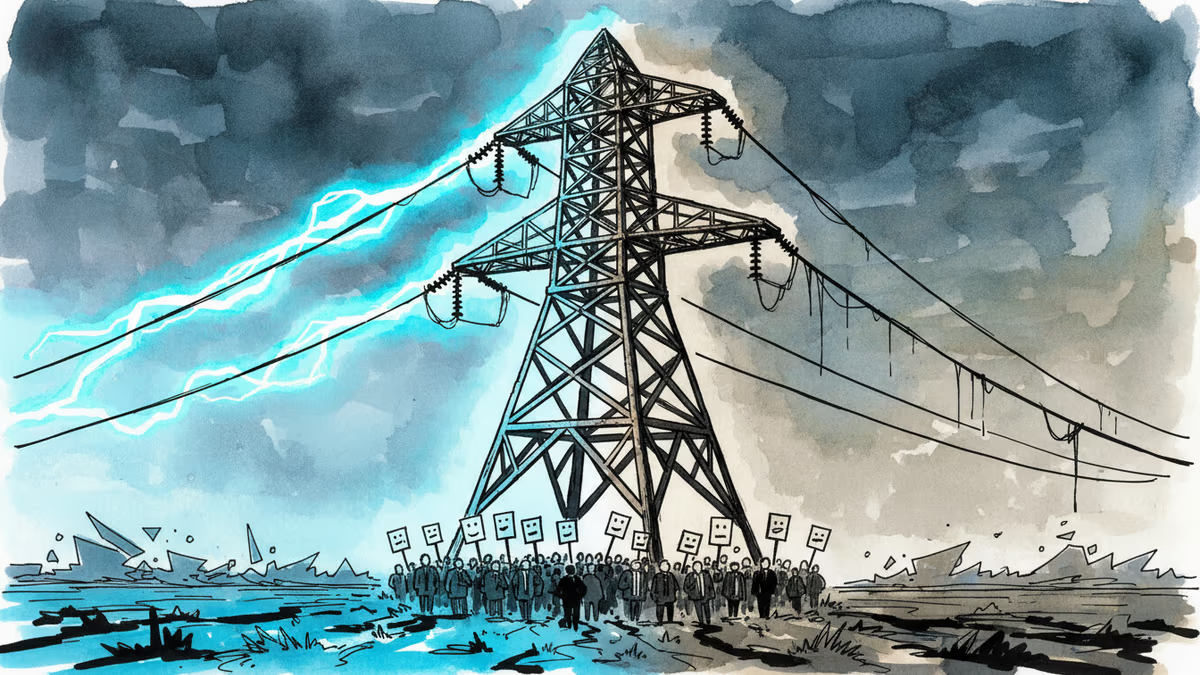
The Grid Is Half-Empty. Big Tech Wants to Fix That.
Google, Tesla, and five other companies just formed a coalition called Utilize to push for smarter use of the electrical grid. Is this genuine climate advocacy—or a lobbying play dressed in green?
Right now, somewhere on the grid, electricity is going nowhere. Not because demand is low—it's because the grid was engineered to handle the worst day of the year, every day. The rest of the time, a significant chunk of that capacity just sits idle. Seven companies, including Google and Tesla, have decided that's a problem worth fighting over.
What Just Happened
On Tuesday, Google, Tesla, data center developer Verrus, HVAC giant Carrier, virtual power plant company Renew Home, distributed energy resource developer Sparkfund, and smart panel startup Span launched a new advocacy coalition called Utilize. The name is deliberate: the group's central argument is that the tools to better use the grid already exist—battery storage, demand response, virtual power plants—but they remain underdeployed because regulators and politicians keep defaulting to what's familiar: centralized fossil fuel plants.
Utilize isn't just talking. The group already claims a legislative win: some of its members backed a bill in Virginia requiring utilities to quantify and publicly disclose how much of the grid's capacity is actually being used. It's a modest but pointed first move—if you can't hide the waste, you have to explain it.
The coalition's structure is telling. On the supply side: Tesla (batteries, solar), Span (smart panels), Carrier (heat pumps), Sparkfund and Renew Home (distributed energy aggregation). On the demand side: Google and Verrus, two entities with enormous and growing appetites for reliable power. Buyers and sellers, united by a shared interest in reshaping the rules of the market they both operate in.
Why This Moment Matters

The timing isn't accidental. The AI boom has turned data center power demand into a boardroom crisis. Google, Microsoft, and Amazon have collectively announced hundreds of billions in data center investment over the coming years. Every new server rack needs electrons, and the question of where those electrons come from—and how reliably—has become a strategic priority, not just an operational one.
Meanwhile, the grid itself is straining. Texas, long a cautionary tale of grid fragility, has actually fared better during recent cold snaps—largely because battery storage capacity in the state has grown substantially. The technology works. The bottleneck is political.
That's the gap Utilize is trying to close. Regulators and politicians remain cautious about distributed energy resources, partly out of genuine risk aversion and partly because incumbent utilities—which have spent decades building centralized infrastructure—have significant political sway. Changing grid regulation is, as the group itself acknowledges, a long game.
Three Ways to Read This
The optimist's view: This is exactly how policy change happens. Industries that benefit from new technologies band together, fund advocacy, score incremental wins, and shift the Overton window over time. The Virginia disclosure bill is a classic first step—make the problem visible before pushing for solutions.
The skeptic's view:Google and Tesla are not nonprofits. Google needs cheap, reliable power for its AI infrastructure. Tesla sells the batteries and panels that a grid-reform agenda would make more valuable. When the companies most likely to profit from a policy change are the ones advocating for it, the public interest framing deserves scrutiny. Utilize has not yet registered as a formal lobbying group—a detail worth watching.
The regulator's view: Every grid operator's nightmare is a blackout they can't explain. Distributed energy resources are harder to model, harder to control, and harder to blame when things go wrong. The preference for centralized plants isn't just inertia—it's risk management, even if it's increasingly expensive risk management.
Authors
Related Articles

Google's Gmail Live lets you ask your inbox questions out loud. Announced at I/O 2026, it's AI's pitch to skeptics — and a reminder of how much Google already knows about you.

OpenAI has reorganized for the second time in a month, merging ChatGPT and Codex into a single agentic platform under president Greg Brockman's unified product leadership.
AI sustainability researcher Sasha Luccioni is launching a new venture to push for energy transparency in AI. Here's why Big Tech keeps the numbers hidden—and what's starting to change.
Emails revealed in the Musk v. Altman trial show Microsoft executives were deeply skeptical of OpenAI in 2017–2018. What actually changed their minds?
Google's Gmail Live lets you ask your inbox questions out loud. Announced at I/O 2026, it's AI's pitch to skeptics — and a reminder of how much Google already knows about you.
OpenAI has reorganized for the second time in a month, merging ChatGPT and Codex into a single agentic platform under president Greg Brockman's unified product leadership.
AI sustainability researcher Sasha Luccioni is launching a new venture to push for energy transparency in AI. Here's why Big Tech keeps the numbers hidden—and what's starting to change.
Emails revealed in the Musk v. Altman trial show Microsoft executives were deeply skeptical of OpenAI in 2017–2018. What actually changed their minds?
Thoughts
Share your thoughts on this article
Sign in to join the conversation