
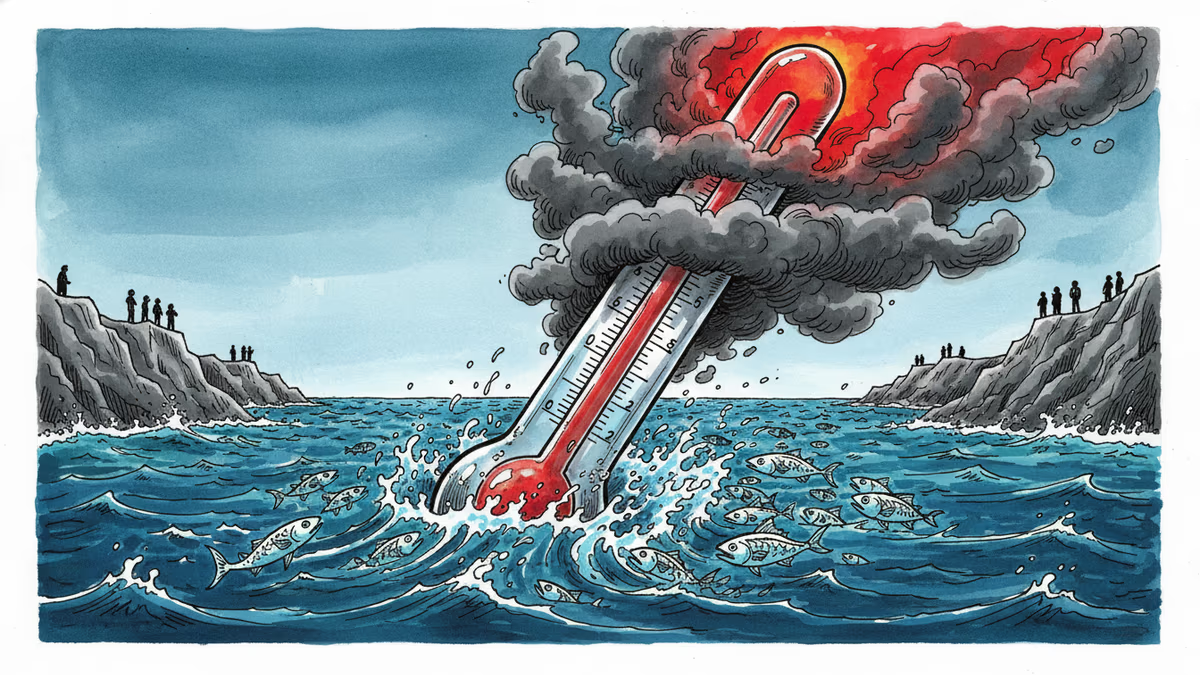
The Pacific Is Heating Up. So Is the Climate Debate.
Scientists warn a strong El Niño could push Earth past the 1.5°C warming threshold within 12-18 months. What that means for weather, food, energy—and the politics of climate action.
For decades, 1.5°C has been the line climate science and international politics agreed we must not cross. Now the Pacific Ocean may cross it for us—at least temporarily.
The Ocean Engine Is Revving
Scientists tracking sea surface temperatures in the tropical Pacific are increasingly confident: a strong El Niño is building, with a potential arrival window of 12 to 18 months. That's not just a weather forecast. El Niño—the warm phase of the ocean-atmosphere cycle known as ENSO—is one of the most powerful natural levers on Earth's climate system. It reshapes storm tracks, disrupts fisheries, and alters rainfall patterns across continents that never touch the Pacific.
What makes this moment different from past El Niño cycles is the baseline. The planet is already running hotter than at any point in recorded history, driven by accumulated greenhouse gas emissions. When a strong El Niño is layered on top of that elevated baseline, climate models suggest Earth's average annual temperature could, for the first time, exceed 1.5°C above pre-industrial levels—the threshold explicitly named in the Paris Agreement and IPCC reports as a potential tipping point for irreversible impacts.
Why 1.5°C Isn't Just a Number
The science behind the 1.5°C figure is specific. Cross that line and coral reef systems face 70–90% collapse risk. Extreme heat events become significantly more frequent and severe. Sea-level rise accelerates. Hundreds of millions of people who depend on ocean fisheries for protein face disrupted food supplies. Agricultural zones shift faster than farming infrastructure can adapt.
The immediate, tangible effects of a strong El Niño are already well-documented. The 2015–2016 event—the strongest on modern record—triggered severe droughts across South America and Southeast Asia, catastrophic flooding in East Africa, and contributed to global food price spikes. Energy grids that depend on hydropower stuttered. Insurance losses ran into the tens of billions.
If the coming event matches or exceeds that intensity on an already-warmer planet, the amplification effect is the core concern.

A Natural Event, a Human Context
Here's where the debate gets genuinely complicated. El Niño is not a symptom of climate change—it has cycled through the Pacific for millennia. Scientists are careful to distinguish between a natural phenomenon and the human-caused warming that amplifies its effects. The same storm, the same El Niño pulse, hits harder when the background temperature is already elevated.
Some researchers argue that a temporary breach of 1.5°C driven partly by natural variability is meaningfully different from a permanent, sustained crossing. The number could dip back below the threshold once El Niño fades. Others push back: once the threshold is breached—even briefly—the political and psychological signal may be impossible to walk back. The urgency embedded in that number could erode precisely when it's most needed.
Who's Watching—and Why It Matters to Them
The reactions split sharply depending on where you sit.
Climate scientists are treating this as a high-confidence alert, not a speculative scenario. The convergence of multiple models pointing toward a strong event is unusual and warrants preparation, not just observation.
Energy policymakers face a practical puzzle. Strong El Niño events disrupt solar irradiance patterns, reduce hydropower output in affected regions, and make demand forecasting significantly harder. For governments accelerating renewable energy transitions, climate variability isn't an abstract risk—it's an infrastructure planning problem.
Agricultural and commodity markets are already pricing in uncertainty. Tropical crops—coffee, cocoa, palm oil—are produced in regions historically hammered by El Niño-related drought. In an inflationary environment, another supply shock in food commodities lands differently than it did a decade ago.
Investors and corporate risk managers are watching for a different reason. Climate-related financial disclosure requirements are tightening globally. A high-profile breach of the 1.5°C threshold—however temporary—accelerates pressure on companies to demonstrate credible climate risk assessments. The science becomes a compliance trigger.
Authors
Related Articles
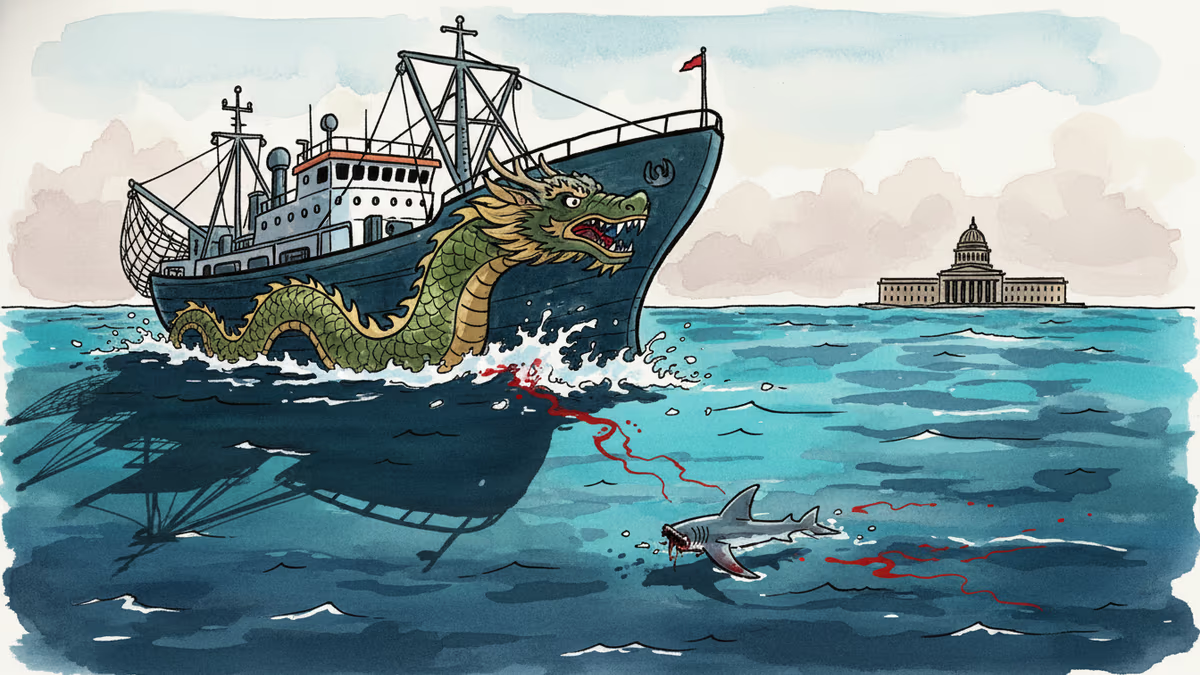
A U.S. nonprofit has petitioned the federal government to sanction China over shark finning. If upheld, it could trigger a ban on all Chinese seafood imports worth $1.5 billion annually.
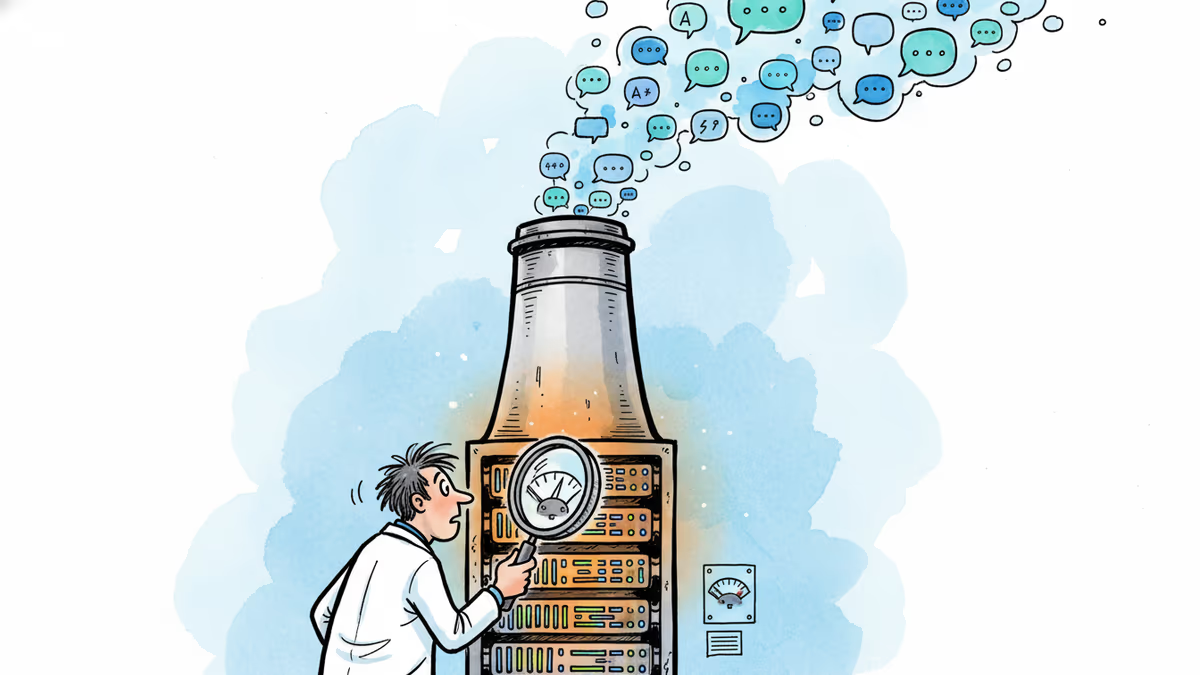
AI sustainability researcher Sasha Luccioni is launching a new venture to push for energy transparency in AI. Here's why Big Tech keeps the numbers hidden—and what's starting to change.

At Milken 2026, five AI insiders—from the CEO of ASML to a quantum physicist challenging LLMs—laid out the physical, energy, and geopolitical limits the AI boom is running into.
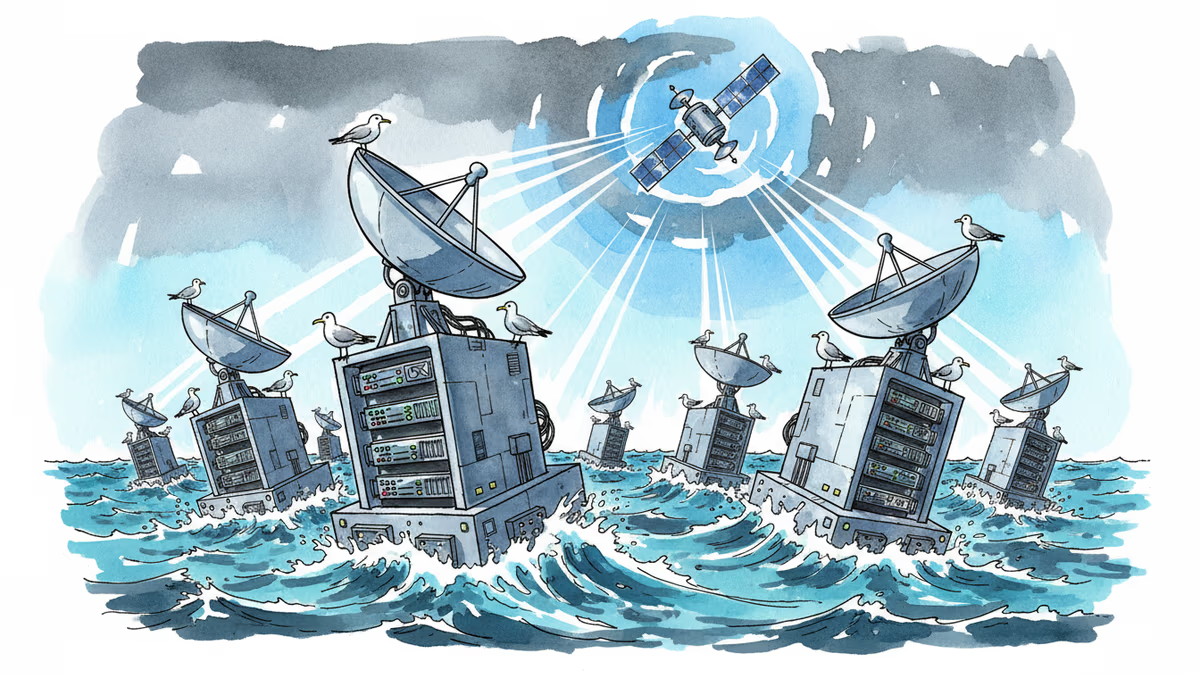
Palantir co-founder Peter Thiel and other Silicon Valley investors have poured $140 million into Panthalassa, a startup building wave-powered floating AI data centers in the open ocean. Here's what that actually means.
A U.S. nonprofit has petitioned the federal government to sanction China over shark finning. If upheld, it could trigger a ban on all Chinese seafood imports worth $1.5 billion annually.
AI sustainability researcher Sasha Luccioni is launching a new venture to push for energy transparency in AI. Here's why Big Tech keeps the numbers hidden—and what's starting to change.
At Milken 2026, five AI insiders—from the CEO of ASML to a quantum physicist challenging LLMs—laid out the physical, energy, and geopolitical limits the AI boom is running into.
Palantir co-founder Peter Thiel and other Silicon Valley investors have poured $140 million into Panthalassa, a startup building wave-powered floating AI data centers in the open ocean. Here's what that actually means.
Thoughts
Share your thoughts on this article
Sign in to join the conversation