
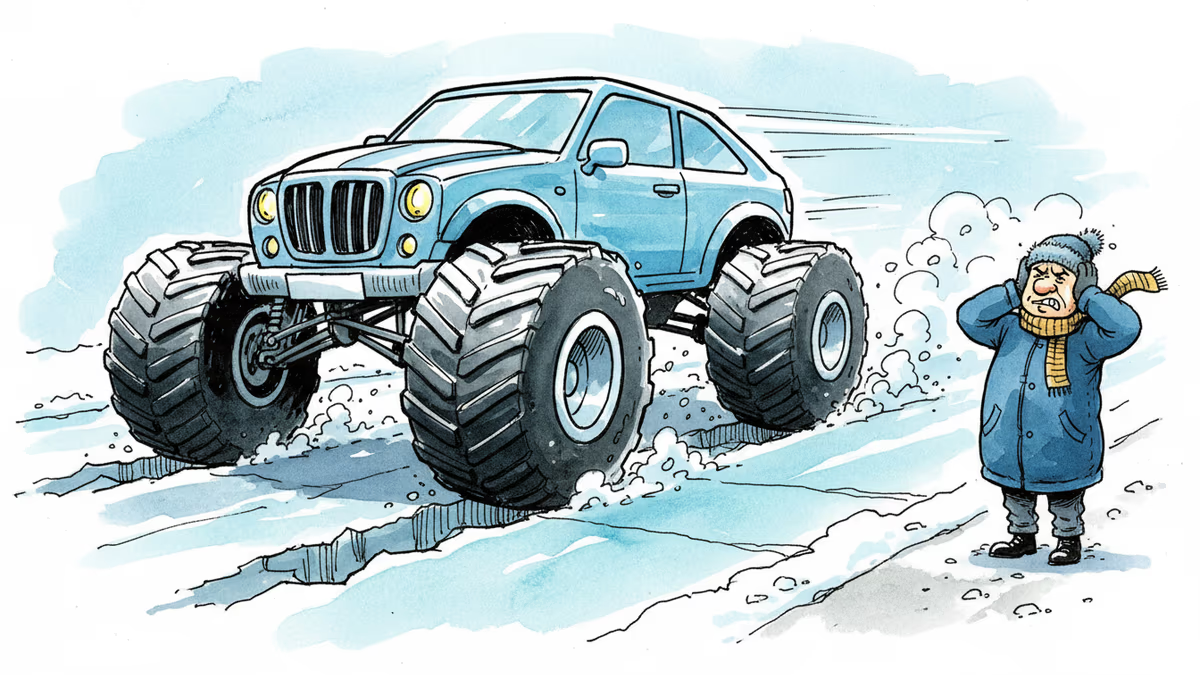
The Best Snow Tire You Can't Use
Studded snow tires offer unmatched grip on ice, but they're banned or restricted in many countries due to road damage and air quality concerns. What's the real trade-off?
The tire that makes you nearly unstoppable on ice is the same one that quietly tears apart the road beneath everyone else's feet.
Studded snow tires — the kind with small tungsten pins embedded in the tread — are the undisputed kings of winter driving. On black ice or packed snow, those metal tips bite directly into the surface, giving drivers a level of control that regular winter tires simply can't match. If you've ever driven on a set, you know the feeling: an almost eerie confidence in conditions that would have other drivers white-knuckling the wheel.
But that confidence comes with costs that go well beyond the price tag — and understanding those trade-offs reveals something bigger about how we design technology for collective environments.
What Makes Them So Good (and So Controversial)
The physics are straightforward. A conventional winter tire relies on a soft rubber compound and complex tread patterns to create friction against snow and ice. A studded tire does all of that and adds metal pins that physically dig into icy surfaces. On pure ice, the performance difference is significant — stopping distances can be reduced by 25–30% compared to non-studded winter tires in the worst conditions.
The problem is that those same pins don't distinguish between ice and asphalt. On dry or wet pavement — which makes up the majority of most winter commutes — the studs grind continuously against the road surface. Scandinavian research has documented measurable increases in road wear and particulate matter in cities with high studded tire usage. In Helsinki, a notable share of springtime urban air pollution has been traced back to road dust generated by studded tires grinding through winter.
The noise penalty is real too. On dry pavement, studded tires run 8–10 decibels louder than standard tires — a difference that's immediately noticeable and cumulatively significant in dense urban environments.
Who Allows Them, Who Doesn't, and Why
The regulatory map is a patchwork. Germany, the UK, and Japan ban them outright. Finland, Norway, Sweden, and parts of Canada permit them during defined winter months. Russia allows year-round use. The US varies by state — Alaska and many northern states permit them seasonally, while states like Hawaii and Texas prohibit them entirely.

The pattern isn't random. Countries with long, severe winters and lower urban density tend toward permissiveness. Countries where studded tires would spend more time on dry urban roads — grinding away at expensive infrastructure and filling city air with fine particles — lean toward restriction.
This creates a genuine equity question: the driver who commutes 5 miles on cleared city streets and the one navigating 40 miles of mountain passes have very different risk profiles, but often face the same blanket regulation.
The Industry's Answer: Better Rubber, Smarter Systems
Major tire manufacturers — Michelin, Bridgestone, Continental, and others — have spent years trying to close the performance gap with non-studded alternatives. Advanced 3D sipe technology, specialized silica rubber compounds, and nano-material surfaces have produced winter tires that perform remarkably well down to -30°C (-22°F). The gap with studded tires on pure ice has narrowed, though not closed.
The other front is the vehicle itself. Modern ABS, electronic stability control, and increasingly AI-driven traction management systems compensate for tire limitations in ways that weren't possible a decade ago. Tesla has pushed over-the-air software updates that specifically tune braking algorithms for winter conditions. As these systems mature, the hardware advantage of studded tires becomes less decisive.
For electric vehicles — which are heavier due to battery packs and therefore have longer stopping distances — the calculus is particularly interesting. EVs arguably need better winter tires, not just equivalent ones, which is one reason tire companies are investing heavily in this space.
The Tension That Won't Go Away
Studded tires sit at the intersection of a tension that appears across many technology debates: a solution that is individually optimal but collectively costly. The driver who fits studs gets maximum personal safety. The city that absorbs the road wear, the residents who breathe the particulate matter, and the municipality that funds the infrastructure repairs don't get a vote.
This isn't unique to tires. Loud motorcycles, diesel generators, leaf blowers — the pattern is consistent. Individual performance gain, distributed public cost.
What's different now is that alternatives are genuinely improving. The question is whether they'll improve fast enough, and whether regulatory frameworks will update to reflect real-world performance data rather than legacy restrictions written when the technology gap was much wider.
Authors
Related Articles
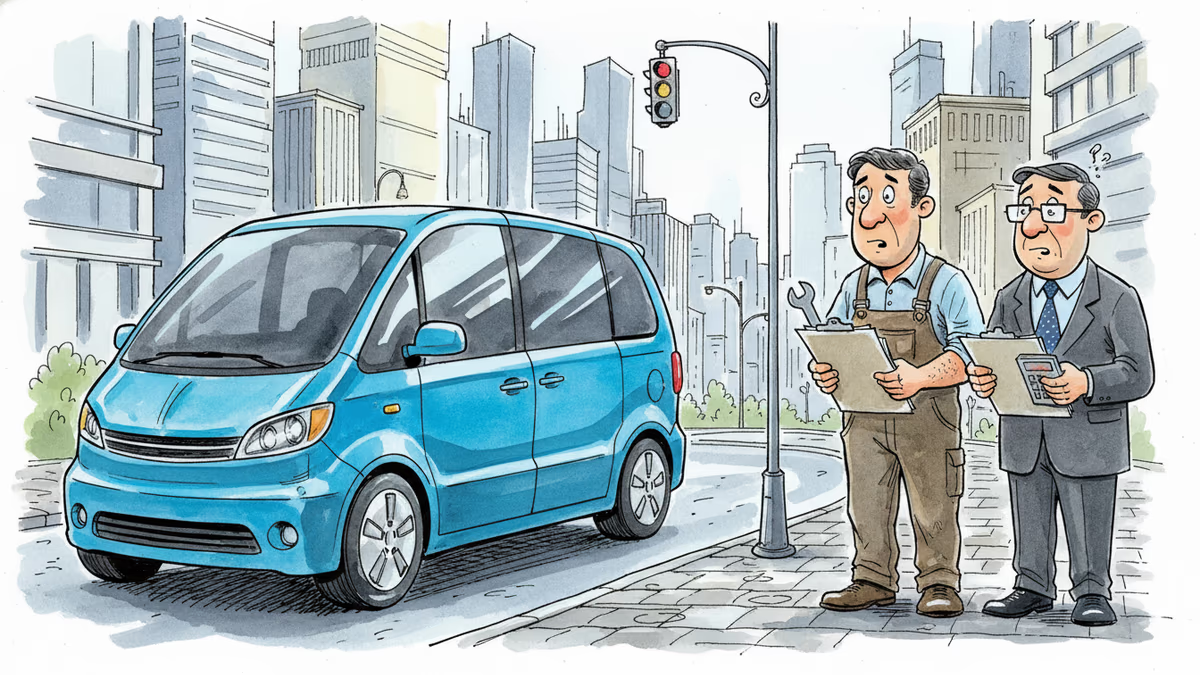
Waymo's new Ojai robotaxi isn't just a vehicle upgrade. It's the company's most serious attempt yet at cracking the cost problem that has kept autonomous vehicles from scaling. Here's what's really at stake.
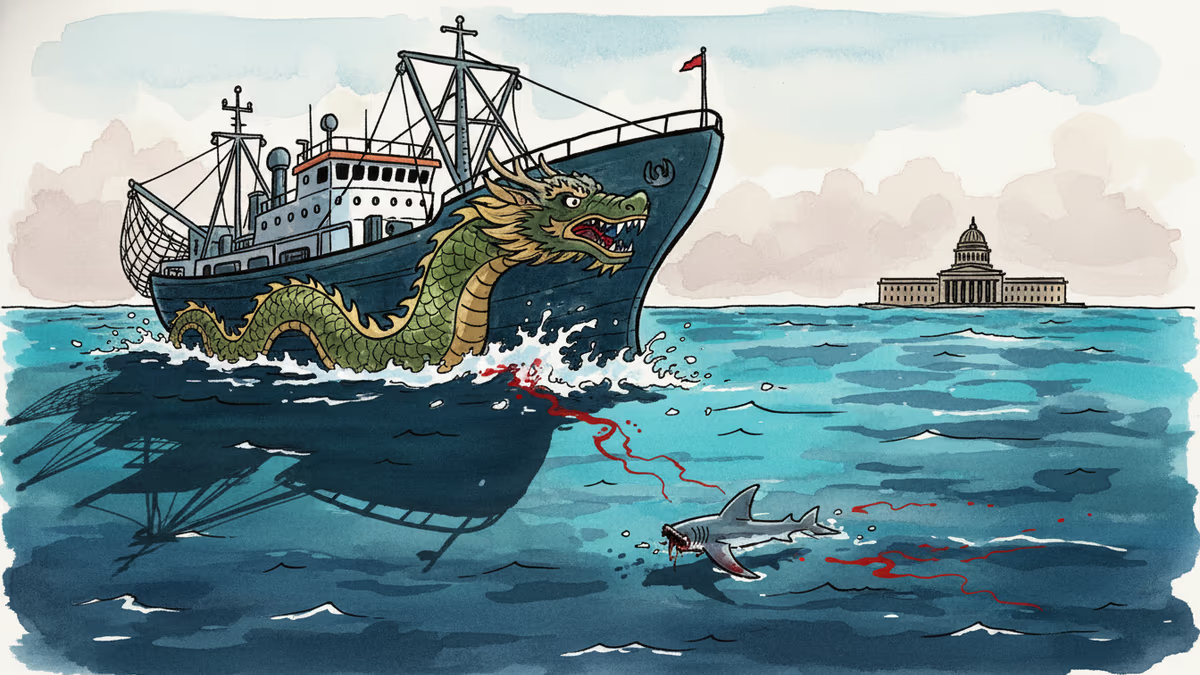
A U.S. nonprofit has petitioned the federal government to sanction China over shark finning. If upheld, it could trigger a ban on all Chinese seafood imports worth $1.5 billion annually.
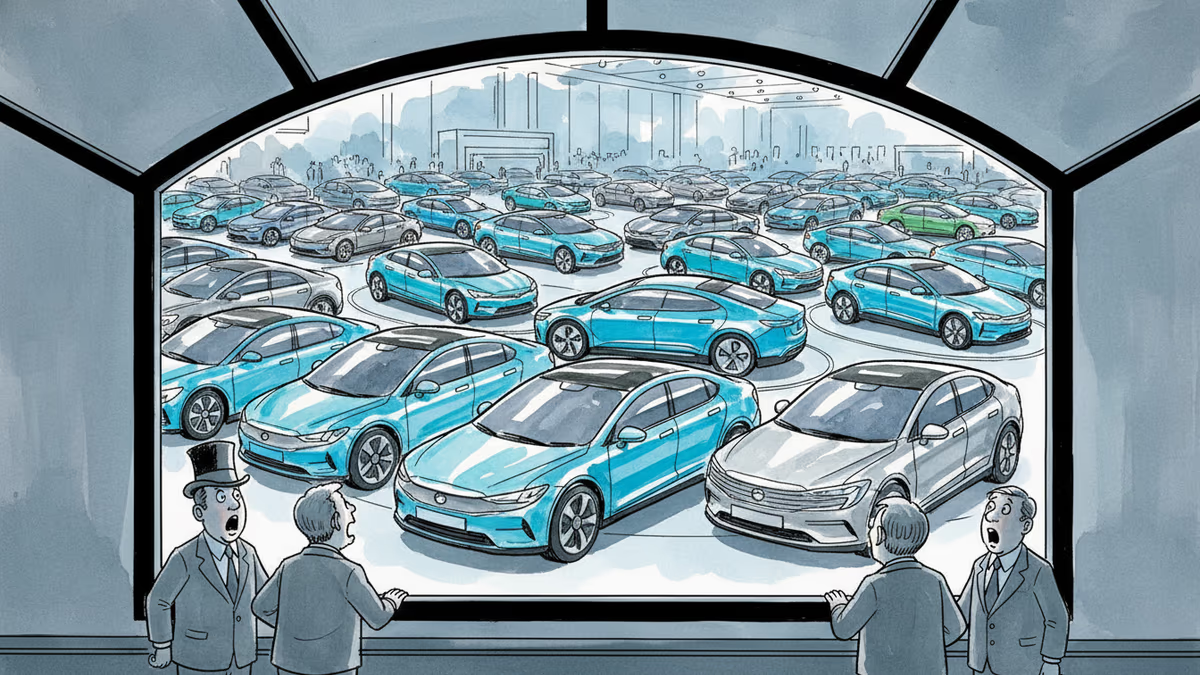
Auto China 2026 set records with 1,451 vehicles and 181 world premieres. But the real story isn't the size—it's how Chinese automakers stopped competing on price and started competing on brains.
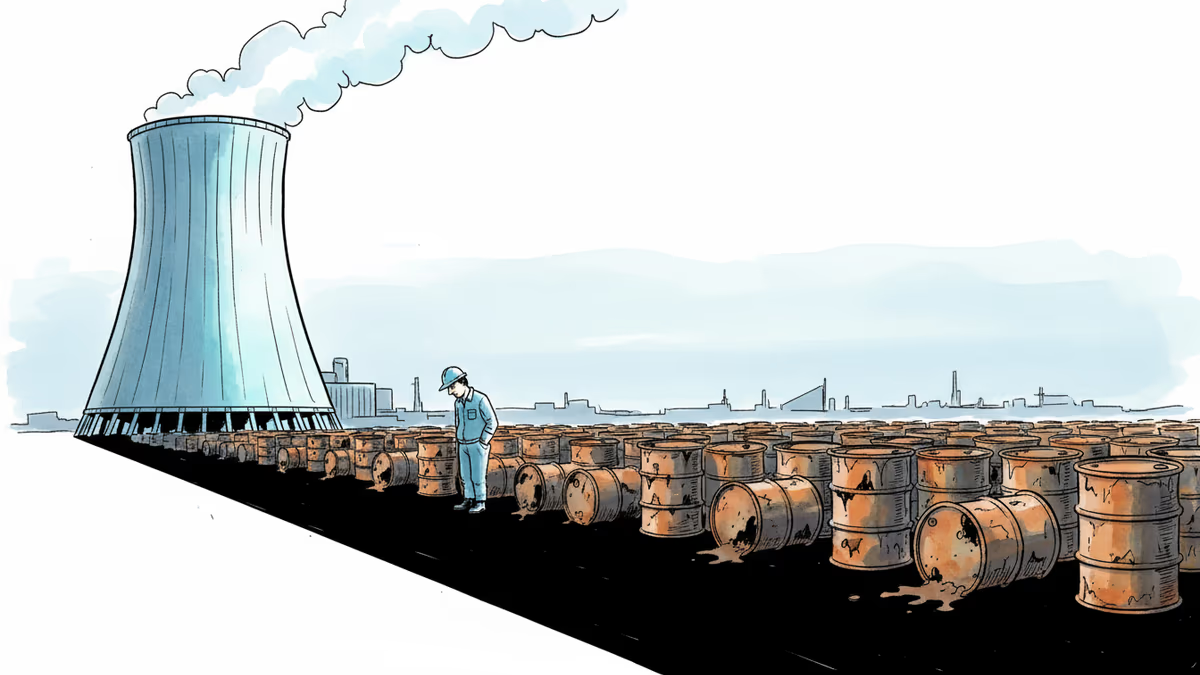
Nuclear power is winning fans across the political spectrum—and Big Tech is pouring billions in. But America still has no permanent home for the 2,000 metric tons of high-level waste its reactors produce every single year.
Waymo's new Ojai robotaxi isn't just a vehicle upgrade. It's the company's most serious attempt yet at cracking the cost problem that has kept autonomous vehicles from scaling. Here's what's really at stake.
A U.S. nonprofit has petitioned the federal government to sanction China over shark finning. If upheld, it could trigger a ban on all Chinese seafood imports worth $1.5 billion annually.
Auto China 2026 set records with 1,451 vehicles and 181 world premieres. But the real story isn't the size—it's how Chinese automakers stopped competing on price and started competing on brains.
Nuclear power is winning fans across the political spectrum—and Big Tech is pouring billions in. But America still has no permanent home for the 2,000 metric tons of high-level waste its reactors produce every single year.
Thoughts
Share your thoughts on this article
Sign in to join the conversation