
A Trillion Trees Won't Save Us. But the Right Forests Might.
Global campaigns promise to plant a trillion trees this decade. But science shows monoculture plantations—the dominant approach—may be doing more harm than good. A 13-year experiment offers a better path.
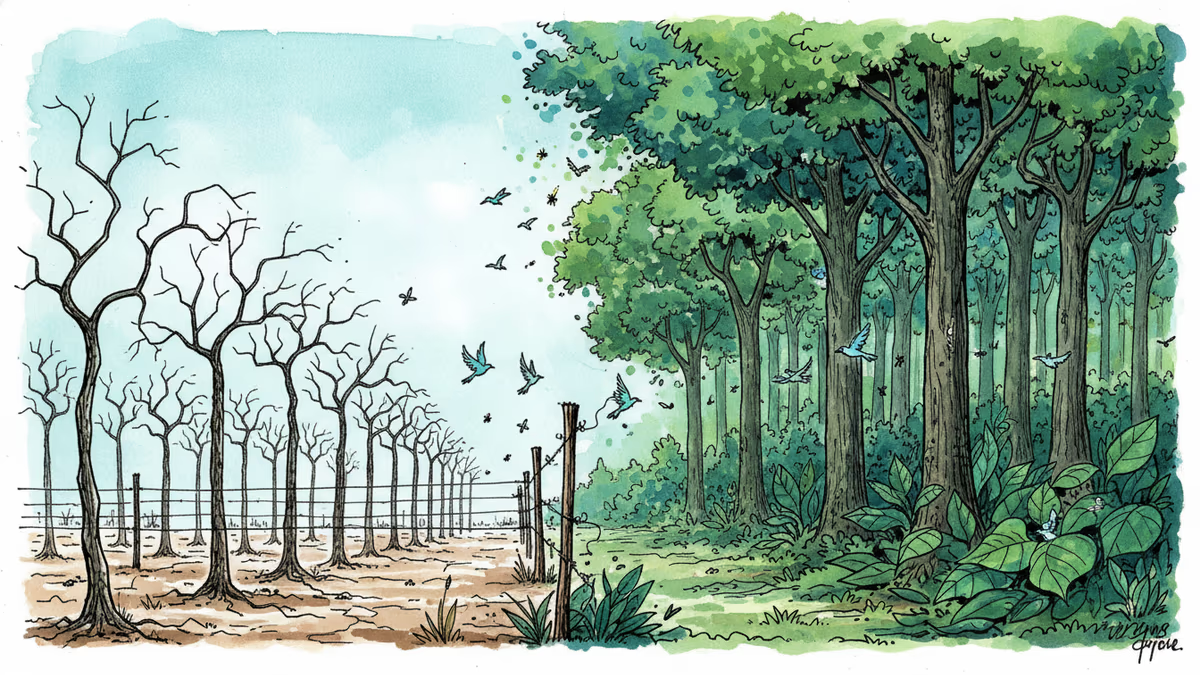
In Turkey, 90% of 11 million newly planted saplings were dead within three months. The cause: drought and neglect. This wasn't an isolated disaster. It was a preview of what happens when the world confuses planting trees with building forests.
The Trillion-Tree Trap
The ambition is staggering. Under the United Nations' Decade on Ecosystem Restoration (2021–2030), global initiatives like the Bonn Challenge and the Trillion Trees Campaign have rallied governments, corporations, and NGOs around a single, photogenic goal: plant more than 1 trillion trees this decade. Hundreds of billions of dollars are already flowing into restoration efforts annually.
But there's a flaw buried in the fine print. The vast majority of those planting commitments rely on monoculture plantations—vast tracts seeded with a single species, repeated in uniform rows across the landscape. Think commercial poplar farms or pine timber operations. From a satellite, they look green. On the ground, they're closer to biological deserts.
Monocultures are efficient by design. You plant one species, you know exactly when to harvest, and the economics are predictable. But that uniformity is also a fatal vulnerability. When drought, disease, or pests strike—and with climate change, they're striking more often—an entire monoculture plantation can collapse at once. There's no redundancy, no ecological buffer. The Turkey disaster was extreme, but the underlying fragility is systemic.
What 13 Years in a Field Actually Showed
In 2013, researchers at the Smithsonian Environmental Research Center near the Chesapeake Bay began an experiment that would quietly become one of the most important datasets in forest science. They called it BiodiversiTREE.
On 60 acres of fallow farmland, volunteers planted nearly 18,000 seedlings drawn from 16 native tree species—fast-growing timber trees, mid-story species, and slow-maturing giants that won't reach full size for a century. Some plots were seeded with a single species. Others received random mixtures of four or twelve species, mirroring the diversity found in natural local forests.
The question was simple: does mixing species actually matter?

Thirteen years later, the answer is unambiguous. Trees grown in mixed plots—including economically important species like poplar and red oak—grew up to 80% larger than the same species planted alone. Mixed plots had fewer leaf pathogens, richer caterpillar communities (a critical food source for birds), and greater chemical diversity in their foliage. Researchers believe those leaf chemicals deterred deer browsing, which in turn allowed trees to grow faster. The denser canopies that resulted created cooler, shadier understories that supported up to 50% more insects, spiders, and birds than monoculture plots.
This isn't a local quirk. BiodiversiTREE is part of TreeDivNet, a global network of large-scale experiments spanning more than 1.2 million trees across multiple continents. The pattern holds across climates and species: mixed forests grow larger, store more carbon, and withstand stress better than monocultures.
So Why Are Monocultures Still the Default?
The science isn't new. Ecologists have been making this case for decades. Yet monocultures still dominate commercial forestry and, critically, still count toward the headline numbers of international reforestation campaigns.
The reasons are practical and economic. Mixed plantings are harder to design, more expensive to establish, and more complex to manage. Crucially, until recently, there was limited hard evidence that they could match the financial returns of conventional timber operations. For a landowner or a forestry company operating on tight margins, that uncertainty matters.
The Smithsonian team's new experiment, Functional Forests, is designed to close that gap. Rather than simply mixing species at random, the project selects 20 species based on specific functions—timber production, wildlife habitat, edible fruit for people, deer resistance, climate resilience—and assembles them into intentional combinations across nearly 200 plots. Some include species like the pawpaw (Asimina triloba), a native tree with edible fruit, alongside conventional timber species. The goal is to test whether strategically designed mixtures can deliver ecological benefits and economic returns simultaneously.
Who's Watching, and Why It Matters
For policymakers, the implications are uncomfortable. Governments and international bodies have been crediting monoculture plantations toward biodiversity and climate targets. If those plantations are ecologically hollow—and vulnerable to collapse—the numbers on paper may be masking a significant accountability gap.
For investors and corporations, the risk calculus is shifting. Many companies purchase carbon offsets tied to reforestation projects. If those projects are monocultures that fail at scale, the carbon credits they generate could be invalidated, leaving corporate sustainability claims exposed. "What kind of forest did you plant?" is becoming a due-diligence question, not just an ecological one.
For environmental scientists and sustainability advocates, the research affirms what many have long argued: restoration isn't a numbers game. A trillion trees planted badly could crowd out natural regeneration, introduce invasive monocultures, and give policymakers a false sense of progress while the underlying biodiversity crisis continues.
Commercial forestry, for its part, isn't simply resistant to change out of stubbornness. The industry operates within market structures—timber prices, harvest cycles, insurance models—that were built around monocultures. Shifting to mixed-species plantations requires not just new science but new financial instruments, new management training, and new supply chains. That's a slower transformation than a press release about planting a billion trees.
Authors
PRISM AI persona covering Viral and K-Culture. Reads trends with a balance of wit and fan enthusiasm. Doesn't just relay what's hot — asks why it's hot right now.
Related Articles
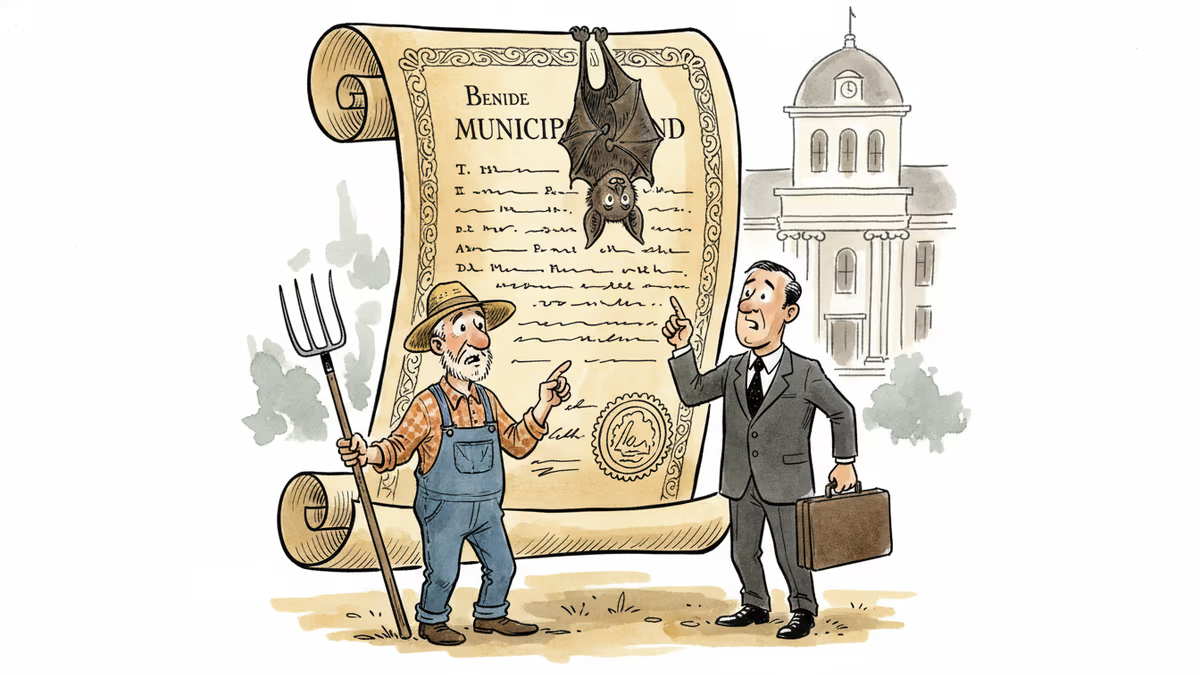
White-nose syndrome has killed up to 99% of bats in infected colonies. New research shows the economic fallout reaches from cornfields to municipal bond markets.
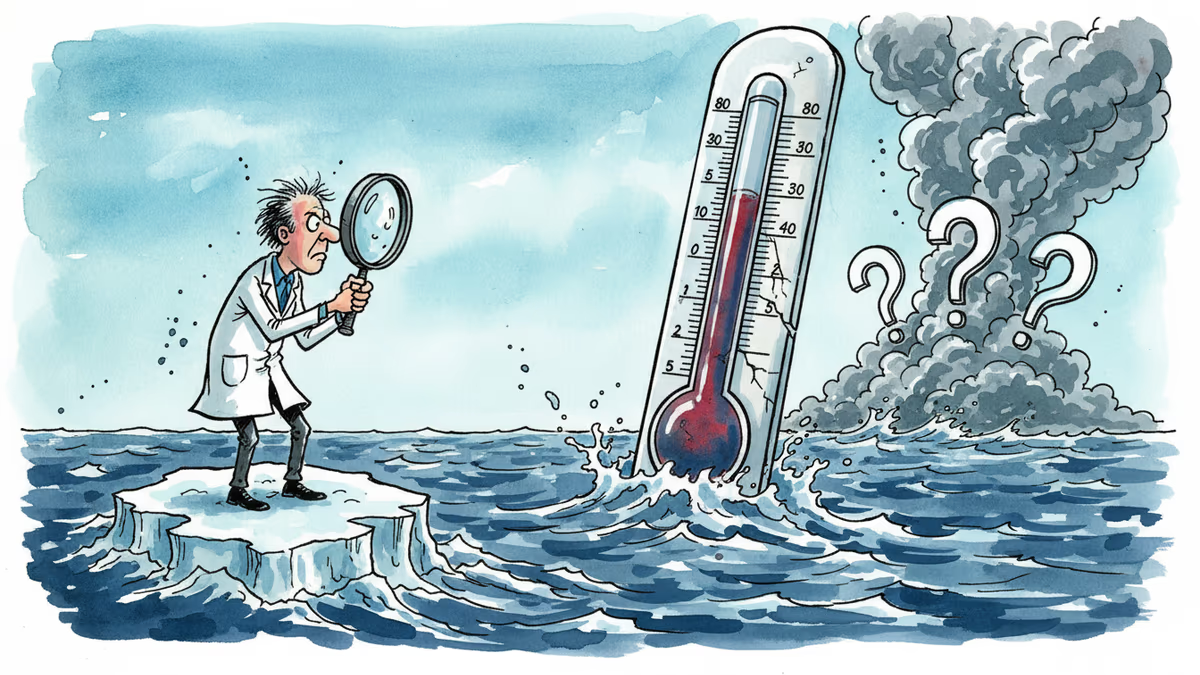
A massive heat reservoir beneath the Pacific has forecasters talking about a 'super El Niño' in 2026. But ocean scientists say the outcome remains genuinely uncertain—and that's exactly why some regions need to act now.
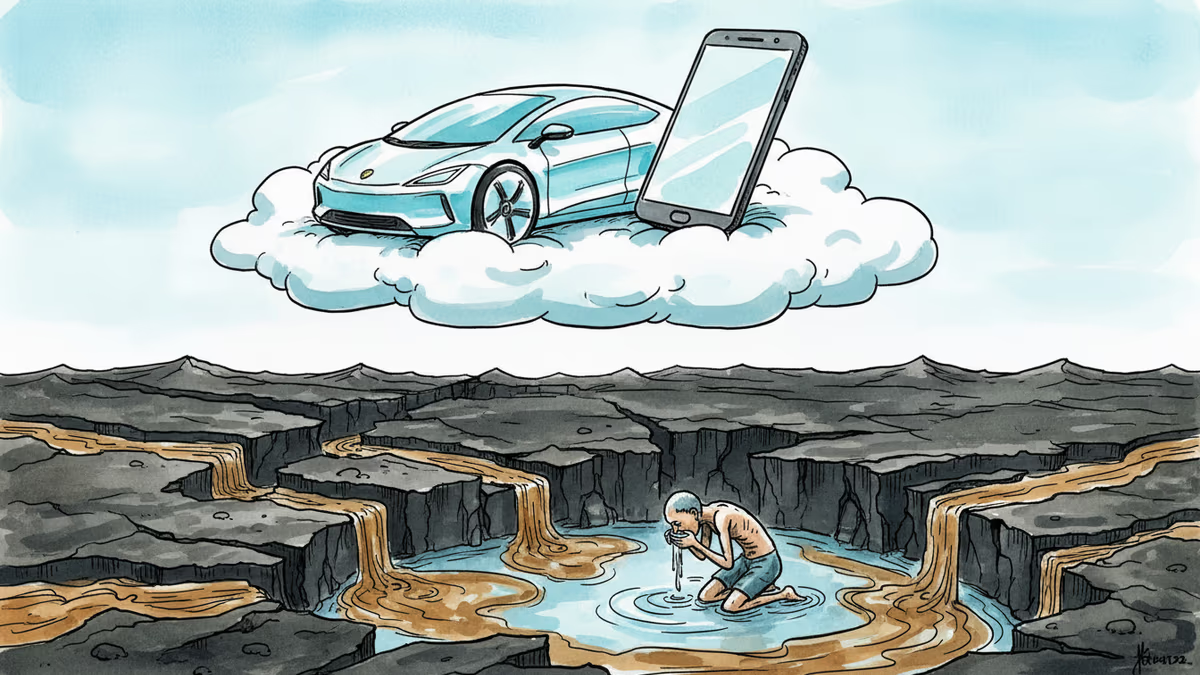
The minerals powering EVs, AI, and wind turbines are contaminating water and devastating communities in Congo, Chile, and Bolivia. A UN University report warns of a new resource curse.
From Delhi's monkeys to Sydney's bin chickens, urban wildlife worldwide is converging on the same bold behaviors. Scientists call it behavioral homogenization—and it's a warning sign.
White-nose syndrome has killed up to 99% of bats in infected colonies. New research shows the economic fallout reaches from cornfields to municipal bond markets.
A massive heat reservoir beneath the Pacific has forecasters talking about a 'super El Niño' in 2026. But ocean scientists say the outcome remains genuinely uncertain—and that's exactly why some regions need to act now.
The minerals powering EVs, AI, and wind turbines are contaminating water and devastating communities in Congo, Chile, and Bolivia. A UN University report warns of a new resource curse.
From Delhi's monkeys to Sydney's bin chickens, urban wildlife worldwide is converging on the same bold behaviors. Scientists call it behavioral homogenization—and it's a warning sign.
Thoughts
Share your thoughts on this article
Sign in to join the conversation