
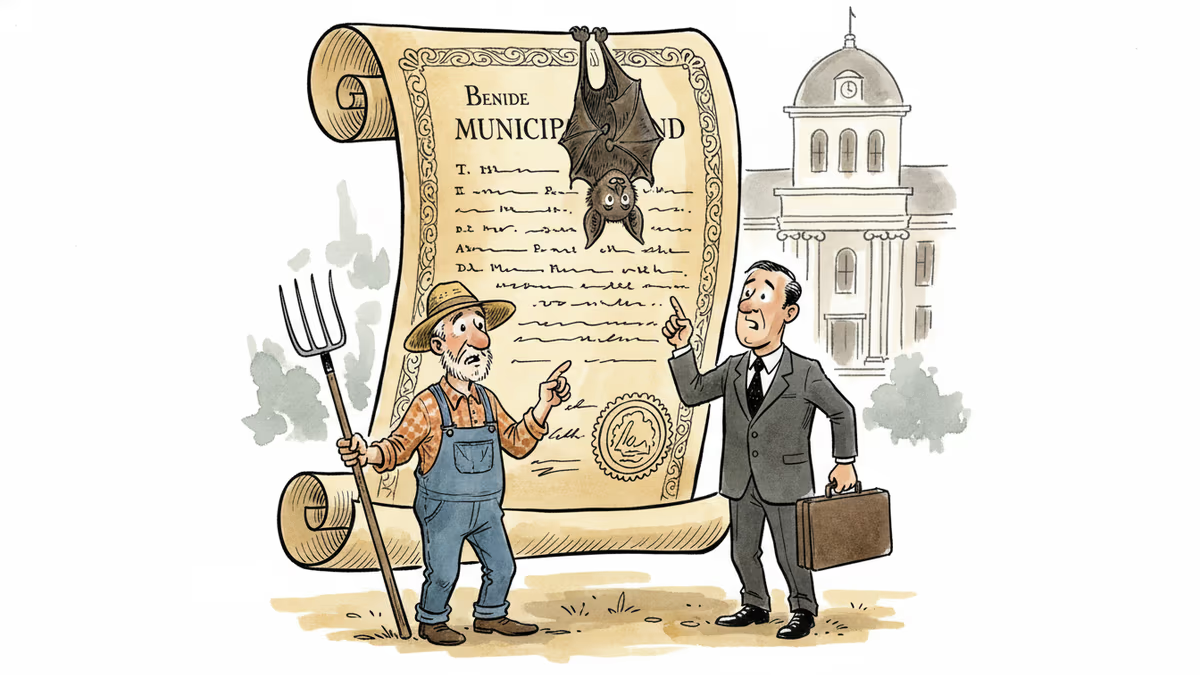
When Bats Die, Bond Markets Pay
White-nose syndrome has killed up to 99% of bats in infected colonies. New research shows the economic fallout reaches from cornfields to municipal bond markets.
A bat dies in a cave in upstate New York. A rural county in the Midwest pays more to borrow money. These two events are connected — and the chain between them is shorter than most people realize.
That's not a metaphor. It's the finding of researchers at Yale University, who traced the economic ripple effects of white-nose syndrome — a fungal disease decimating bat populations across North America — all the way from infected caves to municipal bond markets.
The Invisible Workforce Underground
Bats don't show up in GDP statistics, but they do a lot of economic heavy lifting. They pollinate crops, fertilize soil with their guano, and eat insects — enormous quantities of them.
A reproductive female big brown bat can consume her entire body weight in insects on a single summer night. A colony of just 150 big brown bats eats 600,000 cucumber beetles in a year. That matters because cucumber beetles are the adult form of rootworm — the single most destructive corn pest in the United States. Rootworm destroys more than 340 million bushels of corn annually across the Midwest and South, even as farmers spend $1 billion per year on pesticides trying to control it.
Remove the bats, and that natural pest control disappears. The insects don't disappear with them.
A Fungus Crosses a Continent
In the winter of 2006, a fungus called Pseudogymnoascus destructans was detected in a cave near Albany, New York. Nobody paid much attention at the time. Within two decades, it had spread to 47 states, reaching California, Washington, and Oregon as of March 2026.
The disease it causes — white-nose syndrome — is devastating. It wakes bats from hibernation too early, burning through their fat reserves until they starve. Studies found it killed between 30% and 99% of bats in infected colonies. Twelve species have been affected; three are now listed as endangered. The fungus spreads mainly through bat-to-bat contact, though cave explorers inadvertently carry it on their gear from one cave to the next.

State and federal wildlife agencies have restricted cave access and coordinated containment efforts. The fungus kept spreading anyway.
From Farm to County Hall to Wall Street
The agricultural fallout was the first thing researchers measured. After white-nose syndrome arrives in an area, crop yields fall as pest populations rise. Farmers buy more pesticides — costs up, revenues down. By 2017, the estimated annual agricultural losses from white-nose syndrome exceeded $420 million.
But the Yale research team — economists Eli Fenichel, Anya Nakhmurina, and Dale Manning — followed the money further.
Every U.S. county taxes agricultural land based on its productive value. When bat populations crash and farm profitability drops, the tax base shrinks. Rural counties, where agriculture dominates the property tax rolls, feel this acutely. The researchers found that rural counties lost nearly $150 per person in annual revenue after white-nose syndrome arrived — roughly $2.7 million per year for an average-sized rural county.
That revenue loss forces a familiar set of bad choices: cut services, raise taxes, or borrow. When counties borrow, they issue municipal bonds — and that's where the story reaches financial markets.
Investors buying municipal bonds are essentially lending money to county governments. The interest rate reflects perceived risk. After white-nose syndrome arrives, that risk goes up. The researchers found that affected counties paid about 0.1147 percentage points more in interest — a figure that sounds trivial until you do the math. That's 27% larger than the typical risk premium investors already demand from county governments. On a standard 15-year, $1 million bond, borrowing costs rise by more than $33,000. Investors discount the same bond's value by nearly $14,000.
Pension funds hold municipal bonds. The death of bats in a cave is not as distant from retirement portfolios as it might seem.
The Case for Bat Conservation as Investment
The researchers are careful to frame this not just as a warning but as an opportunity. Healthy bat populations generate measurable financial returns for farmers, local governments, and bond investors alike. Conservation, in this framing, isn't charity — it's a recoverable asset.
Several approaches are being tested. The U.S. Geological Survey and partners are trialing a fungal vaccine for white-nose syndrome. Artificial roost designs and expanded cave protections can help preserve surviving colonies. Scientists are also studying natural disease resistance in some bat populations to understand whether selective breeding or habitat management could stabilize numbers without a vaccine.
None of these is a quick fix. But the economic logic for investing in them is now quantified.
This content is AI-generated based on source articles. While we strive for accuracy, errors may occur. We recommend verifying with the original source.
Related Articles
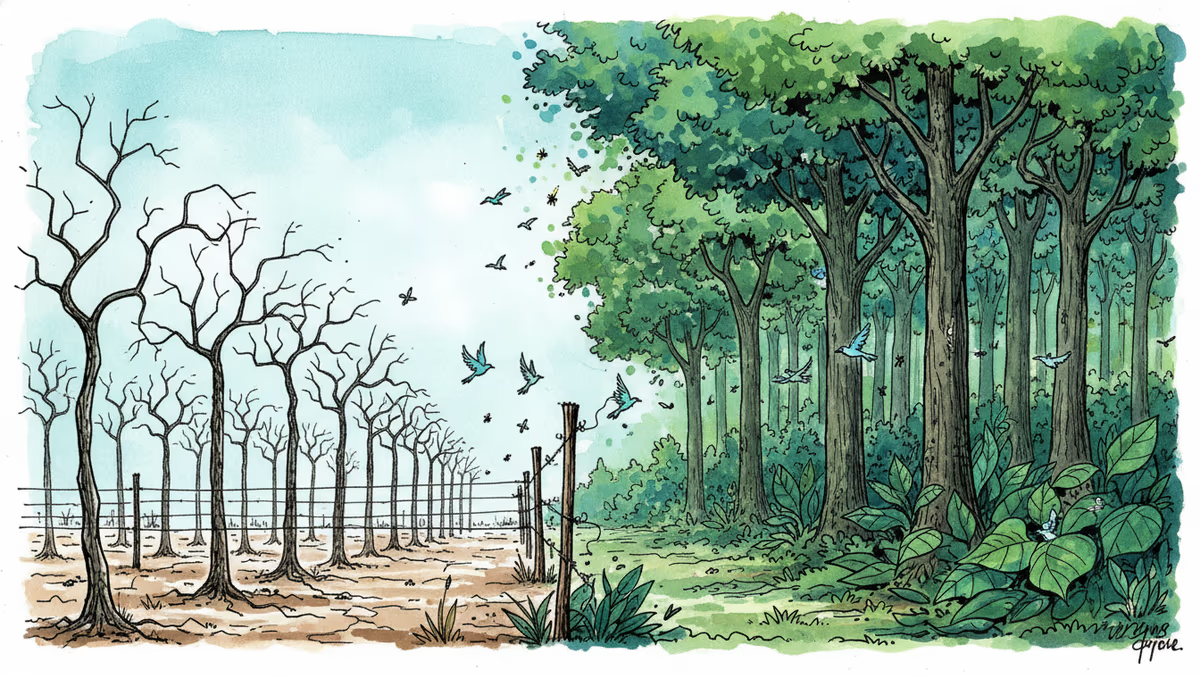
Global campaigns promise to plant a trillion trees this decade. But science shows monoculture plantations—the dominant approach—may be doing more harm than good. A 13-year experiment offers a better path.
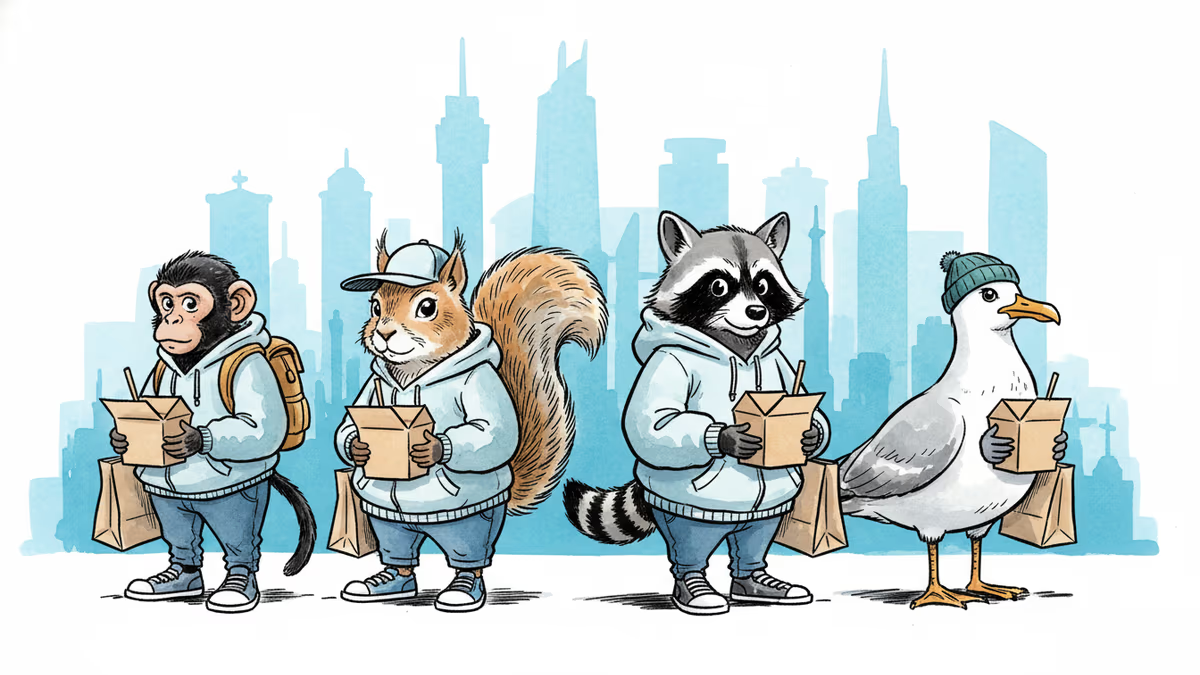
From Delhi's monkeys to Sydney's bin chickens, urban wildlife worldwide is converging on the same bold behaviors. Scientists call it behavioral homogenization—and it's a warning sign.
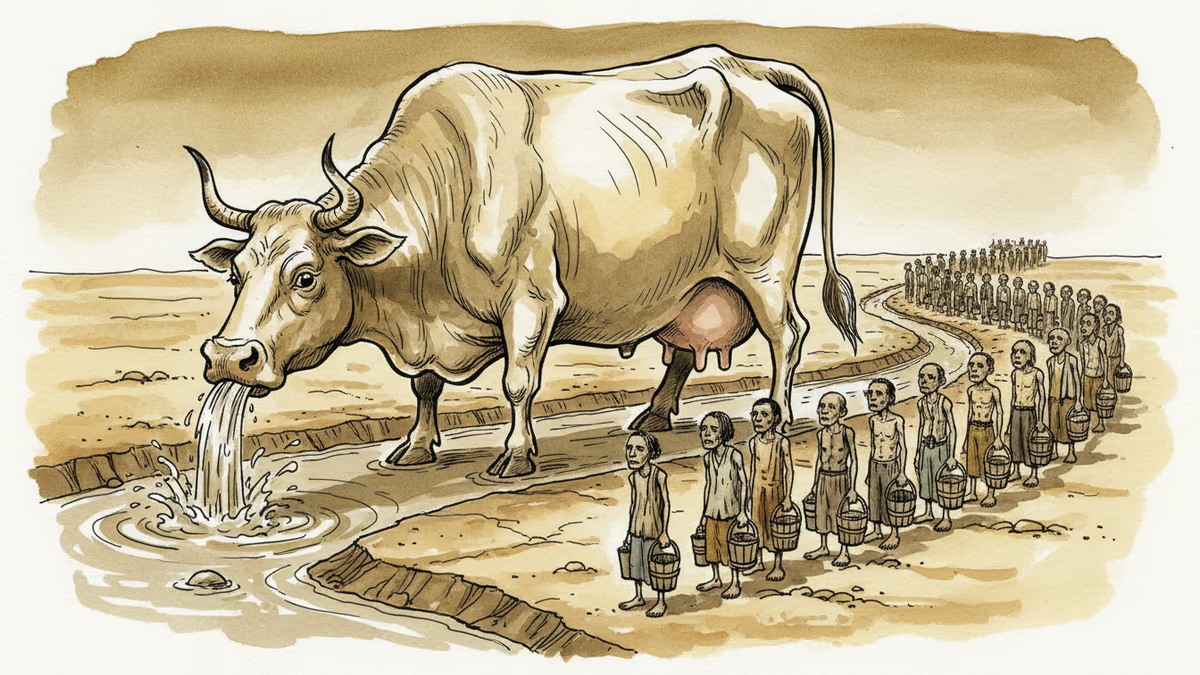
The real culprit behind Western water crisis isn't golf courses or lawns—it's livestock. Nearly 47% of Colorado River water feeds cattle while cities ration supplies.
California's first wolf killings in over a century highlight the complex reality of successful species recovery. When conservation success creates new conflicts, who pays the price?
Global campaigns promise to plant a trillion trees this decade. But science shows monoculture plantations—the dominant approach—may be doing more harm than good. A 13-year experiment offers a better path.
From Delhi's monkeys to Sydney's bin chickens, urban wildlife worldwide is converging on the same bold behaviors. Scientists call it behavioral homogenization—and it's a warning sign.
The real culprit behind Western water crisis isn't golf courses or lawns—it's livestock. Nearly 47% of Colorado River water feeds cattle while cities ration supplies.
California's first wolf killings in over a century highlight the complex reality of successful species recovery. When conservation success creates new conflicts, who pays the price?
Thoughts
Share your thoughts on this article
Sign in to join the conversation