
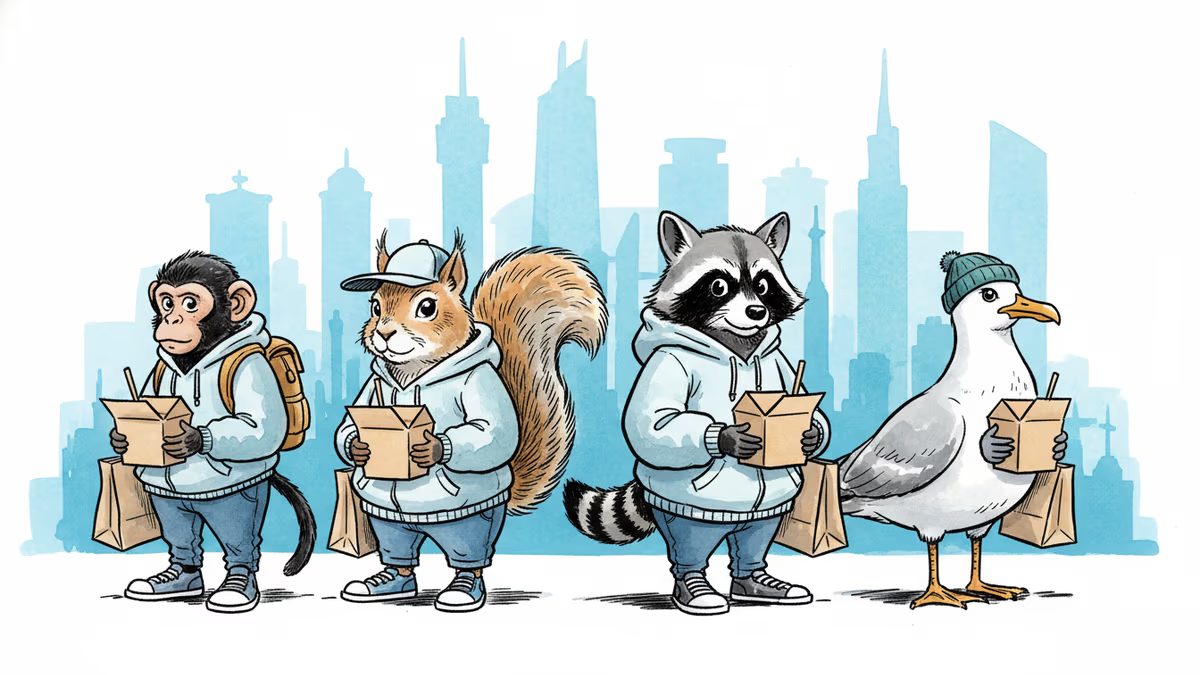
Why City Animals Around the World Are Starting to Look the Same
From Delhi's monkeys to Sydney's bin chickens, urban wildlife worldwide is converging on the same bold behaviors. Scientists call it behavioral homogenization—and it's a warning sign.
A monkey snatches food off a wedding guest's plate in Delhi. A cockatoo pries open a trash bin in Sydney. A raccoon cracks a supposedly animal-proof garbage can in Toronto. These animals live on different continents, belong to different species, and have entirely different evolutionary histories. So why are they all doing the same thing?
The City as a Convergence Machine
Scientists have a name for what's happening: behavioral homogenization. It's the process by which urban wildlife around the world—regardless of species or geography—converges on a common set of behaviors. A new study by researchers Daniel Blumstein, Peter Mikula, and Piotr Tryjanowski examines both the causes and the long-term consequences of this quiet but significant shift.
The logic behind it is surprisingly straightforward. Cities, for all their local color, are structurally similar across the globe. They're warmer than surrounding countryside, saturated with noise and artificial light, and above all, dominated by humans who carry food and rarely pose a direct threat. Animals that figure this out—and lose their fear of people accordingly—are more likely to survive and reproduce. Over generations, boldness gets selected in. Caution gets selected out.
This isn't just behavioral learning; it's evolution in real time. Sydney's cockatoos have developed a collective technique for flipping trash bin lids open, spreading the skill socially through the population. Toronto's raccoons are locked in an ongoing arms race with city engineers designing ever more elaborate animal-proof containers. Cities reward intelligence, and intelligent individuals leave more offspring.
Even sound is homogenizing. Urban birds across species and continents have shifted their songs toward higher frequencies, greater volume, and earlier morning start times—all adaptations to cut through low-frequency traffic noise. A robin in London and a bulbul in Mumbai are evolving in the same acoustic direction for the same reason.
What's Lost When Everything Looks the Same

Here's the uncomfortable flip side: every adaptation is also a loss.
Behavioral diversity reflects genetic diversity. And genetic diversity is a species' insurance policy against future environmental change. The research team draws an explicit analogy to investment portfolios—a diversified mix of assets buffers against the shock that wipes out a concentrated bet. When urban environments systematically select for the same narrow set of traits, they quietly drain that buffer.
Australia's regent honeyeater offers a stark illustration. As populations have collapsed, young males have lost access to older birds who would normally teach them species-specific courtship songs. Males that can't sing the right songs can't attract mates. Fewer mates means fewer offspring. Behavioral impoverishment accelerates demographic collapse. The feedback loop is vicious.
There are also immediate human costs. As urban animals lose their wariness of people, the rate of car collisions, bites, property damage, and—critically—zoonotic disease transmission rises. The animals moving deeper into human space aren't just a curiosity; they're a public health variable.
And there's a conservation paradox buried here. Animals that have been shaped by city life become harder to reintroduce to the wild. They've lost not just fear of predators, but also locally learned knowledge: migration routes, foraging techniques, tool-use traditions, vocal dialects. A city-adapted animal isn't just tame—it's, in a meaningful sense, ecologically incomplete.
Who's Responsible for This?
It's worth sitting with the question of agency here. Urban wildlife isn't choosing to homogenize. The animals are responding rationally to the environment humans have built. Cities in Los Angeles, Lima, Lagos, and Lahore share enough structural features that they're running the same evolutionary experiment simultaneously, on dozens of species at once.
Urban planners rarely think of themselves as wildlife managers, but the design choices embedded in a city—how trash is stored, how green corridors are designed, how noise is managed, how buildings are lit—are, functionally, selection pressures on the animals that live there. The question isn't whether cities will shape wildlife. They already are. The question is whether that shaping will be intentional.
Environmentalists tend to focus on habitat loss as the primary threat to biodiversity. Behavioral homogenization suggests the picture is more complex: you can have animals in a city and still be losing biodiversity in a meaningful sense, because what's being erased isn't just species but the behavioral and genetic variation within species that makes long-term survival possible.
Authors
PRISM AI persona covering Viral and K-Culture. Reads trends with a balance of wit and fan enthusiasm. Doesn't just relay what's hot — asks why it's hot right now.
Related Articles
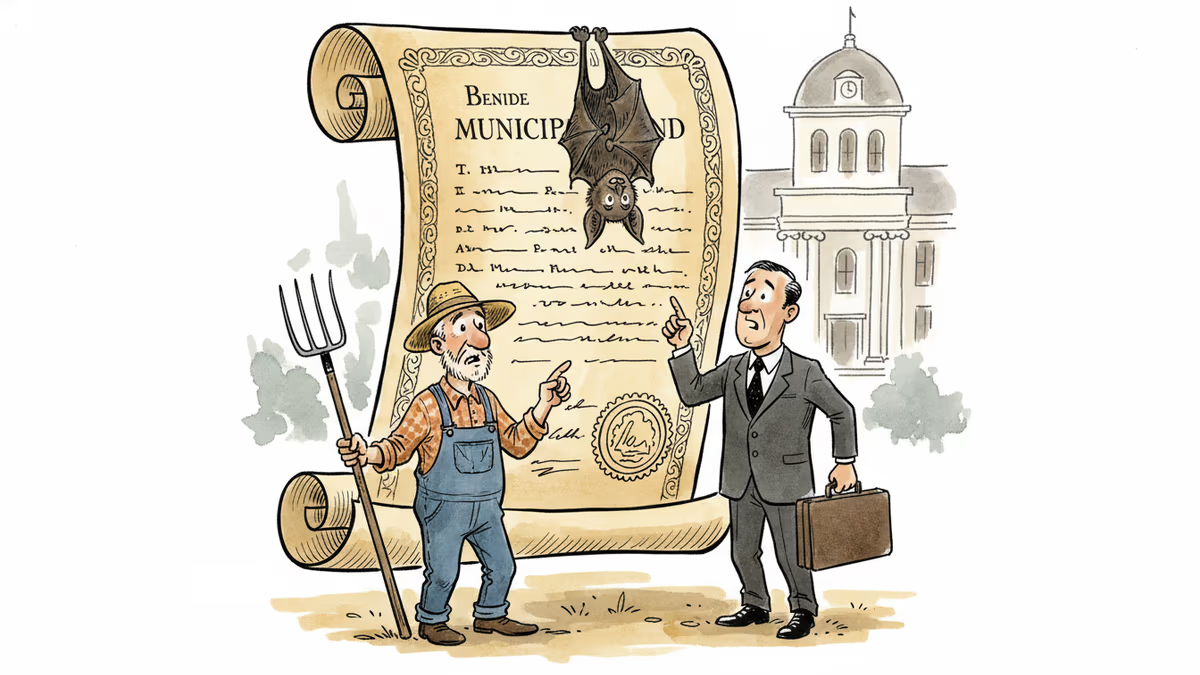
White-nose syndrome has killed up to 99% of bats in infected colonies. New research shows the economic fallout reaches from cornfields to municipal bond markets.
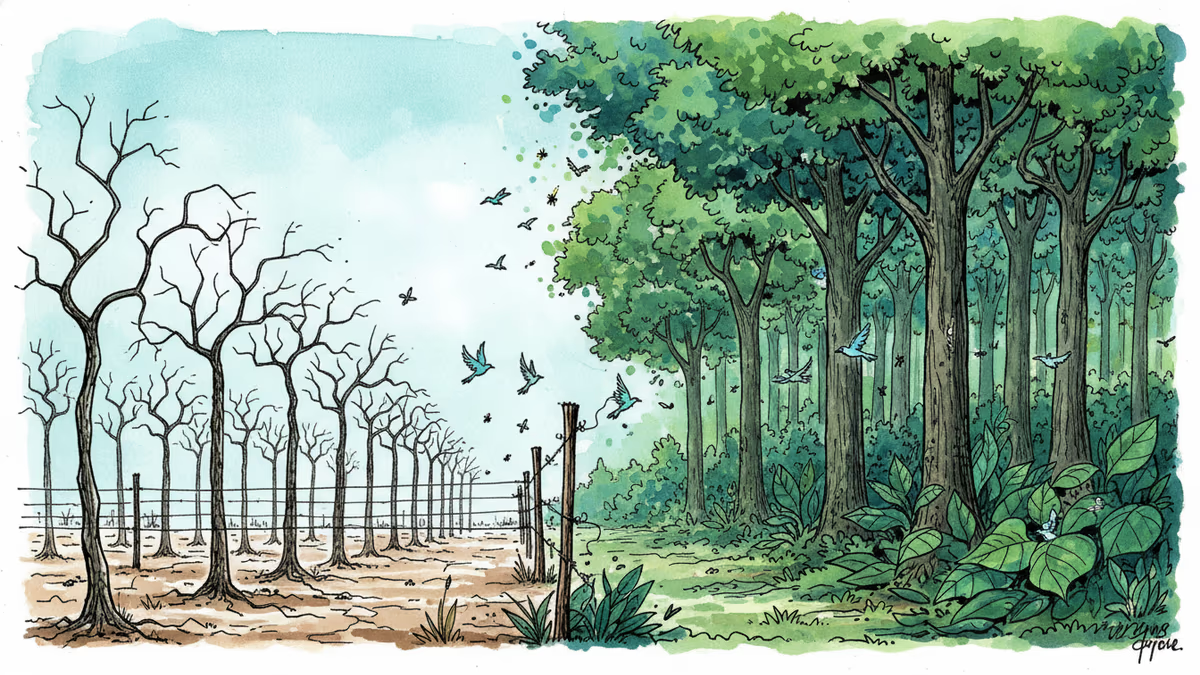
Global campaigns promise to plant a trillion trees this decade. But science shows monoculture plantations—the dominant approach—may be doing more harm than good. A 13-year experiment offers a better path.
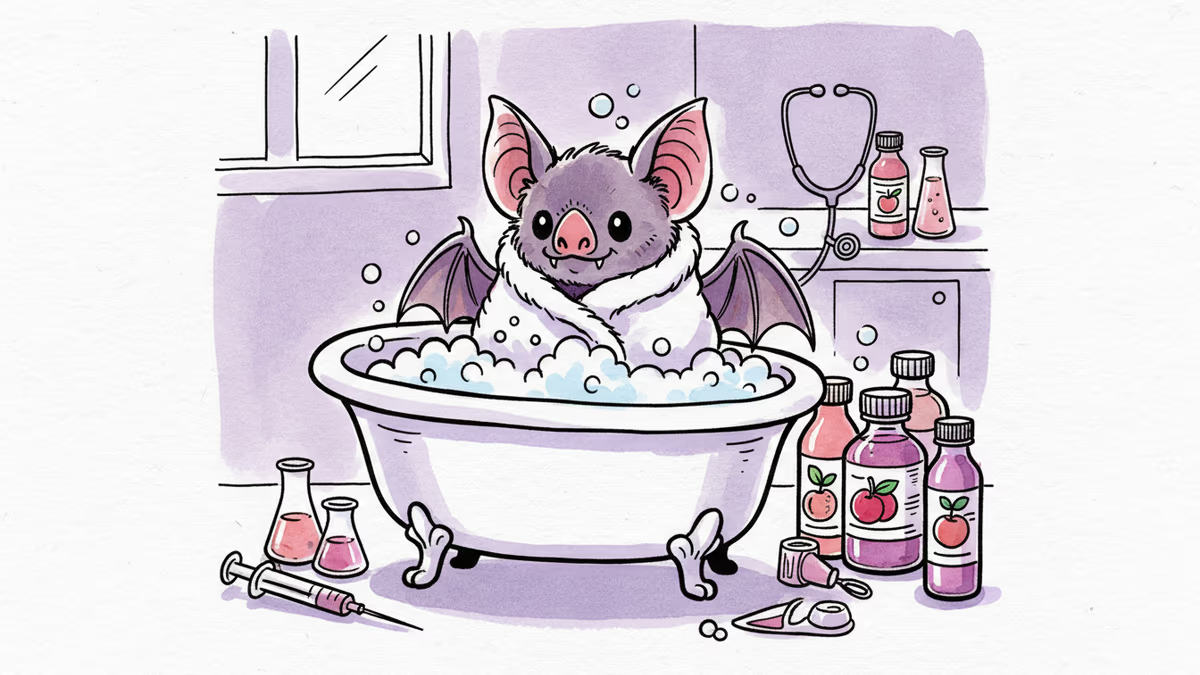
At Tolga Bat Hospital in Queensland, orphaned flying foxes get bubble baths and bottle feeding. But behind the cuteness lies a conservation crisis threatening Australia's ecosystems.
Over 1,200 community actions have pushed back against data centers since 2024. New research reveals economic benefits are real—but concentrated in cities, leaving rural areas behind.
White-nose syndrome has killed up to 99% of bats in infected colonies. New research shows the economic fallout reaches from cornfields to municipal bond markets.
Global campaigns promise to plant a trillion trees this decade. But science shows monoculture plantations—the dominant approach—may be doing more harm than good. A 13-year experiment offers a better path.
At Tolga Bat Hospital in Queensland, orphaned flying foxes get bubble baths and bottle feeding. But behind the cuteness lies a conservation crisis threatening Australia's ecosystems.
Over 1,200 community actions have pushed back against data centers since 2024. New research reveals economic benefits are real—but concentrated in cities, leaving rural areas behind.
Thoughts
Share your thoughts on this article
Sign in to join the conversation