
The Hidden Price Tag on Every Green Device
The minerals powering EVs, AI, and wind turbines are contaminating water and devastating communities in Congo, Chile, and Bolivia. A UN University report warns of a new resource curse.
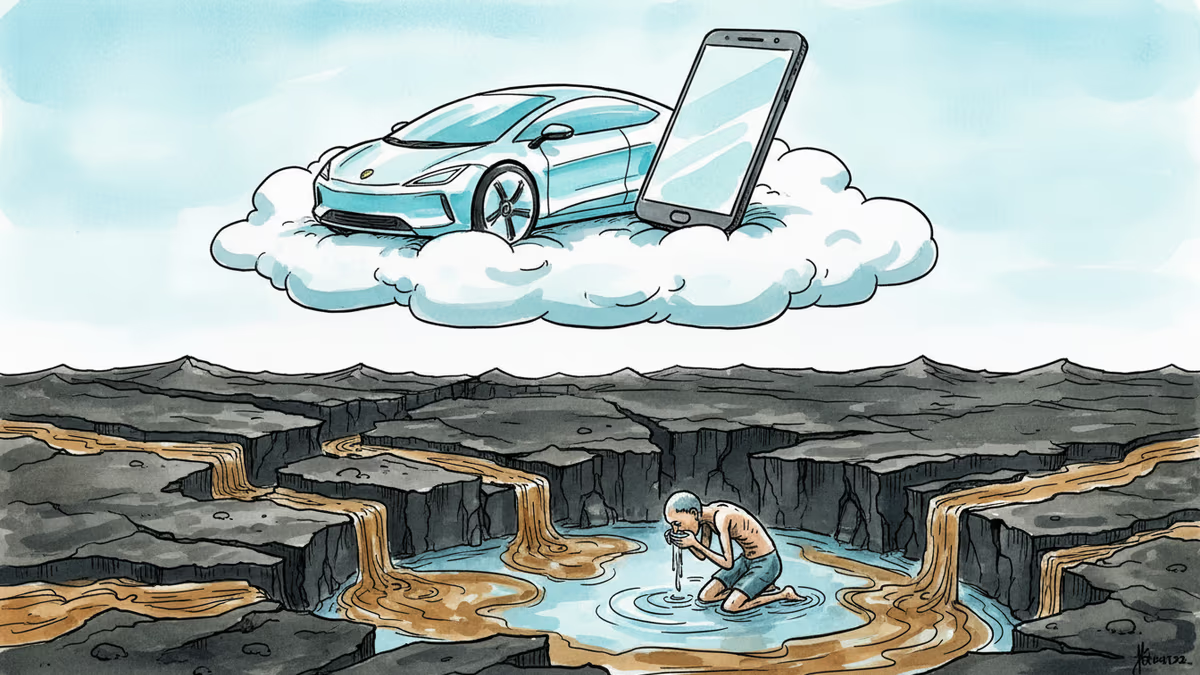
In 2024, extracting the world's lithium consumed an estimated 456 billion liters of water — enough to meet the annual drinking needs of 62 million people in sub-Saharan Africa. The batteries that power your EV, your laptop, your phone: they're all drinking someone else's water.
The Minerals Beneath the Green Dream
Lithium powers batteries. Cobalt stabilizes them. Copper carries electricity. Rare earth elements make wind turbines spin efficiently and keep digital devices running. These aren't optional ingredients — they're the foundation of what researchers call the fourth industrial revolution, the technological shift that's supposed to save us from fossil fuels.
But a new report from the United Nations University Institute for Water, Environment and Health (UNU-INWEH) lays out a troubling paradox: the very materials enabling a cleaner future are poisoning the water, land, and bodies of some of the world's most vulnerable communities.
In Chile's Salar de Atacama, mining accounts for up to 65% of total regional water use, draining groundwater and shrinking salt lagoons. Rare earth production generates up to 2,000 metric tons of waste for every single metric ton of usable material. Rivers near cobalt and copper mines in parts of Congo and Zambia have turned so acidic that communities can no longer drink from them.
A Health Crisis Hidden in Your Supply Chain
The human toll is where the numbers become hardest to read.

Maternity wards in southern Democratic Republic of the Congo located near mining operations report significantly higher rates of birth defects than those farther away. Women living near cobalt and copper sites describe gynecological disorders, miscarriages, and infertility linked to prolonged contact with contaminated water. Tens of thousands of children are estimated to work in artisanal cobalt mines, exposed to hazardous dust without protective gear. As of 2024, only about one-third of DRC's population has access to even basic drinking water services.
In Chile's Antofagasta region — one of the world's premier copper-mining zones — cancer mortality is the highest in the country. Lung cancer rates run at nearly three times the national average. Local physicians connect rising neurological and developmental disorders to early exposure to contaminated water and air.
Food systems are under pressure too. In Peru, zinc mining has contaminated the Cunas watershed, threatening irrigation and livestock water. In Bolivia's Uyuni region, lithium extraction is making it increasingly difficult to grow quinoa — a dietary and economic staple. Across the broader "lithium triangle" of Argentina, Chile, and Bolivia, farming communities are caught between a global energy transition and their own survival.
The Oil Curse, Repackaged
The two researchers behind this report bring an uncomfortable historical lens to the data. One comes from the Middle East — a region still living with the long-term consequences of supplying the oil that fueled 20th-century prosperity. The other comes from Africa, the continent now serving as a primary supplier of the minerals fueling 21st-century technological advancement.
Their central argument isn't that mining should stop. It's that without binding international rules, enforceable supply chain due-diligence laws, and genuine power-sharing with local communities, humanity is on track to reproduce the injustices of the oil era — this time under the banner of sustainability.
The voluntary guidelines that currently govern much of the critical minerals industry aren't working. The researchers call for binding international treaties, mandatory environmental and human rights standards, water-efficient mining technologies, independent monitoring, and — more ambitiously — a potential global mineral trust that would treat these resources as shared planetary assets rather than private extraction opportunities.
For consumers and investors, the implications are real. The EU's Corporate Sustainability Due Diligence Directive (CSDDD) is already pushing companies to audit their supply chains for human rights and environmental violations. Similar pressure is building in the US and UK. Companies that can't account for what happens at the mine face growing regulatory and reputational risk. And as recycling technology improves and circular economy policies tighten, the economics of newly mined minerals may shift faster than many expect.
This content is AI-generated based on source articles. While we strive for accuracy, errors may occur. We recommend verifying with the original source.
Related Articles
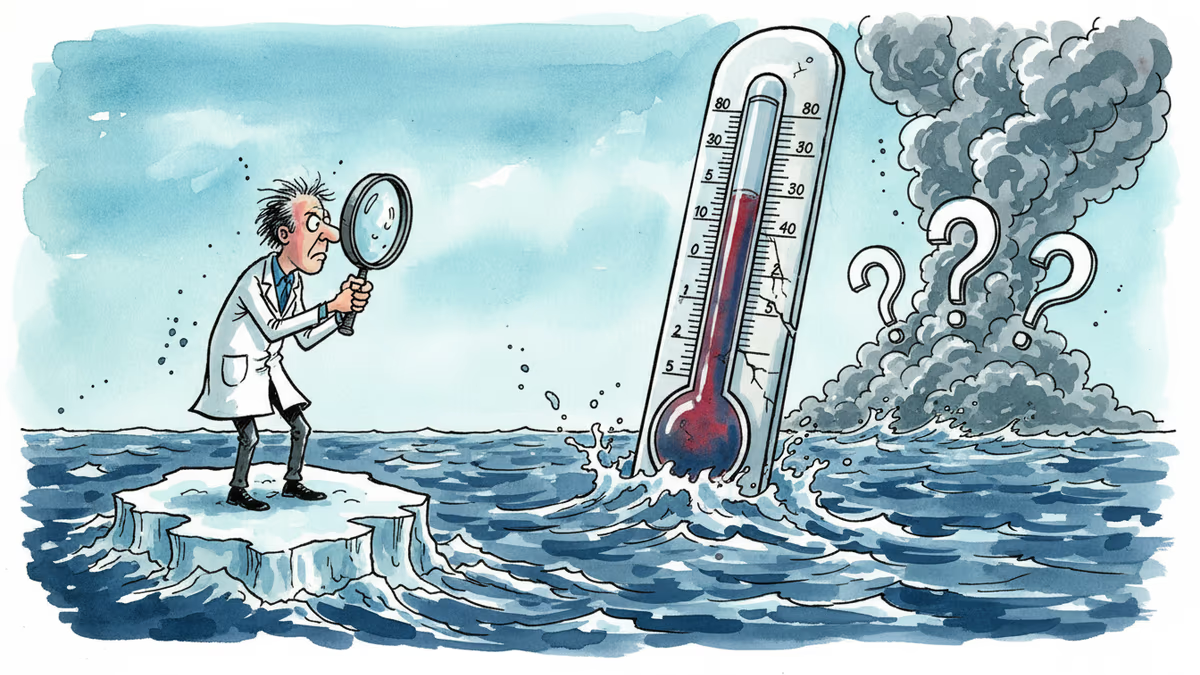
A massive heat reservoir beneath the Pacific has forecasters talking about a 'super El Niño' in 2026. But ocean scientists say the outcome remains genuinely uncertain—and that's exactly why some regions need to act now.
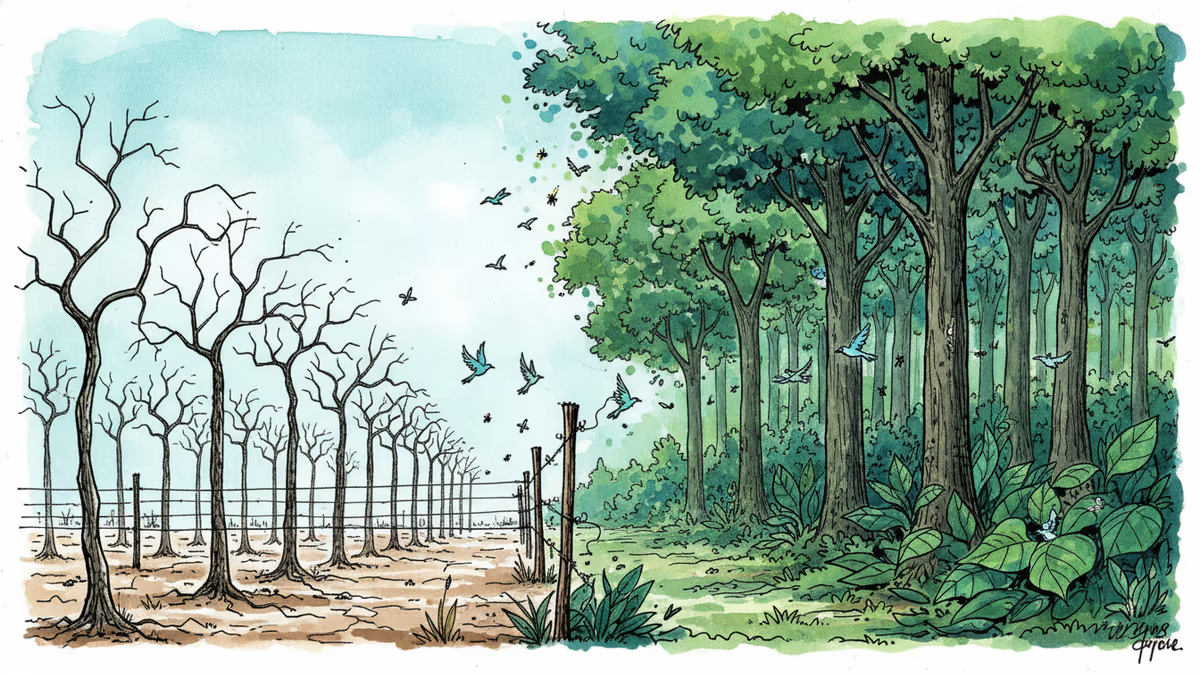
Global campaigns promise to plant a trillion trees this decade. But science shows monoculture plantations—the dominant approach—may be doing more harm than good. A 13-year experiment offers a better path.
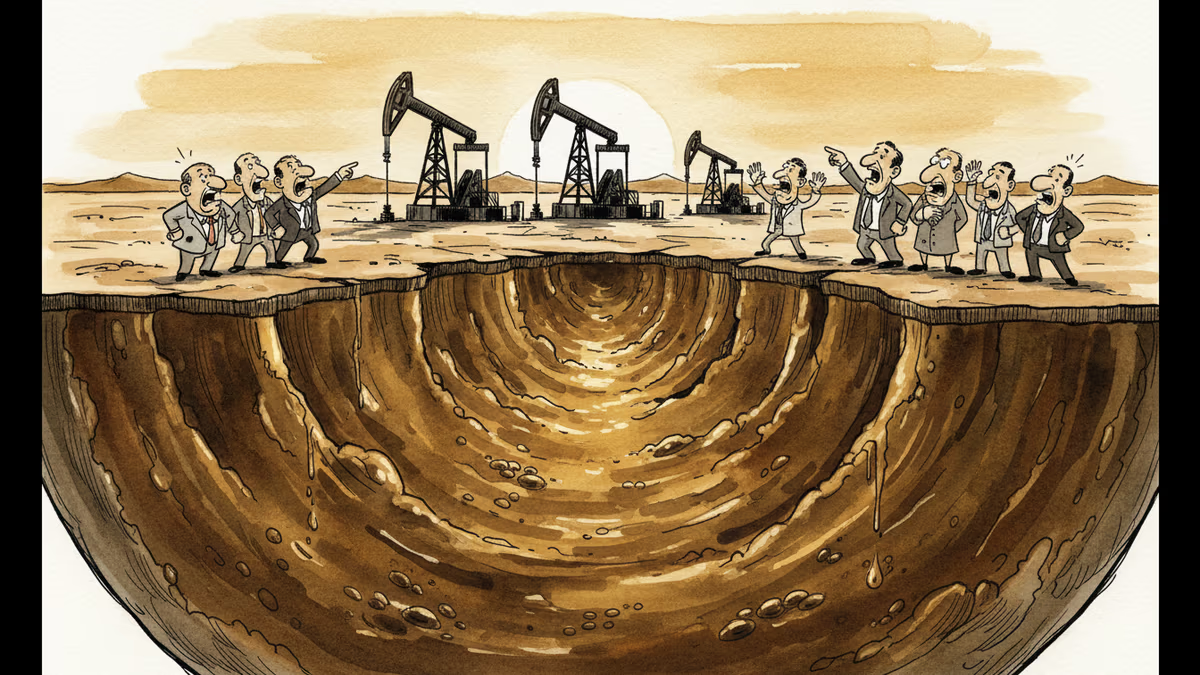
The Persian Gulf's staggering oil wealth isn't luck—it's geology. Understanding the science behind the region's reserves reveals why its politics will shape global energy for decades.
California's Salton Sea is shrinking, releasing toxic dust that stunts children's lung growth more than living near a busy freeway. A seven-year study reveals the human cost of water policy decisions.
A massive heat reservoir beneath the Pacific has forecasters talking about a 'super El Niño' in 2026. But ocean scientists say the outcome remains genuinely uncertain—and that's exactly why some regions need to act now.
Global campaigns promise to plant a trillion trees this decade. But science shows monoculture plantations—the dominant approach—may be doing more harm than good. A 13-year experiment offers a better path.
The Persian Gulf's staggering oil wealth isn't luck—it's geology. Understanding the science behind the region's reserves reveals why its politics will shape global energy for decades.
California's Salton Sea is shrinking, releasing toxic dust that stunts children's lung growth more than living near a busy freeway. A seven-year study reveals the human cost of water policy decisions.
Thoughts
Share your thoughts on this article
Sign in to join the conversation