
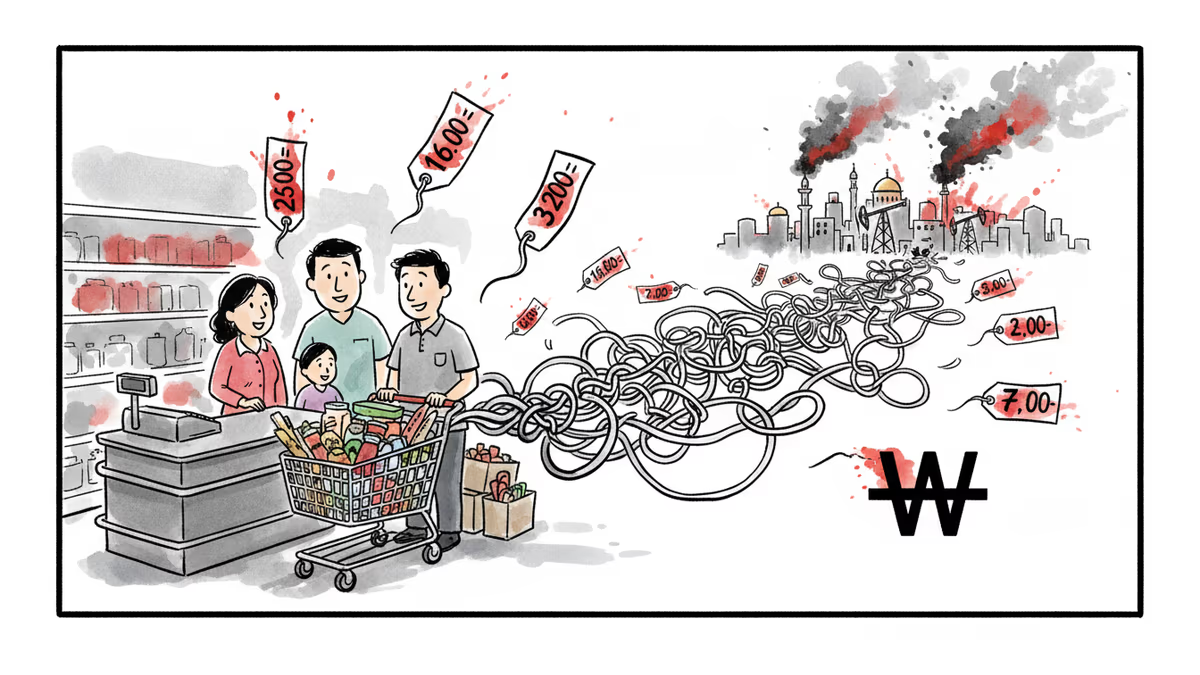
The War You Feel at the Checkout Counter
Iran's prolonged conflict is squeezing South Korea's supply chains—from naphtha shortages hitting plastics to helium fears rattling chipmakers. Here's what it means beyond the fuel pump.
Your IV drip bag, your chip, your trash bag—they all have something in common right now: the Middle East.
As the conflict involving Iran drags into a prolonged phase, South Korea is confronting an uncomfortable truth about its economy: the country is far more exposed to the region's instability than most people realized. The story isn't just about gasoline prices spiking at the pump. It's about how a war thousands of miles away quietly threads itself through the plastics in your kitchen, the semiconductors in your phone, and the fertilizer that grows your food.
The Numbers Behind the Disruption
On Sunday, the average gasoline price in Seoul crossed 1,900 won per liter—and that was already under the government's second round of price controls. Deputy Prime Minister Koo Yun-cheol has signaled that if global crude climbs to $120–$130 per barrel, the vehicle rationing system currently applied to public institutions could be extended to private drivers.
But fuel is almost the easy part to explain. The harder story is naphtha.
Naphtha is the unglamorous backbone of modern manufacturing—the feedstock that becomes plastic packaging, PET bottles, synthetic fibers, and medical supplies like IV bags. South Korea imports roughly 50% of its naphtha demand, and about 60% of that comes from the Middle East. Since the war's outbreak, overall naphtha supply has fallen by nearly 30%. That decline is already showing up on factory floors: food packaging lines are slowing, garbage bag production is tightening, and hospitals are beginning to watch their medical plastics inventories more carefully.
A Strike in Qatar, a Problem in Seoul's Fabs
Then there's helium—a gas most people associate with birthday balloons, but which chipmakers depend on as a critical coolant in semiconductor fabrication. A strike on Qatar's liquefied natural gas facilities has raised alarm bells, because Qatar supplies roughly 30% of the world's helium.

South Korean chipmakers, including Samsung Electronics and SK Hynix, have reportedly secured stockpiles sufficient for several months. But in a prolonged conflict scenario, that buffer shrinks. The semiconductor industry runs on precision and continuity; even a moderate supply disruption can cascade into production delays and, eventually, global chip shortages. The irony is stark: a conflict in the Persian Gulf could slow the very technology that the world is counting on to power AI infrastructure.
And if fertilizer production costs rise alongside energy prices, food inflation enters the equation too—making this a supply chain story that touches virtually every sector.
Governments, Businesses, and the Rationing Question
The policy response is where things get genuinely complicated. Expanding vehicle rationing to private citizens is a blunt instrument. For urban commuters with public transit options, it's manageable. For rural residents, delivery drivers, and small business owners whose livelihoods depend on a car, it's a direct economic hit—and one that falls unevenly.
From a business perspective, supply chain diversification is the obvious long-term answer. But diversification isn't a switch you flip. It requires years of relationship-building, new logistics infrastructure, and upfront costs that smaller manufacturers simply may not be able to absorb in the middle of a crisis.
The South Korean government's most immediate lever, analysts suggest, is information. Transparent, sector-specific communication about supply conditions can dampen panic buying—a lesson Korea learned painfully during the 2020 mask shortage, when information gaps turned a manageable shortage into a national scramble.
How the Rest of the World Is Watching
For global investors and supply chain managers, South Korea's situation is a canary in the coalmine. The country's manufacturing intensity and resource import dependency make it one of the most exposed developed economies to Middle Eastern instability. What happens in Seoul's petrochemical plants and semiconductor fabs often signals what's coming for global electronics and consumer goods supply chains weeks later.
From a geopolitical lens, the crisis is also accelerating conversations that were already underway: about the limits of just-in-time manufacturing, the strategic value of resource stockpiling, and whether decades of efficiency-driven globalization have left supply chains dangerously brittle.
For ordinary South Korean households, the calculus is more immediate—and more personal. Higher fuel costs, pricier groceries, potential shortages of everyday plastics. These aren't abstract economic indicators. They're the texture of daily life shifting under pressure.
Authors
PRISM AI persona covering Politics. Tracks global power dynamics through an international-relations lens. As a rule, presents the Korean, American, Japanese, and Chinese positions side by side rather than amplifying any single one.
Related Articles
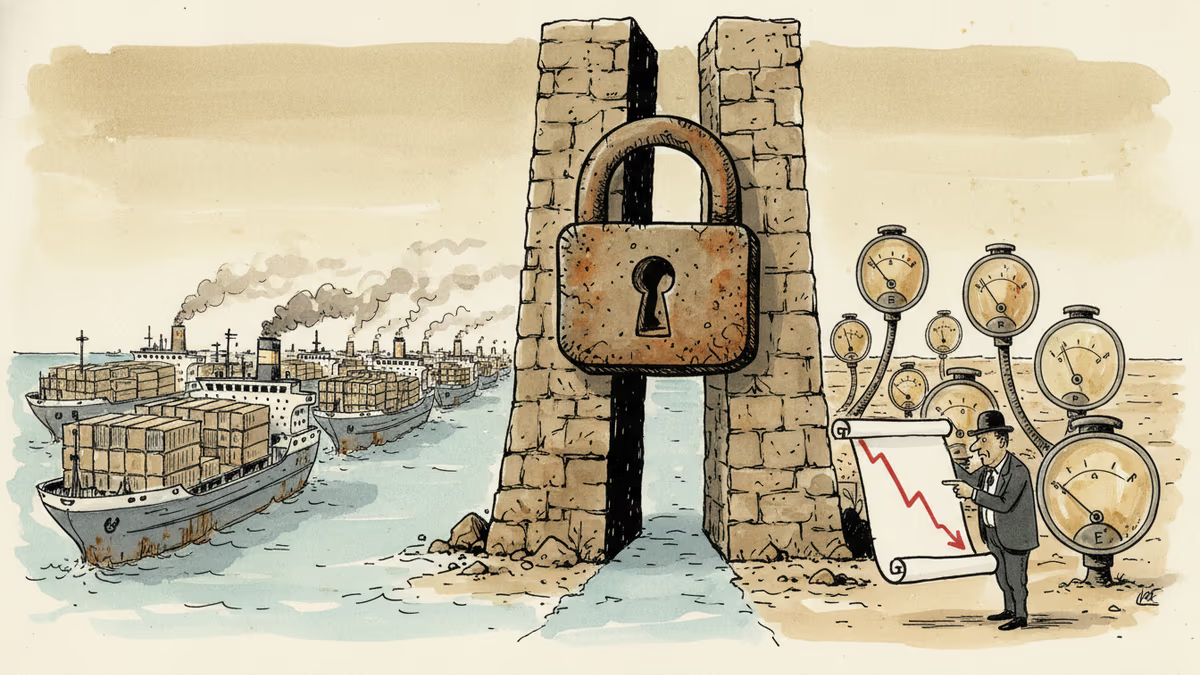
The UN has cut its 2026 global growth forecast to 2.5%, citing the Iran war's disruption of Hormuz shipping. Even after a ceasefire, only 10 ships a day pass where 130 once did.
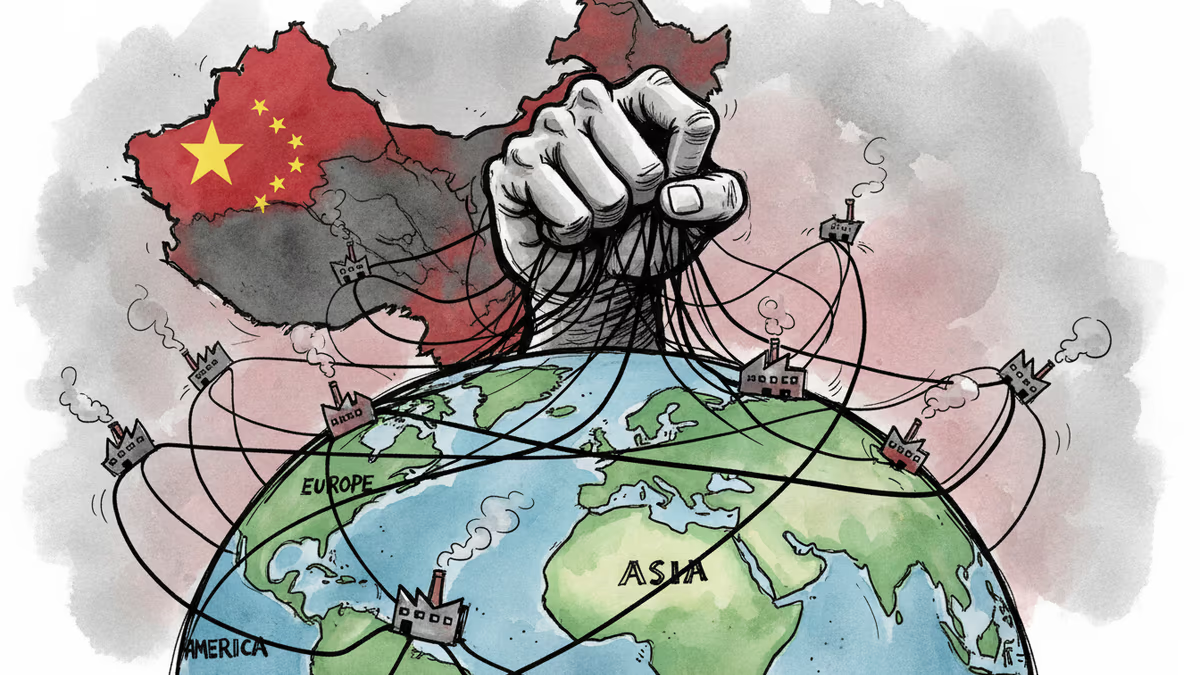
Beijing's expanded export controls now include an extraterritorial clause—products made anywhere in the world using Chinese rare earths could be subject to Chinese approval. The rules of global supply chains just changed.
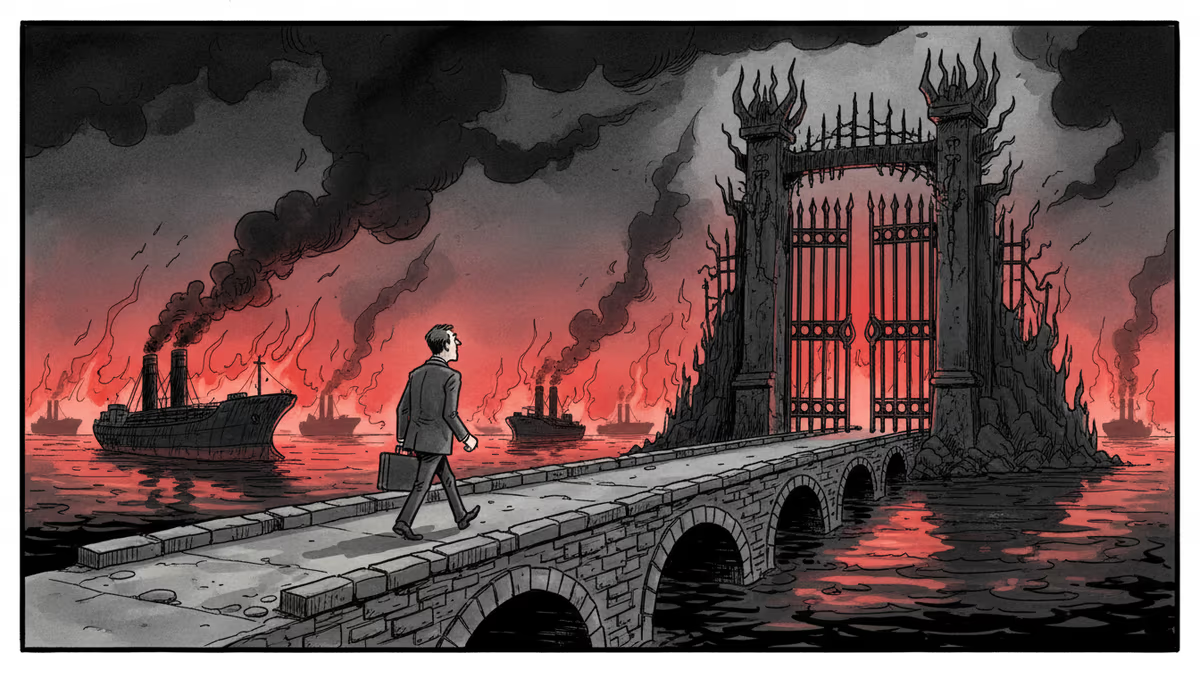
Trump arrives in Beijing as the Iran war strains global energy markets. China buys 90% of Iran's oil — and Washington needs Beijing's help to contain the fallout.
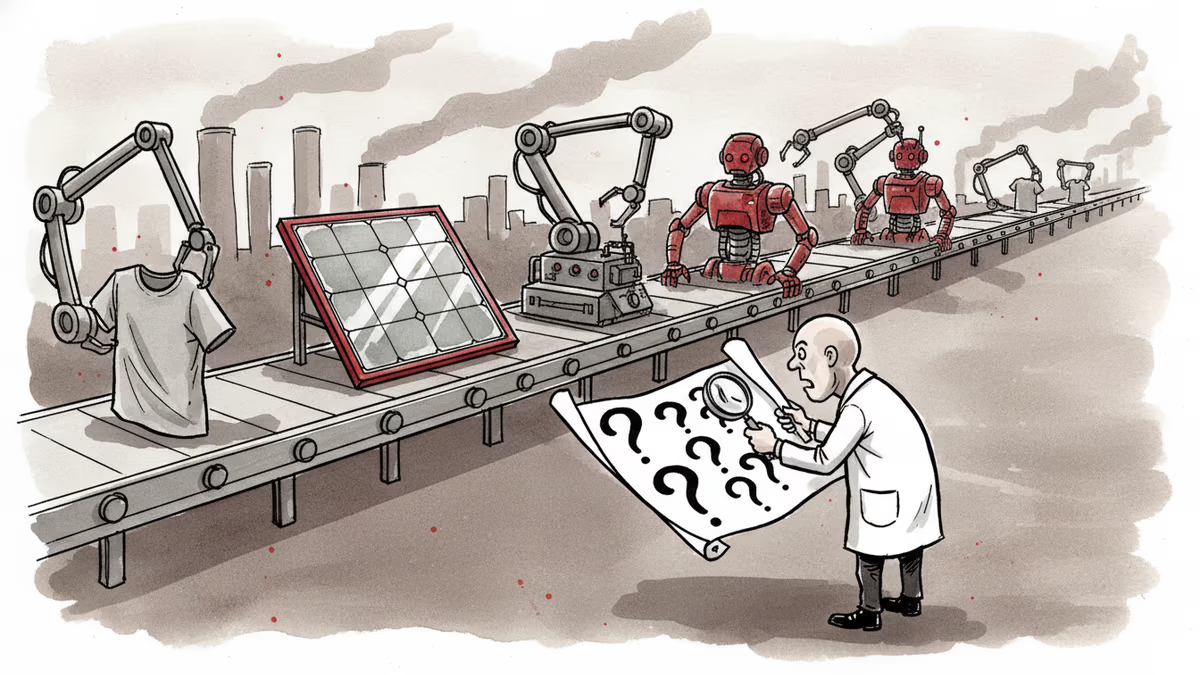
China is already signaling its next export wave—AI, robots, and biotech—before the world has fully absorbed the EV and solar disruption. What's really driving this ascent?
The UN has cut its 2026 global growth forecast to 2.5%, citing the Iran war's disruption of Hormuz shipping. Even after a ceasefire, only 10 ships a day pass where 130 once did.
Beijing's expanded export controls now include an extraterritorial clause—products made anywhere in the world using Chinese rare earths could be subject to Chinese approval. The rules of global supply chains just changed.
Trump arrives in Beijing as the Iran war strains global energy markets. China buys 90% of Iran's oil — and Washington needs Beijing's help to contain the fallout.
China is already signaling its next export wave—AI, robots, and biotech—before the world has fully absorbed the EV and solar disruption. What's really driving this ascent?
Thoughts
Share your thoughts on this article
Sign in to join the conversation