

Instacart's Secret Price Surge: Why Its AI is Charging You a 23% 'Loyalty Tax'
A new report shows Instacart's AI is charging some users 23% more. PRISM analyzes why this isn't a price test, but a fundamental breach of trust.
The Bottom Line Up Front
A bombshell report from Consumer Reports has pulled back the curtain on Instacart's latest strategy for profitability: AI-powered dynamic pricing. The investigation found some shoppers are being charged up to 23% more than others for the exact same products. Instacart frames this as a benign "pricing test," but for executives, investors, and consumers, this represents a critical inflection point. This isn't just about variable pricing; it's a fundamental breach of the trust that underpins the entire digital convenience economy, with significant implications for the company's future and the industry at large.
Why This Isn't Just Another Price Hike
Most consumers understand surge pricing for an Uber on a rainy night or the fluctuating cost of an airline ticket. What Instacart and its partners are doing is fundamentally different and far more insidious. The key distinction is opacity. When Uber surges, the app tells you. With Instacart, the price discrimination is invisible, creating two tiers of customers without their knowledge or consent.
This matters because it corrodes the core value proposition of a marketplace aggregator. Users turn to Instacart for convenience and a reasonable expectation of price parity with the physical store (plus fees). By secretly personalizing prices to maximize revenue from individual users, Instacart is transforming from a trusted facilitator into an opaque adversary. This raises immediate, pressing questions:
- What data is the AI using? Is it pricing based on your order history, your location, the time of day, or even inferred demographic data? This skates dangerously close to a new form of digital redlining.
- Who is accountable? Instacart points the finger at its retail partners like Kroger and Safeway, but the technology (Eversight) is integrated into its platform. For the consumer, it's an Instacart charge on their credit card, making this a brand-damaging exercise in blame-shifting.
- What is the long-term cost of this short-term gain? The potential revenue lift from these "tests" could be dwarfed by the catastrophic loss of consumer trust if this practice becomes widely known.
The Gig Economy's Desperate Search for Profit

This move cannot be viewed in isolation. It is a direct symptom of the post-IPO pressure facing the entire gig economy. For years, companies like Instacart, DoorDash, and Uber subsidized growth with venture capital, prioritizing market share over profitability. Now, as public companies, the mandate from Wall Street is clear: show us the money.
With thin margins in grocery delivery, there are only a few levers to pull for profit:
- Squeeze the gig workers (lower pay, fewer benefits).
- Charge retailers more (higher commission fees).
- Charge consumers more (higher fees and, now, variable product pricing).
Instacart is aggressively pulling the third lever. While the company calls it an experiment by a "small subset" of 10 retail partners, it represents a strategic test. If successful and unchallenged, it provides a roadmap for systematically extracting more revenue per user, a key metric for investors. However, it's a high-stakes gamble that treats customer loyalty not as an asset to be rewarded, but as a vulnerability to be exploited.
For Investors & Market Watchers:
The key risk here is not regulatory fines, but reputational implosion. Track Instacart's (NASDAQ: CART) user retention and monthly active user (MAU) numbers closely in the coming quarters. Any significant dip could be an early indicator that consumers are catching on and abandoning the platform. This pricing strategy introduces a significant hidden risk to future earnings forecasts, as it relies on customers remaining ignorant. A single viral social media movement exposing these price differences could erase any gains overnight.
For Consumers:
Your loyalty to the Instacart platform may now be a liability. The convenience of one-click ordering comes with a potential "ignorance tax." To protect yourself, cross-reference prices. Before checking out on Instacart, quickly check the item's price on the grocer's own website or app. A significant discrepancy is a clear signal that you are part of a pricing experiment. The most powerful tool a consumer has is their data and their wallet; be prepared to use another service if the trust is broken.
PRISM's Take
Instacart's deployment of opaque, AI-driven price discrimination is a profound strategic miscalculation. While presented as a sophisticated A/B test to "unlock revenue growth," it is, in reality, a betrayal of the platform's implicit promise to its user base. In the relentless pursuit of profitability, Instacart is trading its most valuable and fragile asset: consumer trust. This isn't innovation; it's a reversion to the old-world tactic of charging what you think a customer is willing to bear, now supercharged with opaque algorithms. We predict this will backfire, leading to either a significant consumer backlash that will damage the brand far more than the incremental revenue it generates, or inviting the very regulatory scrutiny the tech industry perpetually seeks to avoid. This is a clear signal that the gig economy has entered its extraction phase, and consumers are the primary resource being mined.
Authors
Related Articles
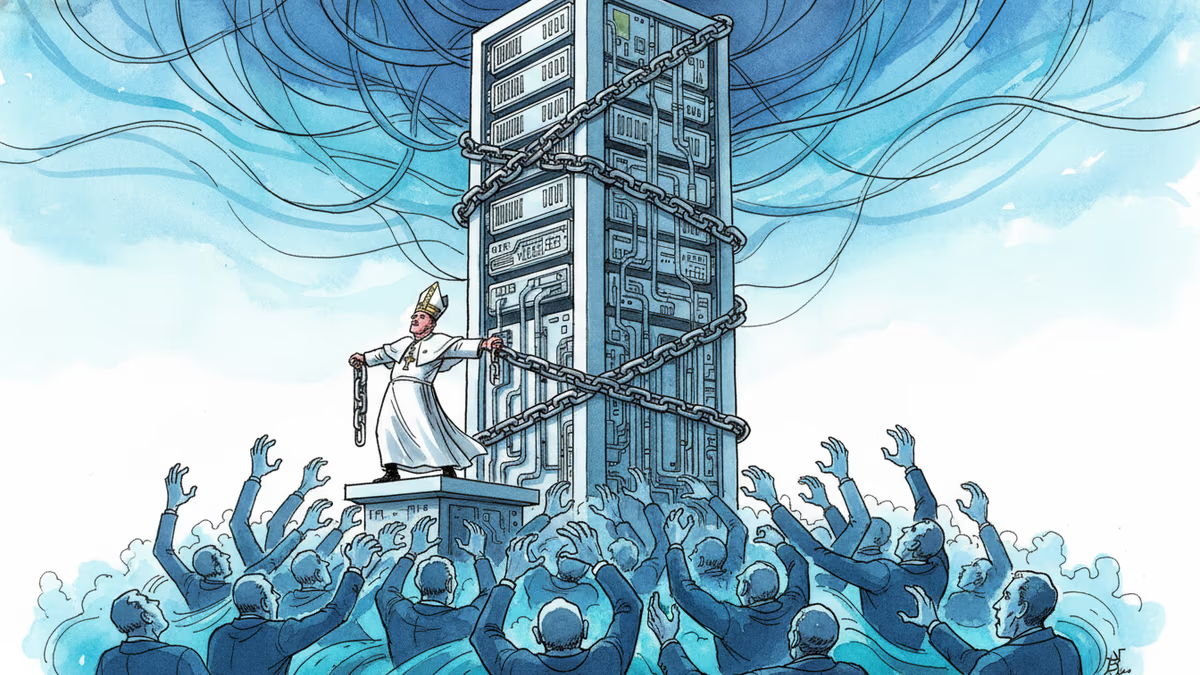
Pope Leo XIV's first encyclical frames AI not as a technology problem but a power problem. Who controls the algorithm controls reality—and that's a political question, not a spiritual one.
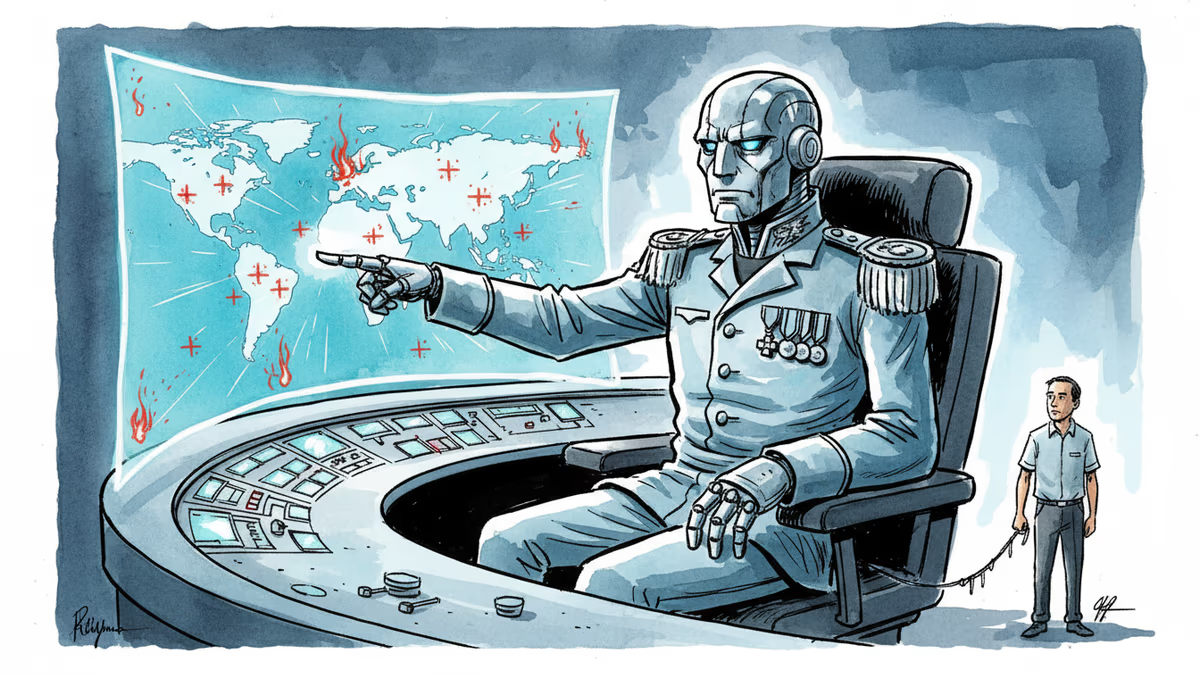
Anthropic's Claude AI is embedded in US military operations—from the capture of Maduro to the Iran war. A Pentagon dispute is exposing what "responsible AI" actually means in wartime.
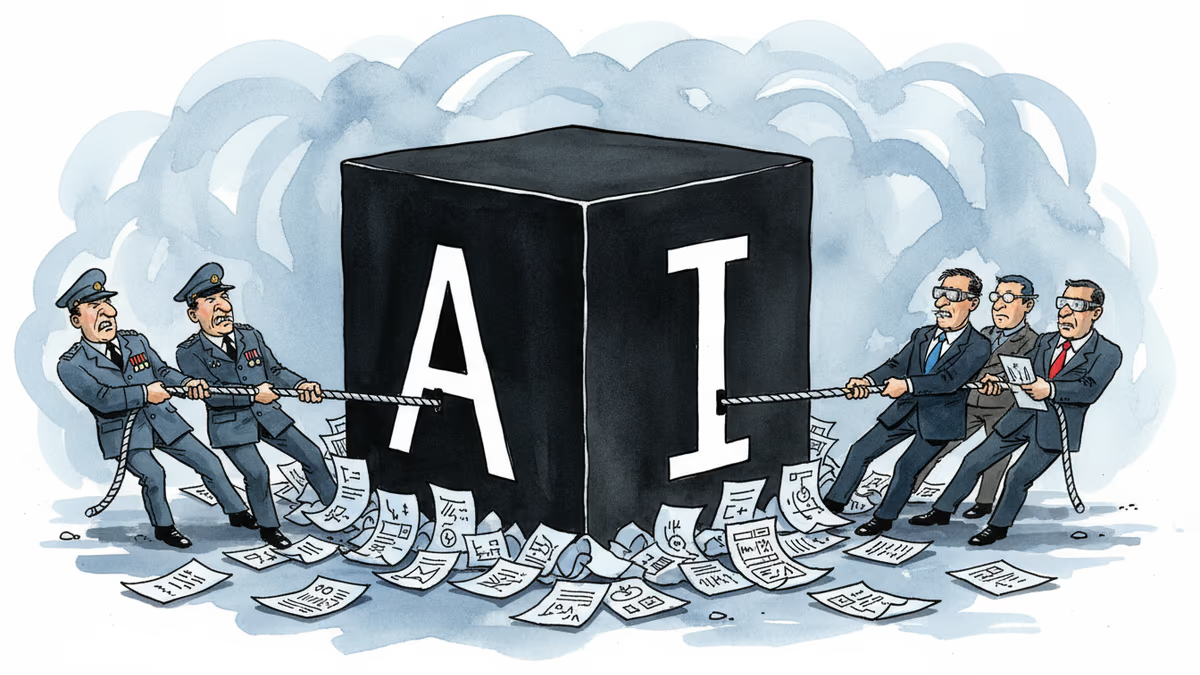
OpenAI faced internal backlash over Pentagon contracts, revealing deeper questions about AI military use, transparency, and corporate accountability in defense partnerships.
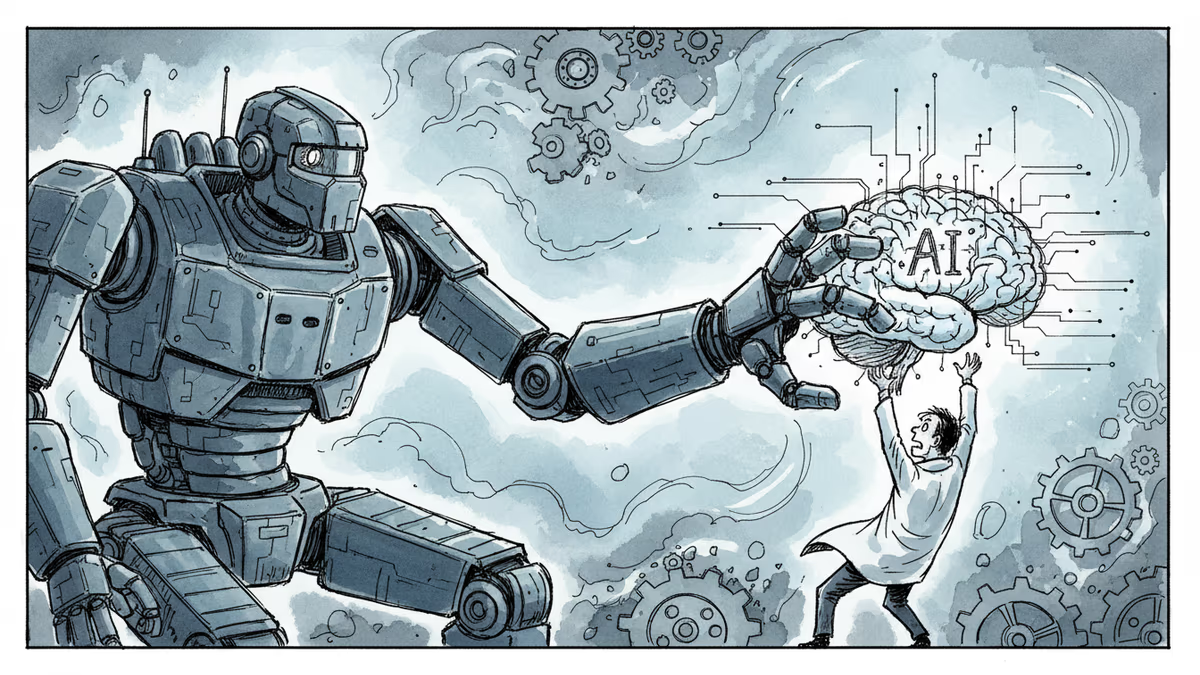
Trump's explosive reaction to Anthropic's military contract refusal reveals the growing tension between AI ethics and national security demands.
Pope Leo XIV's first encyclical frames AI not as a technology problem but a power problem. Who controls the algorithm controls reality—and that's a political question, not a spiritual one.
Anthropic's Claude AI is embedded in US military operations—from the capture of Maduro to the Iran war. A Pentagon dispute is exposing what "responsible AI" actually means in wartime.
OpenAI faced internal backlash over Pentagon contracts, revealing deeper questions about AI military use, transparency, and corporate accountability in defense partnerships.
Trump's explosive reaction to Anthropic's military contract refusal reveals the growing tension between AI ethics and national security demands.
Thoughts
Share your thoughts on this article
Sign in to join the conversation