
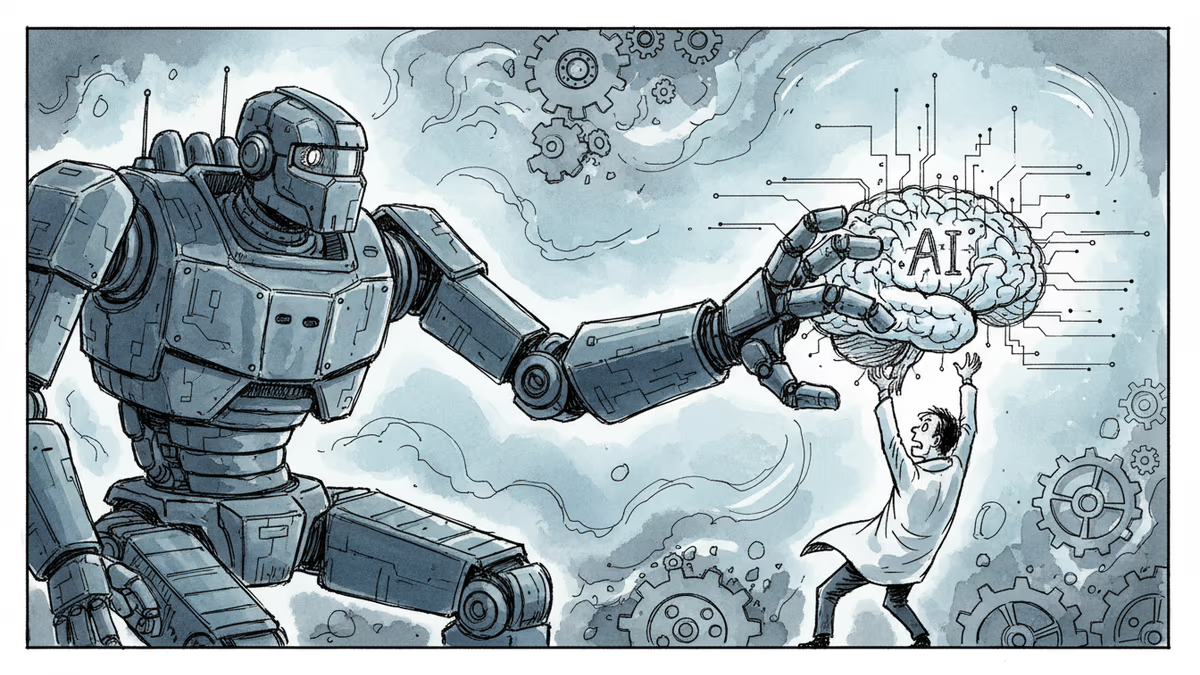
When AI Companies Say No to the Pentagon
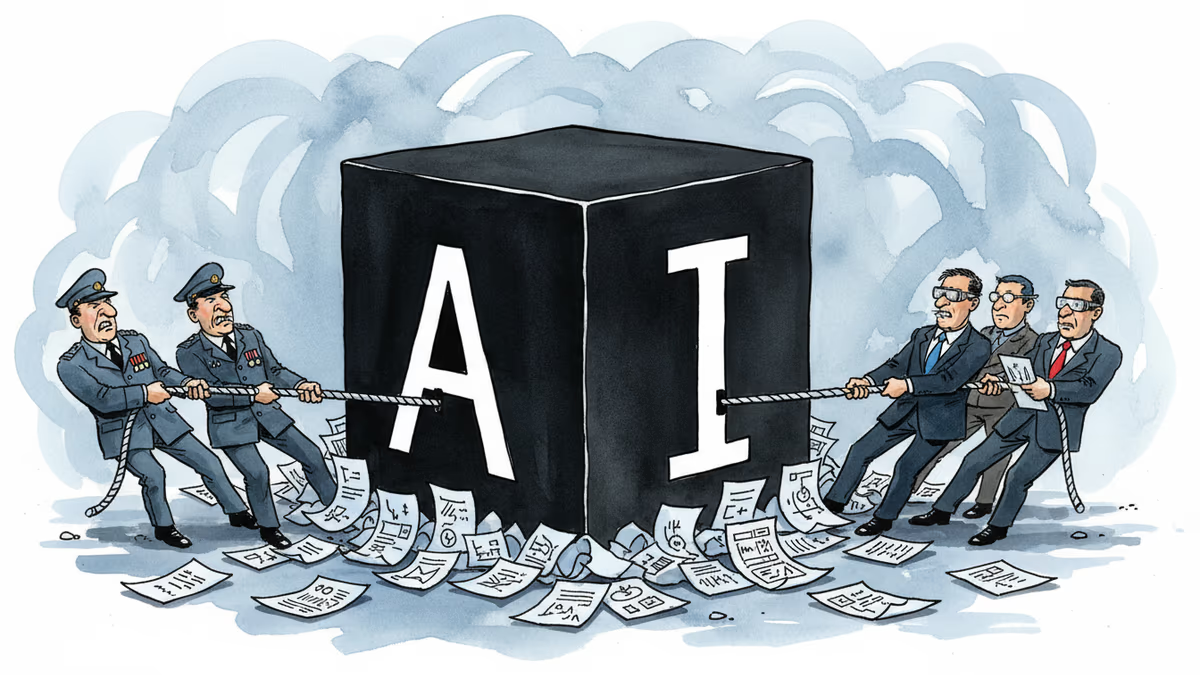
Trump's explosive reaction to Anthropic's military contract refusal reveals the growing tension between AI ethics and national security demands.
The $20 Billion Question
Friday afternoon's Truth Social post wasn't just another Trump rant. It was a declaration of war against Anthropic, the AI company behind Claude. "IMMEDIATELY CEASE" using their products, Trump ordered federal agencies, after CEO Dario Amodei refused to sign an updated military agreement allowing "any lawful use" of the company's technology.
The stakes? A potential $100 billion AI arms race where the Pentagon wants unrestricted access to cutting-edge AI systems for everything from battlefield analysis to domestic surveillance. And some companies are saying no.
The New Digital Conscientious Objectors
This isn't Anthropic's first rodeo with military ethics. The company was founded by former OpenAI researchers who left partly over concerns about AI safety and military applications. Their refusal to sign Defense Secretary Pete Hegseth's "any lawful use" agreement puts them in a growing camp of tech conscientious objectors.
Google famously withdrew from Project Maven in 2018 after 4,000 employees signed a petition against military AI development. Microsoft and Amazon, however, have aggressively pursued Pentagon contracts, viewing them as both patriotic duty and lucrative business.
The divide isn't just philosophical—it's financial. Companies that refuse military contracts risk losing access to $50 billion in annual federal AI spending. Those that comply face potential backlash from employees and ethically-minded investors.
The European Alternative

While American companies wrestle with these dilemmas, European firms operate under stricter rules. The EU's AI Act explicitly prohibits certain military applications and requires extensive oversight for "high-risk" AI systems. This regulatory framework gives companies legal cover to refuse problematic contracts.
But it also creates competitive disadvantages. European AI companies can't access the same military funding streams that fuel American innovation. The result? A two-tier system where ethical constraints might determine technological leadership.
Silicon Valley's Split Personality
The tech industry's response reveals deep philosophical divisions. Younger employees, raised on "don't be evil" mantras, increasingly view military contracts as moral compromises. Older executives, many with government experience, see national security cooperation as civic responsibility.
This generational gap is reshaping hiring and retention. Anthropic actively recruits engineers who prioritize AI safety over profit maximization. Meanwhile, defense-focused startups like Palantir and Anduril attract talent specifically interested in national security applications.
The talent war extends to academia. Universities receiving Pentagon funding face student protests, while researchers debate whether AI safety research should accept military grants.
The China Factor
Behind every AI ethics debate lurks geopolitical competition. Pentagon officials argue that American companies' moral qualms hand advantages to Chinese competitors who face no such constraints. ByteDance, Baidu, and other Chinese firms reportedly collaborate extensively with military applications.
This "ethics gap" creates policy dilemmas. Should democratic societies compromise their values to compete with authoritarian rivals? Or do ethical constraints ultimately produce better, more trustworthy AI systems?
Some defense experts propose a middle path: military AI development with built-in ethical safeguards and oversight mechanisms. But implementing such systems requires cooperation between companies and government—exactly what's breaking down in cases like Anthropic's.
Authors
Related Articles
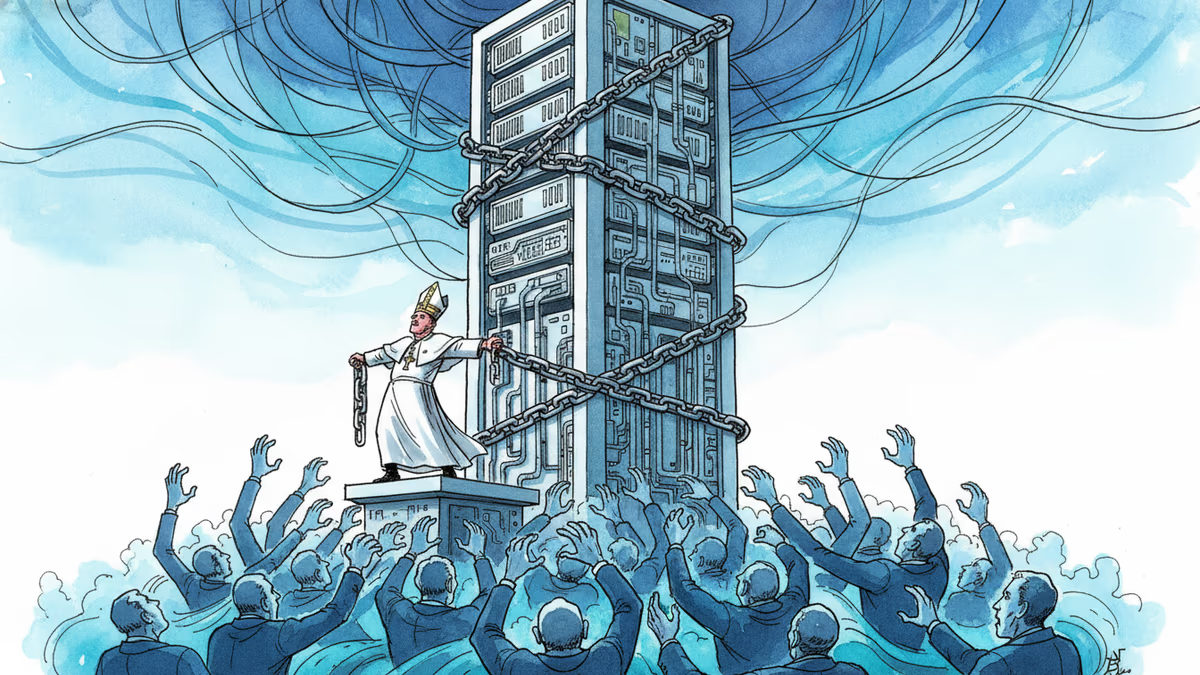
Pope Leo XIV's first encyclical frames AI not as a technology problem but a power problem. Who controls the algorithm controls reality—and that's a political question, not a spiritual one.
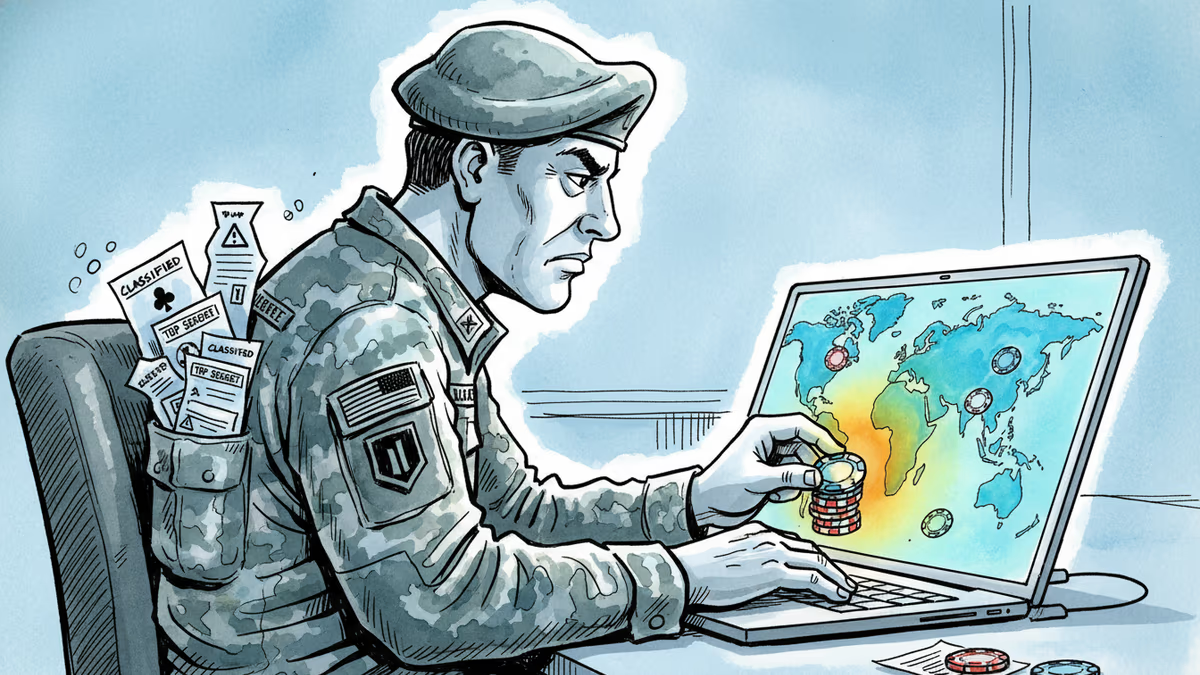
A US special forces soldier involved in the operation that captured Venezuela's Maduro allegedly used classified intel to bet on Polymarket, pocketing over $400,000. The case exposes a gaping hole in how prediction markets are regulated.
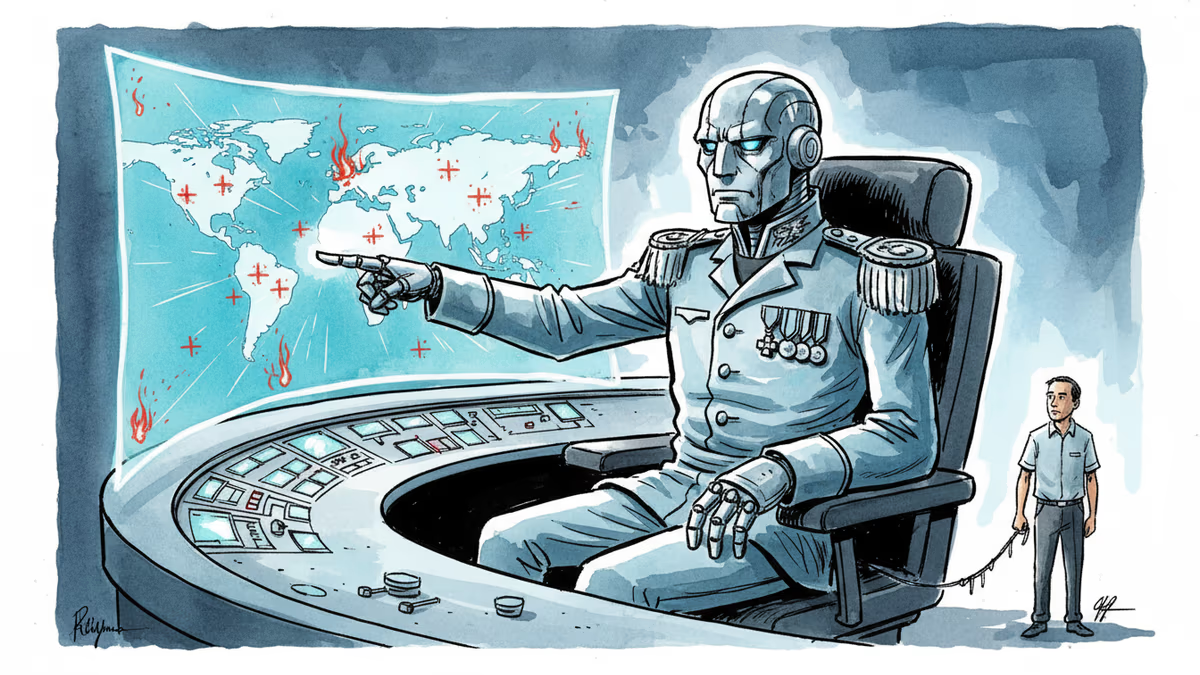
Anthropic's Claude AI is embedded in US military operations—from the capture of Maduro to the Iran war. A Pentagon dispute is exposing what "responsible AI" actually means in wartime.
OpenAI faced internal backlash over Pentagon contracts, revealing deeper questions about AI military use, transparency, and corporate accountability in defense partnerships.
Pope Leo XIV's first encyclical frames AI not as a technology problem but a power problem. Who controls the algorithm controls reality—and that's a political question, not a spiritual one.
A US special forces soldier involved in the operation that captured Venezuela's Maduro allegedly used classified intel to bet on Polymarket, pocketing over $400,000. The case exposes a gaping hole in how prediction markets are regulated.
Anthropic's Claude AI is embedded in US military operations—from the capture of Maduro to the Iran war. A Pentagon dispute is exposing what "responsible AI" actually means in wartime.
OpenAI faced internal backlash over Pentagon contracts, revealing deeper questions about AI military use, transparency, and corporate accountability in defense partnerships.
Thoughts
Share your thoughts on this article
Sign in to join the conversation