
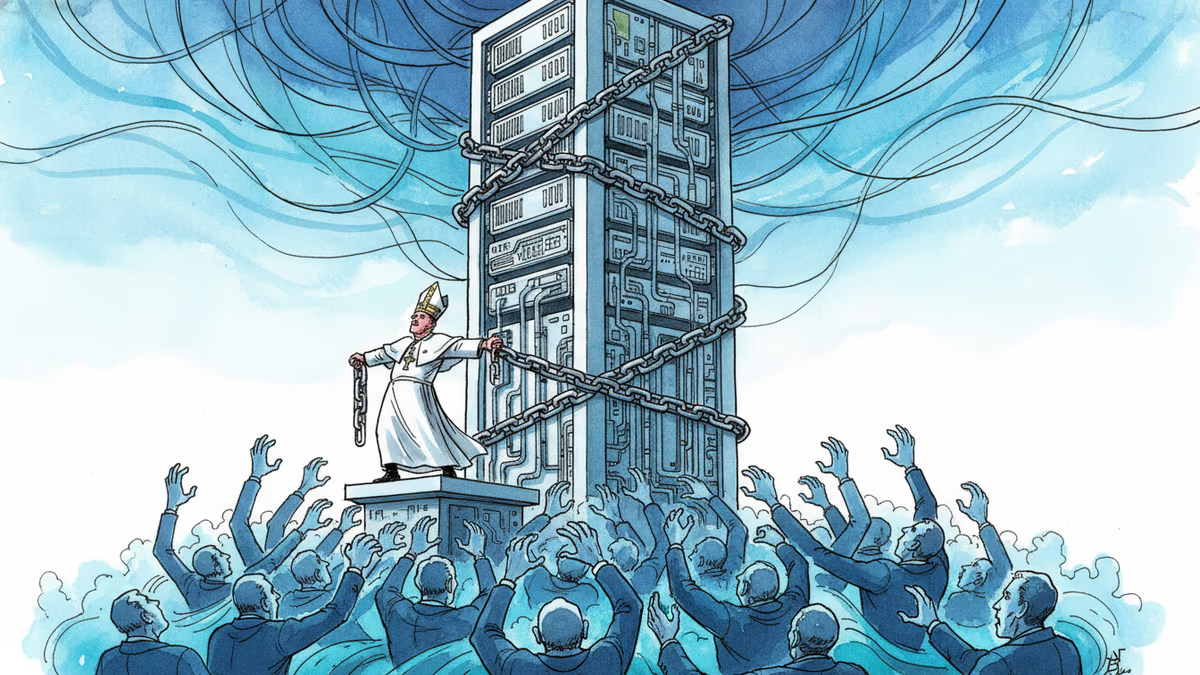
The Pope Just Called for AI to Be Disarmed
Pope Leo XIV's first encyclical frames AI not as a technology problem but a power problem. Who controls the algorithm controls reality—and that's a political question, not a spiritual one.
135 years ago, a pope told industrial capitalism it had gone too far. On May 25, 2026, another pope—choosing the same name—said the same thing to Silicon Valley.
Pope Leo XIV's first encyclical, Magnifica Humanitas, published yesterday from the Vatican, doesn't read like a theology document. It reads like a power analysis. The central argument: AI isn't a tool. It's infrastructure. And whoever controls infrastructure controls everything built on top of it.
What "Disarming Technology" Actually Means
The phrase that anchors the entire encyclical is "disarming technology." It's easy to misread this as technophobia. It isn't. Leo XIV is explicit: technology belongs to human history and creativity. The problem isn't the algorithm. The problem is who owns it.
The encyclical describes today's AI race as a sprint toward "the highest-performing algorithm" and "the largest data center," where competitive advantage has become geopolitical. A handful of players—corporations and states—are concentrating digital infrastructure, data, and computing capacity in ways that reshape information flows, economic outcomes, and democratic processes.
"Disarming" means three concrete things in the text. First, breaking the link between technical power and the right to govern. Second, making AI systems transparent and open to challenge. Third, preventing AI from becoming an instrument of domination—economic, political, or military—by a select few. The encyclical is careful to note this is not a moral metaphor. It's a structural demand.
"As happens with every major technological turning point," Leo XIV writes, "AI tends above all to increase the power of those who already possess economic resources and access to data."
The Algorithm Doesn't Show You the Truth—It Shows You What Works
One of the encyclical's sharpest passages concerns how collective truth gets formed in algorithmic environments. The problem isn't disinformation in the narrow sense of fake content. It's deeper: platforms and algorithms select information based on attention and engagement maximization. What becomes visible isn't necessarily what's most accurate—it's what generates the strongest reaction.
Truth doesn't disappear in this system. It becomes dependent on opaque infrastructure that responds to market logic. Public judgment gets outsourced to systems whose criteria are invisible to the people they influence.

The encyclical's response here isn't primarily regulatory. It's educational: build people capable of recognizing these mechanisms rather than entrusting the construction of shared reality to digital systems that answer to profit or power.
Work: The Most Concrete Fault Line
If the encyclical has a passage most likely to be quoted in policy debates, it's this one. Leo XIV warns explicitly of a "social calamity" tied to technological unemployment when innovation is driven primarily by cost-cutting and profit maximization. The concern isn't just job loss—it's the transformation of work into something less human, less creative, and therefore less free.
The text goes granular: automated surveillance of workers, fragmentation of tasks into repetitive micro-functions, erosion of autonomy. These aren't hypothetical futures. They describe warehouse logistics, gig platforms, and call center AI monitoring that already exist at scale.
This is where the deliberate echo of Rerum Novarum—Leo XIII's 1891 encyclical on labor during the industrial revolution—becomes most legible. That document didn't oppose factories. It opposed the reduction of workers to interchangeable parts. Magnifica Humanitas makes the same argument 135 years later, with the same structure: work is not merely economic output to be optimized. It's a space through which people express dignity, responsibility, and participation in social life.
Autonomous Weapons: Where the Encyclical Gets Radical
The most politically charged section addresses war. Leo XIV argues that the traditional framework of "just war" theory is becoming inadequate to describe contemporary conflict—not because self-defense is denied, but because the nature of conflict is changing.
Algorithms don't pull triggers. But they enable a new form of distance in which decision-making is progressively removed from human bodies and human accountability. The encyclical sets a clear limit: lethal or irreversible decisions cannot be delegated to artificial systems. Moral responsibility cannot be dissolved in automated chains.
This puts the Vatican in direct tension with the direction of defense procurement across NATO members, where autonomous weapons systems are moving from research to deployment. The encyclical doesn't name specific programs or nations. It doesn't need to.
An Open Construction Site—and Who's Doing the Building
The final image of Magnifica Humanitas is a construction site: not a closed system, not a finished model, but a process still underway. Technology, economics, information, and conflict are interwoven within the same digital infrastructure and power relations.
The encyclical's closing argument is that the decisive question is no longer what AI can do. It's who controls it, with what interests, and according to what idea of what a human being is.
That framing puts the document in interesting company. It echoes arguments made by AI safety researchers worried about value alignment, by antitrust economists worried about platform monopoly, and by labor organizers worried about algorithmic management. The Vatican isn't claiming to have invented these concerns. It's claiming they belong to the same underlying problem.
This content is AI-generated based on source articles. While we strive for accuracy, errors may occur. We recommend verifying with the original source.
Related Articles
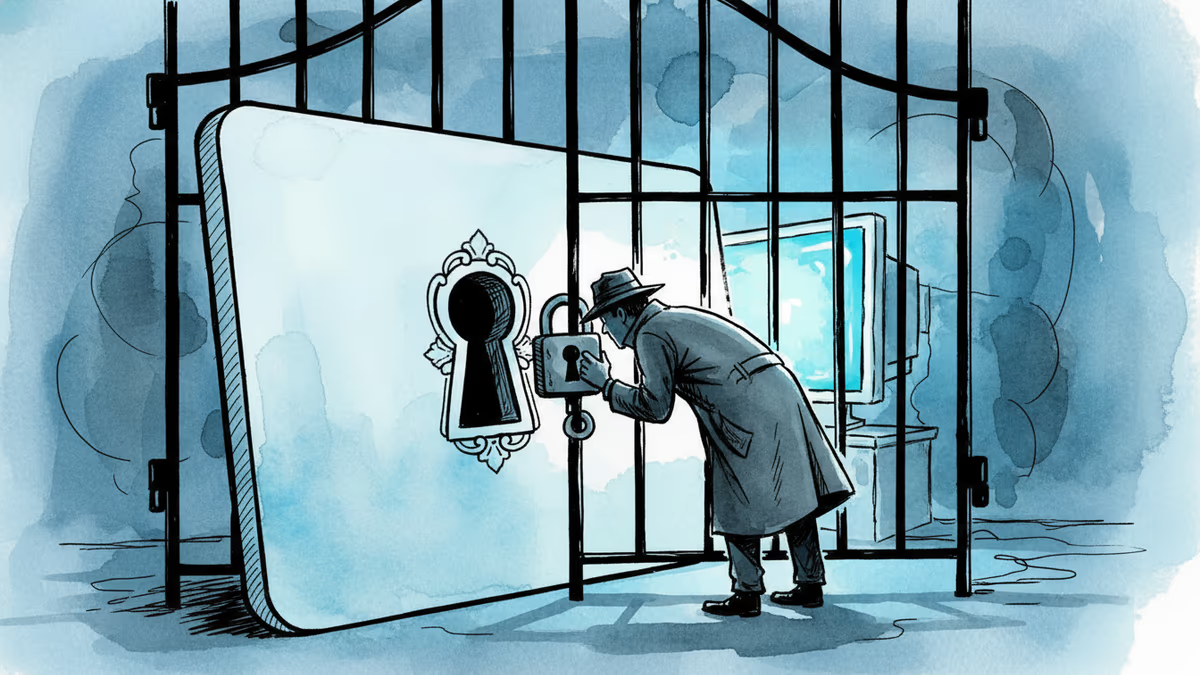
Wisconsin Governor Tony Evers vetoed an age verification bill for adult sites, citing privacy concerns. With 25+ states going the other way, the debate cuts to the heart of online freedom vs. child protection.
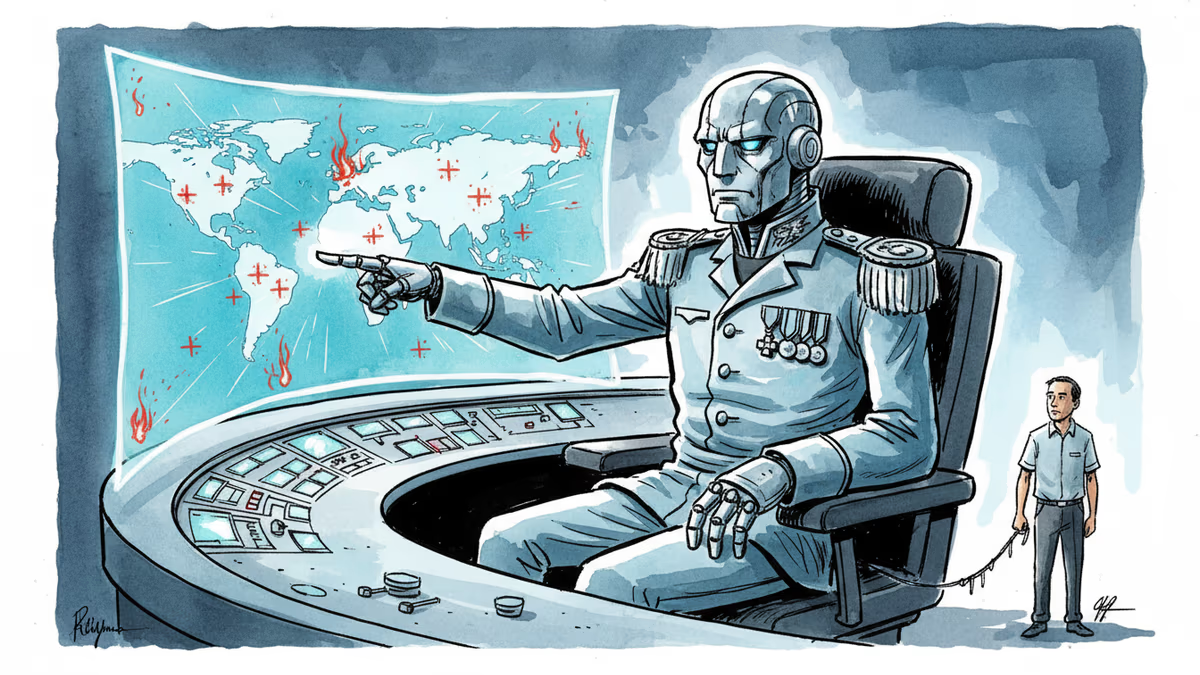
Anthropic's Claude AI is embedded in US military operations—from the capture of Maduro to the Iran war. A Pentagon dispute is exposing what "responsible AI" actually means in wartime.

For Iranian diaspora families, digital communication isn't convenience—it's survival. What happens when staying connected becomes a political act?
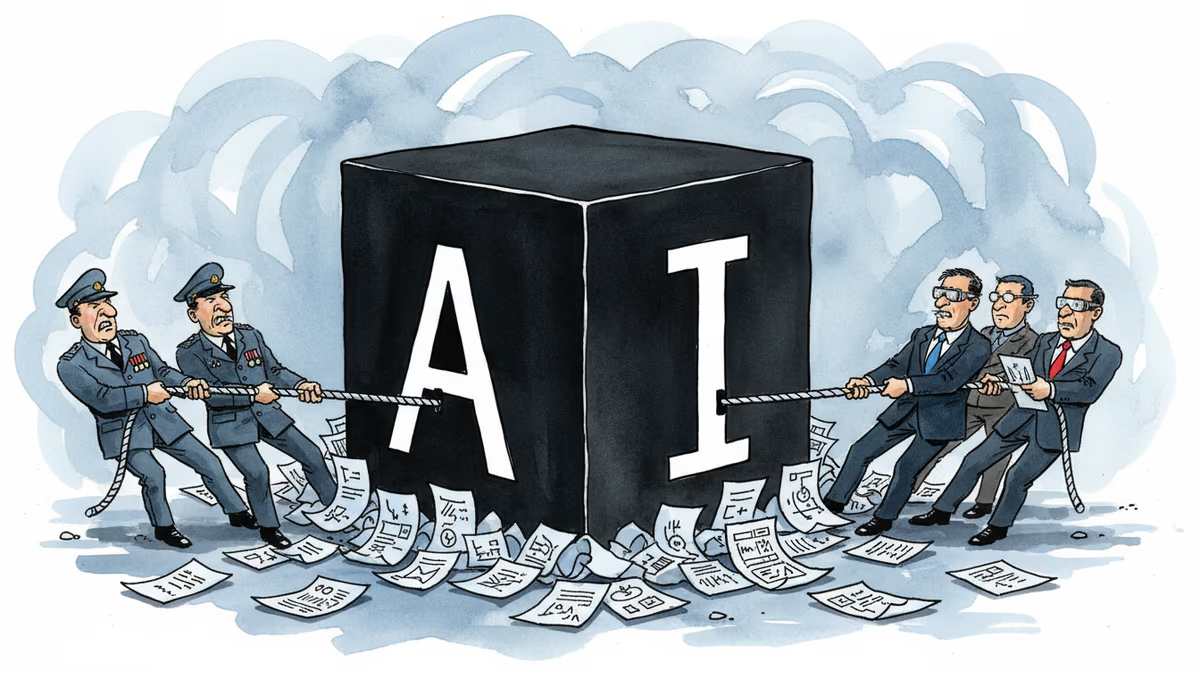
OpenAI faced internal backlash over Pentagon contracts, revealing deeper questions about AI military use, transparency, and corporate accountability in defense partnerships.
Wisconsin Governor Tony Evers vetoed an age verification bill for adult sites, citing privacy concerns. With 25+ states going the other way, the debate cuts to the heart of online freedom vs. child protection.
Anthropic's Claude AI is embedded in US military operations—from the capture of Maduro to the Iran war. A Pentagon dispute is exposing what "responsible AI" actually means in wartime.
For Iranian diaspora families, digital communication isn't convenience—it's survival. What happens when staying connected becomes a political act?
OpenAI faced internal backlash over Pentagon contracts, revealing deeper questions about AI military use, transparency, and corporate accountability in defense partnerships.
Thoughts
Share your thoughts on this article
Sign in to join the conversation