
When Two Check Marks Become a Lifeline
For Iranian diaspora families, digital communication isn't convenience—it's survival. What happens when staying connected becomes a political act?
The Morning Ritual of Uncertainty
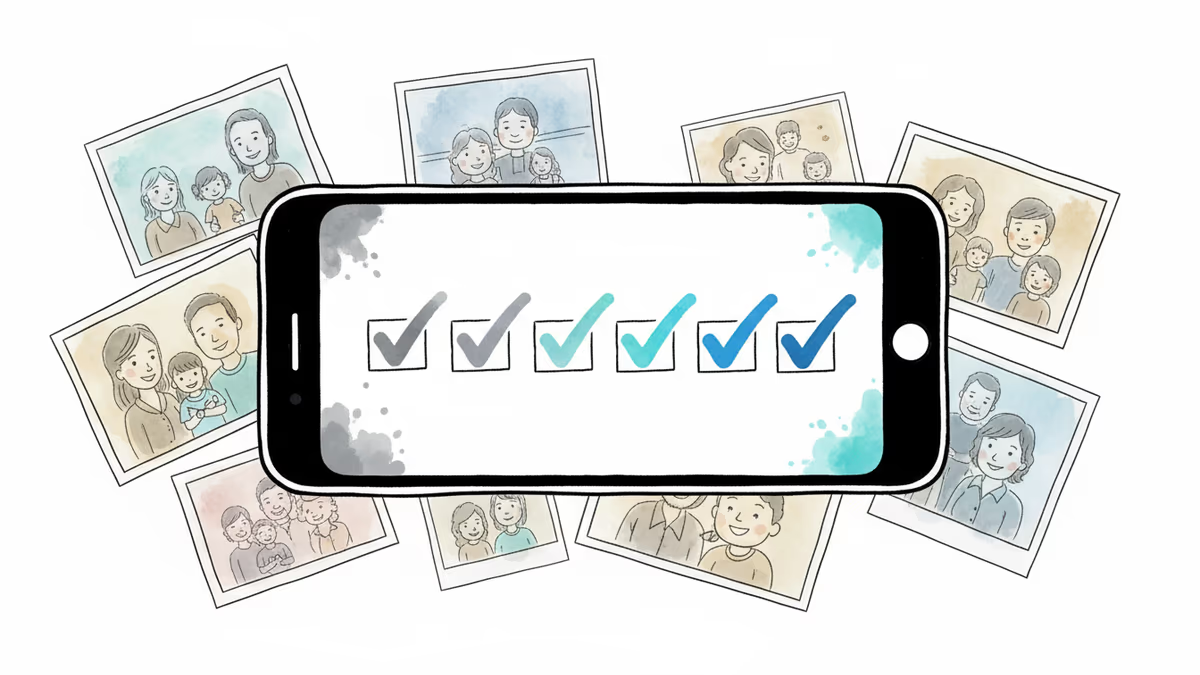
The first thing I check each morning isn't the headlines—it's two check marks on my phone. They sit under the message I sent hours earlier to my family in Tehran. Blue means relief. Gray means my body braces for scenarios my mind hasn't named yet.
This is how many Iranian diaspora families live now. After prolonged communication shutdowns during recent protests, Iranian authorities have again imposed blackouts amid U.S.-Israel strikes that killed hundreds in the country.
From Letters to VPNs: A History of Interrupted Connection
In the 1980s and early 1990s, family contact meant handwritten letters taking weeks or months to arrive. Envelopes came slit open and resealed. Sometimes sections were missing. We learned to write carefully, knowing someone else would read our words first.
Phone calls were brief and expensive. We rehearsed to avoid wasting seconds. Sometimes we called just to hear each other breathe, to anchor the memory of a voice.
If lucky, travelers from Tehran brought cassette tapes recorded at family gatherings. We'd sit around tape players hearing relatives pass the recorder hand to hand. Dishes clinked. Children shouted. Laughter drifted from other rooms. We replayed those tapes for months.
The Shadow Economy of Communication
Then came email, chat rooms, social media. Technology shrank distance. Communication tools multiplied: WhatsApp for family groups, Signal for sensitive conversations, Telegram for updates, Instagram for glimpses of daily life. VPNs when connections stalled.
But these tools aren't constant. VPNs are perpetually blocked. Families trade tips on which ones are faster, which last longer. They budget for them like utilities, knowing each will eventually stop working.

A cousin rotates SIM cards: one for everyday use, one for tense periods, one kept aside. It's not paranoia—it's preparation.
The Exhaustion of Coded Messages
For decades, communication between those inside Iran and outside has unfolded under the shadow of monitoring. My relatives no longer write long sentences. "We are okay. Situation normal. Will write later." Sometimes messages disappear minutes after arriving.
When the phone rings unexpectedly, my heart drops. Sometimes I hesitate to ask what I want to ask—it's easier to ask about internet speed than who's been hurt.
Starlink devices have allowed limited uploads during blackouts. For some, this meant the difference between silence and visibility. But it's expensive, difficult to obtain, and dangerous to possess.
The Fact-Checking Diaspora
Lately, feeds fill with dramatic clips. Explosions from other countries, other times. Audio recordings claiming mass arrests no credible outlet confirms. Images looking authentic until someone notices a warped shadow or wrong license plate.
We check timestamps in Persian. Listen for regional accents. Compare sunlight angles to reported hours. Zoom into backgrounds searching for recognizable street signs. Reverse image search.
In diaspora group chats, someone's always fact-checking. A friend in Chicago scans Telegram channels. Another in Australia compares news broadcasts. A relative in Stockholm reads European coverage. Together we assemble reality from fragments.
Yet when videos of wounded protesters circulate through personal networks, people hesitate. They squint at screens saying it's "probably AI"—even when you explain footage came from someone you know, someone who risked arrest to film it. Doubt lingers. Suffering dissolves into speculation.
When the Internet Goes Dark
Then there are days when internet goes completely dark. Families from Tehran to Chicago stare at frozen screens. During the last blackout, I replayed my aunt's final voice note just to hear water running in her kitchen—an ordinary sound offering proof of existence.
Authors
Related Articles
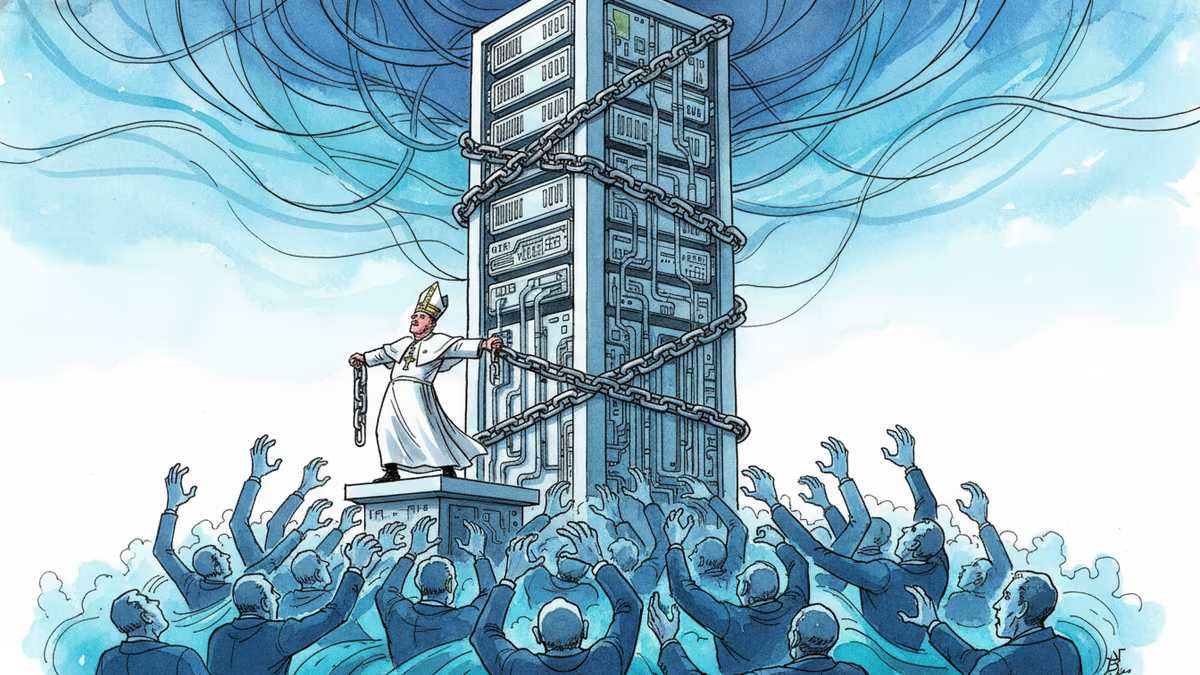
Pope Leo XIV's first encyclical frames AI not as a technology problem but a power problem. Who controls the algorithm controls reality—and that's a political question, not a spiritual one.
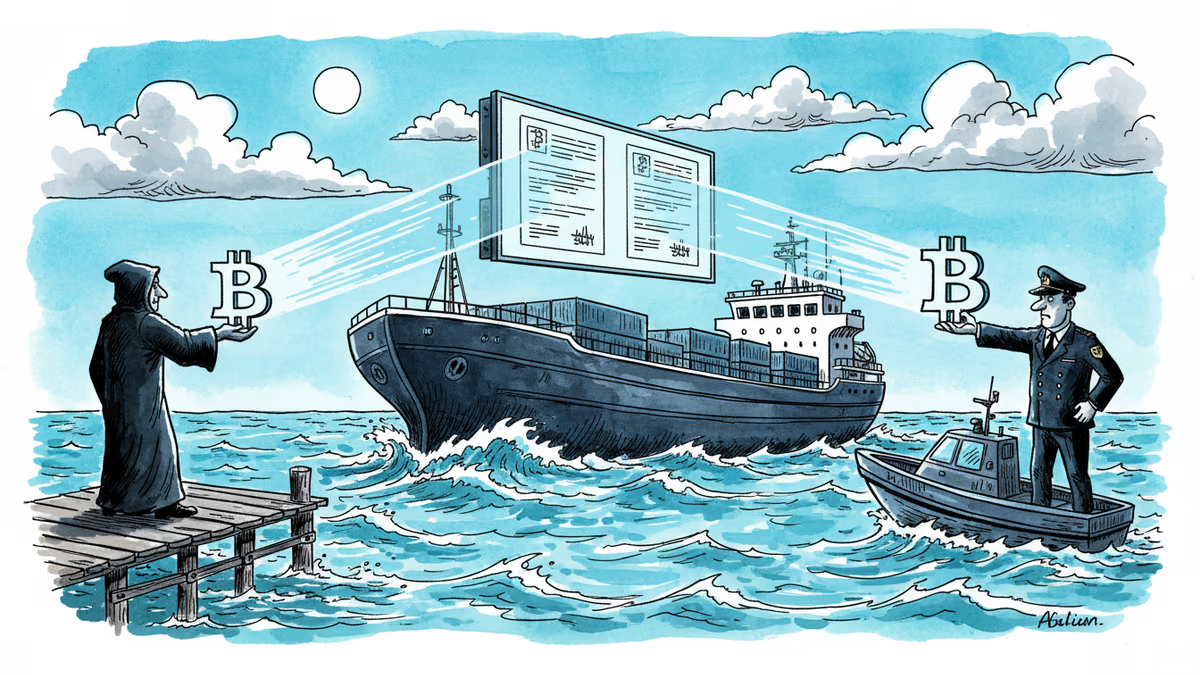
Scammers posing as Iranian authorities are demanding bitcoin and tether from ships near the Strait of Hormuz—exploiting the fact that Iran already does exactly this.
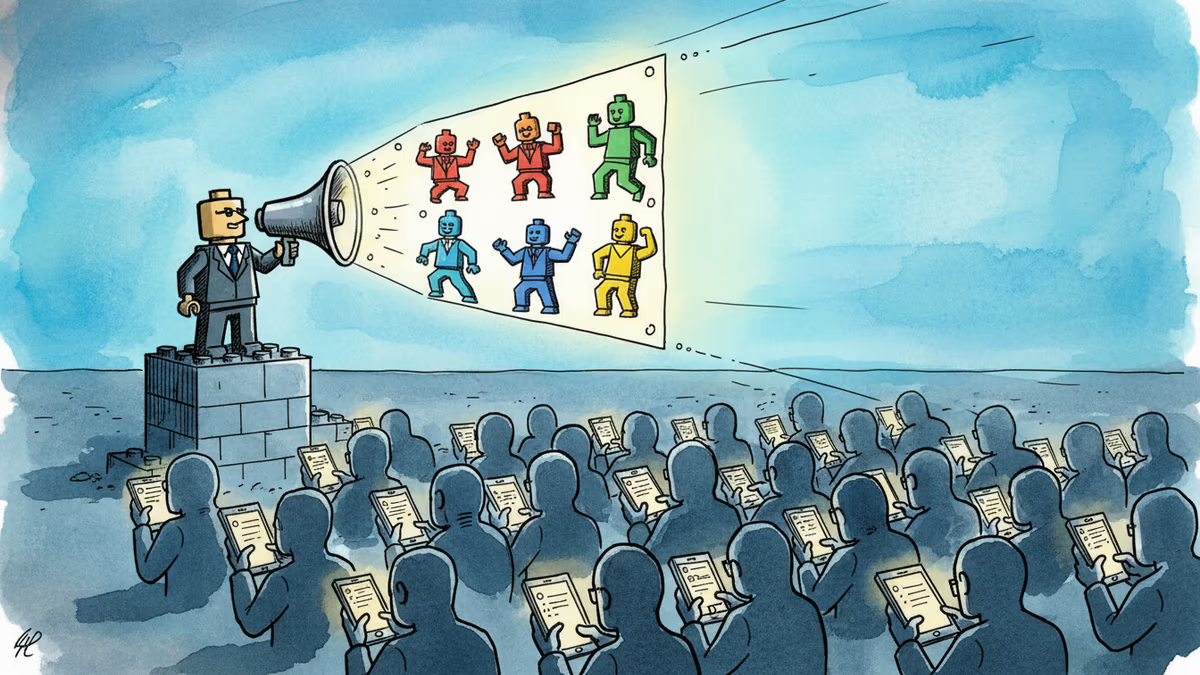
A small pro-Iran team is racking up millions of views with AI-generated Lego videos that mock Trump — and Americans are sharing them. What does that tell us about information warfare?
Iranian government-backed hackers have escalated from data theft to physically manipulating U.S. water, power, and local government control systems. A joint FBI-NSA-CISA-DOE advisory confirms operational disruption has already occurred.
Pope Leo XIV's first encyclical frames AI not as a technology problem but a power problem. Who controls the algorithm controls reality—and that's a political question, not a spiritual one.
Scammers posing as Iranian authorities are demanding bitcoin and tether from ships near the Strait of Hormuz—exploiting the fact that Iran already does exactly this.
A small pro-Iran team is racking up millions of views with AI-generated Lego videos that mock Trump — and Americans are sharing them. What does that tell us about information warfare?
Iranian government-backed hackers have escalated from data theft to physically manipulating U.S. water, power, and local government control systems. A joint FBI-NSA-CISA-DOE advisory confirms operational disruption has already occurred.
Thoughts
Share your thoughts on this article
Sign in to join the conversation