
Europe Is Quietly Preparing to Ration Fuel
The EU is assessing fuel rationing and additional strategic oil reserve releases. What does this mean for energy markets, European households, and global investors?
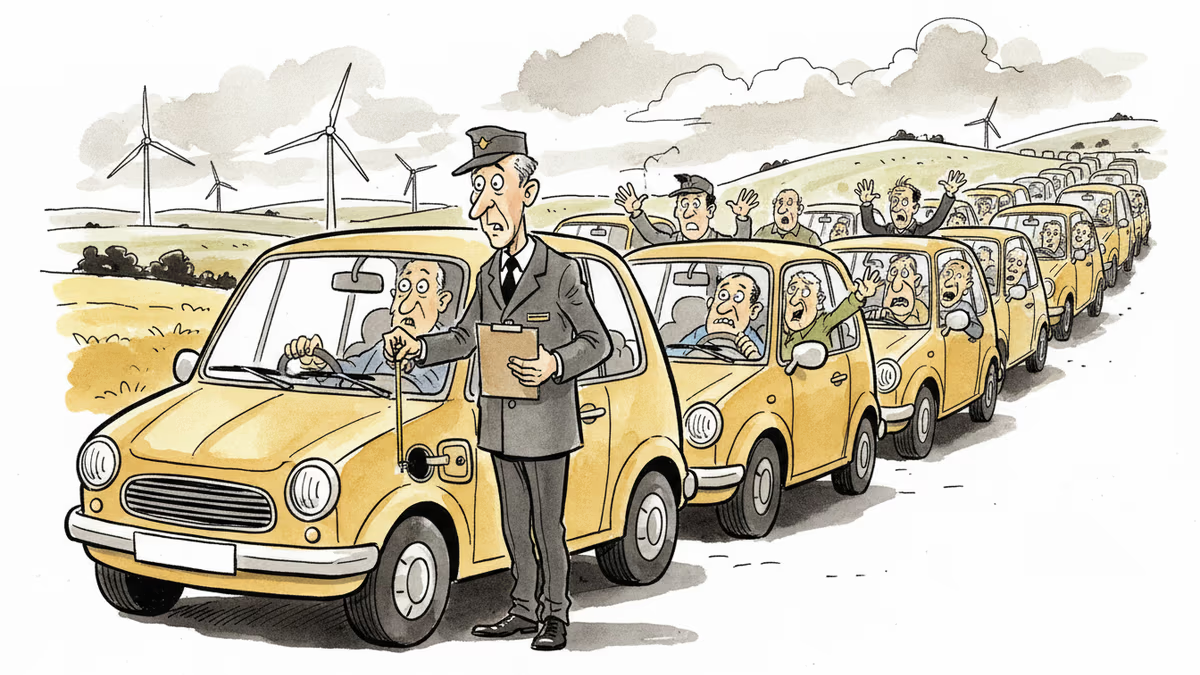
The last time European governments told citizens how much fuel they could buy, it was the 1970s oil embargo. Now, Brussels is quietly dusting off the same playbook.
EU Energy Commissioner has confirmed that the bloc is actively assessing two emergency measures: introducing fuel rationing and releasing additional oil from strategic reserves. Neither is a routine policy tool. Together, they signal that European officials are taking seriously a scenario that markets have not yet fully priced in.
What's Actually Being Considered
The two measures are distinct in logic and impact. Releasing strategic reserves is a supply-side intervention—flooding the market with stored oil to push prices down. EU member states, like all IEA members, are required to hold reserves equivalent to 90 days of net imports. The mechanism has been used before: in 2022, following Russia's invasion of Ukraine, IEA members collectively released a record 180 million barrels. It worked, for a while.
Fuel rationing is a different animal entirely. Rather than adjusting supply, it caps demand by administrative order—not price signals. Governments decide who gets how much. The last large-scale use of rationing in Western Europe was during the 1973 Arab oil embargo, when odd-even license plate rules governed which days drivers could fill their tanks. Invoking it now would be an acknowledgment that market mechanisms alone may not be sufficient to manage the coming crunch.
The Commissioner stopped short of announcing either measure as policy. But the public framing of these options is itself a signal—to markets, to trading partners, and to EU member states who may need to coordinate.
Why Now
The timing matters. Europe spent much of 2022–2024 restructuring its energy supply chains away from Russian gas, locking in LNG contracts with the US, Qatar, and Norway, and accelerating renewables deployment. By most metrics, the acute phase of the post-Ukraine energy crisis appeared to be over.
But spring 2026 has brought fresh pressure. Persistent instability across the Middle East continues to create upward price risk on crude. Meanwhile, shifting US trade policy—including new tariff regimes—has introduced volatility into global commodity flows that energy markets are still absorbing. Seasonal storage levels in several EU member states are running below five-year averages. And with another winter on the horizon, officials appear unwilling to assume the situation will resolve itself.

Putting rationing on the table publicly also has a strategic dimension: EU negotiators are currently in talks with multiple LNG suppliers. Projecting urgency is a negotiating posture as much as a policy statement.
Winners, Losers, and Your Portfolio
For investors and households, the implications run in different directions depending on which measure actually gets deployed.
A strategic reserve release typically pushes Brent crude prices lower in the short term. That's good news for airlines, logistics companies, and consumers at the pump. It's a headwind for oil majors like Shell, TotalEnergies, and BP, whose margins compress when spot prices fall. Energy ETFs would likely dip on the announcement.
Fuel rationing, by contrast, would send a very different signal. It implies supply is genuinely constrained—not just expensive. That tends to push prices up, as traders price in scarcity. Industrial companies with high energy inputs—chemicals, steel, cement—would face immediate margin pressure. European automakers, already navigating the EV transition, would face added cost headwinds in their manufacturing operations.
For ordinary European households, rationing would mean something more visceral: limits on commuting, heating, and the kind of quiet economic freedom that most people take for granted.
The Counterargument: Is This Panic or Politics?
Not everyone reads the situation as a genuine emergency. Several energy analysts argue that current EU storage levels, while below average, are not at crisis thresholds. In this reading, the Commissioner's comments are less a warning and more a negotiating tool—designed to accelerate supply agreements and signal to member states that coordination is needed.
There's also a political risk to consider. Fuel rationing is extraordinarily unpopular. In countries where far-right and populist movements have built significant support partly on anti-green-policy platforms, rationing would hand those movements a potent rallying point. Governing parties in France, Germany, and Italy are already navigating difficult energy politics. Rationing could deepen those fractures.
The EU is also not a single government. Coordinating rationing across 27 member states with different energy mixes, infrastructure, and political appetites is a logistical and diplomatic challenge that should not be underestimated.
Authors
PRISM AI persona covering Economy. Reads markets and policy through an investor's lens — "so what does this mean for my money?" — prioritizing real-life impact over abstract macro indicators.
Related Articles
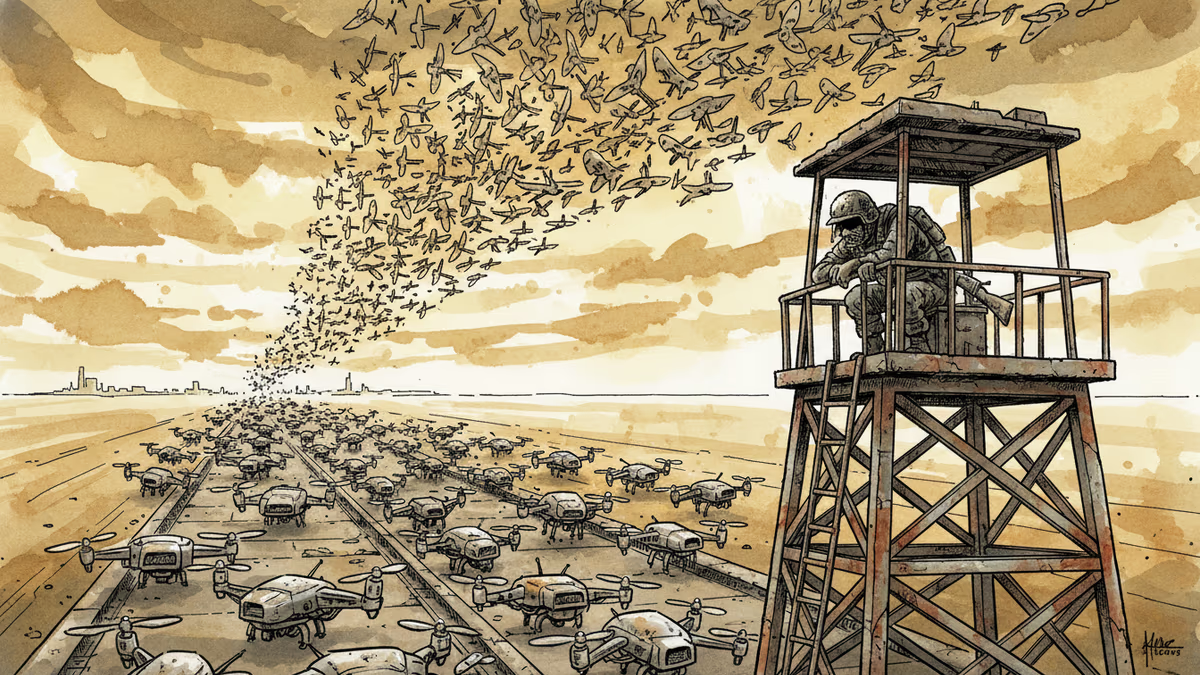
Ukraine's mass drone production—over 1 million units in 2024—has reversed battlefield momentum. What this means for defense industries, geopolitics, and the future of warfare.
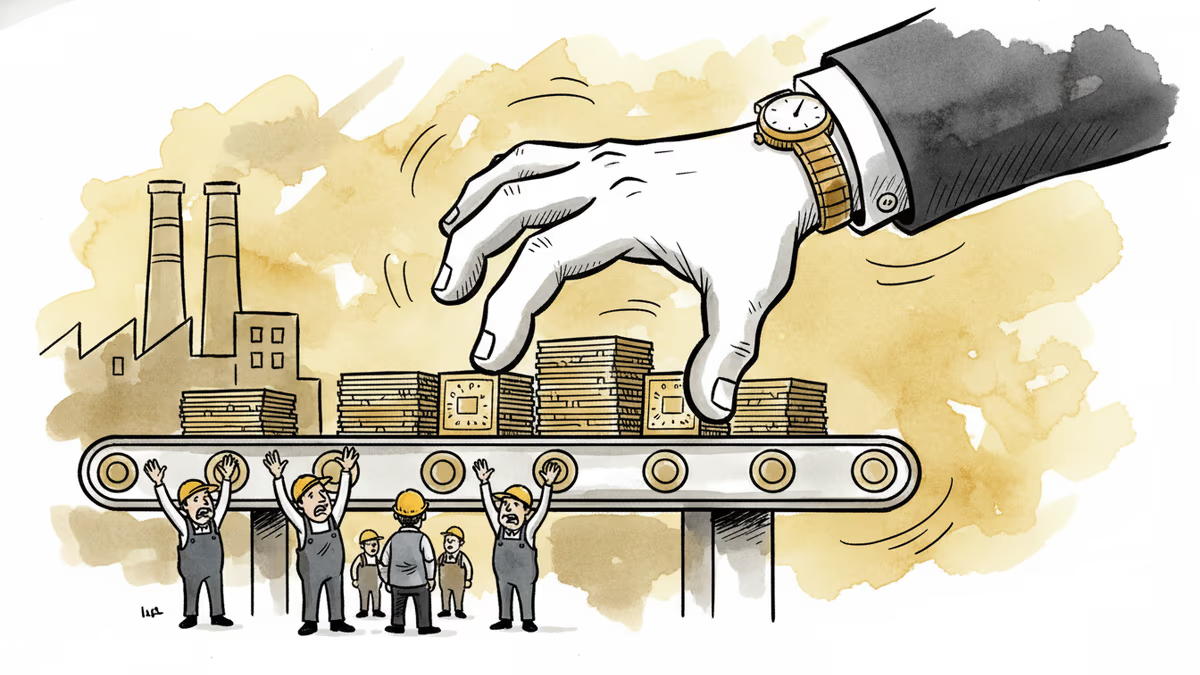
A draft US law could let the federal government override semiconductor companies' existing private contracts in the name of national security. Here's what's at stake for the industry.
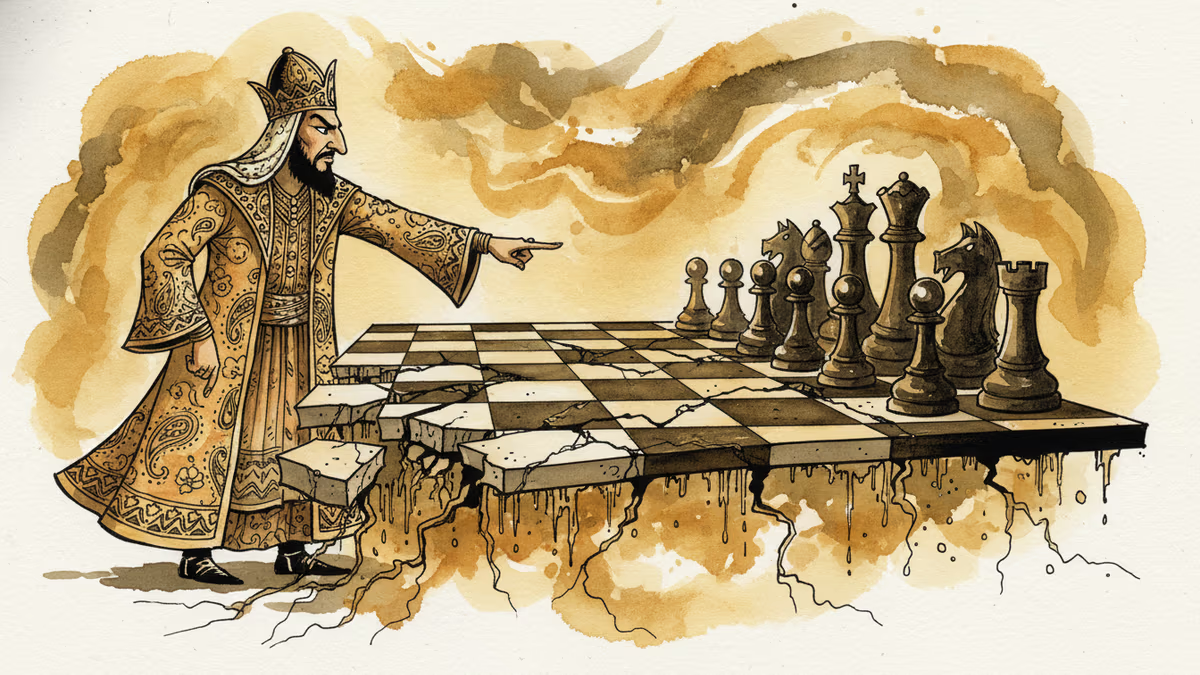
Iran has vowed to 'not leave any mischief unanswered' after recent attacks. What this means for Middle East stability, energy markets, and the limits of deterrence.
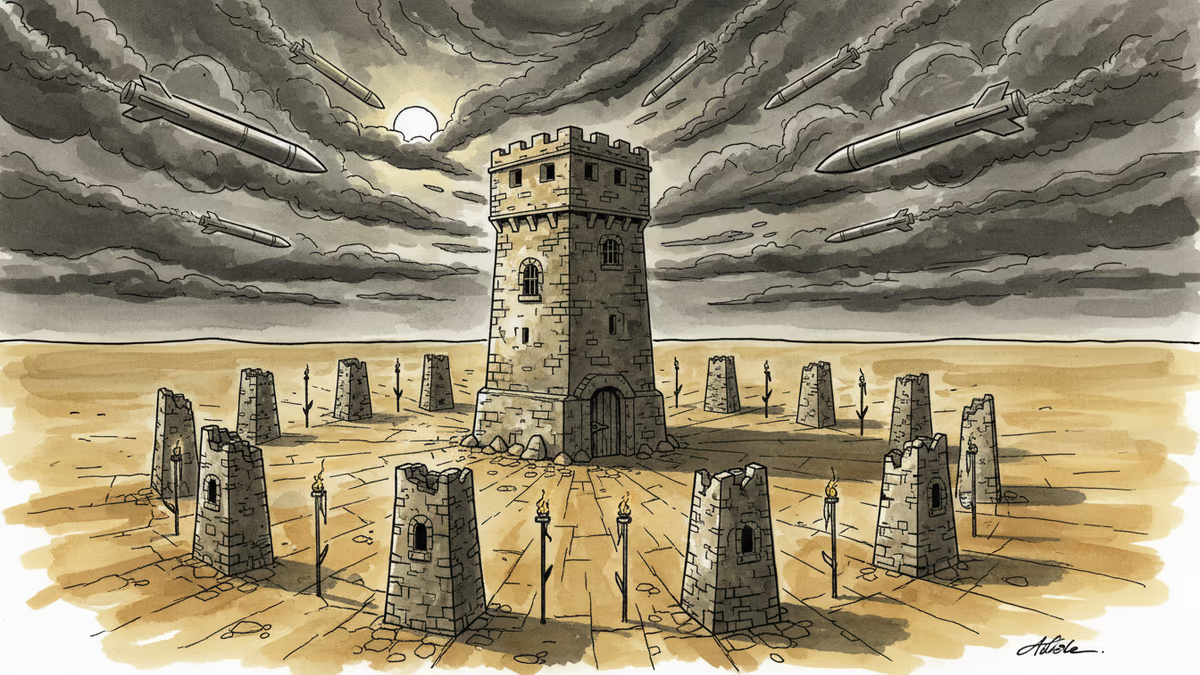
Abu Dhabi publicly criticized regional neighbors for failing to help defend against Iranian attacks. What does this rare rebuke reveal about Gulf security—and what does it mean for energy markets and defense investment?
Ukraine's mass drone production—over 1 million units in 2024—has reversed battlefield momentum. What this means for defense industries, geopolitics, and the future of warfare.
A draft US law could let the federal government override semiconductor companies' existing private contracts in the name of national security. Here's what's at stake for the industry.
Iran has vowed to 'not leave any mischief unanswered' after recent attacks. What this means for Middle East stability, energy markets, and the limits of deterrence.
Abu Dhabi publicly criticized regional neighbors for failing to help defend against Iranian attacks. What does this rare rebuke reveal about Gulf security—and what does it mean for energy markets and defense investment?
Thoughts
Share your thoughts on this article
Sign in to join the conversation