
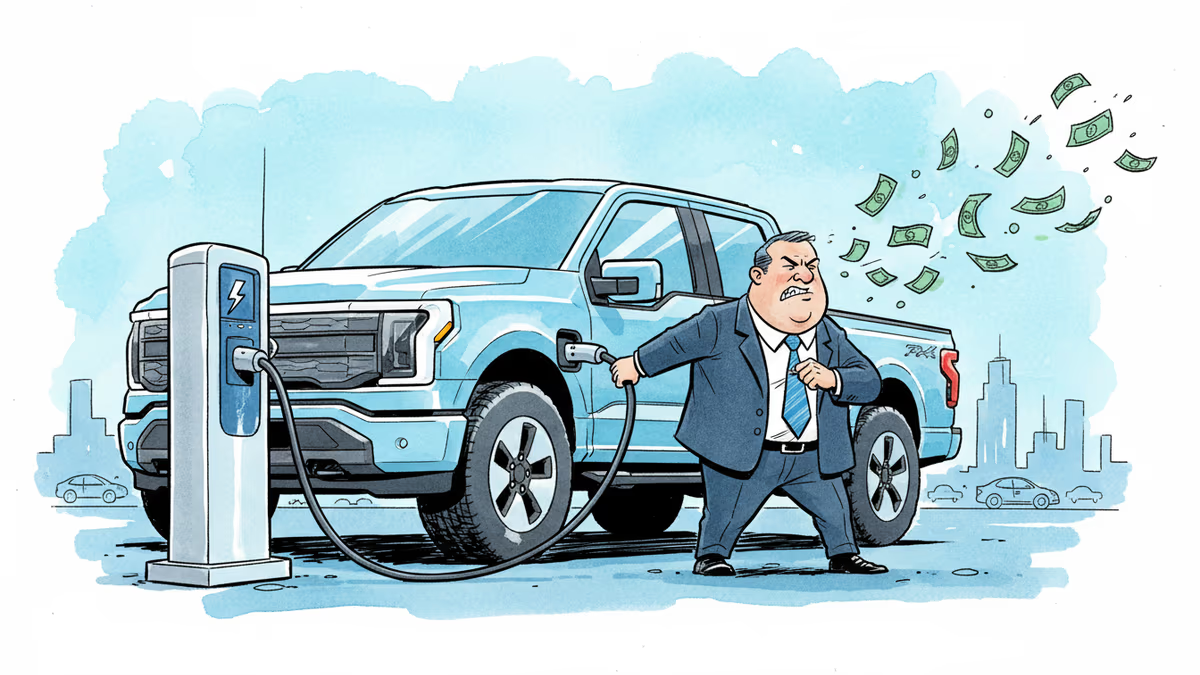
Ford's $19.5B Reality Check on Electric Dreams
Ford pulls plug on F-150 Lightning after massive EV losses, pivoting to hybrids and smaller EVs. What this means for the auto industry's electric future.
The $19.5 Billion Lesson Ford Had to Learn the Hard Way
Ford just pulled the plug on the F-150 Lightning, the truck once hailed as "the most important EV ever made." After burning through $19.5 billion on EV investments, the 122-year-old company is making a brutal admission: sometimes the future isn't profitable.
But this isn't just Ford's story. It's a reality check for an entire industry that bet big on electric dreams.
Why the All-Electric Strategy Failed
The numbers tell a stark story. Ford's Model E division lost $5 billion in 2025 alone, with losses exceeding $20,000 per vehicle sold. That's not a scaling problem—that's a fundamental business model crisis.
"There's no path to profitability" for oversized EVs like the Lightning, admits Andrew Frick, Ford's VP. The math is simple: battery costs remain stubbornly high, charging infrastructure lags behind promises, and consumer adoption has plateaued.
Meanwhile, Ford's traditional combustion engines still generate 80% of the company's profits. Reality has a way of cutting through the hype.
The Hybrid Pivot: Pragmatism Over Purity

Ford's new strategy focuses on hybrids, extended-range EVs, and smaller electric vehicles. It's a dramatic shift from the "all-electric by 2030" rhetoric that dominated boardrooms just three years ago.
Why hybrids? Consumer behavior research reveals the answer. Range anxiety remains the top barrier to EV adoption, cited by 67% of potential buyers. Charging infrastructure, despite billions in investment, still feels inadequate for mainstream America.
Toyota saw this coming. While competitors rushed toward pure electric, Toyota doubled down on hybrid technology. Today, that "conservative" approach looks prescient. Ford is essentially admitting Toyota was right all along.
Winners and Losers in the Pivot
Battery suppliers face mixed signals. Companies like CATL and BYD may see reduced demand for large-format cells, but hybrid batteries could offset losses. The market is reshuffling, not shrinking.
Tesla suddenly looks more vulnerable. If Ford—with its manufacturing expertise and dealer network—can't make large EVs profitable, what does that say about the sustainability of Tesla's truck and SUV ambitions?
Legacy automakers might breathe easier. Ford's pivot validates a more cautious approach to electrification. GM and Stellantis are likely reassessing their own all-electric timelines.
The Consumer Reality Check
Here's what Ford's data reveals about American car buyers: they want environmental benefits without lifestyle compromises. Hybrids deliver 40-50% better fuel economy without range anxiety or charging hassles.
The Lightning's failure wasn't just about profitability—it was about product-market fit. American truck buyers use their vehicles for work, towing, and long-distance travel. A 300-mile range sounds good until you're pulling a trailer and realize you'll get 150 miles on a charge.
Authors
Related Articles
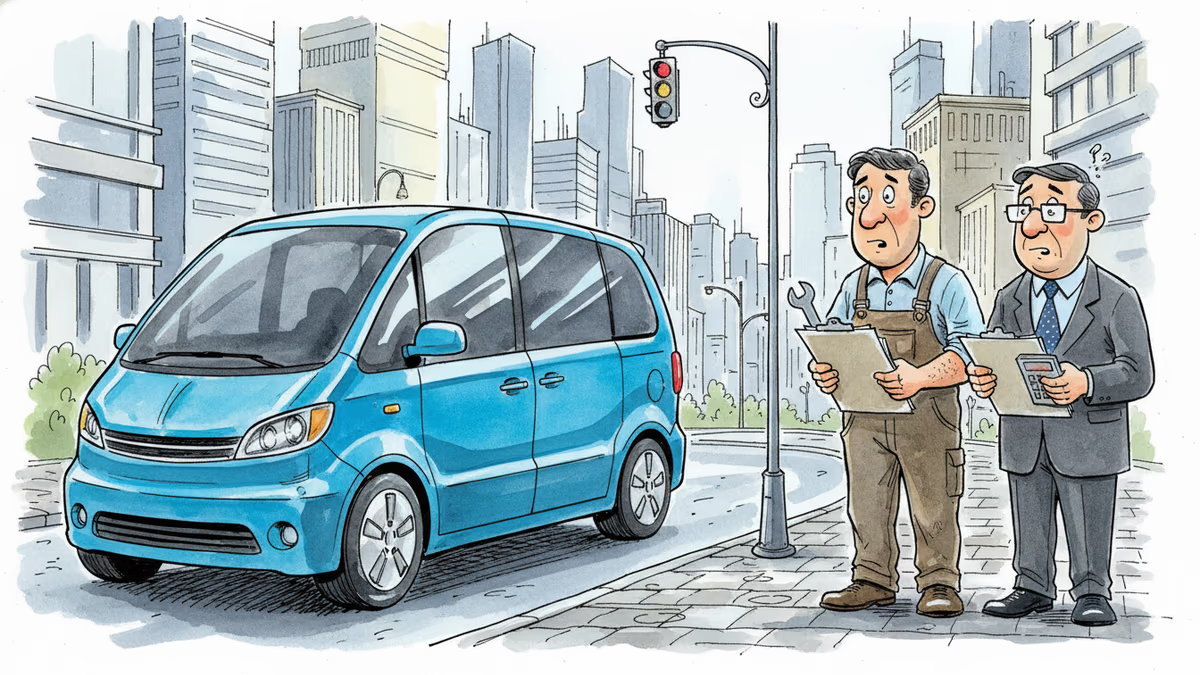
Waymo's new Ojai robotaxi isn't just a vehicle upgrade. It's the company's most serious attempt yet at cracking the cost problem that has kept autonomous vehicles from scaling. Here's what's really at stake.
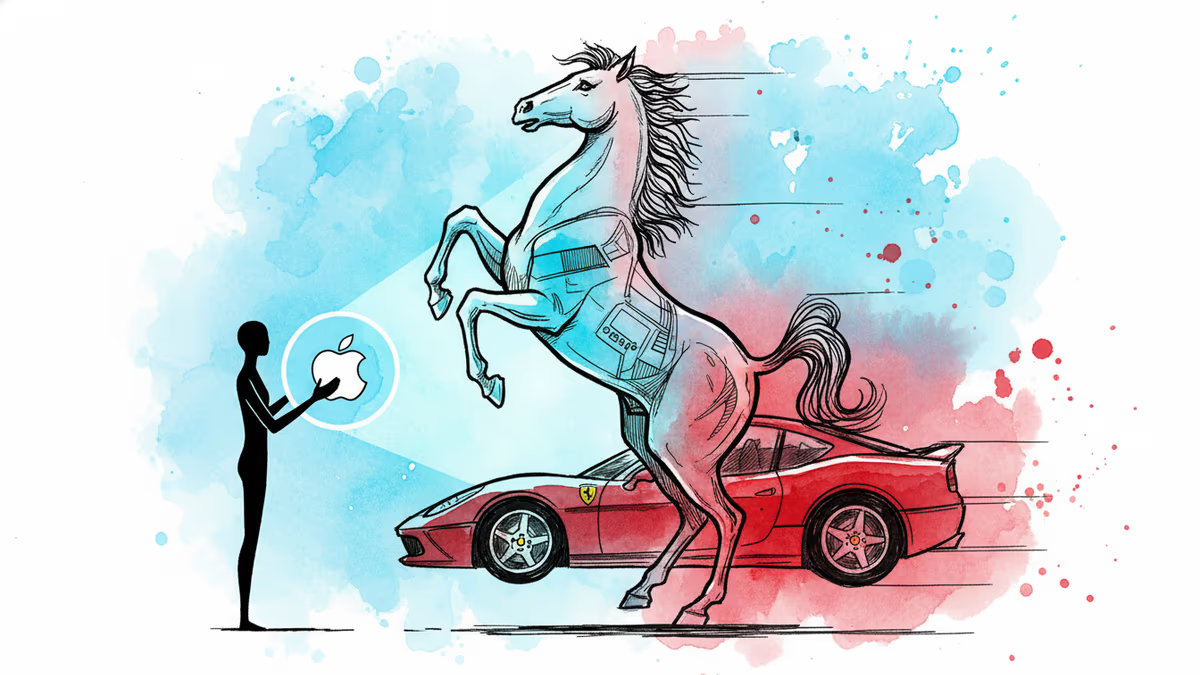
The Ferrari Luce is finally here — 1,000 hp, a 122 kWh battery, and an interior designed by the team behind the iPhone. But the real story is what Ferrari risked to build it.
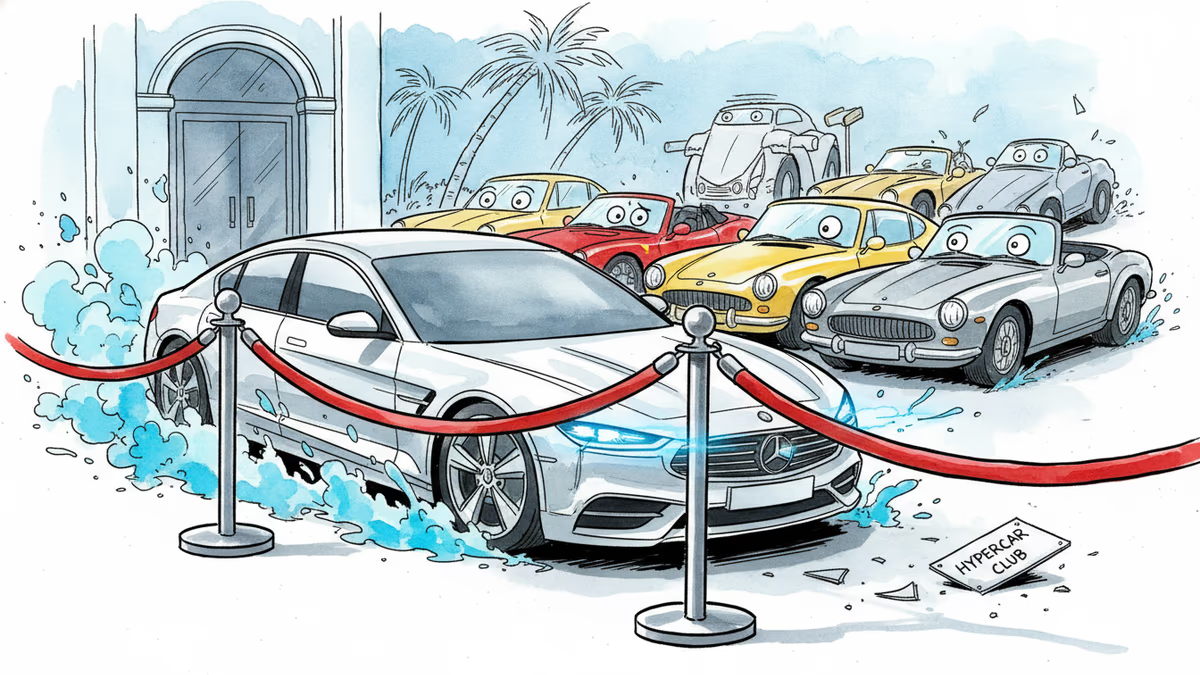
Mercedes-AMG's new GT 4-door coupe packs three YASA axial flux motors producing 1,153 hp and 1,475 lb-ft of torque. Here's what it means for the EV performance race—and who actually wins.
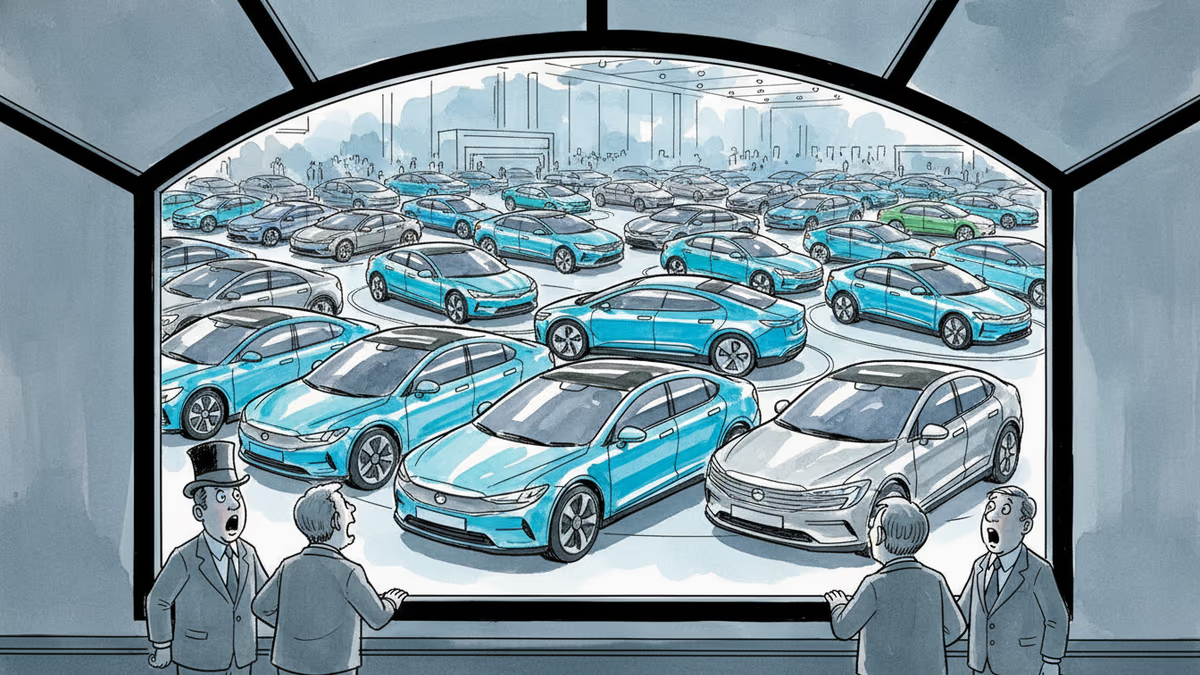
Auto China 2026 set records with 1,451 vehicles and 181 world premieres. But the real story isn't the size—it's how Chinese automakers stopped competing on price and started competing on brains.
Waymo's new Ojai robotaxi isn't just a vehicle upgrade. It's the company's most serious attempt yet at cracking the cost problem that has kept autonomous vehicles from scaling. Here's what's really at stake.
The Ferrari Luce is finally here — 1,000 hp, a 122 kWh battery, and an interior designed by the team behind the iPhone. But the real story is what Ferrari risked to build it.
Mercedes-AMG's new GT 4-door coupe packs three YASA axial flux motors producing 1,153 hp and 1,475 lb-ft of torque. Here's what it means for the EV performance race—and who actually wins.
Auto China 2026 set records with 1,451 vehicles and 181 world premieres. But the real story isn't the size—it's how Chinese automakers stopped competing on price and started competing on brains.
Thoughts
Share your thoughts on this article
Sign in to join the conversation