
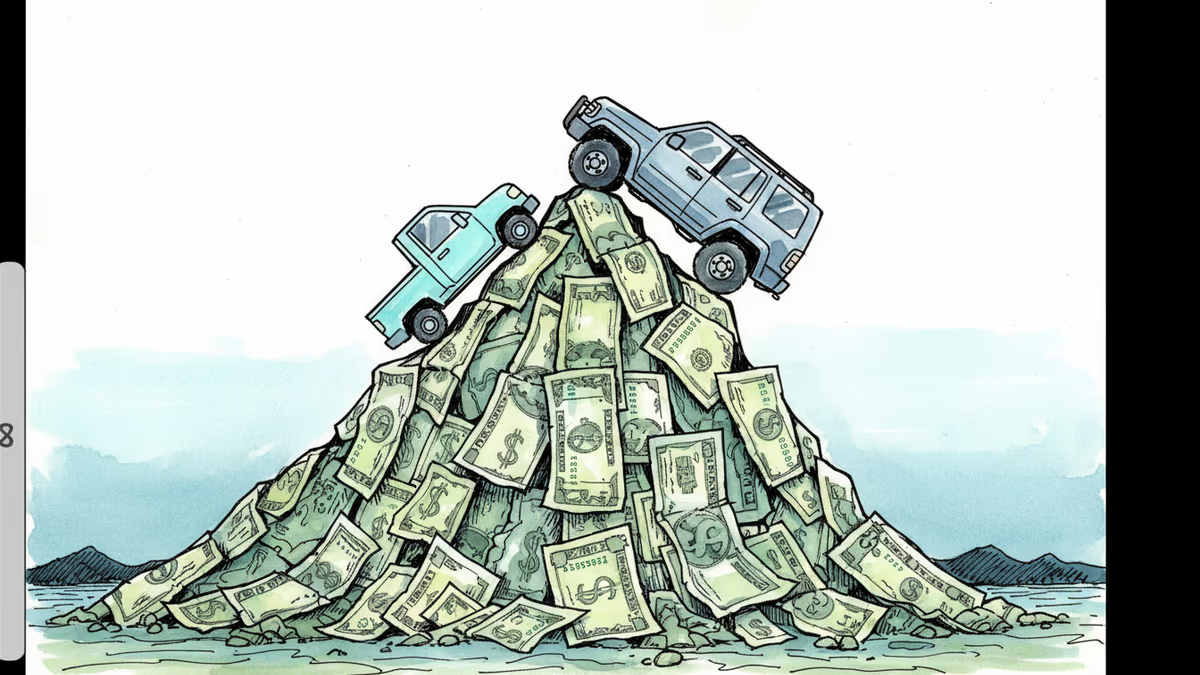
Rivian Stock Surges 27% as R2 SUV Becomes Make-or-Break Moment
Rivian's software partnership with Volkswagen saved the company in 2025, but the upcoming R2 SUV will determine if the EV startup can truly scale. Here's what the numbers reveal.
$100,900. That's how much it cost Rivian to build each vehicle in 2025. Still losing money on every truck and SUV sold, but here's the twist: investors sent the stock soaring 27% after earnings. The market isn't betting on today's numbers—it's betting on tomorrow's story.
Software Saved the Hardware Company
Rivian's 2025 earnings revealed something unexpected: its salvation came not from selling more trucks, but from selling software. The company's technology joint venture with Volkswagen Group is expected to bring in another $2 billion in 2026, essentially buying Rivian time to figure out profitability.
"Software was our savior," is how one analyst described the partnership. It's a fascinating pivot for a company that started as a pure-play EV manufacturer. Now Rivian is positioning itself as a mobility technology platform that happens to make trucks.
The unit economics tell a story of gradual improvement. Cost of goods sold per vehicle dropped from $110,400 in 2024 to $100,900 in 2025. Still brutal, but trending in the right direction. The question is whether the upcoming R2 SUV can accelerate that trend.
The R2 Gambit: Affordable or Affordable-ish?

Everything hinges on the R2, launching in June. Rivian has floated price targets of $45,000 to $50,000—significantly cheaper than its current R1 lineup that starts above $90,000. But here's the catch: the launch edition will be a dual-motor, all-wheel-drive premium trim. Translation: expect that $50,000 to creep higher.
Rivian's 2026 guidance projects 62,000 to 67,000 vehicle deliveries—up to 59% from 2025's 42,247 units. Ambitious? Absolutely. Achievable? That depends on whether American consumers are ready for a $50,000+ electric SUV from a startup.
The Tale of Two Strategies
While Rivian plots its mass-market move, the broader mobility landscape is splitting into distinct camps. Uber is aggressively locking up autonomous vehicle partnerships—Baidu robotaxis in Dubai, WeRide expansion across the Middle East. Meanwhile, Lyft sits on $1.8 billion in cash but announced a $1 billion share buyback program instead of AV investments.
Industry insiders are puzzled by Lyft's approach. "Why buy back shares when the entire industry is pivoting to autonomous?" one executive asked. The talent exodus from Lyft—including recent defections to Adobe and Uber—suggests internal uncertainty about strategic direction.
Waymo continues its methodical expansion, removing safety drivers in Nashville and deploying sixth-generation vehicles in San Francisco. The company even hired DoorDash gig workers to shut robotaxi doors—a charmingly analog solution to a high-tech problem.
Authors
Related Articles
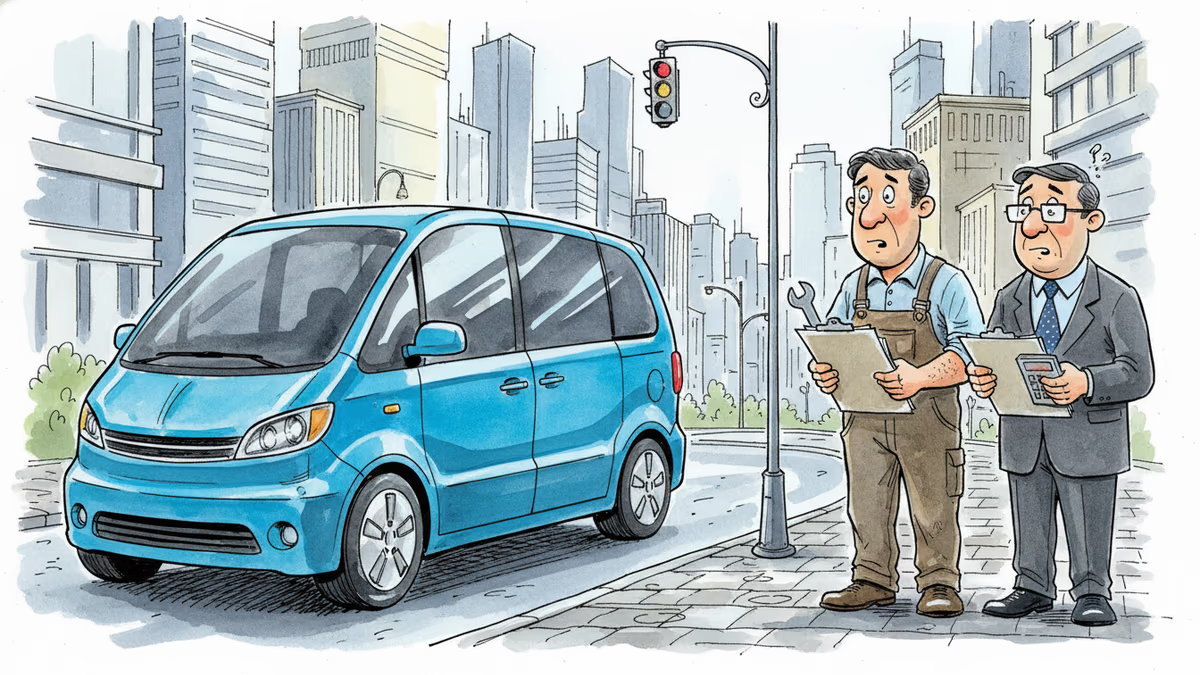
Waymo's new Ojai robotaxi isn't just a vehicle upgrade. It's the company's most serious attempt yet at cracking the cost problem that has kept autonomous vehicles from scaling. Here's what's really at stake.
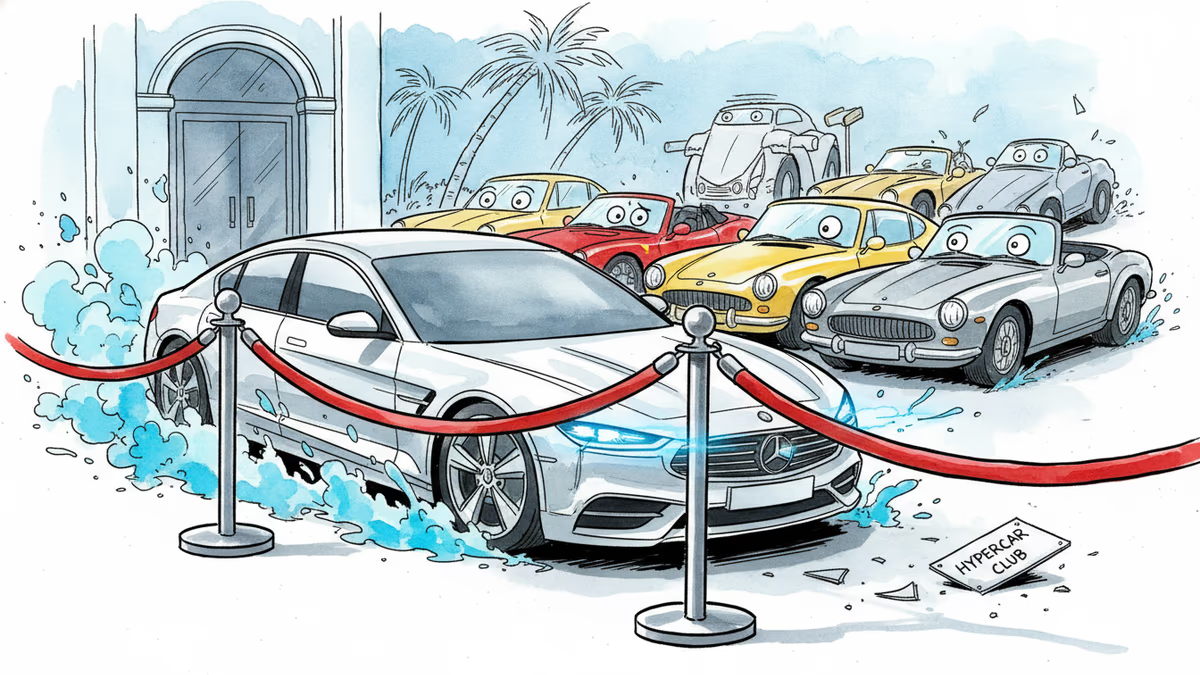
Mercedes-AMG's new GT 4-door coupe packs three YASA axial flux motors producing 1,153 hp and 1,475 lb-ft of torque. Here's what it means for the EV performance race—and who actually wins.
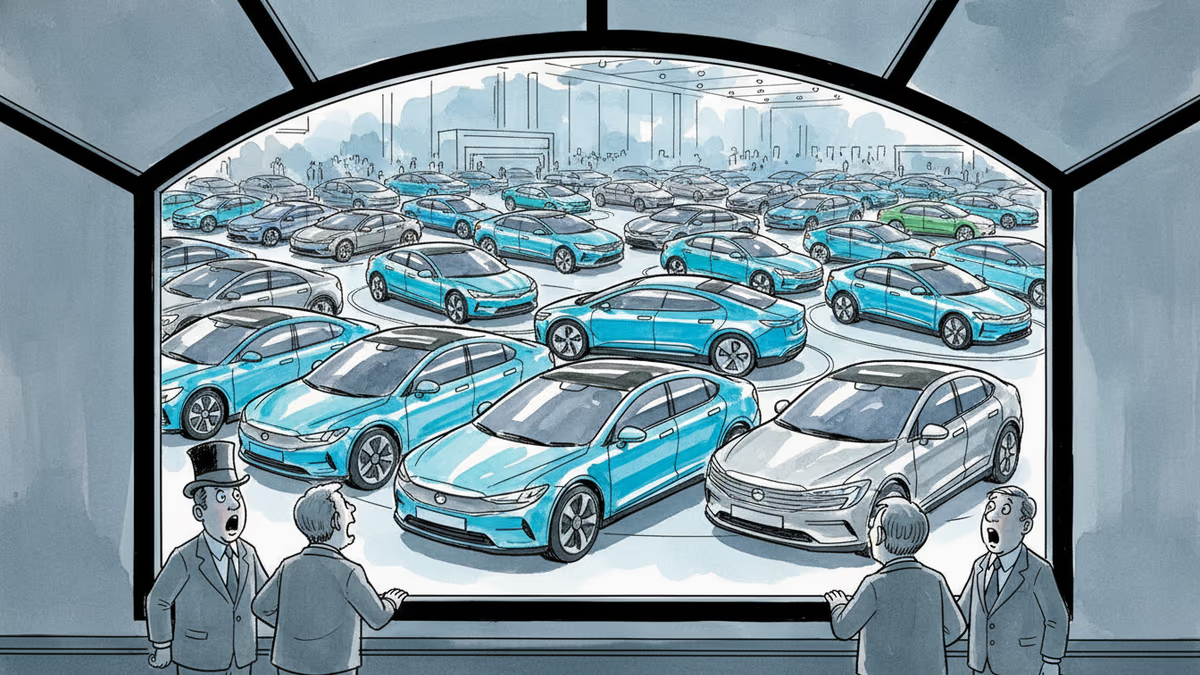
Auto China 2026 set records with 1,451 vehicles and 181 world premieres. But the real story isn't the size—it's how Chinese automakers stopped competing on price and started competing on brains.

Expiring leases will flood the US used car market with over a million electric vehicles by 2028. Could this do what subsidies couldn't — make EVs genuinely affordable?
Waymo's new Ojai robotaxi isn't just a vehicle upgrade. It's the company's most serious attempt yet at cracking the cost problem that has kept autonomous vehicles from scaling. Here's what's really at stake.
Mercedes-AMG's new GT 4-door coupe packs three YASA axial flux motors producing 1,153 hp and 1,475 lb-ft of torque. Here's what it means for the EV performance race—and who actually wins.
Auto China 2026 set records with 1,451 vehicles and 181 world premieres. But the real story isn't the size—it's how Chinese automakers stopped competing on price and started competing on brains.
Expiring leases will flood the US used car market with over a million electric vehicles by 2028. Could this do what subsidies couldn't — make EVs genuinely affordable?
Thoughts
Share your thoughts on this article
Sign in to join the conversation