
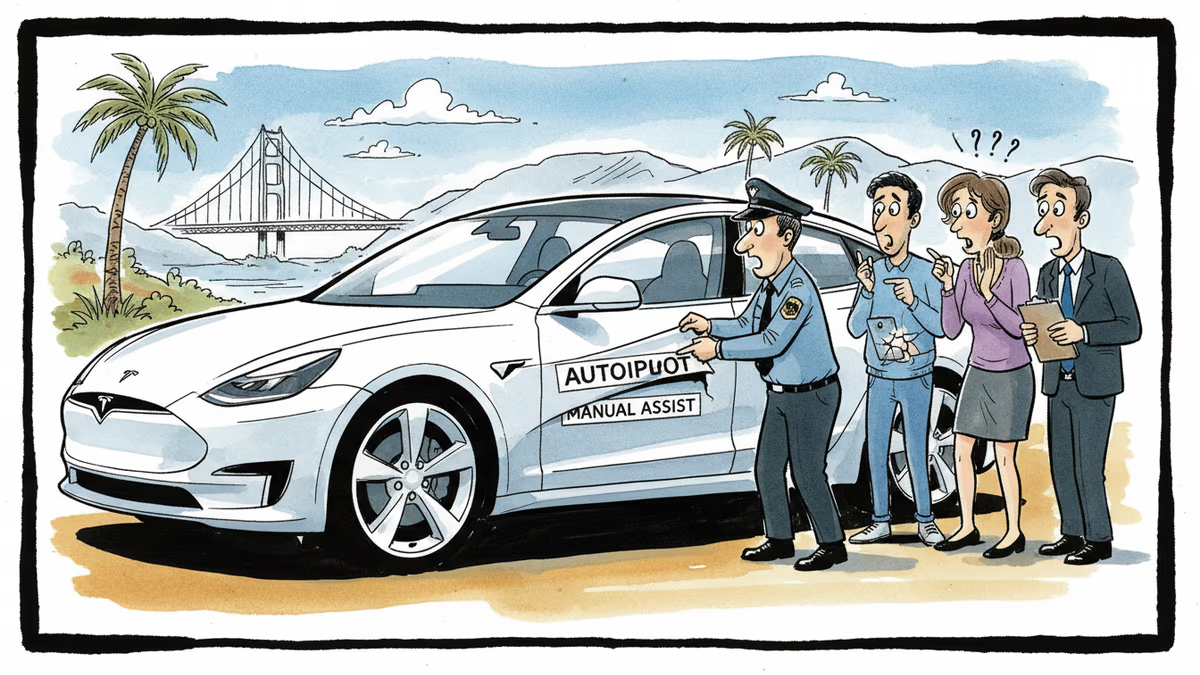
Tesla Drops 'Autopilot' to Dodge California Sales Ban
Tesla stops using 'Autopilot' term in California after DMV threatened 30-day sales suspension over misleading marketing. Analysis of autonomous driving marketing limits and consumer protection debate.
$30 Million Daily Revenue on the Line
Tesla has quietly stopped using the term "Autopilot" in California, dodging a 30-day sales suspension that would have cost the company roughly $900 million in lost revenue. The California Department of Motor Vehicles (DMV) announced that Tesla took "corrective action" after finding the EV maker's marketing violated state law by misleading customers into believing their cars could drive autonomously.
The dispute traces back to marketing materials Tesla began publishing in May 2021 for its Advanced Driver Assistance Systems (ADAS). Even after Tesla added "(Supervised)" to its product names, regulators deemed it insufficient to address consumer confusion.
The 12-Year Brand That Vanished Overnight
This isn't just semantic housekeeping. Tesla's "Autopilot" branding represented one of the most valuable marketing assets in automotive history, built over more than a decade since its 2012 debut. The name conjured images of aircraft autopilot systems—sophisticated, reliable, hands-off technology.
But there's a critical gap between perception and reality. Tesla's current system operates at Level 2 autonomy, requiring constant driver attention and readiness to intervene. The aviation-inspired "Autopilot" name, however, suggests the kind of full automation that won't arrive for years—if ever.
The DMV's action reflects growing regulatory impatience with this disconnect. As one DMV official put it: "You can't market tomorrow's technology with today's limitations buried in fine print."

Industry Reactions: Vindication vs. Concern
Competitors are watching carefully. GM's "Super Cruise" and Ford's "BlueCruise" deliberately chose more conservative naming strategies. "We've always been cautious about overpromising," a GM spokesperson noted, barely concealing satisfaction.
Consumer safety advocates are celebrating. The National Highway Traffic Safety Administration has investigated over 400 crashes involving Tesla's Autopilot in the past two years. "This shows that marketing accountability is finally catching up with Silicon Valley hype," said Consumer Reports' automotive director.
But Tesla owners are split. Some view this as regulatory overreach stifling innovation. Others welcome clarity. "I love my Tesla, but I've seen too many drivers treat Autopilot like a chauffeur," one Model S owner told us.
The Ripple Effect: What's Next?
Tesla's capitulation could reshape how the entire autonomous vehicle industry markets its technology. Startups developing self-driving systems are already reconsidering their messaging strategies. "The Tesla precedent means we all need to be more careful about the gap between our technology and our marketing," said one autonomous vehicle startup CEO.
Investors are also recalibrating. Tesla's stock has remained relatively stable, but the incident highlights regulatory risks that could affect the broader AV sector. "This is about more than Tesla—it's about how we talk about AI capabilities across industries," noted a tech-focused investment analyst.
The timing is particularly sensitive as Tesla faces increased scrutiny over its "Full Self-Driving" (FSD) beta program, which costs customers $15,000 despite requiring constant supervision.
Authors
Related Articles
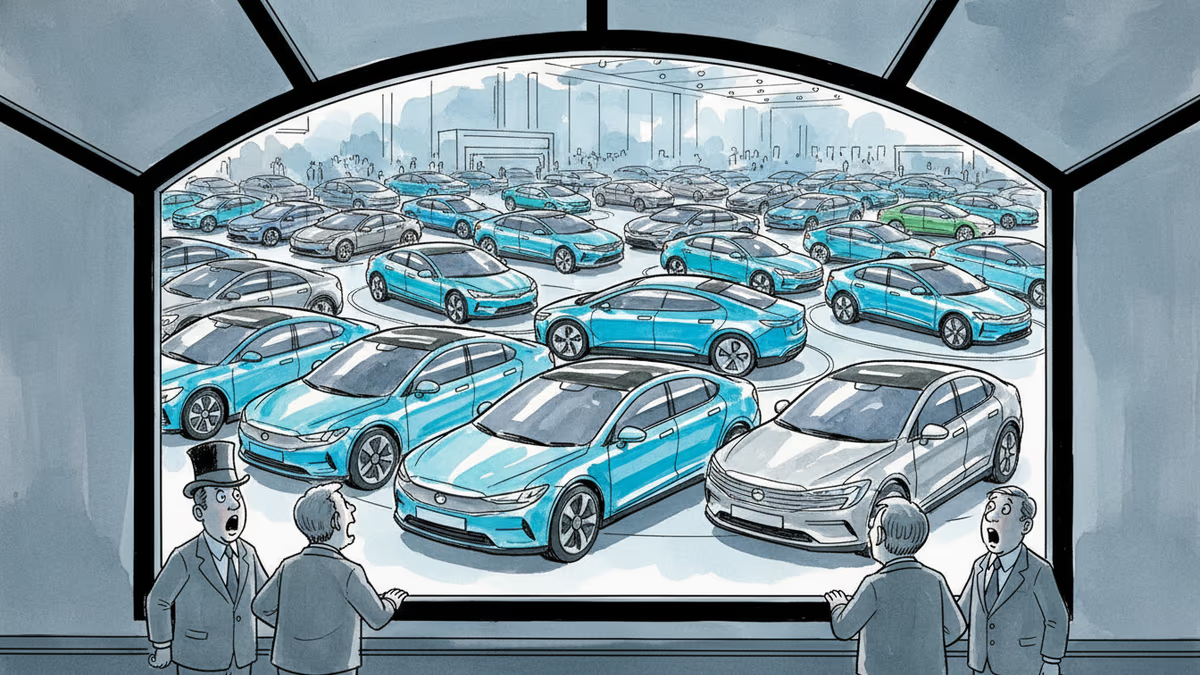
Auto China 2026 set records with 1,451 vehicles and 181 world premieres. But the real story isn't the size—it's how Chinese automakers stopped competing on price and started competing on brains.
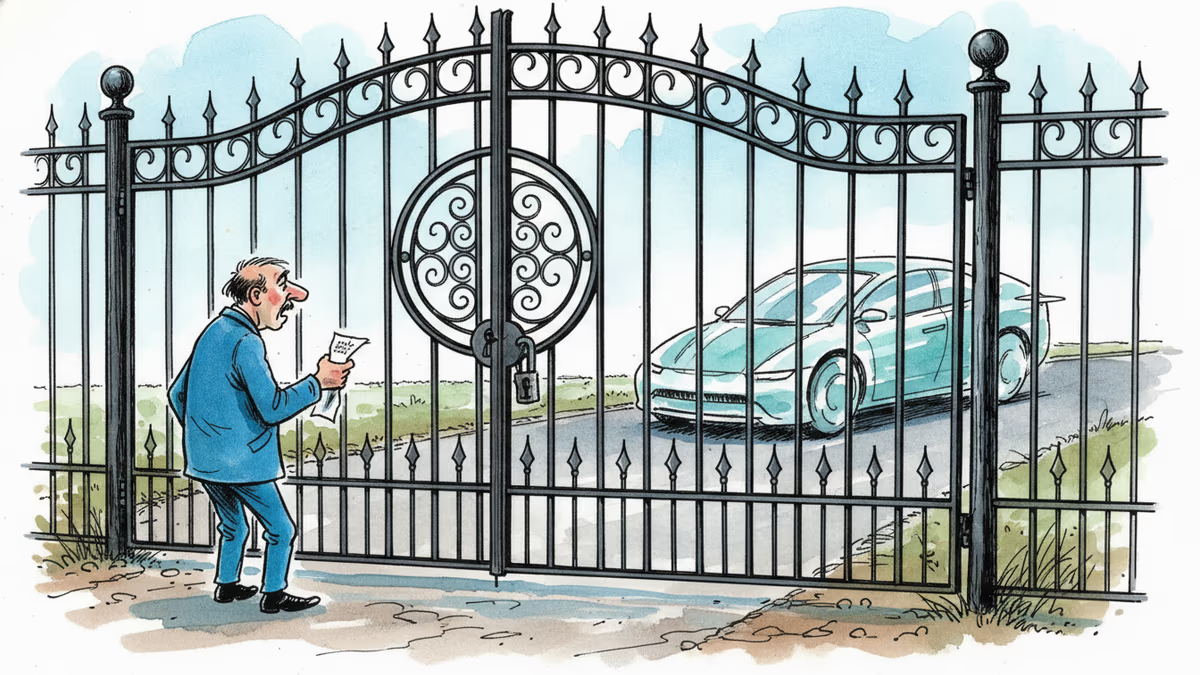
Elon Musk confirmed on Tesla's Q1 2026 earnings call that Hardware 3 vehicles will never receive unsupervised Full Self-Driving — locking out millions who paid for the feature.
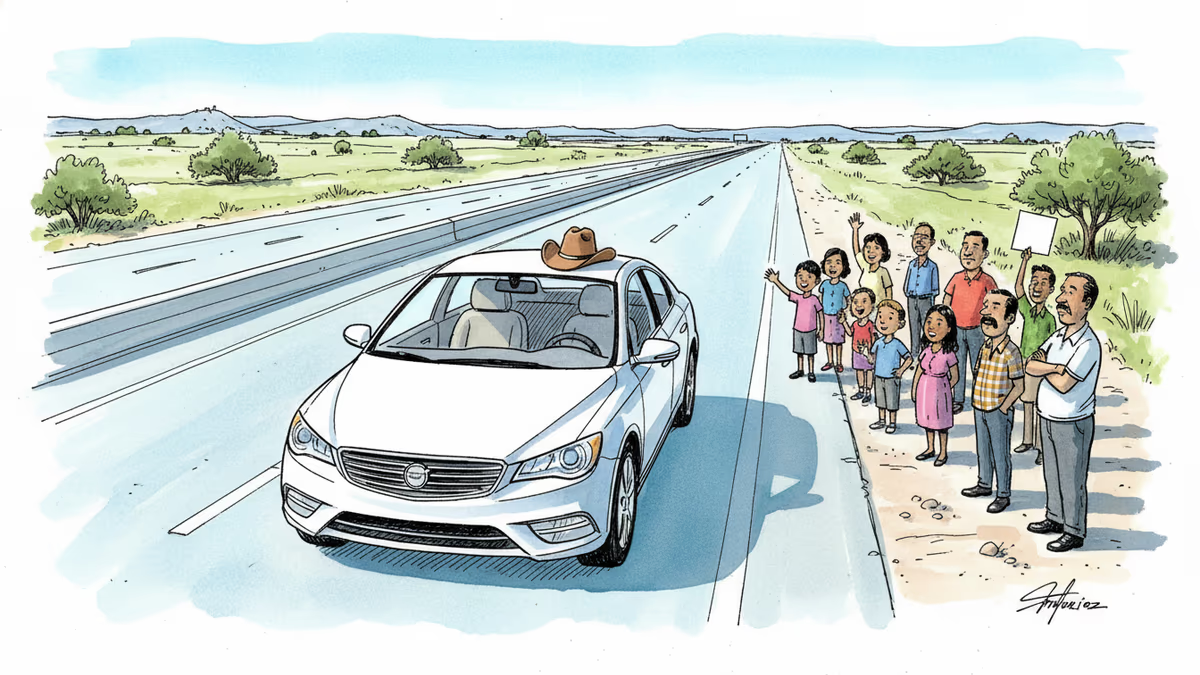
Tesla expanded its driverless robotaxi to Dallas and Houston, even after reporting 14 crashes in Austin. What does this tell us about how autonomous vehicles actually get built?
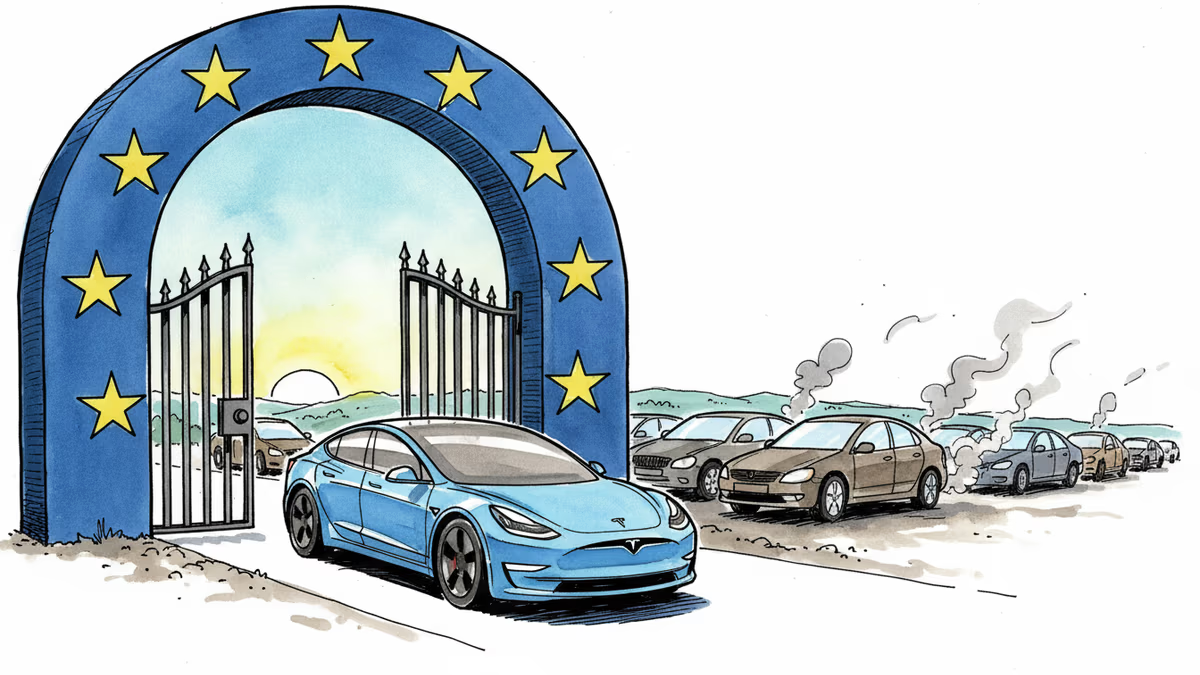
The Netherlands became the first European country to officially approve Tesla's FSD Supervised. With EU's type-approval framework, this could ripple across 27 member states fast.
Auto China 2026 set records with 1,451 vehicles and 181 world premieres. But the real story isn't the size—it's how Chinese automakers stopped competing on price and started competing on brains.
Elon Musk confirmed on Tesla's Q1 2026 earnings call that Hardware 3 vehicles will never receive unsupervised Full Self-Driving — locking out millions who paid for the feature.
Tesla expanded its driverless robotaxi to Dallas and Houston, even after reporting 14 crashes in Austin. What does this tell us about how autonomous vehicles actually get built?
The Netherlands became the first European country to officially approve Tesla's FSD Supervised. With EU's type-approval framework, this could ripple across 27 member states fast.
Thoughts
Share your thoughts on this article
Sign in to join the conversation