
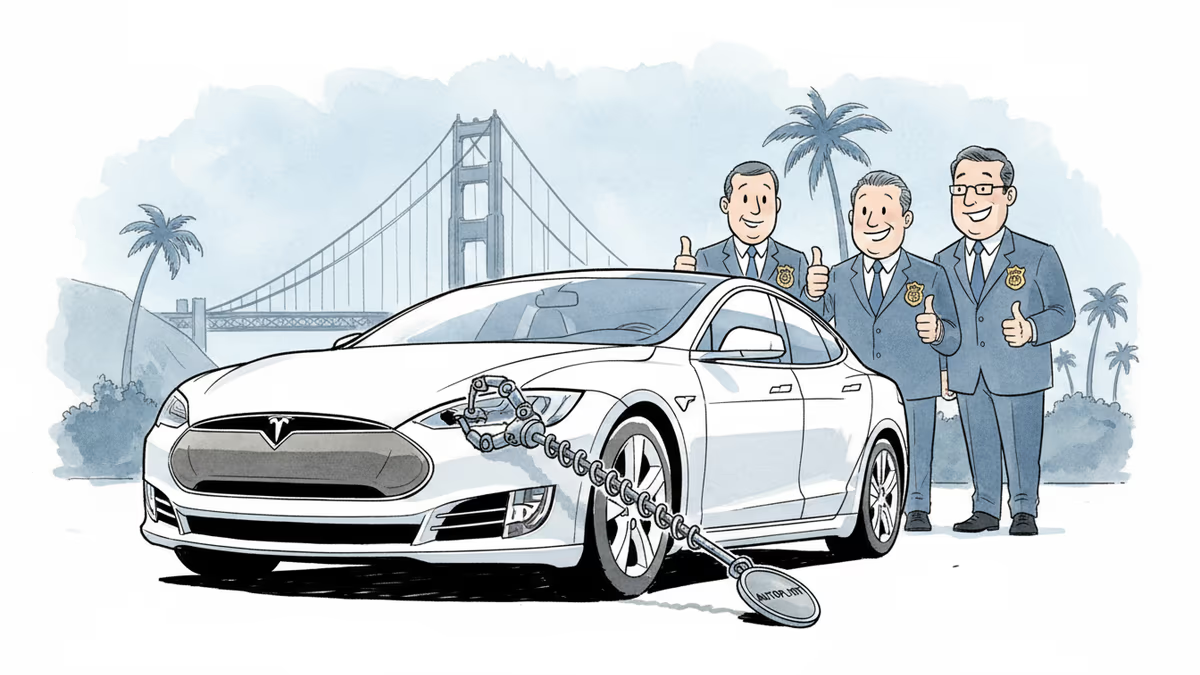
Tesla Kills 'Autopilot' to Avoid 30-Day Sales Ban
Tesla eliminates Autopilot terminology and feature entirely in US/Canada to settle California DMV case, shifting to FSD subscription-only model. A regulatory victory or business strategy?
After three years of legal wrangling, Tesla has officially ended its battle with California regulators. The company stopped using the term "Autopilot" in its marketing, prompting the California Department of Motor Vehicles to cancel a 30-day sales and manufacturing license suspension that could have devastated the EV maker's biggest U.S. market.
But Tesla didn't just change its marketing language—it killed Autopilot entirely. Since January, the company has discontinued the feature across the U.S. and Canada, leaving only its $99-per-month Full Self-Driving (Supervised) subscription service.
The $8 Billion Word Problem
The DMV's case was straightforward: Tesla's "Autopilot" and "Full Self-Driving" terminology misled consumers about the actual capabilities of its driver assistance systems. While Tesla had previously modified "Full Self-Driving Capability" to "Full Self-Driving (Supervised)" to clarify driver supervision requirements, it stubbornly held onto "Autopilot."
That stubbornness nearly cost Tesla its California operations. An administrative law judge sided with the DMV in December, agreeing to the 30-day license suspension. For a company that sells more vehicles in California than anywhere else in America, this was an existential threat.
Regulatory Precedent vs. Innovation Marketing
This case sets a crucial precedent for the autonomous vehicle industry. Regulators are drawing clearer lines between marketing ambition and technical reality, while companies argue that overly conservative language stifles innovation communication.
Tesla's defense wasn't entirely unreasonable—the company consistently warned drivers to keep their hands on the wheel and maintain attention while using Autopilot. But regulators focused on the psychological impact of the terminology itself, regardless of fine-print disclaimers.

General Motors and Ford are likely reassessing their own marketing language. Terms like "Super Cruise" and "BlueCruise" could face similar scrutiny if regulators decide they overstate capabilities.
The Subscription Strategy Behind Compliance
Tesla's response reveals a deeper business calculation. Eliminating Autopilot while keeping only the $99 monthly FSD subscription isn't just regulatory compliance—it's revenue model transformation.
The math is telling: Tesla's previous $8,000 one-time FSD purchase becomes more expensive than the subscription after just 20 months of use. CEO Elon Musk has indicated subscription prices will increase as capabilities improve, potentially making this shift highly profitable.
This mirrors broader automotive industry trends toward subscription services. BMW faced backlash for subscription-based heated seats, while Toyota moved remote start features behind a paywall.
Consumer Protection vs. Market Dynamics
The settlement raises complex questions about consumer protection in emerging technologies. While clearer terminology protects buyers from unrealistic expectations, it might also dampen public excitement about autonomous driving advances.
Investors seem unfazed—Tesla's stock barely moved on the news. But the regulatory precedent could reshape how all automakers market advanced driver assistance systems, potentially slowing consumer adoption of beneficial safety technologies.
The question isn't whether Tesla made the right choice, but whether regulatory caution will ultimately help or hinder the autonomous driving revolution that could save thousands of lives annually.
Authors
Related Articles
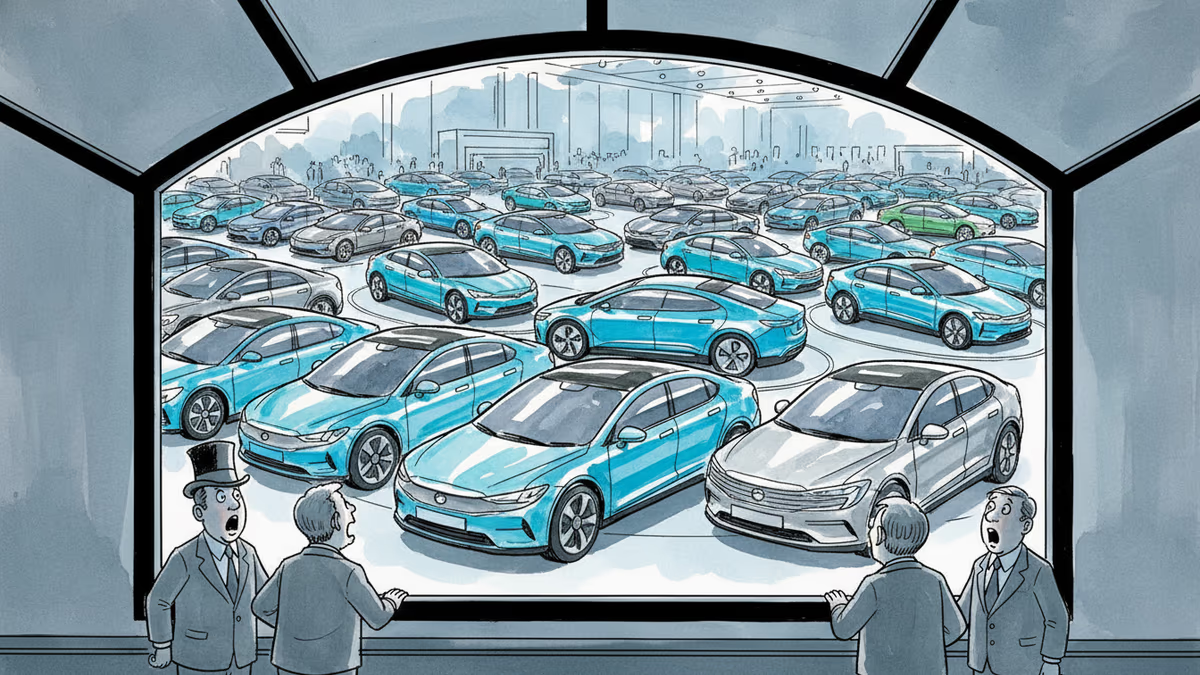
Auto China 2026 set records with 1,451 vehicles and 181 world premieres. But the real story isn't the size—it's how Chinese automakers stopped competing on price and started competing on brains.
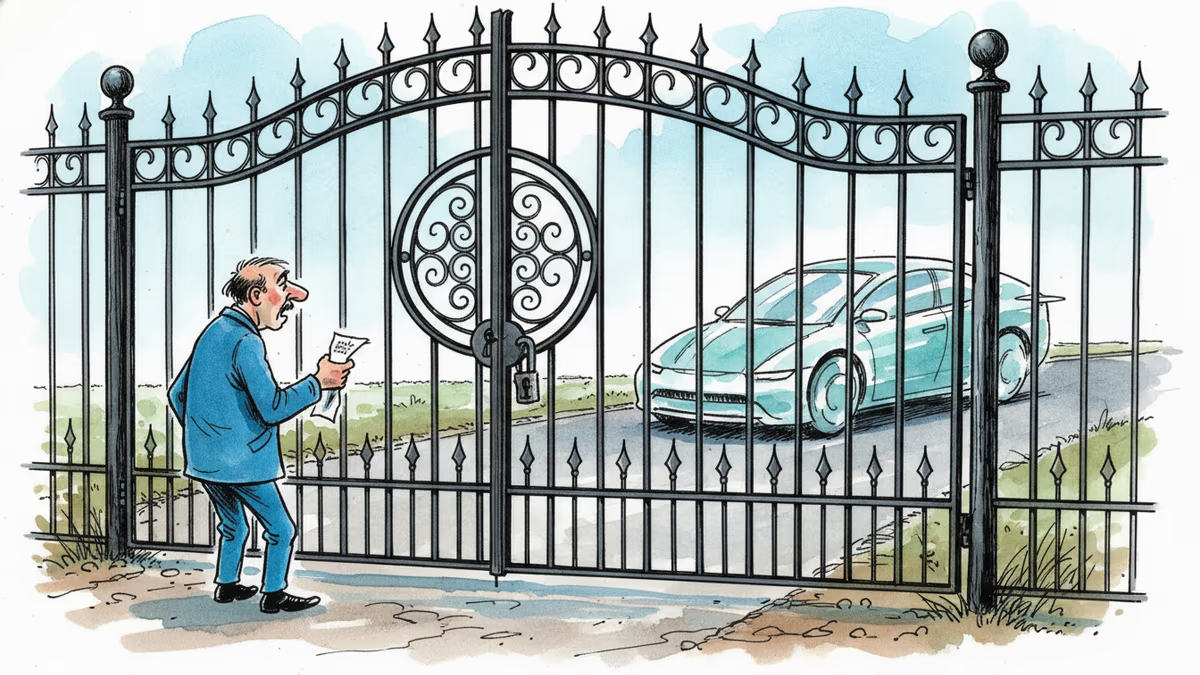
Elon Musk confirmed on Tesla's Q1 2026 earnings call that Hardware 3 vehicles will never receive unsupervised Full Self-Driving — locking out millions who paid for the feature.
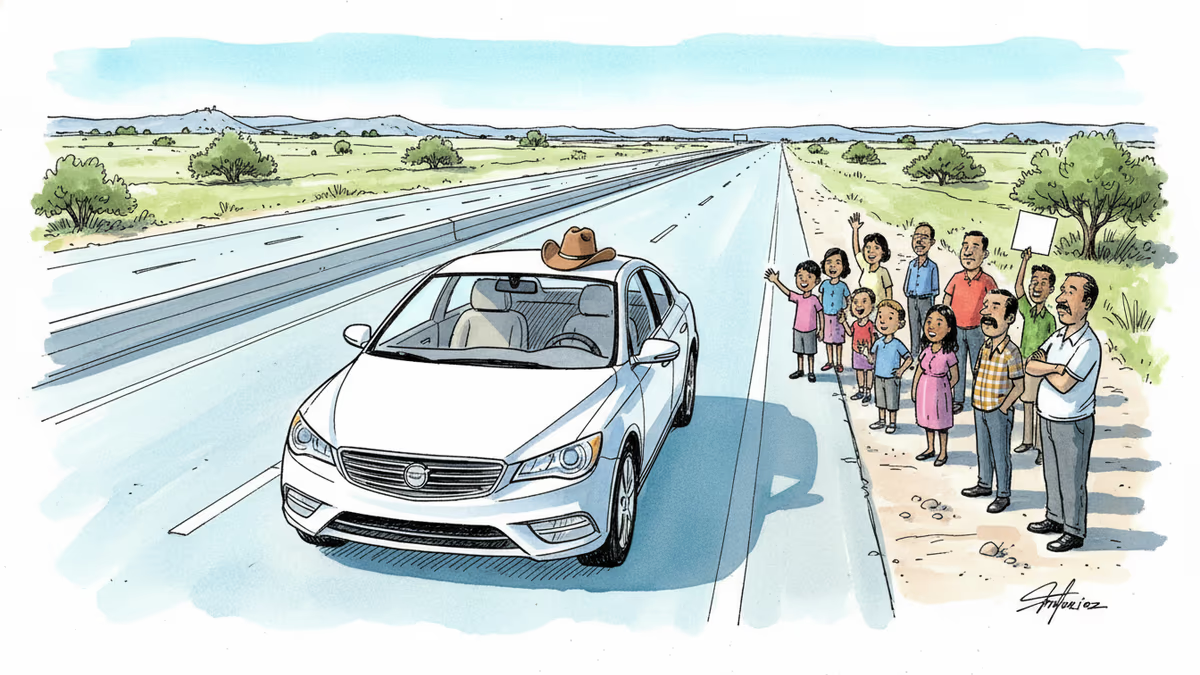
Tesla expanded its driverless robotaxi to Dallas and Houston, even after reporting 14 crashes in Austin. What does this tell us about how autonomous vehicles actually get built?
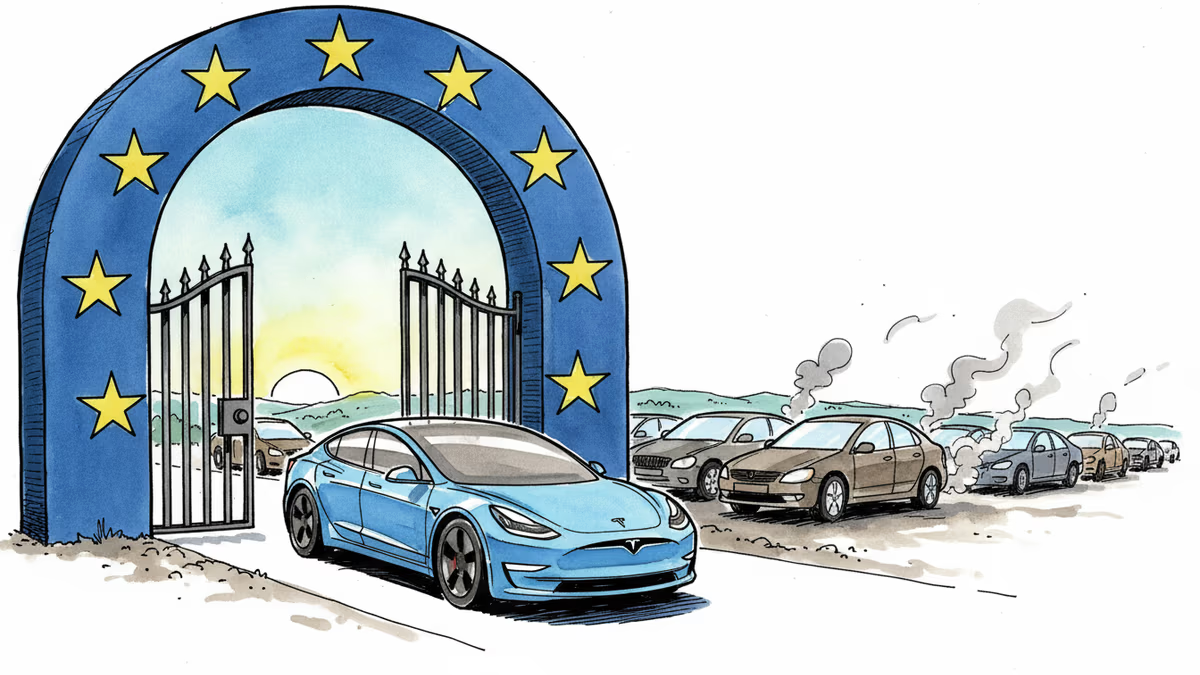
The Netherlands became the first European country to officially approve Tesla's FSD Supervised. With EU's type-approval framework, this could ripple across 27 member states fast.
Auto China 2026 set records with 1,451 vehicles and 181 world premieres. But the real story isn't the size—it's how Chinese automakers stopped competing on price and started competing on brains.
Elon Musk confirmed on Tesla's Q1 2026 earnings call that Hardware 3 vehicles will never receive unsupervised Full Self-Driving — locking out millions who paid for the feature.
Tesla expanded its driverless robotaxi to Dallas and Houston, even after reporting 14 crashes in Austin. What does this tell us about how autonomous vehicles actually get built?
The Netherlands became the first European country to officially approve Tesla's FSD Supervised. With EU's type-approval framework, this could ripple across 27 member states fast.
Thoughts
Share your thoughts on this article
Sign in to join the conversation