
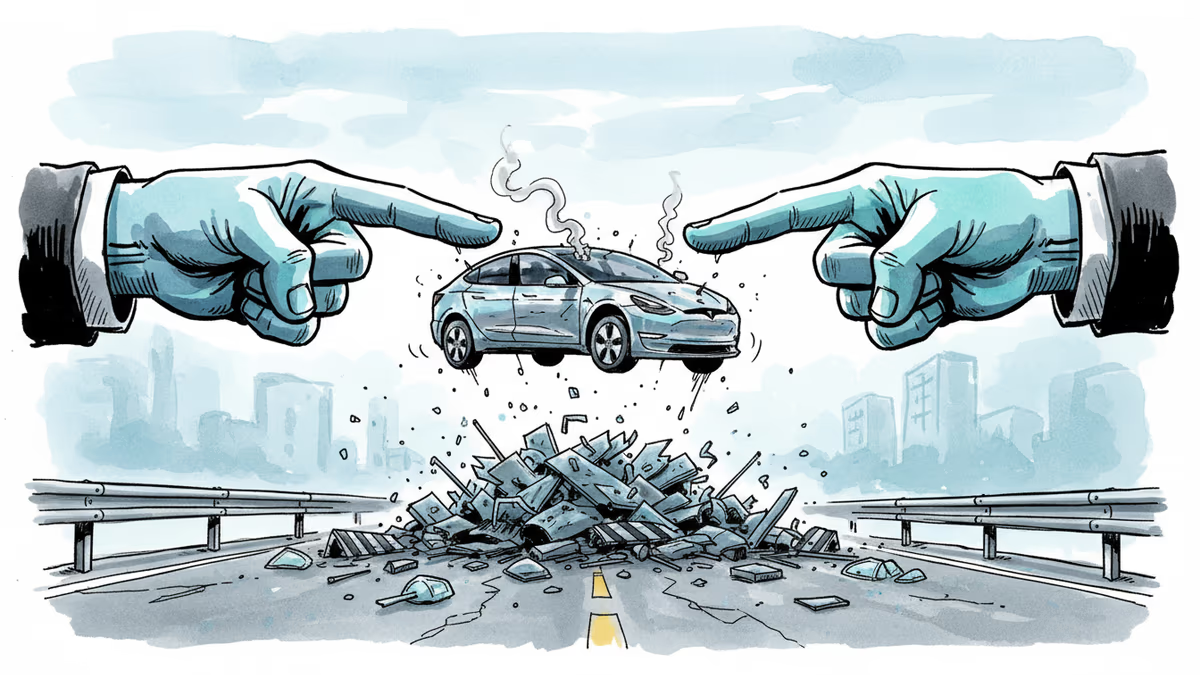
Tesla's $243M Loss Reveals the Real Cost of Semi-Autonomous Driving
A federal judge's rejection of Tesla's appeal in a fatal Autopilot crash case signals a shift in how courts view liability in the age of driver assistance technology.
The $243 Million Question Tesla Couldn't Answer
A federal judge in Florida just delivered a verdict that could reshape the autonomous driving industry. Judge Beth Bloom denied Tesla's request to overturn a $243 million jury award stemming from a fatal 2019 Autopilot crash, calling the company's arguments "virtually the same" as those already "considered and rejected" during trial.
The crash killed Naibel Benavides and critically injured Dillon Angulo when their Tesla collided with a truck. The jury split blame: two-thirds to the driver, one-third to Tesla. But here's the kicker—punitive damages were assessed against Tesla alone.
Tesla's lawyers insisted the driver was primarily at fault. The court wasn't buying it.
The Gray Zone Where Humans Meet Machines
This case cuts to the heart of a growing dilemma: who's responsible when semi-autonomous systems fail?
Tesla has long maintained that Autopilot is a Level 2 driver assistance system—meaning drivers must stay alert and ready to take control. It's a "hands on the wheel, eyes on the road" technology, according to the company. But the jury saw something different: a system that lulled drivers into a false sense of security without adequate warnings about its limitations.

The automotive industry is watching closely. General Motors' Super Cruise, Ford's BlueCruise, and other semi-autonomous systems face similar questions. If manufacturers can be held liable for crashes involving driver assistance technology, it fundamentally changes the risk calculus.
Insurance Companies Are Taking Notes
This verdict is sending ripples through the insurance industry. Traditional auto insurance has always centered on driver behavior and fault. But as vehicles become more automated, the liability equation gets murkier.
State Farm, Geico, and other major insurers are already adjusting their models. Product liability coverage for automakers is becoming as important as traditional driver coverage. Some insurers are even exploring "usage-based" policies that adjust rates based on how often drivers engage autonomous features.
Tesla's stock dropped 2.3% following the court's decision. Wall Street analysts note that the company faces more than 200 similar lawsuits related to Autopilot crashes. Each case could potentially follow this precedent.
The Regulatory Domino Effect
This ruling comes as federal regulators are crafting new rules for autonomous vehicles. The National Highway Traffic Safety Administration has been investigating Tesla's Autopilot system for years, documenting numerous crashes involving the technology.
European regulators are already ahead of the curve. The EU requires more explicit driver monitoring systems and clearer warnings about system limitations. This verdict might push U.S. regulators toward similar standards.
Authors
Related Articles
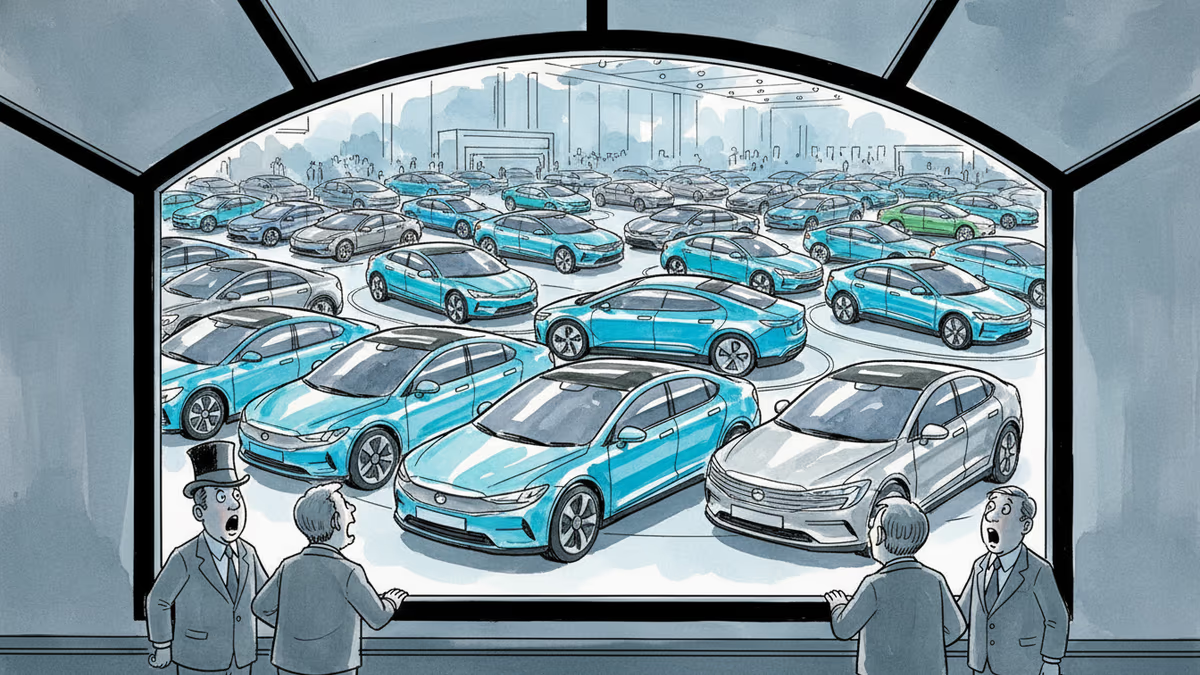
Auto China 2026 set records with 1,451 vehicles and 181 world premieres. But the real story isn't the size—it's how Chinese automakers stopped competing on price and started competing on brains.
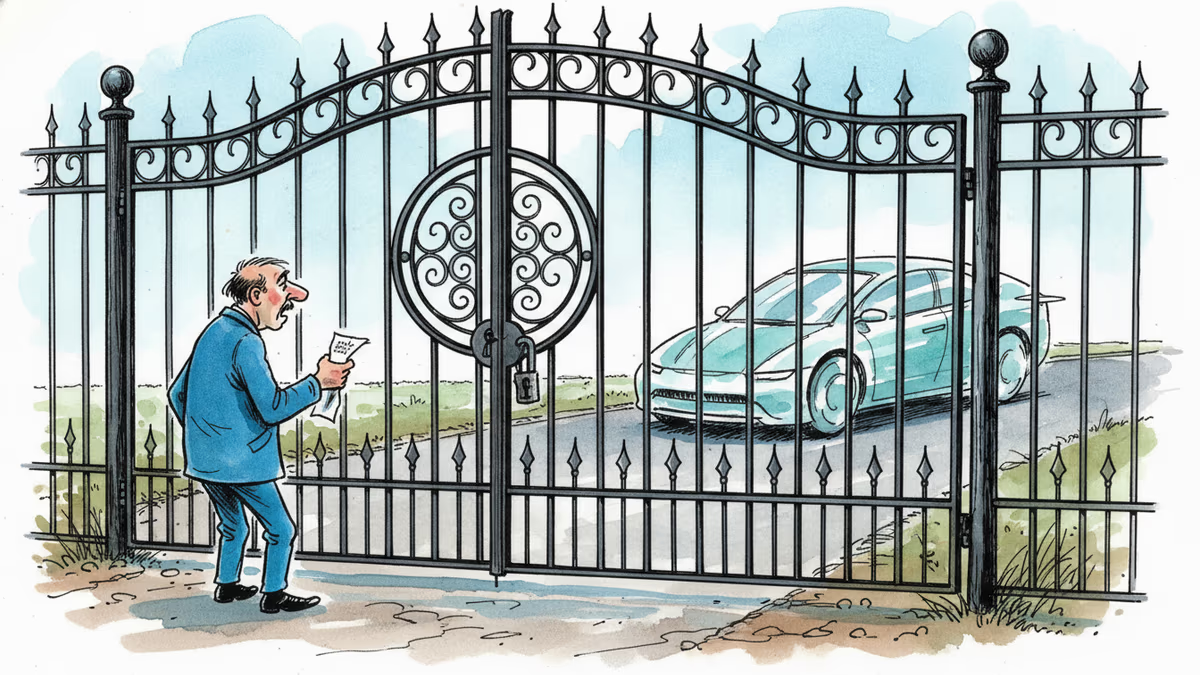
Elon Musk confirmed on Tesla's Q1 2026 earnings call that Hardware 3 vehicles will never receive unsupervised Full Self-Driving — locking out millions who paid for the feature.
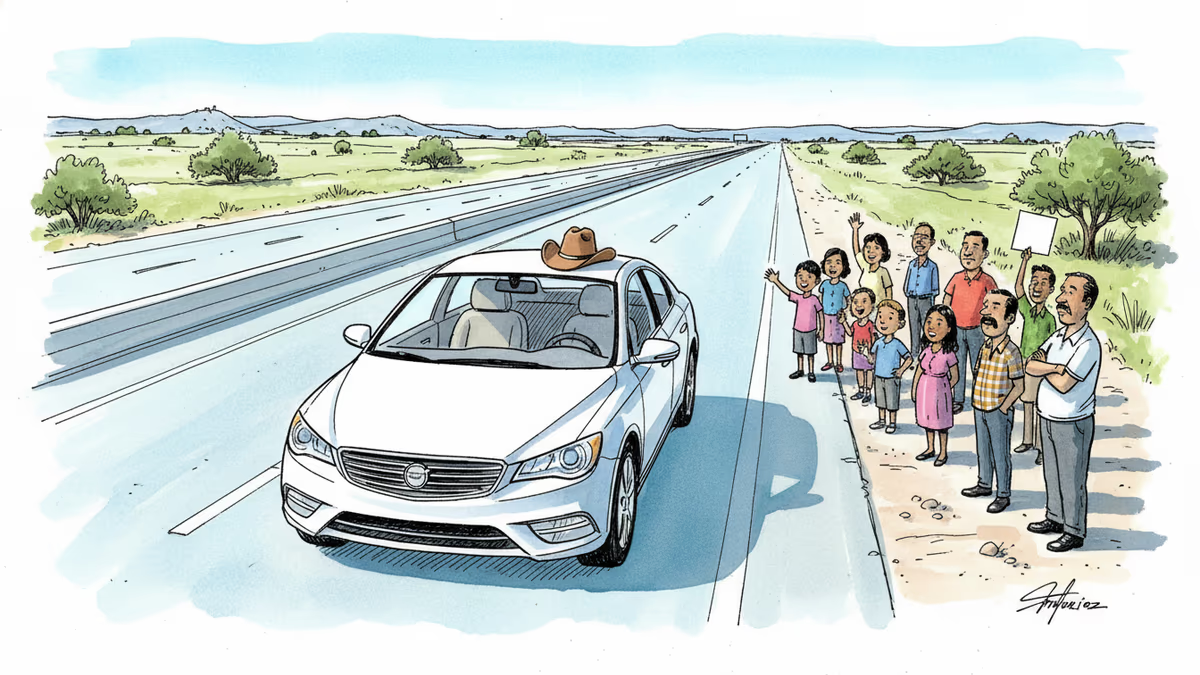
Tesla expanded its driverless robotaxi to Dallas and Houston, even after reporting 14 crashes in Austin. What does this tell us about how autonomous vehicles actually get built?
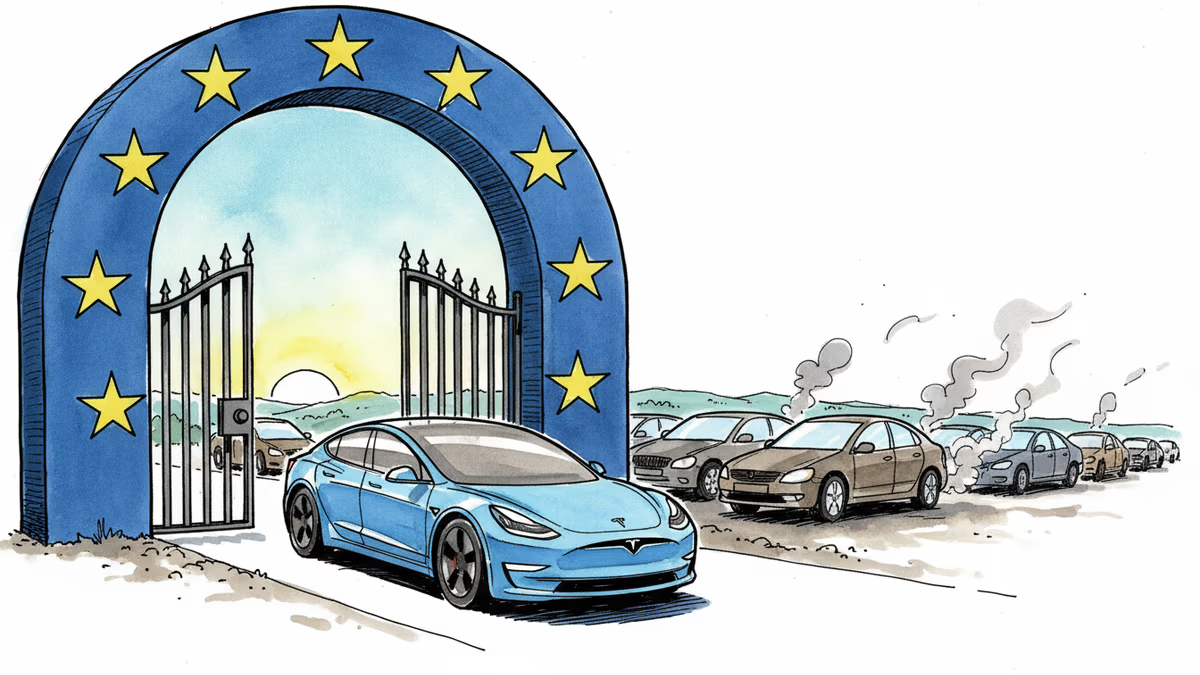
The Netherlands became the first European country to officially approve Tesla's FSD Supervised. With EU's type-approval framework, this could ripple across 27 member states fast.
Auto China 2026 set records with 1,451 vehicles and 181 world premieres. But the real story isn't the size—it's how Chinese automakers stopped competing on price and started competing on brains.
Elon Musk confirmed on Tesla's Q1 2026 earnings call that Hardware 3 vehicles will never receive unsupervised Full Self-Driving — locking out millions who paid for the feature.
Tesla expanded its driverless robotaxi to Dallas and Houston, even after reporting 14 crashes in Austin. What does this tell us about how autonomous vehicles actually get built?
The Netherlands became the first European country to officially approve Tesla's FSD Supervised. With EU's type-approval framework, this could ripple across 27 member states fast.
Thoughts
Share your thoughts on this article
Sign in to join the conversation