
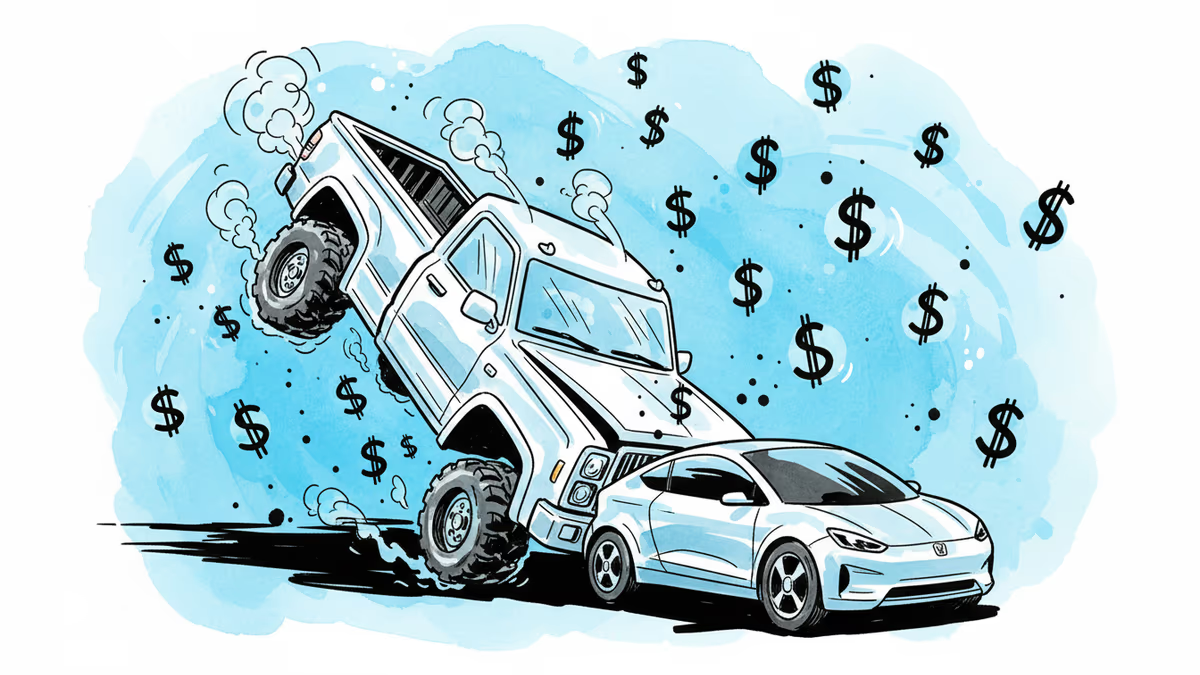
Ford's $30K EV Gambit: Why Bigger Isn't Always Better
Ford kills F-150 Lightning but bets big on $30K Universal EV Platform. American automakers pivot from premium to practical. What does this mean for the EV transition?
The $30,000 Question That Could Change Everything
Ford just killed the F-150 Lightning, but don't mistake this for retreat. The company is doubling down on electric vehicles—just not the ones you'd expect. Next year, Ford will debut its "Universal EV Platform," starting with a midsize truck that promises to hit that magic $30,000 price point.
This isn't just another model launch. Ford created an internal "skunkworks" team years ago to design this platform from scratch, focusing on a deceptively simple principle: do more with less. Fewer components, less energy consumption, same distance traveled.
When Premium Strategy Meets Reality
The F-150 Lightning was supposed to be Ford's electric flagship—a full-size beast packed with job site power outlets and home backup capabilities. The pitch seemed logical: truck buyers would embrace instant torque and minimal running costs, overlooking the range anxiety that comes with heavy towing.
But the market had other ideas. Despite clever features and impressive capabilities, the Lightning struggled against two fundamental barriers: high prices and practical limitations. Commercial users, Ford's bread and butter, needed reliability and affordability over flashy tech.
General Motors faced similar challenges with their electric truck lineup, suggesting this wasn't just a Ford problem—it was an industry miscalculation.
The Tesla Paradox: Learning from Success and Failure

Here's where it gets interesting. Tesla succeeded with premium pricing, but they started with sports cars and luxury sedans—vehicles where performance justifies cost. Ford tried to apply that premium approach to work trucks, where value trumps everything.
Now Ford is essentially copying Tesla's ground-up design philosophy while rejecting their pricing strategy. The Universal EV Platform represents a complete rethink: purpose-built for efficiency rather than adapted from internal combustion engines.
What This Means for Consumers
If Ford delivers on their $30,000 promise, it could trigger a cascade effect across the industry. Suddenly, electric vehicles become accessible to middle-income families who've been priced out of the EV transition.
But there's a catch. That price point likely means compromises—smaller batteries, simpler interiors, fewer premium features. The question becomes: are American consumers ready to embrace "good enough" over "best in class"?
Hyundai and Kia have already proven this approach works, gaining significant market share with practical, affordable EVs. Ford is betting that American buyers will make similar choices when given the option.
The Regulatory Wild Card
Timing matters here. Federal EV tax credits are under political pressure, and state-level incentives vary wildly. Ford's $30,000 starting price could become $22,500 with federal credits—if they survive policy changes.
Meanwhile, Chinese automakers are producing EVs at even lower costs, though trade barriers currently limit their U.S. market access. Ford's window for establishing affordable EV dominance may be narrower than it appears.
Authors
Related Articles

Rivian targets 20,000 R2 SUV sales in six months, matching Tesla Model Y's pace. But can it succeed without federal tax credits in a challenging EV market?
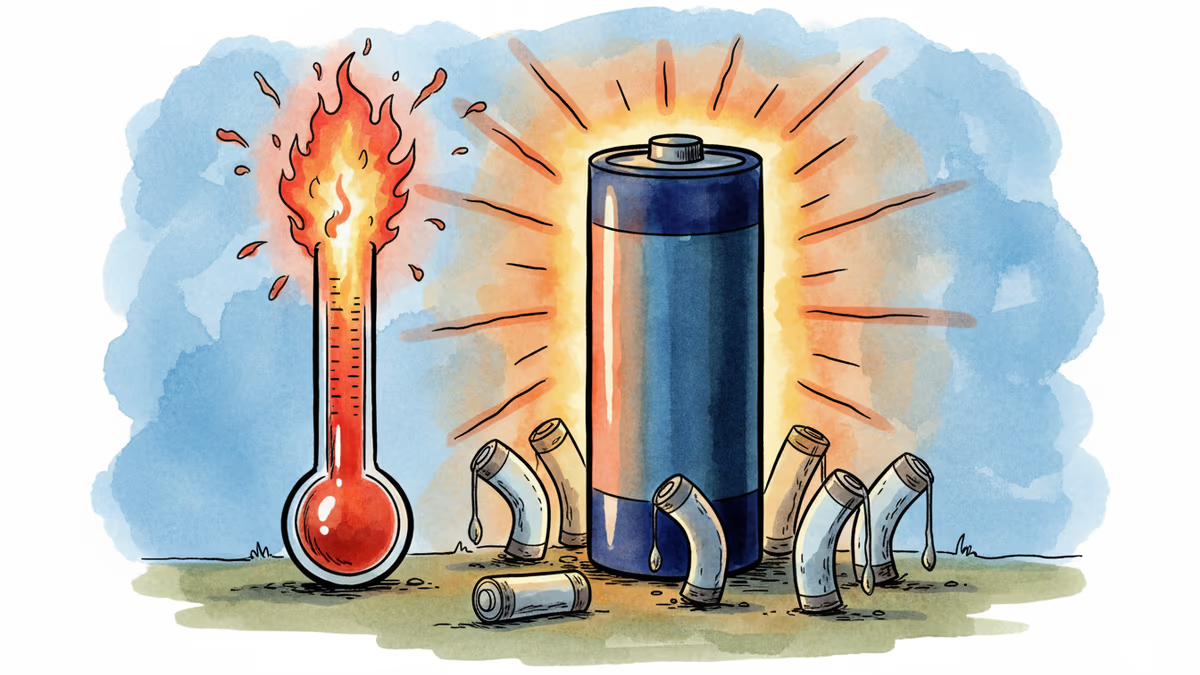
Finnish startup Donut Lab's solid-state battery actually gains capacity at extreme heat, challenging everything we know about EV battery performance in hot climates.
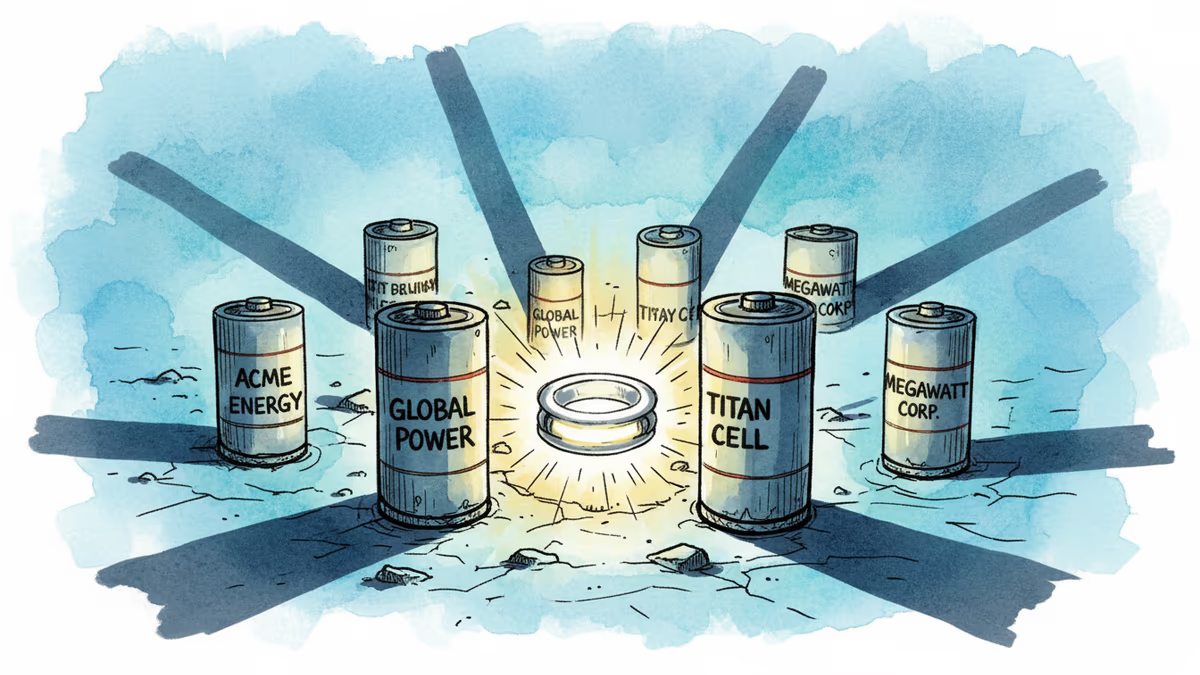
Donut Lab claims breakthrough solid-state battery tech with 5-minute charging and 400Wh/kg density. Experts are skeptical. Could this unknown startup really leapfrog industry giants?
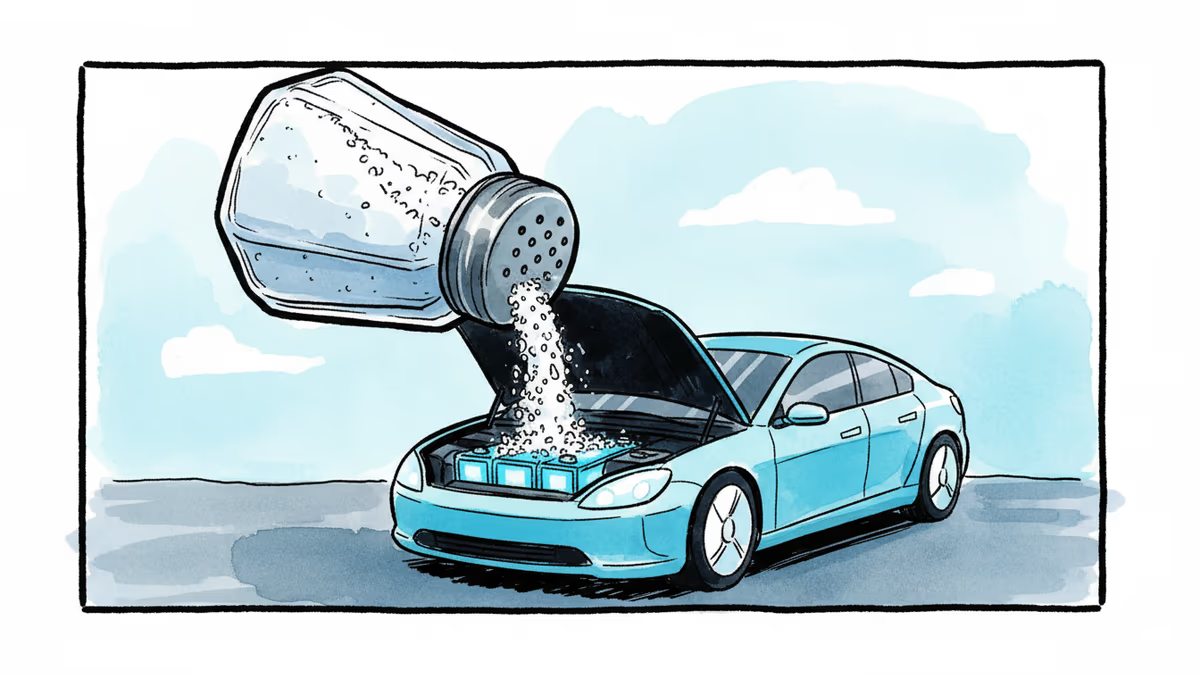
Sodium-ion batteries emerge as cheaper, safer alternatives to lithium, entering EVs and grid storage. MIT Technology Review names it a 2026 breakthrough technology.
Rivian targets 20,000 R2 SUV sales in six months, matching Tesla Model Y's pace. But can it succeed without federal tax credits in a challenging EV market?
Finnish startup Donut Lab's solid-state battery actually gains capacity at extreme heat, challenging everything we know about EV battery performance in hot climates.
Donut Lab claims breakthrough solid-state battery tech with 5-minute charging and 400Wh/kg density. Experts are skeptical. Could this unknown startup really leapfrog industry giants?
Sodium-ion batteries emerge as cheaper, safer alternatives to lithium, entering EVs and grid storage. MIT Technology Review names it a 2026 breakthrough technology.
Thoughts
Share your thoughts on this article
Sign in to join the conversation