
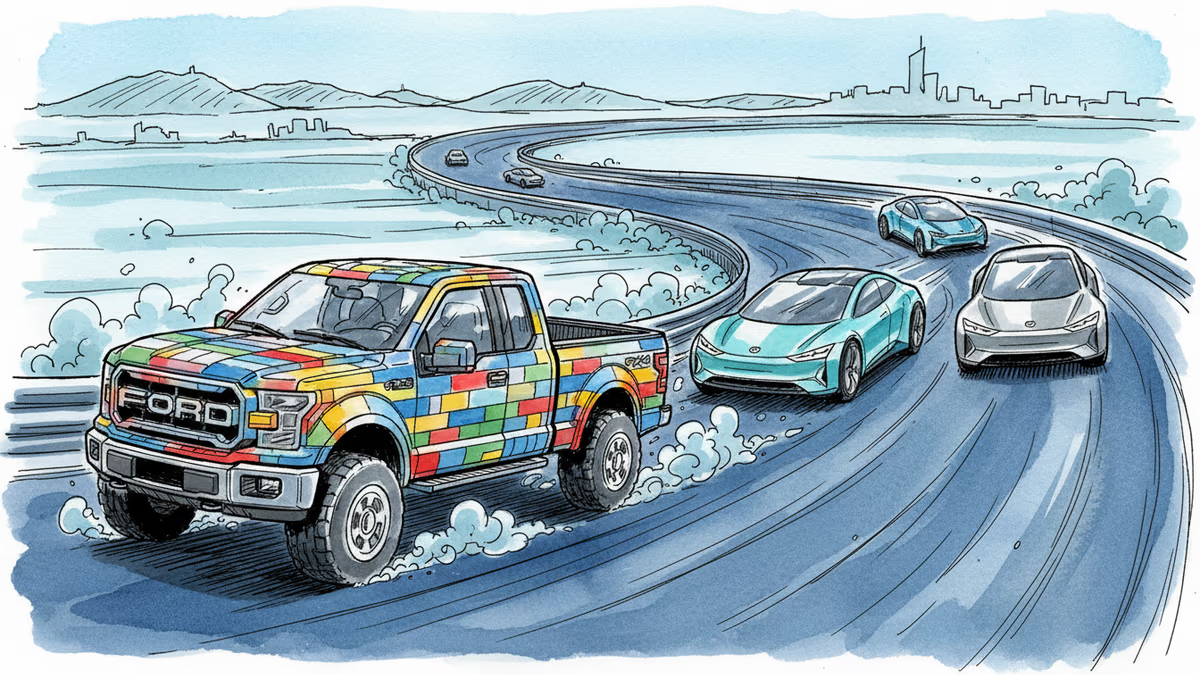
Ford's $30K EV Truck Strategy: Lego Blocks vs. China
After a $19.5B loss, Ford reveals how 3D-printed Lego-like parts, F1 aerodynamics, and bounty programs will help deliver a $30K electric truck to compete with Chinese automakers.
The $19.5 Billion Question
Two months after Ford posted a staggering $19.5 billion loss and killed its F-150 Lightning production, the company is doubling down with a radically different bet. A $30,000 electric truck that can supposedly compete with Chinese automakers without destroying profit margins.
This isn't just about slashing prices. Ford's secret weapon? A combination of Lego-like 3D-printed parts, Formula 1 aerodynamics, and an internal bounty program that gamifies efficiency. The question isn't whether Ford can build it—it's whether American consumers will buy into this new playbook.
The Tesla Veteran's Skunkworks
Alan Clarke, a 12-year Tesla veteran, has been quietly building Ford's answer to Chinese EV dominance. His team of 450 people in Long Beach, California, and 200 in Palo Alto reads like a Silicon Valley all-star roster: ex-Apple, Lucid Motors, Rivian, and Formula 1 engineers.
Last August, Ford revealed pieces of Clarke's plan. Ditch the traditional assembly line. Invest $2 billion in the Louisville factory. Speed up manufacturing by 15%. Build everything on a universal platform with single-piece aluminum castings and lithium iron phosphate batteries licensed from China's CATL.
Now we're seeing the full picture. The Universal EV Platform (UEV) will underpin a mid-sized truck first, then expand to sedans, crossovers, three-row SUVs, and commercial vans. It's Ford's first "clean sheet" EV—built from scratch instead of adapting existing infrastructure.
When Engineers Get Bounties

Here's where it gets interesting. Ford created a bounty program that assigns numerical metrics to everything: vehicle mass, aerodynamic drag, individual parts. Engineers get rewarded for decisions that improve the customer experience and the bottom line.
The results are counterintuitive. Ford uses more expensive parts if they reduce overall weight and improve efficiency. Even the base trim gets power-folding mirrors—typically a premium feature—because they reduce drag. The cost savings? Using one motor instead of two for mirror adjustment and folding.
Formula 1 engineers working with Ford's design team achieved something remarkable: a mid-sized EV truck that's 15% more aerodynamically efficient than any pickup on the market today.
The Lego Revolution
Ford's most innovative move might be its approach to prototyping. Thousands of 3D-printed components, accurate to fractions of a millimeter, can be swapped out in minutes like Lego blocks. These modular prototypes enabled frequent wind tunnel testing from day one—not just when the design was nearly complete.
This obsession with efficiency extends to the battery, which accounts for 40% of a vehicle's cost. A lighter, more efficient vehicle needs a smaller battery. Clarke promises 15% more range than an equivalent gas pickup—about 50 extra miles.
Tesla's Playbook, Ford's Execution
Ford is adopting manufacturing tactics Tesla popularized: aluminum unicastings and 48-volt power systems. But the real transformation is architectural. Instead of dozens of electronic control units scattered throughout the vehicle, Ford integrated multiple functions into five main modules—similar to Tesla and Rivian's zonal approach.
The wire harness is now 4,000 feet shorter and 22 pounds lighter than Ford's first-generation EVs. A single module handles power distribution, battery management, and backup power to customers' homes during outages.
Ford developed its own software for these five ECUs, down to the application layer. "Because Ford owns the software—to the lowest level—it becomes very portable," Clarke explained. This gives Ford direct control over body functions and sensor integration.
Authors
Related Articles

Rivian targets 20,000 R2 SUV sales in six months, matching Tesla Model Y's pace. But can it succeed without federal tax credits in a challenging EV market?

Exploring the used EV market at $15,000 budget point. BMW i3 and Chevrolet Bolt options compared with lower mileage, newer features, and better value propositions.
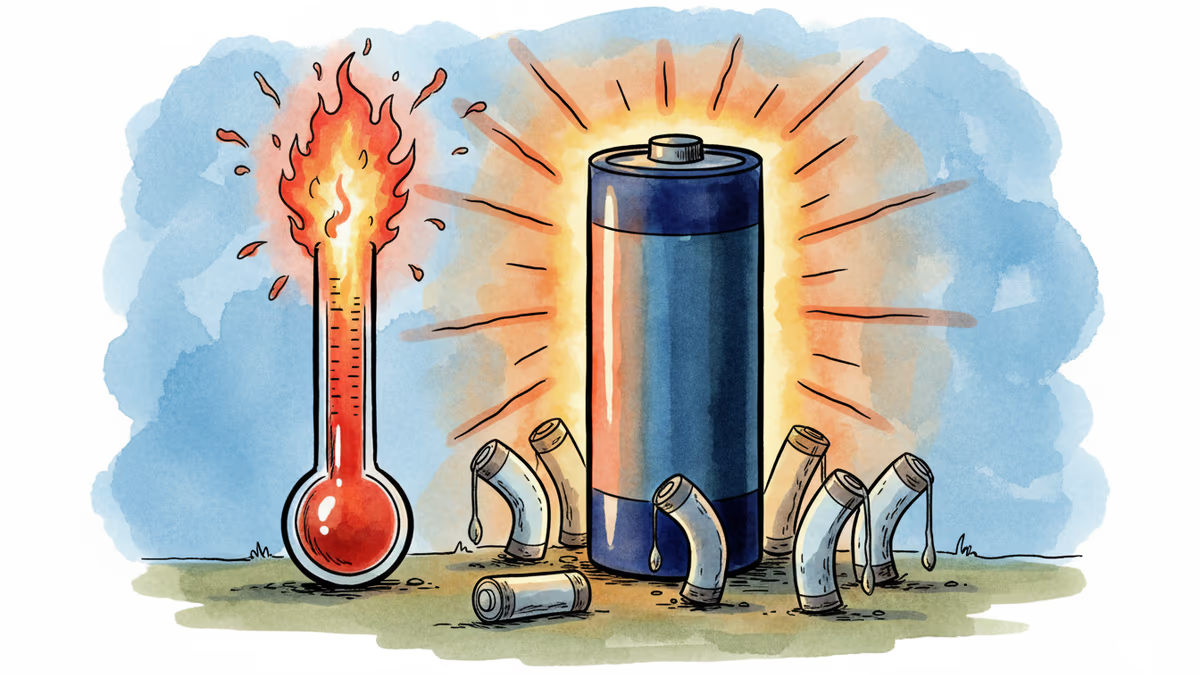
Finnish startup Donut Lab's solid-state battery actually gains capacity at extreme heat, challenging everything we know about EV battery performance in hot climates.
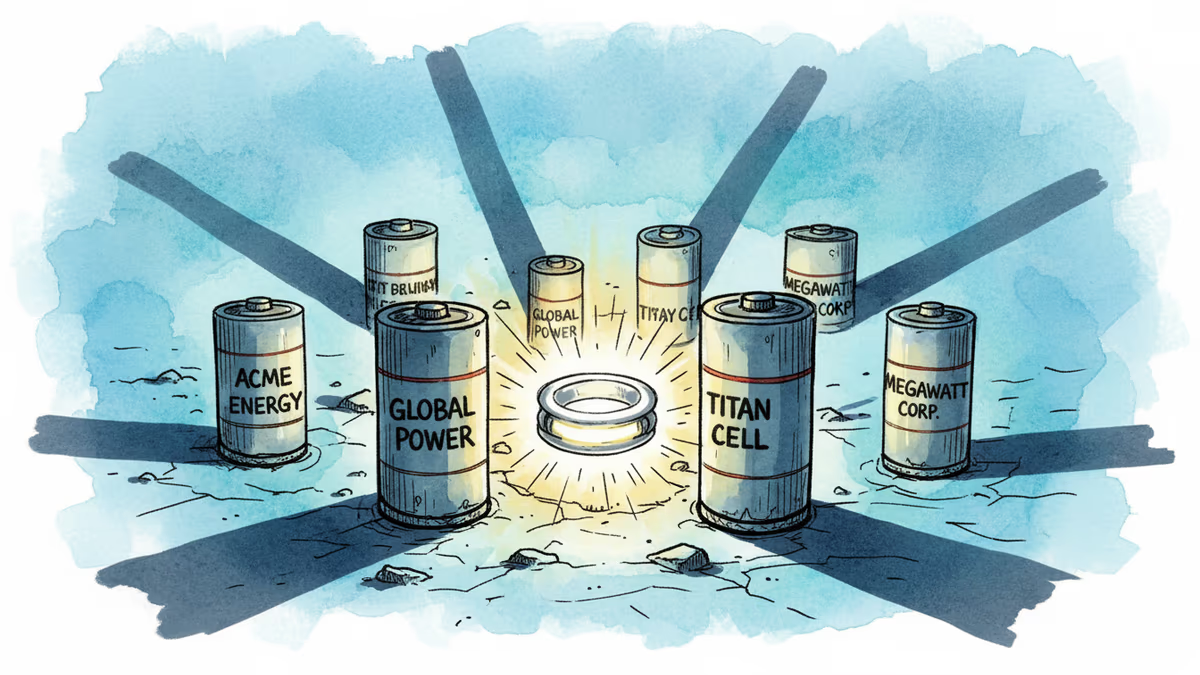
Donut Lab claims breakthrough solid-state battery tech with 5-minute charging and 400Wh/kg density. Experts are skeptical. Could this unknown startup really leapfrog industry giants?
Rivian targets 20,000 R2 SUV sales in six months, matching Tesla Model Y's pace. But can it succeed without federal tax credits in a challenging EV market?
Exploring the used EV market at $15,000 budget point. BMW i3 and Chevrolet Bolt options compared with lower mileage, newer features, and better value propositions.
Finnish startup Donut Lab's solid-state battery actually gains capacity at extreme heat, challenging everything we know about EV battery performance in hot climates.
Donut Lab claims breakthrough solid-state battery tech with 5-minute charging and 400Wh/kg density. Experts are skeptical. Could this unknown startup really leapfrog industry giants?
Thoughts
Share your thoughts on this article
Sign in to join the conversation