
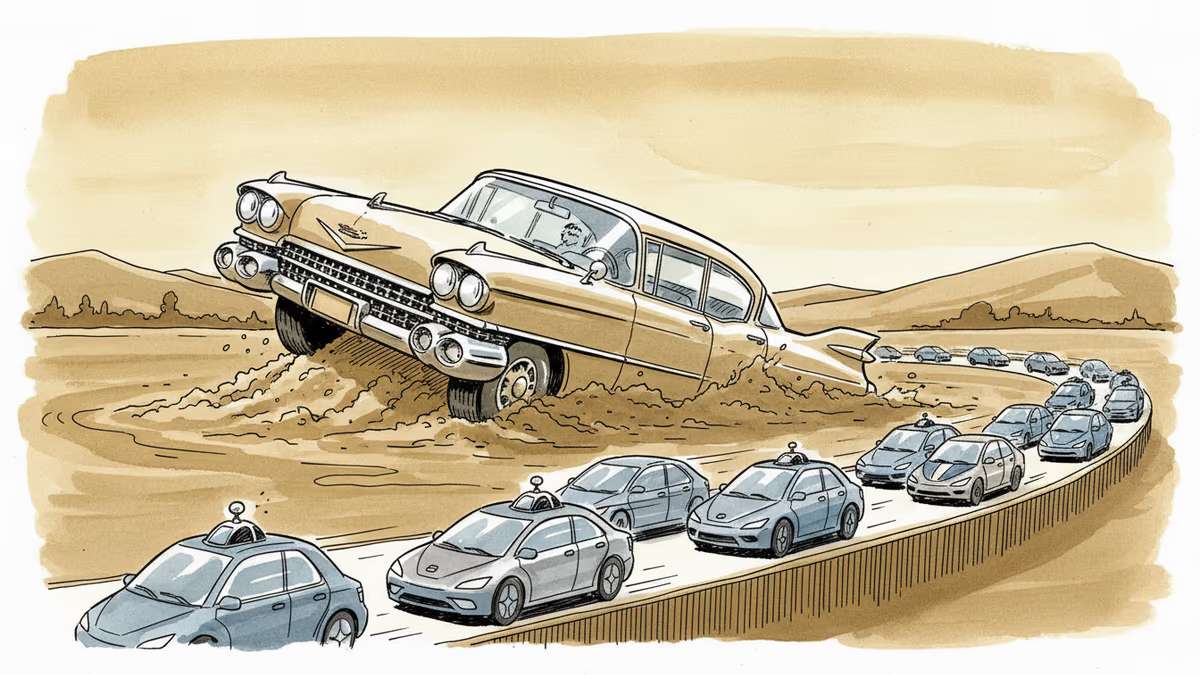
The Fall of American Auto: A Cautionary Tale for Today's Winners
How America's once-dominant auto industry collapsed offers crucial lessons for today's market leaders facing rapid technological disruption.
When Giants Fall: $500 Billion Lost in 30 Years
For decades, Detroit's Big Three ruled the world. General Motors, Ford, and Chrysler didn't just make cars—they defined what cars should be. Mass production, iconic styling, and the promise of the American Dream on four wheels. Then came the unraveling. Between 1970 and 2000, America's share of global auto production plummeted from 48% to 12%. What went wrong?
The First Crack: When Small Beat Big
The 1970s oil crisis should have been a wake-up call. Gas prices soared, and suddenly, Americans wanted fuel-efficient cars. But Detroit kept building gas-guzzling behemoths. Meanwhile, Japanese automakers like Toyota and Honda offered something revolutionary: small, reliable, efficient vehicles.
It wasn't just about fuel economy. Japanese cars simply didn't break down as often. While American cars spent weeks in repair shops, Japanese cars kept running. Consumer perception shifted from "bigger is better" to "reliable is better." Game over.
The Second Blow: Chasing Easy Money
By the 1990s and early 2000s, Detroit had learned nothing. Instead of improving quality, they doubled down on high-margin SUVs and trucks. Why build a $20,000 sedan when you can sell a $40,000 SUV with worse safety ratings and higher emissions?
This short-term thinking proved fatal. As environmental regulations tightened and global competitors improved, American automakers found themselves selling yesterday's products in tomorrow's market.
The Innovation Blindness

Perhaps most damaging was Detroit's dismissal of emerging trends. Hybrid technology? "A fad." Stricter emissions standards? "Government overreach." Consumer preference for reliability over size? "They'll come back to real cars."
This wasn't stupidity—it was success syndrome. When you've dominated for decades, change feels like surrender. But markets don't care about your legacy.
Today's Winners, Tomorrow's Losers?
Fast-forward to 2026, and the parallels are striking. Tesla has done to traditional automakers what Toyota did to Detroit 50 years ago. Chinese manufacturers like BYD are flooding global markets with affordable electric vehicles. Legacy automakers are scrambling to catch up.
But here's the twist: even today's disruptors aren't immune. Tesla's market cap peaked at over $1 trillion in 2021, then lost 60% of its value as competition intensified. Success in tech moves faster than ever—and so does failure.
The Speed of Disruption Has Accelerated
What took Detroit 30 years to lose, today's companies can lose in three. The smartphone killed Nokia in less than five years. Streaming services decimated Blockbuster in two. Netflix, once the disruptor, now fights for survival against Disney+ and TikTok.
In automotive, the transformation is even more dramatic. Traditional automakers had decades to adapt to Japanese competition. Today's players face simultaneous disruption from electric powertrains, autonomous driving, and mobility-as-a-service—all happening at once.
The Warning Signs Are Everywhere
Look around today's business landscape. How many market leaders are making Detroit's mistakes? Focusing on high-margin legacy products while dismissing "inferior" alternatives? Assuming customer loyalty will last forever? Betting that regulations won't change?
Apple dominates smartphones but struggles in AI. Google rules search but faces TikTok's challenge to attention spans. Even Amazon sees its retail dominance threatened by social commerce and quick delivery startups.
Authors
Related Articles
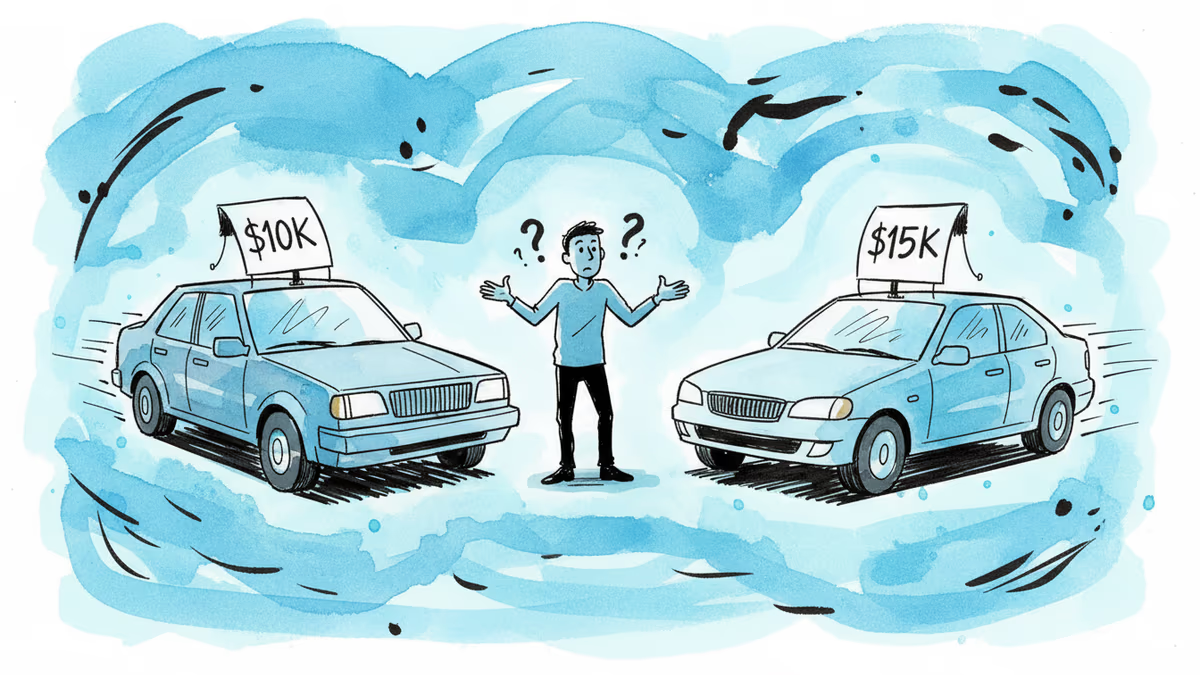
Exploring the used EV market at $15,000 budget point. BMW i3 and Chevrolet Bolt options compared with lower mileage, newer features, and better value propositions.
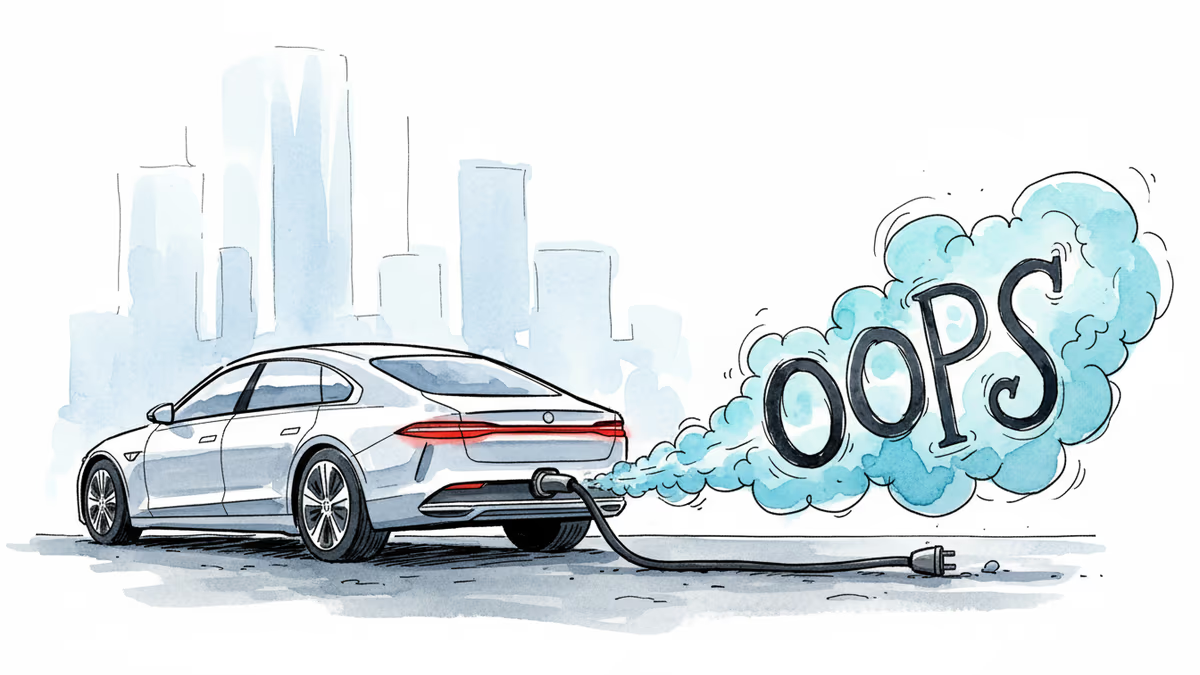
German study reveals shocking truth about plug-in hybrids - most owners rarely charge them. Porsche drivers averaged just 0.8% electric usage over two years.
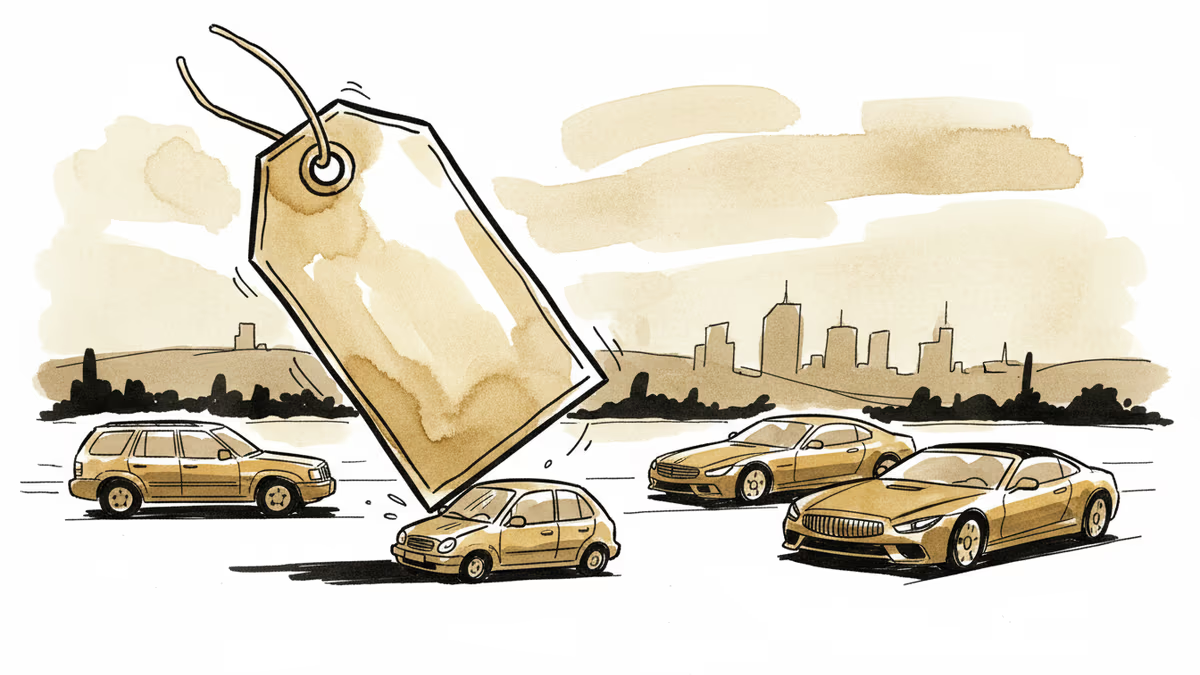
Average new car price hits $48,576 in the US, up a third since 2019. Even with tariff rollbacks, affordable cars aren't coming back. Here's why the auto industry's cost structure has fundamentally shifted.
Used EV market explodes with sub-$10k options as battery degradation fears prove overblown. Mass adoption accelerates with improved reliability data
Exploring the used EV market at $15,000 budget point. BMW i3 and Chevrolet Bolt options compared with lower mileage, newer features, and better value propositions.
German study reveals shocking truth about plug-in hybrids - most owners rarely charge them. Porsche drivers averaged just 0.8% electric usage over two years.
Average new car price hits $48,576 in the US, up a third since 2019. Even with tariff rollbacks, affordable cars aren't coming back. Here's why the auto industry's cost structure has fundamentally shifted.
Used EV market explodes with sub-$10k options as battery degradation fears prove overblown. Mass adoption accelerates with improved reliability data
Thoughts
Share your thoughts on this article
Sign in to join the conversation