
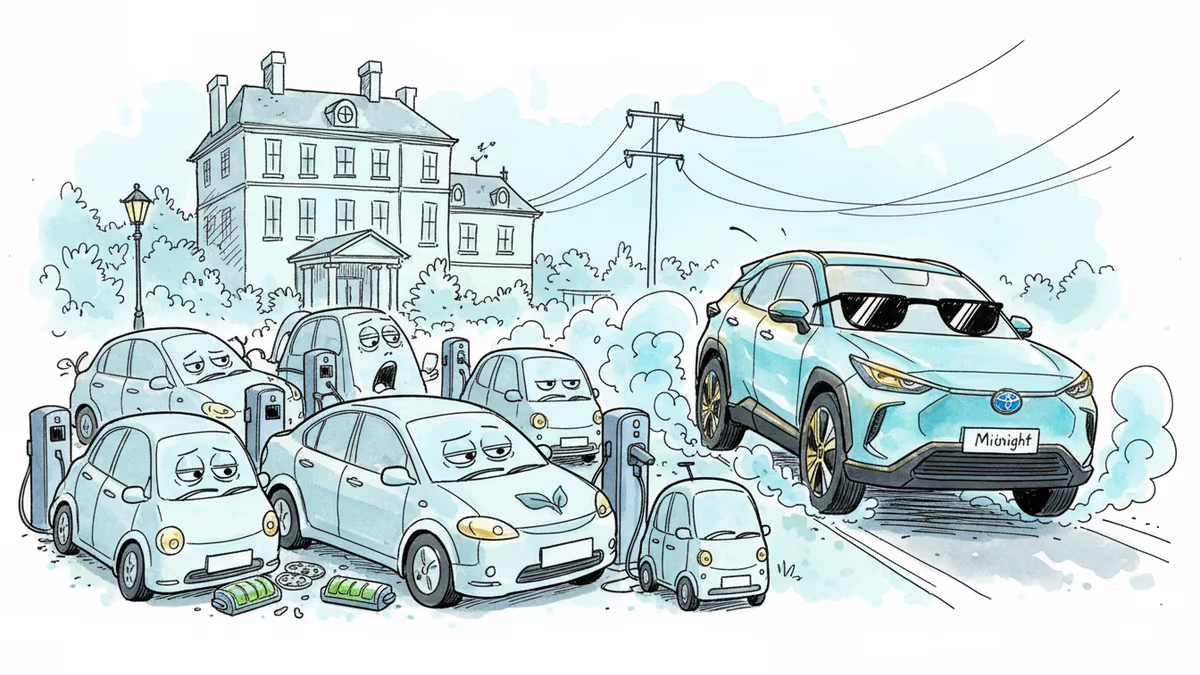
Toyota's Electric Gamble: Late to the Party, Perfect Timing?
Toyota finally enters the EV race after years of hybrid focus. Was the Japanese giant behind the curve, or waiting for the right moment to strike?
The $55 Billion Question Everyone Got Wrong
For years, Toyota was the automotive industry's cautious uncle—watching from the sidelines while Tesla partied and legacy automakers scrambled to catch up. Critics called it stubborn. Analysts called it short-sighted. The company that gave us the Prius seemed to have lost its green mojo, clinging to hybrids while the world went electric.
Then Ford lost $5.5 billion on EVs last year. GM quietly shelved its 1 million EV target. Rivian's stock cratered 90%. Meanwhile, Toyota's shares climbed 19%.
Suddenly, Toyota's "delay" looks less like hesitation and more like strategy. Last week's Highlander reveal—a three-row SUV with 300+ miles of range and vehicle-to-load capabilities—signals the Japanese giant is finally ready to play. But they're entering a very different game than the one everyone else started.
The EV Hangover Is Real
The numbers tell a sobering story. US EV sales growth plummeted from 47% in 2023 to just 9% in 2024. Charging infrastructure remains patchy. Battery costs haven't fallen as fast as predicted. Range anxiety persists, especially in winter.
More telling: consumer behavior. Early EV adopters were tech enthusiasts willing to deal with quirks for the sake of innovation. But mainstream buyers want their cars to work like... cars. They want to fuel up quickly, drive anywhere, and not worry about software updates bricking their vehicle.

Toyota watched this unfold while perfecting hybrid technology that gives consumers 90% of the environmental benefit with 10% of the hassle. The company sold 11 million vehicles globally last year—most of them hybrids that actually reduced emissions without requiring new infrastructure or changing consumer habits.
Tesla's Luxury Problem
Tesla dominated the early EV market by making electric cars aspirational. The Model S was a statement: EVs could be faster, smarter, and cooler than gas cars. But Tesla's approach—minimalist interiors, over-the-air updates, autonomous driving promises—appealed to a specific demographic.
Toyota's taking the opposite approach with the new Highlander. Instead of revolutionizing the car experience, they're making EVs feel familiar. Three rows for families. Buttons and knobs where you expect them. Vehicle-to-load for camping trips and power outages. It's not trying to be a smartphone on wheels—it's trying to be a reliable Toyota that happens to run on electricity.
This strategy could be devastating for competitors who bet everything on "disruption." If consumers just want a normal car that's electric, Toyota's reputation for reliability becomes a massive advantage.
The Infrastructure Reality Check
Here's what Toyota's timing gets right: infrastructure is finally catching up to ambition. The US will have 500,000 public charging stations by 2030, up from 60,000 today. Battery costs have dropped 85% since 2010. Supply chains for lithium and rare earth minerals are stabilizing.
Early EV buyers were pioneers willing to plan routes around charging stations. But mainstream adoption requires charging to be as thoughtless as gas stations. Toyota waited for that infrastructure foundation to solidify before committing fully.
Meanwhile, competitors who rushed to market are dealing with the messy reality of being first. Ford's Lightning had to halt production due to battery issues. GM's Bolt faced massive recalls. Tesla's Cybertruck is years behind schedule.
Authors
Related Articles
Rivian targets 20,000 R2 SUV sales in six months, matching Tesla Model Y's pace. But can it succeed without federal tax credits in a challenging EV market?
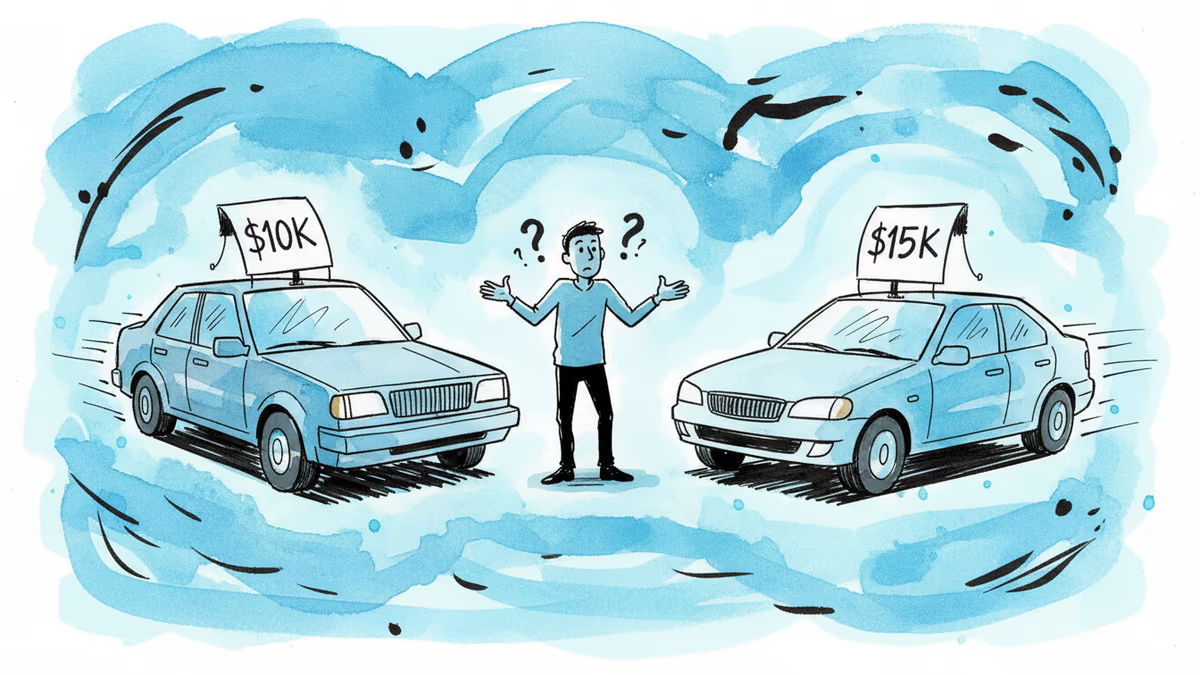
Exploring the used EV market at $15,000 budget point. BMW i3 and Chevrolet Bolt options compared with lower mileage, newer features, and better value propositions.
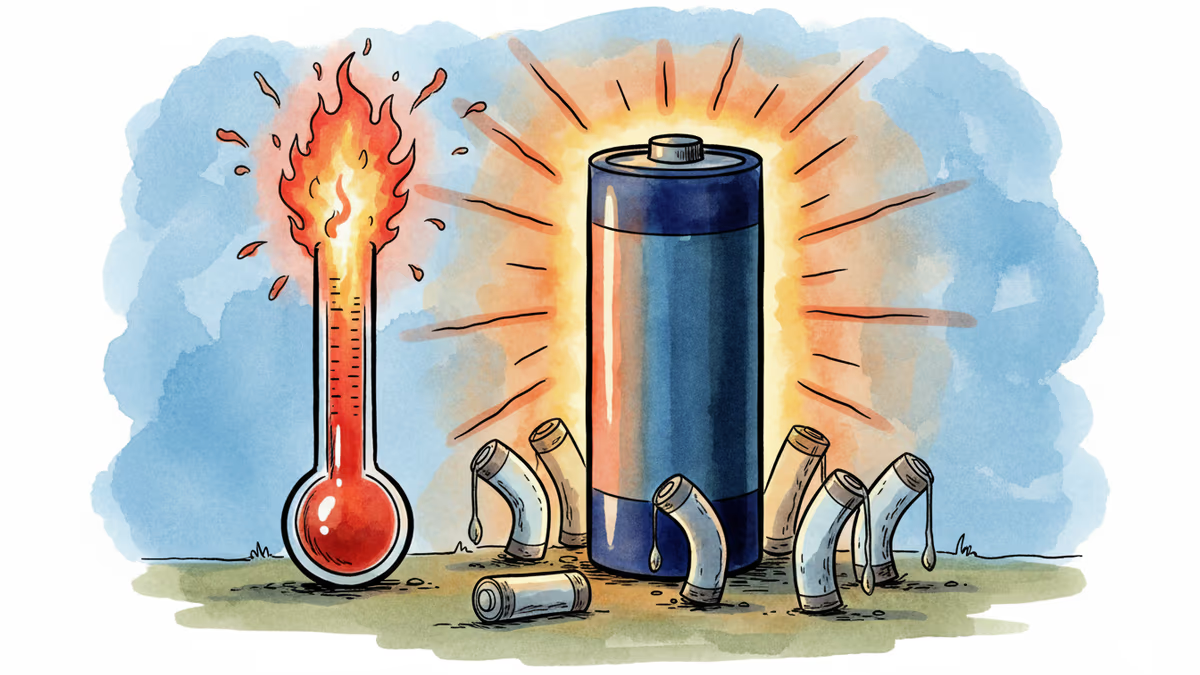
Finnish startup Donut Lab's solid-state battery actually gains capacity at extreme heat, challenging everything we know about EV battery performance in hot climates.
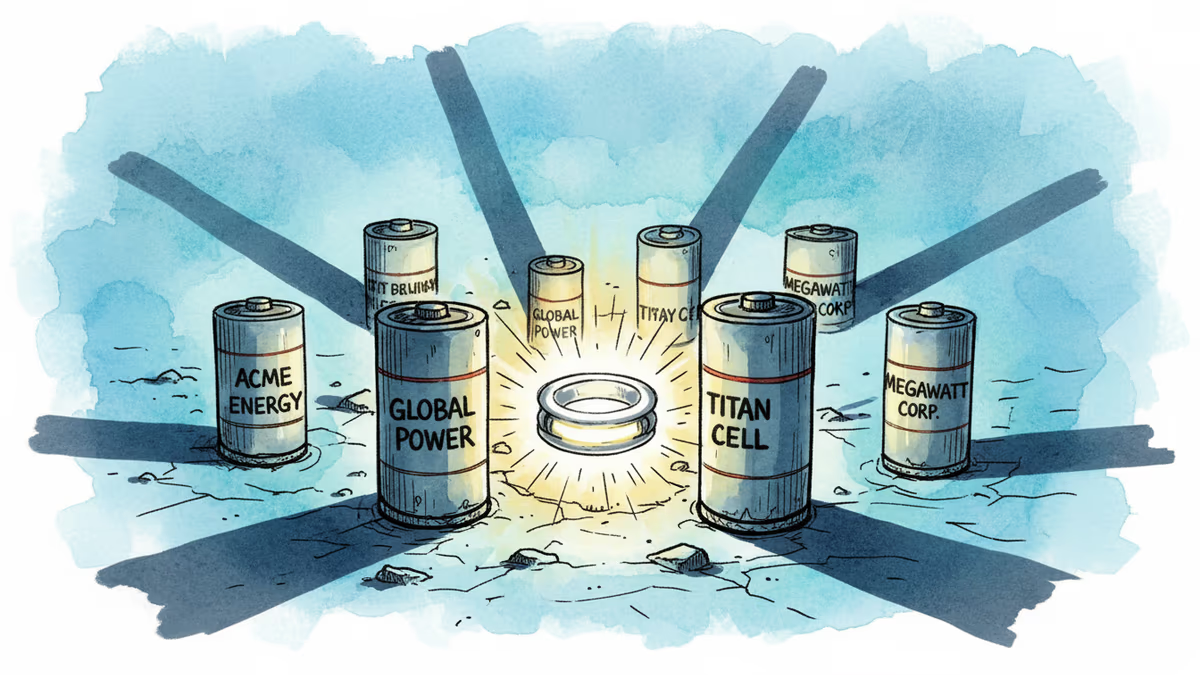
Donut Lab claims breakthrough solid-state battery tech with 5-minute charging and 400Wh/kg density. Experts are skeptical. Could this unknown startup really leapfrog industry giants?
Rivian targets 20,000 R2 SUV sales in six months, matching Tesla Model Y's pace. But can it succeed without federal tax credits in a challenging EV market?
Exploring the used EV market at $15,000 budget point. BMW i3 and Chevrolet Bolt options compared with lower mileage, newer features, and better value propositions.
Finnish startup Donut Lab's solid-state battery actually gains capacity at extreme heat, challenging everything we know about EV battery performance in hot climates.
Donut Lab claims breakthrough solid-state battery tech with 5-minute charging and 400Wh/kg density. Experts are skeptical. Could this unknown startup really leapfrog industry giants?
Thoughts
Share your thoughts on this article
Sign in to join the conversation