
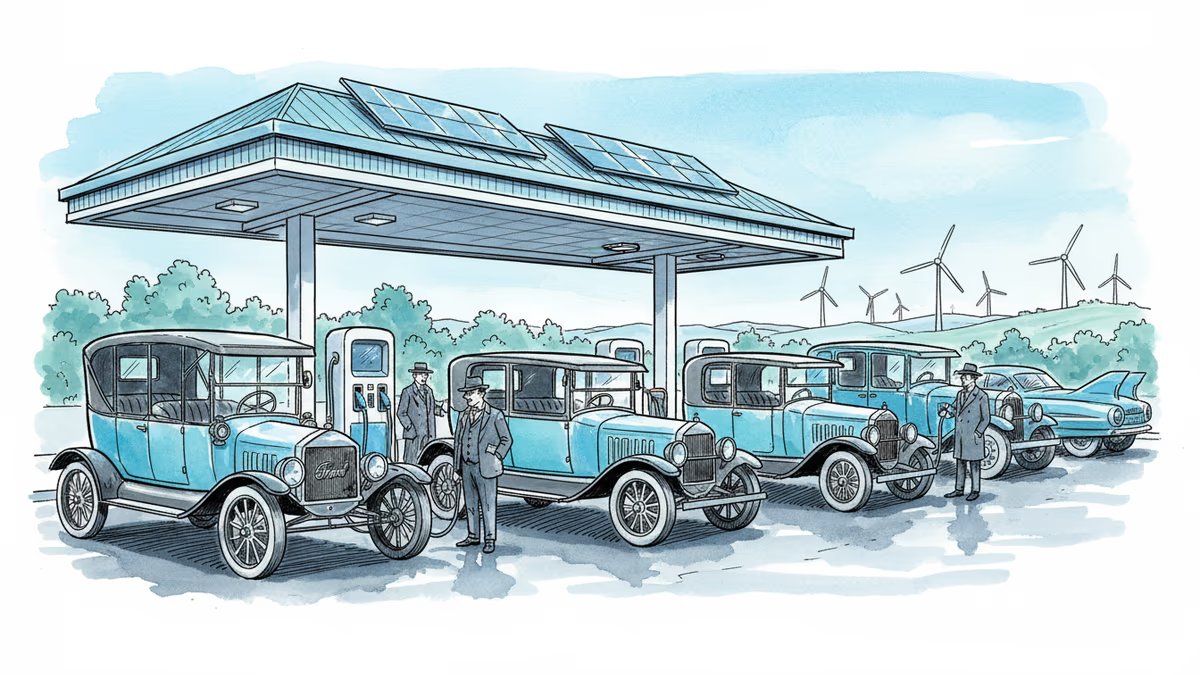
The $10,000 Electric Car Revolution Is Here
Used EV market explodes with sub-$10k options as battery degradation fears prove overblown. Mass adoption accelerates with improved reliability data
The $10,000 Electric Car Revolution Is Here
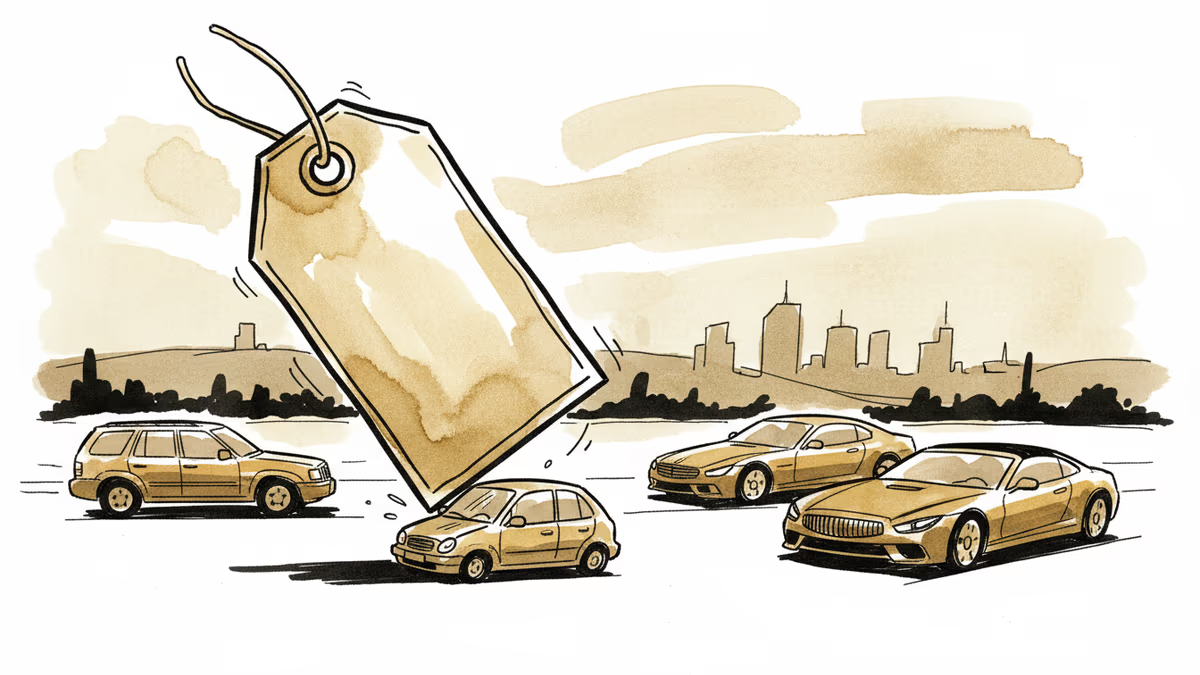
$10,000 used to buy you a beat-up sedan with questionable brakes. Today, it can get you a Tesla Model S, Nissan Leaf, or Chevy Bolt—cars that were selling for $30,000+ just three years ago.
The used EV market has hit an inflection point. What was once the domain of early adopters with deep pockets is becoming accessible to budget-conscious buyers. But this isn't just about falling prices—it's about a fundamental shift in how we think about car ownership.
The Battery Anxiety That Wasn't
For years, the biggest fear around used EVs was battery degradation. "What if the battery dies in two years?" buyers wondered. The data tells a different story.
Most EVs with active battery cooling lose only 2% capacity per year. A five-year-old Tesla Model S typically retains 90% of its original range. Compare that to a gas engine, which loses efficiency gradually and faces expensive maintenance as it ages.
Tesla's own data shows vehicles maintaining 80%+ battery capacity after 500,000 miles. That's not just impressive—it's potentially game-changing for the used car market.

The Infrastructure Reality Check
Here's the catch: buying a $10,000 EV only makes sense if you can charge it reliably. Most budget EVs charge slowly on DC fast chargers, making road trips challenging. You'll want home or workplace charging.
For apartment dwellers or those without dedicated parking, this remains a significant hurdle. The used EV sweet spot currently serves homeowners with garages—a demographic that doesn't necessarily need the savings.
What This Means for New Car Sales
Automakers are watching nervously. If a 2019 Model 3 performs 95% as well as a 2026 model for half the price, why buy new? The traditional automotive depreciation curve—where cars lose 20% of their value the moment you drive off the lot—might not apply to EVs.
This creates a peculiar market dynamic. Tesla benefits from strong resale values but faces competition from its own used inventory. Legacy automakers launching new EV lines must compete not just with each other, but with their own depreciated models.
The Democratization Dilemma
The sub-$10,000 EV market could accelerate adoption among price-sensitive buyers who've been waiting on the sidelines. But it also highlights a growing divide: those with charging access can go electric cheaply, while others remain locked out.
This isn't just about individual choice—it's about equitable access to cleaner transportation. As EVs become the budget option, gas cars risk becoming the expensive, polluting alternative.
Authors
Related Articles
Despite EV success, electric sports cars struggle with consumer rejection, technical hurdles, and emotional disconnect from traditional performance enthusiasts
Exploring the used EV market at $15,000 budget point. BMW i3 and Chevrolet Bolt options compared with lower mileage, newer features, and better value propositions.
German study reveals shocking truth about plug-in hybrids - most owners rarely charge them. Porsche drivers averaged just 0.8% electric usage over two years.
Average new car price hits $48,576 in the US, up a third since 2019. Even with tariff rollbacks, affordable cars aren't coming back. Here's why the auto industry's cost structure has fundamentally shifted.
Despite EV success, electric sports cars struggle with consumer rejection, technical hurdles, and emotional disconnect from traditional performance enthusiasts
Exploring the used EV market at $15,000 budget point. BMW i3 and Chevrolet Bolt options compared with lower mileage, newer features, and better value propositions.
German study reveals shocking truth about plug-in hybrids - most owners rarely charge them. Porsche drivers averaged just 0.8% electric usage over two years.
Average new car price hits $48,576 in the US, up a third since 2019. Even with tariff rollbacks, affordable cars aren't coming back. Here's why the auto industry's cost structure has fundamentally shifted.
Thoughts
Share your thoughts on this article
Sign in to join the conversation