

When Your Car Won't Start Because the Server Is Down
As vehicles become software platforms, their lifespan increasingly depends on company survival. What happens when the code dies?
Turn the key. Press the start button. Nothing happens. Not because your battery died or your engine failed, but because a server somewhere stopped responding.
It sounds like science fiction, but for a growing number of vehicles, this scenario is becoming reality. As cars transform into platforms for software and subscriptions, their longevity is increasingly tied to the survival of the companies behind their code.
Your Phone Is Now Your Car Key
Automotive software used to handle basic engine management and diagnostics. Today's cars are different beasts entirely. Smartphone apps unlock doors, flash headlights, and precondition cabins. Some models won't unlock at all unless a phone running the manufacturer's app is within range.
Tesla exemplifies this shift. Most vehicle functions run through software—autopilot, air conditioning, glove box, even the horn operates via touchscreen. It's convenient until it isn't. When software fails, basic car functions can become inaccessible.
The integration goes deeper than convenience features. Modern vehicles rely on over-the-air updates for everything from security patches to performance improvements. Miss those updates, and your car doesn't just lose features—it becomes vulnerable.
When Companies Die, Cars Follow
The real risk emerges when manufacturers disappear. Electric vehicle startups and software-heavy brands are particularly vulnerable. When companies fold, servers shut down, app updates cease, and vehicles can become expensive paperweights.
Chinese EV startups provide cautionary tales. When several collapsed due to funding shortages, owners found themselves with cars that couldn't receive software updates or basic service support. 10-year-old vehicles became scrap metal overnight.

Fisker owners experienced similar uncertainty when the company filed for bankruptcy in 2024. While the cars still functioned, questions about long-term software support and parts availability left owners in limbo.
The Subscription Car Economy
Ownership itself is being redefined. Traditional car purchases granted lifetime access to all installed features. Today's model resembles software licensing—you're renting access to your car's capabilities.
BMW charges $18 monthly for heated seats already installed in the vehicle. Mercedes offers acceleration improvements via subscription. The hardware sits in your driveway, but the functionality lives in the cloud.
This shift impacts resale values dramatically. Software-dependent vehicles face accelerated depreciation when support ends. While traditional cars lasted 15-20 years, software-defined vehicles may see useful lifespans shrink to 5-10 years.
The Right to Repair Meets Right to Drive
Consumer advocacy groups are pushing back. The "right to repair" movement now includes automotive software access. Massachusetts passed legislation requiring automakers to provide independent repair shops with diagnostic data. Similar bills are advancing in other states.
John Deere faced farmer revolts over tractor software restrictions, eventually agreeing to limited repair access. The automotive industry may face similar pressure as software lock-in becomes more apparent to consumers.
European regulators are also watching closely. The EU's Digital Services Act could extend to automotive software, potentially requiring interoperability and data portability.
Planning for Digital Obsolescence
Smart buyers are adapting. Used car shoppers now research software support lifecycles alongside mechanical reliability. Fleet managers factor digital obsolescence into replacement schedules.
Some manufacturers are responding with longer support commitments. Volvo promises 15 years of software updates for its EX90 model. Toyota emphasizes hybrid systems with minimal connectivity requirements.
Authors
Related Articles
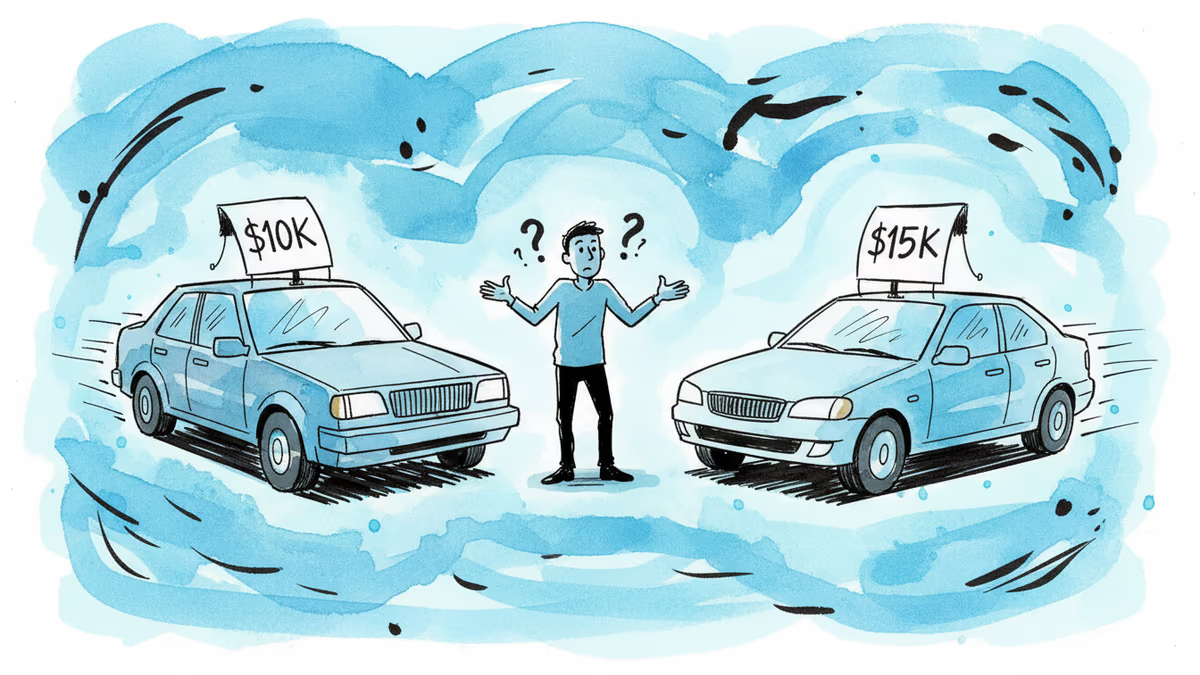
Exploring the used EV market at $15,000 budget point. BMW i3 and Chevrolet Bolt options compared with lower mileage, newer features, and better value propositions.
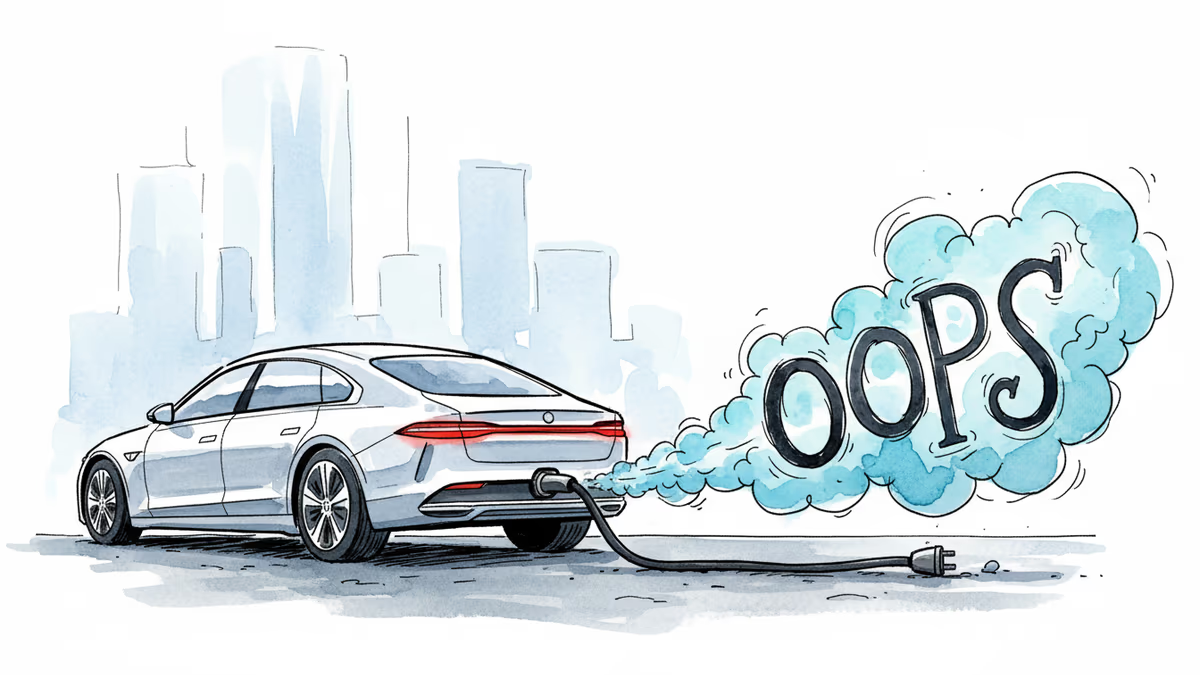
German study reveals shocking truth about plug-in hybrids - most owners rarely charge them. Porsche drivers averaged just 0.8% electric usage over two years.
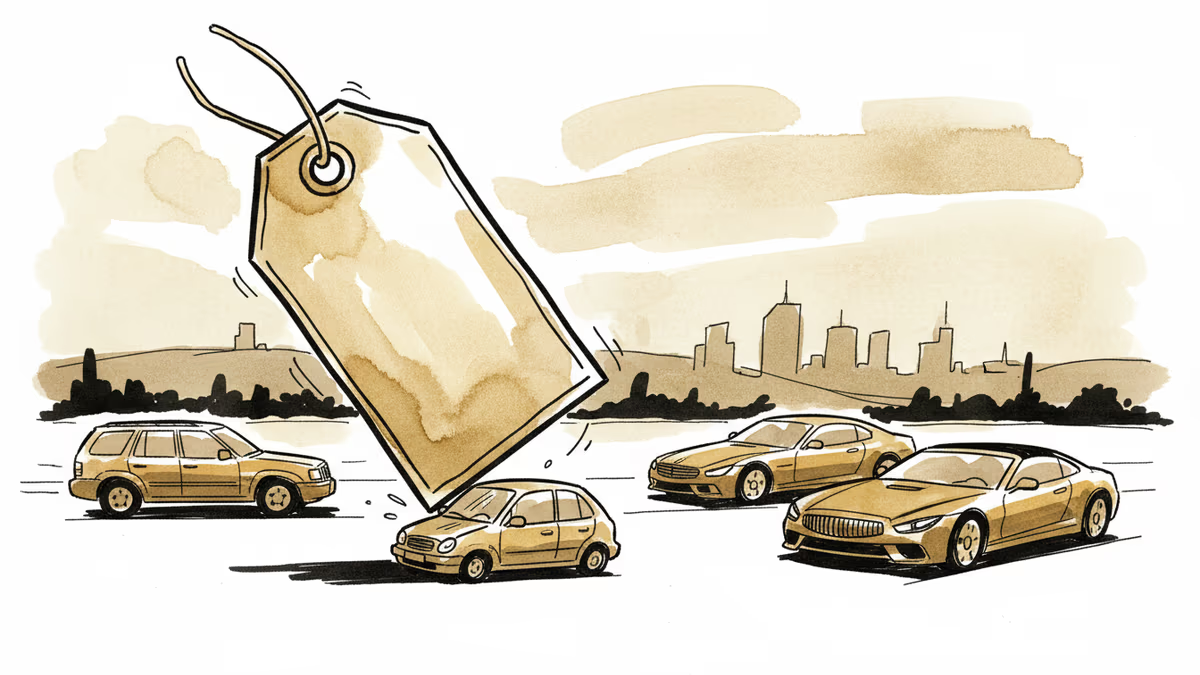
Average new car price hits $48,576 in the US, up a third since 2019. Even with tariff rollbacks, affordable cars aren't coming back. Here's why the auto industry's cost structure has fundamentally shifted.
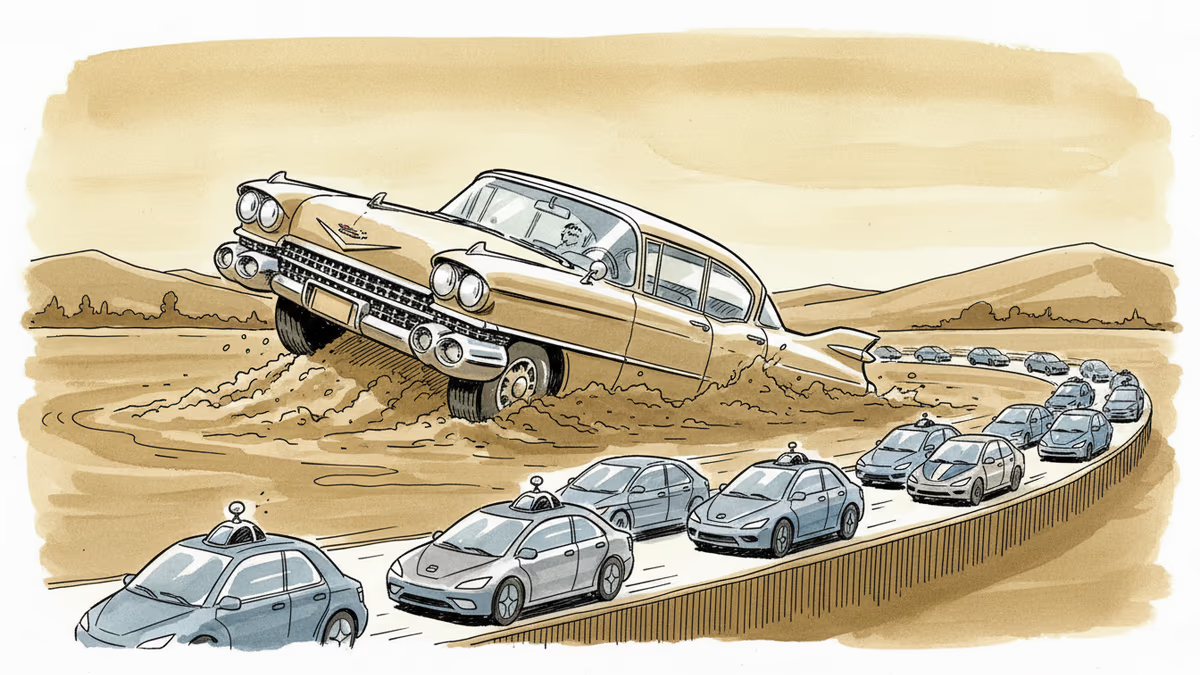
How America's once-dominant auto industry collapsed offers crucial lessons for today's market leaders facing rapid technological disruption.
Exploring the used EV market at $15,000 budget point. BMW i3 and Chevrolet Bolt options compared with lower mileage, newer features, and better value propositions.
German study reveals shocking truth about plug-in hybrids - most owners rarely charge them. Porsche drivers averaged just 0.8% electric usage over two years.
Average new car price hits $48,576 in the US, up a third since 2019. Even with tariff rollbacks, affordable cars aren't coming back. Here's why the auto industry's cost structure has fundamentally shifted.
How America's once-dominant auto industry collapsed offers crucial lessons for today's market leaders facing rapid technological disruption.
Thoughts
Share your thoughts on this article
Sign in to join the conversation