
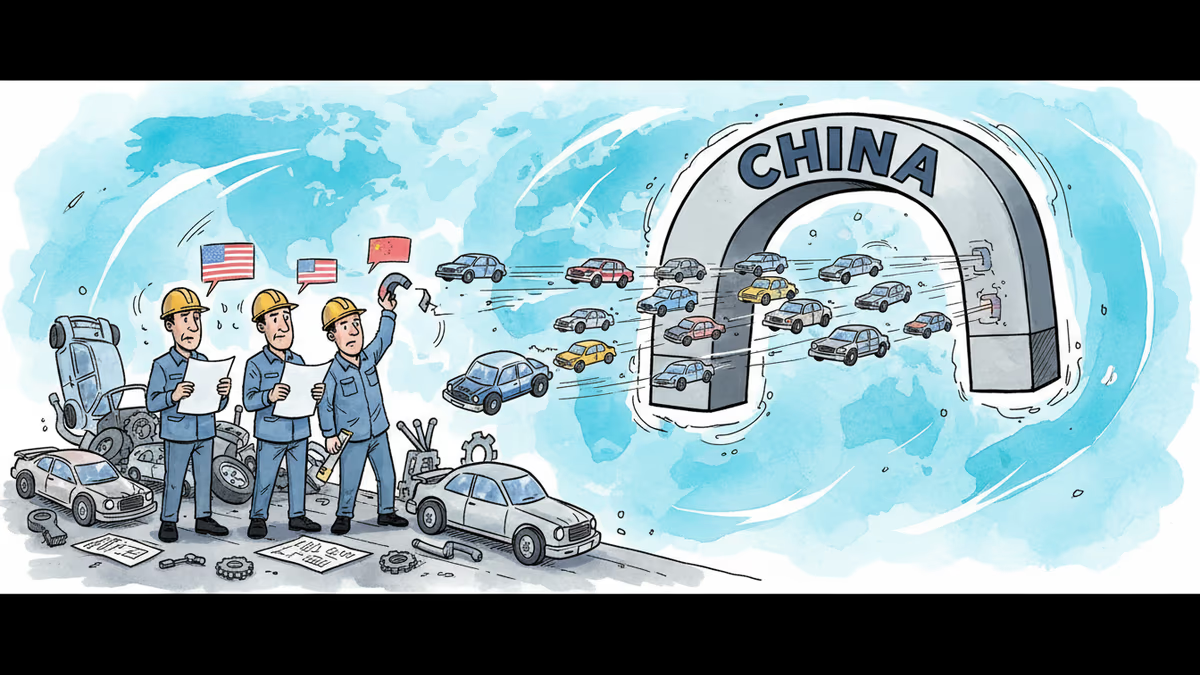
The $1 Trillion EV Industry's China Problem Has No Easy Fix
China controls 91% of rare earth processing that powers most EVs. As automakers scramble for alternatives, the reality check is sobering - and Chinese companies are developing the same tech.
94.7% of Electric Cars Depend on One Country
When China tightened rare earth exports last year, European parts plants shuttered overnight. Suzuki halted production. The math was brutal: 94.7% of light EVs use rare earth-based motors, and China controls 91% of global rare earth processing capacity.
"If you build a product where 90% of a key component is controlled by one country, you're not very comfortable," Jonathan Rost, chief customer engineer at French supplier Valeo, told Rest of World. His company supplies Mercedes-Benz and Hyundai, and now they're racing to build motors without rare earths.
The wake-up call couldn't have come at a worse time. Western automakers are already struggling to compete with Chinese EV rivals. Adding supply chain vulnerability to the mix? That's a problem they can no longer afford.
The Great Decoupling Race
Over the past six months, Stellantis, General Motors, and Honda have each announced new funding for rare earth alternatives. The strategies fall into two camps: developing permanent magnets from abundant materials like iron and nitrogen, or building motors that skip permanent magnets entirely.
BMW started this journey in 2011 when neodymium prices spiked. Today, the German automaker claims its rare earth-free designs match or exceed conventional motor efficiency at everyday driving speeds. Stellantis (Fiat, Jeep, Maserati) and GM recently renewed backing for Niron Magnetics, a Minnesota startup developing iron-nitrogen magnets.
But neither company will say when the technology might reach showrooms.
Reality Check: 2028 at the Earliest
Valeo explored alternatives over a decade ago but didn't commission a serious project until 2022. There's a reason for the delay - turning prototypes into production-ready products is harder than it looks.

Valeo's rare earth-free motor won't hit markets until at least 2028, and pricing "will take production volumes into account." Translation: it'll be expensive initially. Original partner Renault has since sought new collaborators, including Chinese suppliers.
The numbers tell the story. S&P Mobility projects 15% annual growth for rare earth-free motors through 2037 - but from a "tiny base." IDTechEx expects more than 75% of passenger EVs will still use rare earth-based motors by 2030.
"If carmakers don't have a plan B, manufacturing can come to a halt," John Li, a technology analyst at IDTechEx, warned. "We've already seen how supply disruptions can financially cripple companies - especially when making a profit on EVs is already difficult."
China's Paradox: Abundant Resources, Still Innovating
Here's the twist: Chinese automakers have no trouble sourcing rare earths at home. Yet they're chasing the same technology anyway, hunting for cheaper components to sharpen their overseas edge.
BYD, Nio, and Huawei have each developed rare earth-free motor designs. None have moved to mass production, but the intent is clear. Hengchun Mao, founder of Chengdu-based Quanten Technologies, has sold about 2,000 motor sets since opening his factory last August.
"Chinese EV makers were my first customers," Mao explained. "Not because they lacked access to rare earths, but because they're always hunting for ways to cut costs. They want to compete better, inside and outside China."
Mao received his first European orders this year and expects overseas customers will outnumber Chinese ones by 2030. But Chinese carmakers aren't rushing adoption. "They don't have a shortage problem," he said.
Tesla's Flip-Flop Reveals the Challenge
Tesla switched to rare earth-based motors in 2017, then announced its next-generation motors expected in 2026 will again be rare earth-free. This back-and-forth underscores how experimental the transition remains.
Building alternative supply chains outside China is another path, but Marina Zhang, an associate professor at the University of Technology Sydney, estimates it could take 15 years and cost dearly. "It may be very costly, but it could be safe," she said.
The greater risk lies with smaller countries lacking resources to build their own supply chains. And even massive investments could vanish if Beijing floods markets with cheaper, better rare earths. "If Chinese rare earth products become available at lower prices and higher quality, the game could change immediately."
Authors
Related Articles
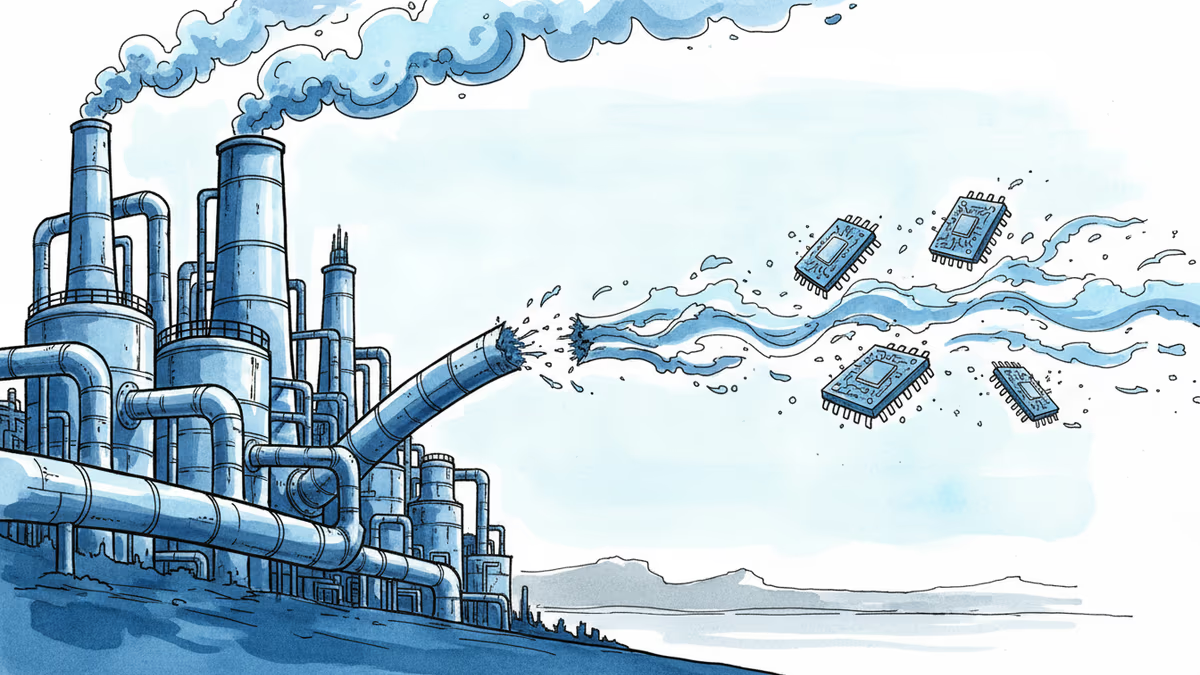
Qatar's gas production halt threatens global semiconductor supply chains as the Middle East conflict disrupts critical materials. Samsung and SK Hynix face potential production slowdowns in a market already stretched by AI demand.
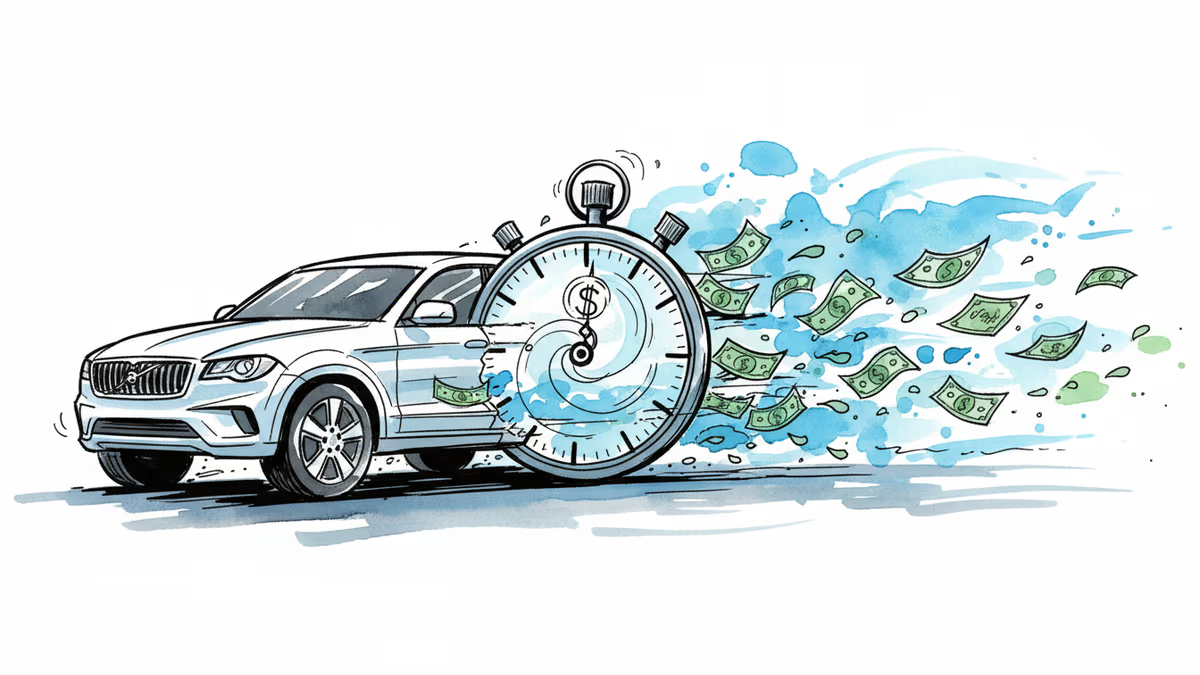
Rivian targets 20,000 R2 SUV sales in six months, matching Tesla Model Y's pace. But can it succeed without federal tax credits in a challenging EV market?
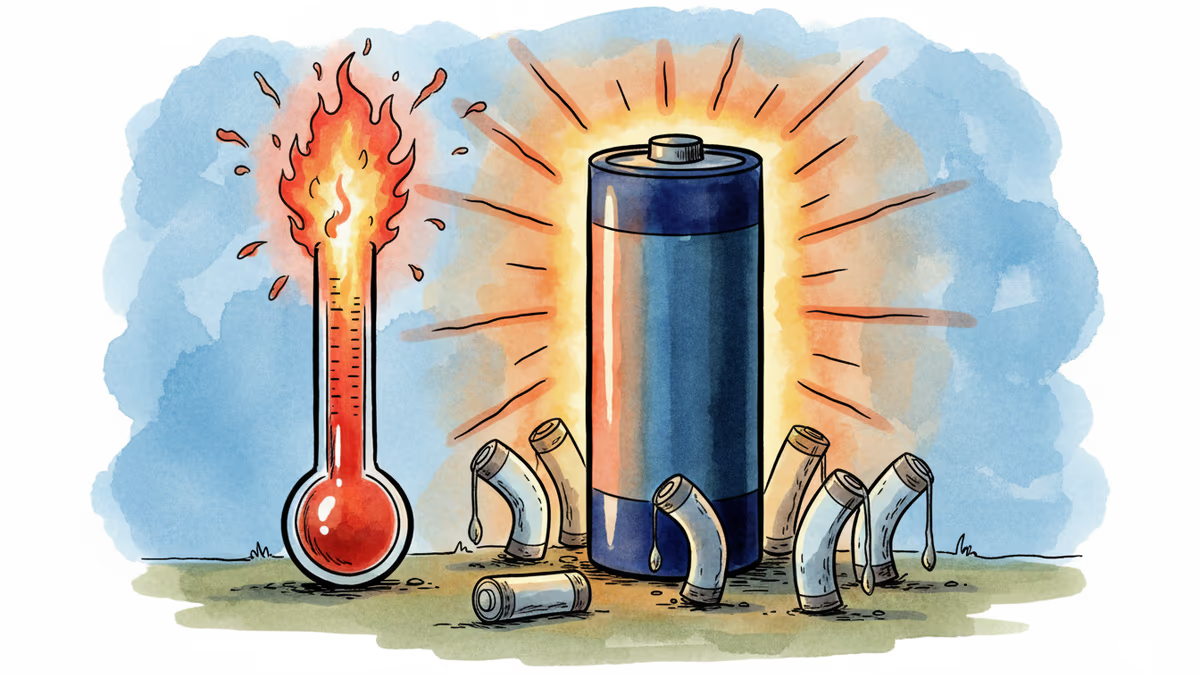
Finnish startup Donut Lab's solid-state battery actually gains capacity at extreme heat, challenging everything we know about EV battery performance in hot climates.
Trump promised to remove Vietnam from export control lists just weeks after the country broke ground on its first chip factory. A strategic pivot 70 years in the making could reshape global semiconductor supply chains.
Qatar's gas production halt threatens global semiconductor supply chains as the Middle East conflict disrupts critical materials. Samsung and SK Hynix face potential production slowdowns in a market already stretched by AI demand.
Rivian targets 20,000 R2 SUV sales in six months, matching Tesla Model Y's pace. But can it succeed without federal tax credits in a challenging EV market?
Finnish startup Donut Lab's solid-state battery actually gains capacity at extreme heat, challenging everything we know about EV battery performance in hot climates.
Trump promised to remove Vietnam from export control lists just weeks after the country broke ground on its first chip factory. A strategic pivot 70 years in the making could reshape global semiconductor supply chains.
Thoughts
Share your thoughts on this article
Sign in to join the conversation