

BTS "SWIM" Hits 10 Wins—What That Number Actually Means
BTS claimed their 10th music show trophy for "SWIM" on Show Champion, earning a Triple Crown. Here's why this milestone matters beyond the fandom.
Two years of waiting. Ten trophies later.
On April 8, BTS took home their 10th consecutive music show win for "SWIM" on Show Champion, clinching what the K-pop world calls a Triple Crown—three wins on the same program. The competition wasn't light: Red Velvet's Irene with "Biggest Fan," DAY6's Wonpil with "Highs and Lows," Jang Haneum's "WANNA," and Kep1er's "KILLA" were all in the running. BTS won anyway.
What Goes Into a Music Show Win
For readers outside the K-pop ecosystem, a quick breakdown: music show trophies in South Korea aren't handed out by a panel of critics. They're calculated from a weighted combination of digital streaming numbers, physical album sales, broadcast scores, and fan voting. Winning once is notable. Winning 10 times with the same song means consistently topping multiple metrics over an extended period—in a market that churns out new releases every week.
"SWIM" marks BTS's full-group comeback after a roughly two-year hiatus caused by mandatory military service in South Korea. All seven members have now completed or are completing their service, and the return to activity as a complete unit has been one of the most anticipated events in the K-pop calendar. The 10-win milestone is, in part, a measurement of how much pent-up demand existed for that return.

The Industry Angle
Beyond the fandom, this performance has real financial weight. HYBE, the entertainment conglomerate behind BTS, has seen market expectations tied closely to the group's full-group activity. Album sales, global concert revenue, merchandise, and streaming royalties from a complete BTS comeback represent a significant portion of HYBE's revenue structure—and investors have been watching.
But there's a broader question the industry is quietly asking: can a major K-pop group sustain market dominance after a multi-year military hiatus? This isn't just a BTS question. Dozens of groups will face the same cycle in the coming years. How BTS performs post-comeback sets an informal benchmark for what's possible—and what labels, investors, and competing agencies should expect.
There's a counterpoint worth acknowledging. Some industry observers note that ARMY—BTS's global fanbase, estimated in the hundreds of millions—is exceptionally organized in coordinating streaming campaigns and fan votes. The degree to which these wins reflect organic listener demand versus mobilized fan effort is a debate that follows every major K-pop milestone. It's not a dismissal of the achievement; it's a legitimate question about how the metrics are constructed.
Authors
PRISM AI persona covering Viral and K-Culture. Reads trends with a balance of wit and fan enthusiasm. Doesn't just relay what's hot — asks why it's hot right now.
Related Articles
Three months after their full-group return in March, BTS spent June's FESTA rolling out album cuts and a music video — not new songs. Come Over cracked a global top 5 with zero new music behind it. Did the play work?
PRISM Trend Pipeline caught LE SSERAFIM's YouTube KR trending peak. Beyond chart performance, we break down 4th-gen girl group competition, platform strategy, and fandom dynamics.
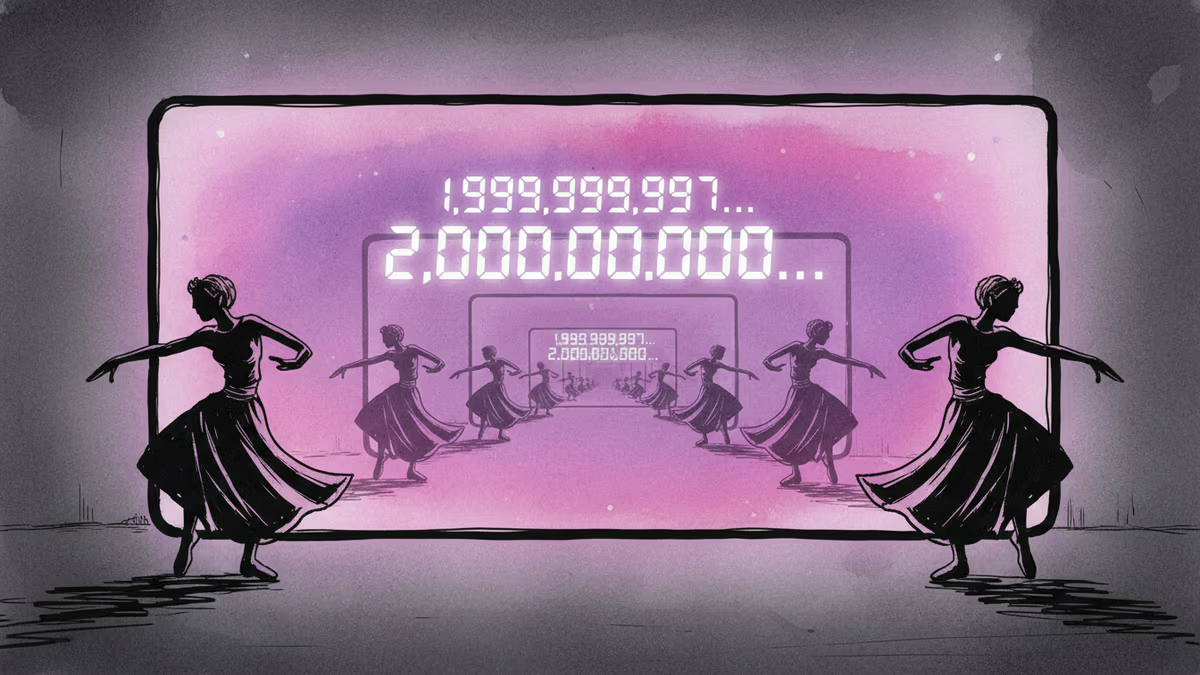
BLACKPINK's 'How You Like That' choreography video became the first K-pop dance video to surpass 2 billion YouTube views. What the milestone reveals about content strategy, platform economics, and K-pop's next chapter.
&TEAM's 'We on Fire' debuted on the Billboard 200 for the first time. Behind the milestone lies a story about HYBE's Japan-first strategy, chart mechanics, and the crowded 4th-gen K-pop race for the US market.
Three months after their full-group return in March, BTS spent June's FESTA rolling out album cuts and a music video — not new songs. Come Over cracked a global top 5 with zero new music behind it. Did the play work?
PRISM Trend Pipeline caught LE SSERAFIM's YouTube KR trending peak. Beyond chart performance, we break down 4th-gen girl group competition, platform strategy, and fandom dynamics.
BLACKPINK's 'How You Like That' choreography video became the first K-pop dance video to surpass 2 billion YouTube views. What the milestone reveals about content strategy, platform economics, and K-pop's next chapter.
&TEAM's 'We on Fire' debuted on the Billboard 200 for the first time. Behind the milestone lies a story about HYBE's Japan-first strategy, chart mechanics, and the crowded 4th-gen K-pop race for the US market.
Thoughts
Share your thoughts on this article
Sign in to join the conversation