
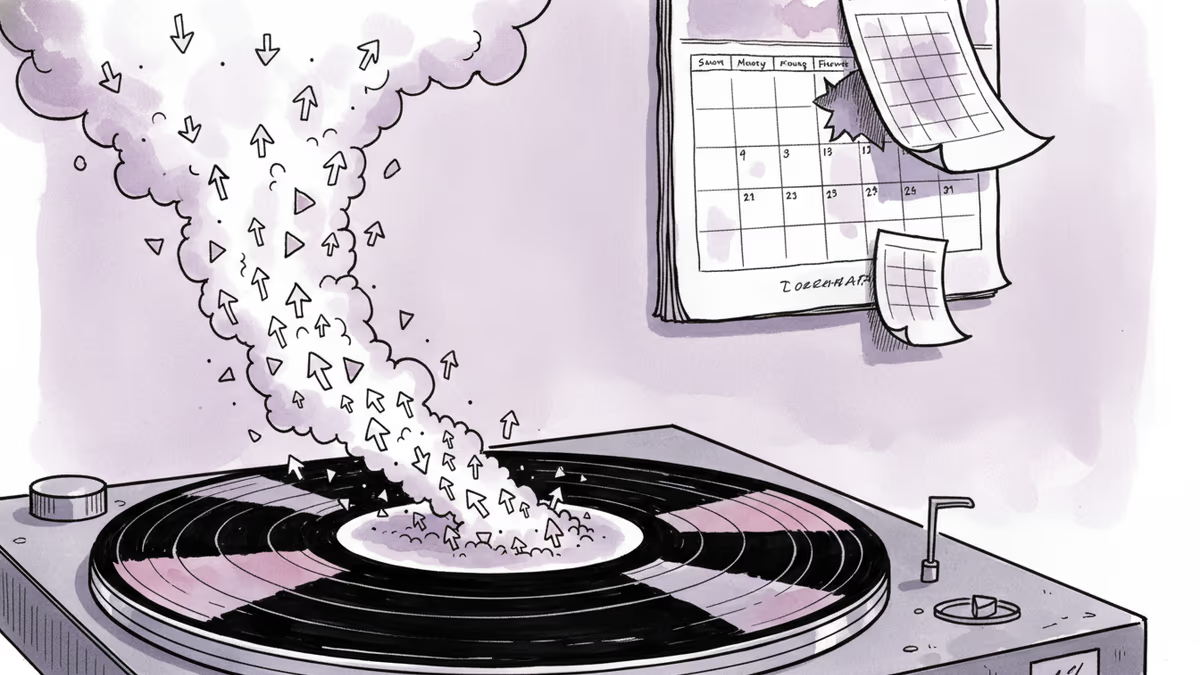
BTS's "Heartbeat" Hits 100M Views—What a Game OST Reveals About K-Pop's Long Game
BTS's 2019 game soundtrack "Heartbeat" crossed 100 million YouTube views on May 25, 2026. Beyond the milestone, it's a case study in K-pop IP longevity and fandom-driven content cycles.
Seven years to reach a milestone that some BTS title tracks hit in a single weekend. On May 25, 2026, at approximately 8:06 a.m. KST, the music video for "Heartbeat" crossed 100 million views on YouTube—making it the latest addition to BTS's nine-figure club, but by far the slowest to get there. That gap tells a more interesting story than the number itself.
What "Heartbeat" Actually Was
Released on June 28, 2019, "Heartbeat" wasn't a chart single or an album centerpiece. It was the main theme for BTS WORLD, a mobile interactive game developed with Netmarble and published by what was then Big Hit Entertainment (now HYBE). The game cast players as the group's manager, navigating a fictional storyline alongside the members. "Heartbeat" served as its emotional anchor.
The game itself has since wound down. But the music video stayed on YouTube, quietly accumulating streams from a fanbase that never quite let it go. No viral moment, no chart re-entry, no algorithmic spike—just seven years of steady, deliberate replays by ARMY.
The Long Tail of K-Pop IP

For HYBE, the milestone is worth examining beyond the fan celebration. A game OST generating 100 million views years after its source platform went dark is a proof-of-concept for something the company has been betting on: that K-pop IP can outlive the product it was built for.
This is the logic behind HYBE's broader IP strategy—Weverse as a fan ecosystem, expansions into webtoons, dramas, and merchandise, individual member content running parallel to group releases. The underlying assumption is that a strong enough artist identity becomes a self-sustaining content engine. "Heartbeat" is an early data point for that thesis, even if an imperfect one.
The counterargument is worth noting: BTS WORLD received mixed reviews from fans for its gameplay depth, and its service shutdown represents a cautionary tale about IP extension without sufficient platform investment. 100 million views on the OST doesn't rehabilitate the game. It just means the music survived it.
Timing, Military Service, and the Fandom Replay Cycle
The timing of this milestone isn't incidental. Through 2025 and into 2026, BTS members have been completing mandatory South Korean military service, with a full group comeback increasingly on the horizon. During this hiatus, ARMY has demonstrably cycled through older content—music videos, live performances, behind-the-scenes footage—at elevated rates.
This pattern is a well-documented feature of K-pop fandoms: in the absence of new material, archival content absorbs the demand. The effect is practical as well as emotional. Sustained replay activity keeps an artist's catalog visible in YouTube's recommendation algorithm, maintaining discoverability for new listeners who might arrive during the quiet period. Fans, in effect, perform an unpaid marketing function—one that benefits HYBE's catalog value whether or not the company explicitly orchestrates it.
This content is AI-generated based on source articles. While we strive for accuracy, errors may occur. We recommend verifying with the original source.
Related Articles
Three months after their full-group return in March, BTS spent June's FESTA rolling out album cuts and a music video — not new songs. Come Over cracked a global top 5 with zero new music behind it. Did the play work?
PRISM Trend Pipeline caught LE SSERAFIM's YouTube KR trending peak. Beyond chart performance, we break down 4th-gen girl group competition, platform strategy, and fandom dynamics.
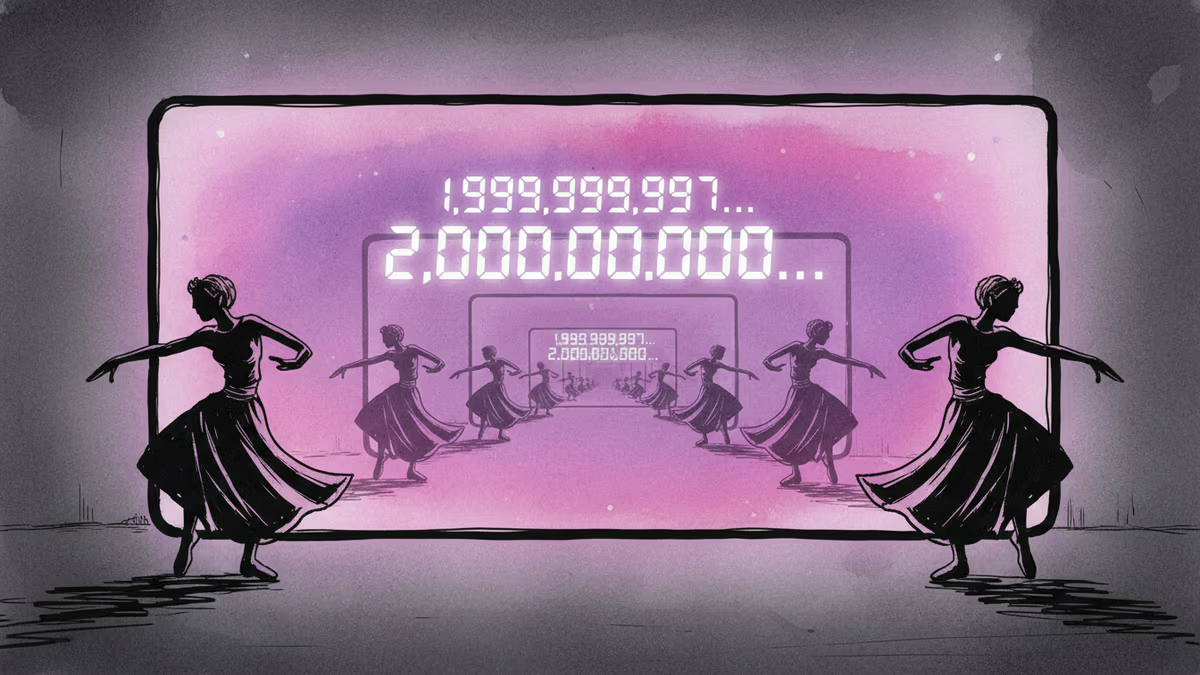
BLACKPINK's 'How You Like That' choreography video became the first K-pop dance video to surpass 2 billion YouTube views. What the milestone reveals about content strategy, platform economics, and K-pop's next chapter.
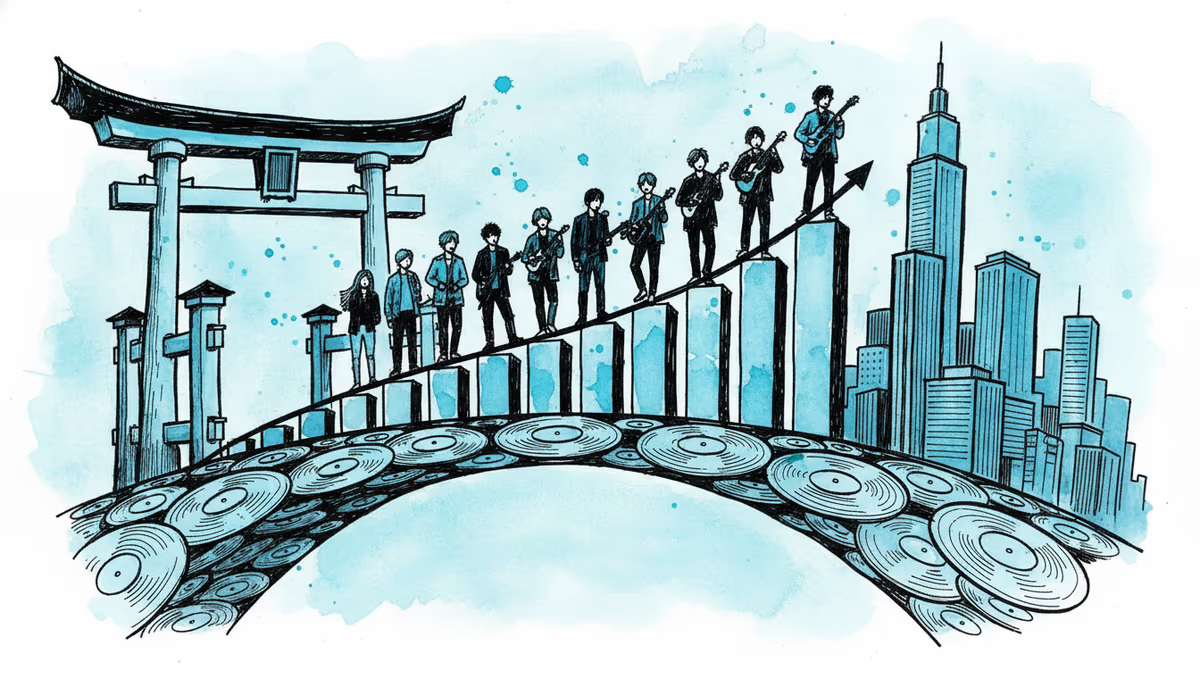
&TEAM's 'We on Fire' debuted on the Billboard 200 for the first time. Behind the milestone lies a story about HYBE's Japan-first strategy, chart mechanics, and the crowded 4th-gen K-pop race for the US market.
Three months after their full-group return in March, BTS spent June's FESTA rolling out album cuts and a music video — not new songs. Come Over cracked a global top 5 with zero new music behind it. Did the play work?
PRISM Trend Pipeline caught LE SSERAFIM's YouTube KR trending peak. Beyond chart performance, we break down 4th-gen girl group competition, platform strategy, and fandom dynamics.
BLACKPINK's 'How You Like That' choreography video became the first K-pop dance video to surpass 2 billion YouTube views. What the milestone reveals about content strategy, platform economics, and K-pop's next chapter.
&TEAM's 'We on Fire' debuted on the Billboard 200 for the first time. Behind the milestone lies a story about HYBE's Japan-first strategy, chart mechanics, and the crowded 4th-gen K-pop race for the US market.
Thoughts
Share your thoughts on this article
Sign in to join the conversation