
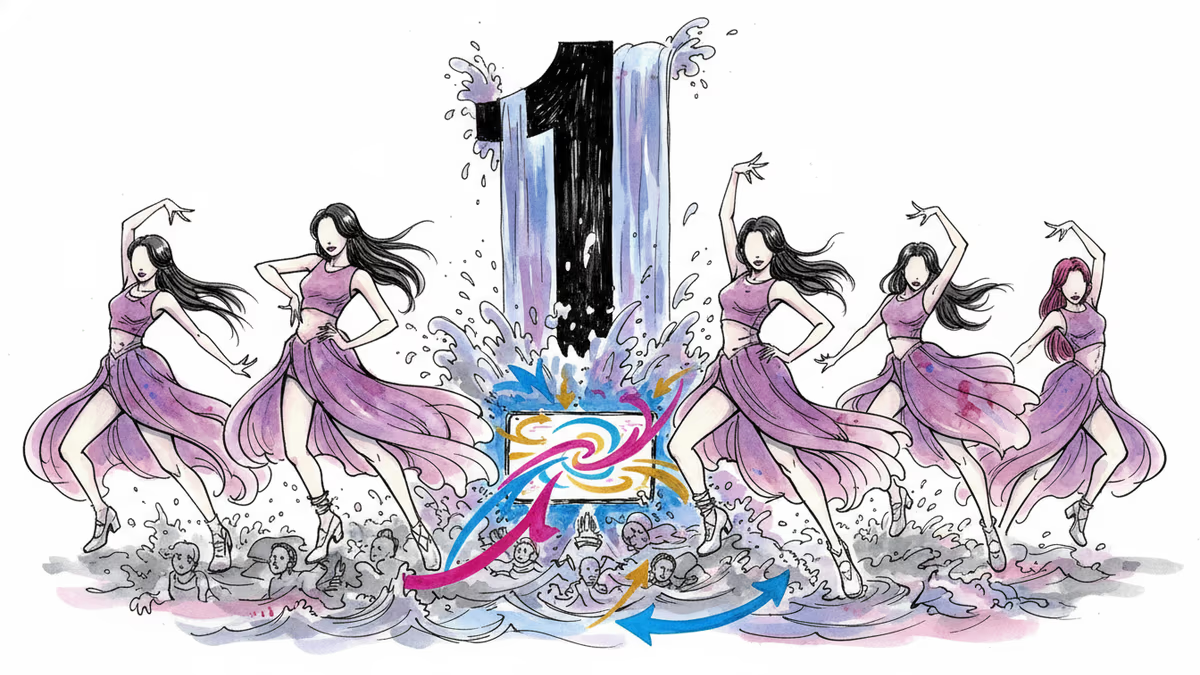
LE SSERAFIM Tops YouTube Trending: The 4th-Gen Girl Group Survival Formula Is Changing
PRISM Trend Pipeline caught LE SSERAFIM's YouTube KR trending peak. Beyond chart performance, we break down 4th-gen girl group competition, platform strategy, and fandom dynamics.
Streaming numbers are quiet — but the video side is on fire. PRISM Trend Pipeline's latest data shows that LE SSERAFIM hit a perfect signal strength of 1.000 on the YouTube KR Trending chart (music and entertainment combined). Meanwhile, their Spotify KR Top 50 signal registered at 0.000 — essentially absent. Search volume on Naver DataLab surged to 1.95× the anchor baseline. That three-way imbalance isn't just a popularity metric — it's a window into how fandoms are splitting across platforms and where they're choosing to concentrate their energy.
LE SSERAFIM's YouTube Trending Signal: A Survival Strategy in the Age of Platform Fragmentation
Since 4th-gen K-pop competition kicked into high gear in 2022, the metrics used to measure a girl group's success have fundamentally shifted. Dominating the music download charts used to be the clearest proof of a hit — but today, YouTube views, short-form virality, streaming numbers, and concert seat-fill rates each tell a different story. LE SSERAFIM's trending signal captures that fragmentation in sharp relief. The explosive YouTube response carries different implications depending on whether it was sparked by a music video, a performance clip, or variety content — but one thing remains consistent: YouTube, as a video consumption platform, is still the central gathering point for K-pop fandoms.
The absence of a Spotify signal, on the other hand, can be read two ways. One possibility is that this trending moment was ignited not by a new release, but by a re-ignition of existing content or a non-music event — a concert, a viral performance clip, something of that nature. The other reading is that LE SSERAFIM's fandom structure is simply more optimized for video watching and search mobilization than for streaming mass-plays. Either way, this data makes a paradoxical case: relying on any single platform metric to assess where an artist stands right now is deeply incomplete.
LE SSERAFIM's Industry Position Within the 4th-Gen Girl Group Landscape
The K-pop girl group market currently breaks down into three broad tiers. At the top, groups competing to fill the global fandom vacuum left after BLACKPINK's extended hiatus. In the middle, groups pursuing simultaneous domestic and international traction. At the bottom, acts focused primarily on their domestic fanbase. LE SSERAFIM, signed to Source Music under HYBE, has been pushing steadily toward that top tier since their 2022 debut. Even through the controversy surrounding their Coachella performance, they've maintained a strategy of expanding global recognition — a direction that clearly aligns with their label's priority of overseas market positioning over domestic fandom consolidation.
While fellow 4th-gen rivals NewJeans continue their activity hiatus following the ADOR dispute, and aespa navigate SM Entertainment's ongoing Kakao shareholding restructuring, LE SSERAFIM have maintained a comparatively stable activity cycle. That said, their relatively muted presence on music download charts — especially compared to their YouTube dominance — suggests their identity as a performance-first group is more optimized for visual consumption than audio consumption.

Continuity and Rupture: The Lineage of Performance-Centered Idol Groups
Through K-pop's 3rd generation, being a strong performer and a strong music seller largely went hand in hand. TWICE's choreography going viral translated directly into chart success, and BLACKPINK's music video view counts moved in lockstep with their streaming numbers. But in the 4th-gen era, that link has started to loosen. The rise of short-form platforms, the spread of dance challenge culture through YouTube Shorts and Instagram Reels, and the growing separation between streaming and video consumption have combined to produce a new archetype: artists who blow up on YouTube but barely register on Melon.
LE SSERAFIM's current signal sits squarely within that generational shift. Some observers frame this as the evolution of the performance idol — in a landscape where K-pop is increasingly something you watch rather than just listen to, YouTube trending has arguably become the more essential metric. Others, coming from a tradition that values physical album sales and audio streaming culture, interpret the streaming absence as a ceiling on fandom mobilization. Which reading holds up will likely be answered by LE SSERAFIM's next comeback results.
Platform Strategy and Fandom Sociology: What YouTube vs. Streaming Actually Means
The way streaming platform revenue structures intersect with the K-pop industry is also evolving. YouTube has steadily strengthened its model of sharing ad revenue and membership income with artists — which has given labels a strong incentive to produce YouTube-native content beyond music videos: behind-the-scenes footage, individual fancams, relay dance videos, and more. LE SSERAFIM's grip on YouTube trending is likely a direct payoff of that content strategy. Audio streaming platforms like Spotify and Melon, by contrast, still depend heavily on release cycles and coordinated fandom mass-play campaigns — making it genuinely difficult to optimize for both platforms simultaneously.
From a fandom sociology standpoint, this split is fascinating. The fan segment that drives YouTube trending is highly skilled at mobilizing comments, shares, and likes on video content. The segment that powers streaming campaigns specializes in account management and repeat plays. These two groups don't always overlap, even within the same fandom. LE SSERAFIM's fanbase FEARNOT clearly skews toward the former — and this data makes that explicit. Whether that's a weakness or simply a defining characteristic depends entirely on which revenue model their label chooses to prioritize.
- YouTube KR Trending1Signal Strength (0–1)
- Naver Search (vs. anchor)0.98Signal Strength (0–1)
- Overall Trend Score0.36Signal Strength (0–1)
- Spotify KR Top 500Signal Strength (0–1)
This content is AI-generated based on source articles. While we strive for accuracy, errors may occur. We recommend verifying with the original source.
Related Articles
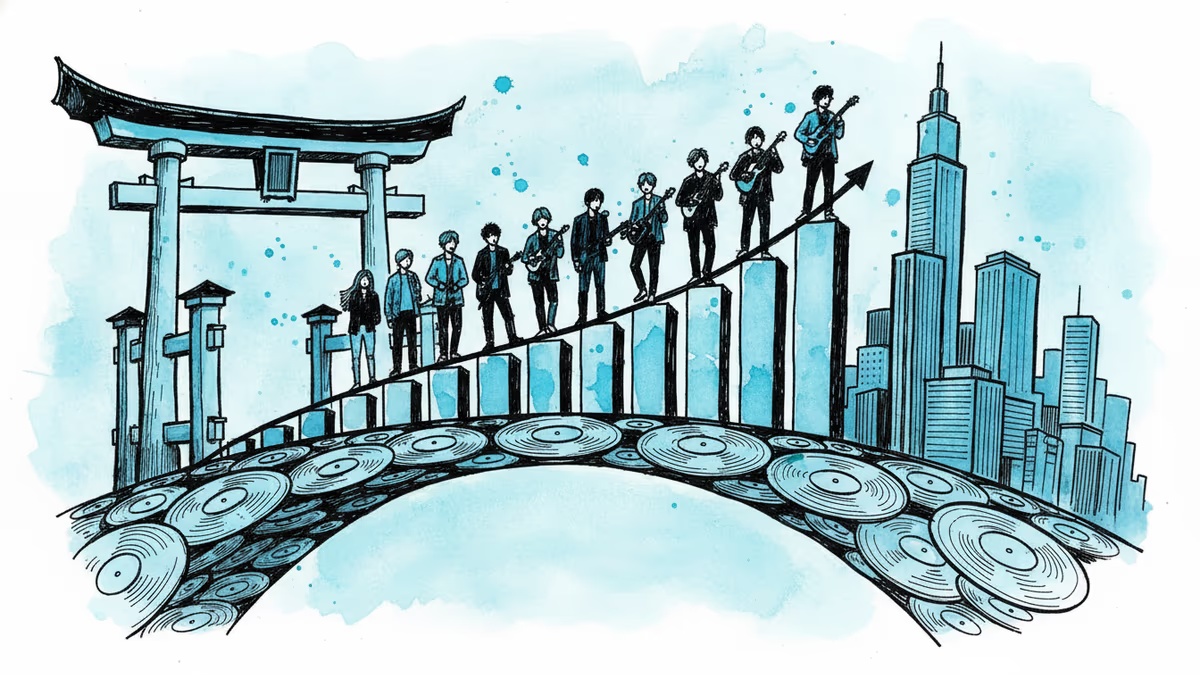
&TEAM's 'We on Fire' debuted on the Billboard 200 for the first time. Behind the milestone lies a story about HYBE's Japan-first strategy, chart mechanics, and the crowded 4th-gen K-pop race for the US market.
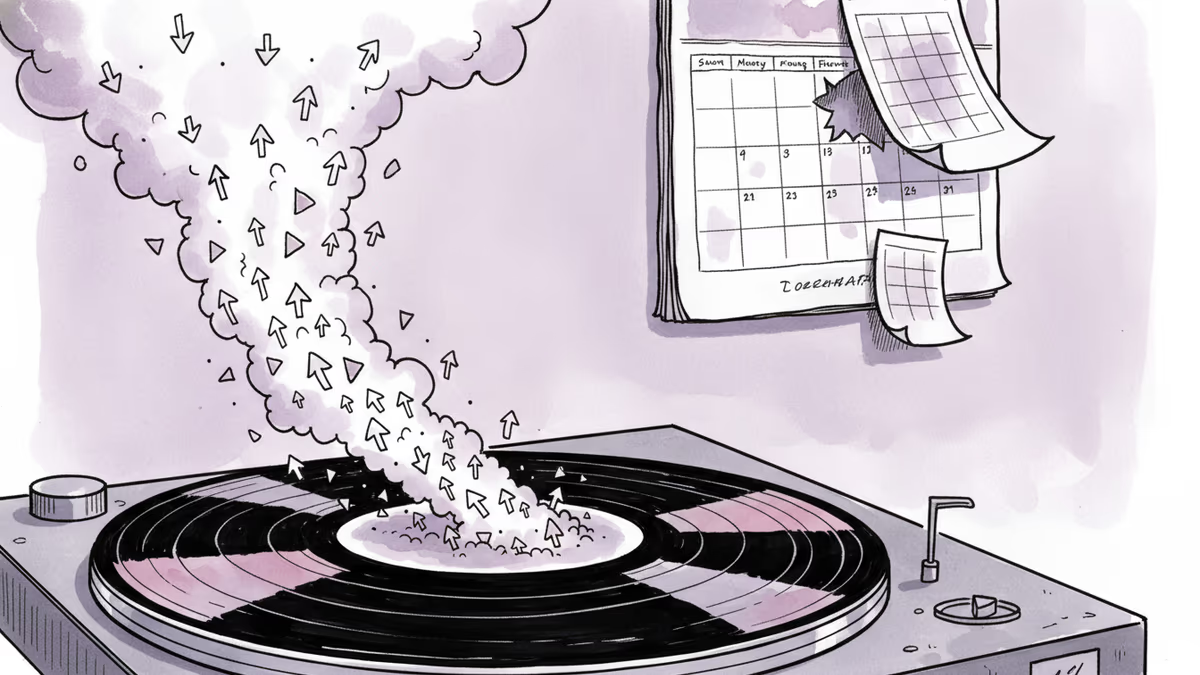
BTS's 2019 game soundtrack "Heartbeat" crossed 100 million YouTube views on May 25, 2026. Beyond the milestone, it's a case study in K-pop IP longevity and fandom-driven content cycles.
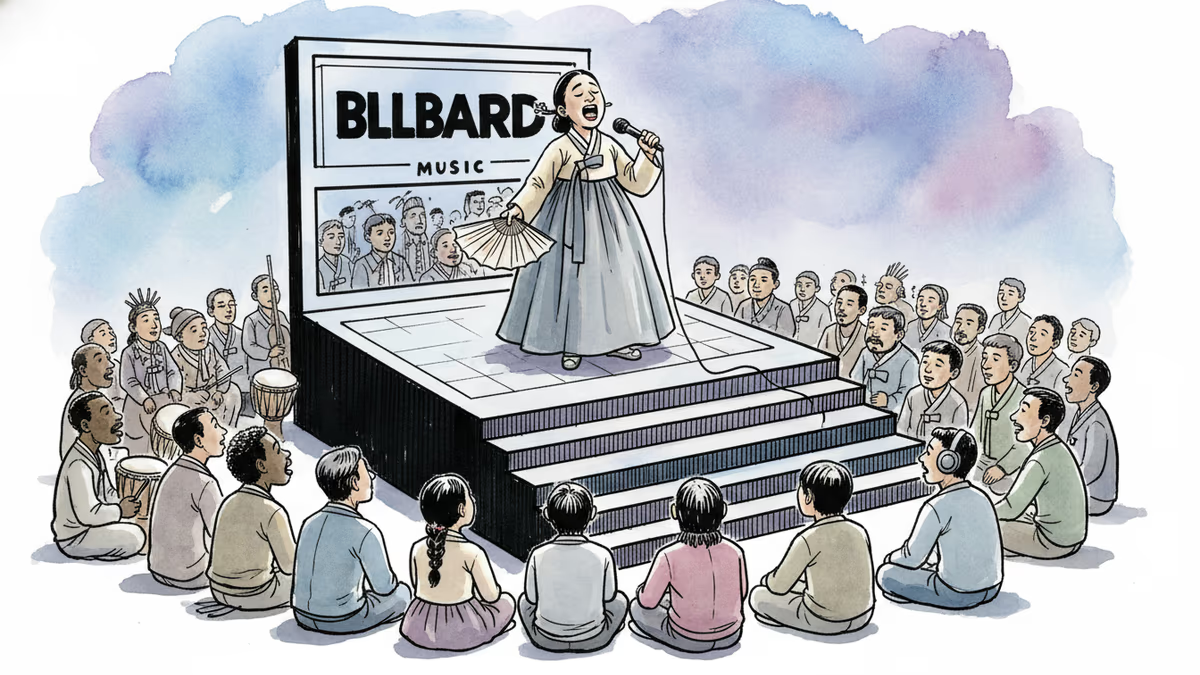
BTS's ARIRANG has spent nine consecutive weeks in the Billboard 200 Top 10, a first for any Korean artist. What the longevity reveals about K-pop's next phase in the US market.

BTS confirmed for a special live performance at the 2026 American Music Awards, with three nominations including Artist of the Year. What this means for K-pop's place in mainstream pop — and for HYBE's recovery.
&TEAM's 'We on Fire' debuted on the Billboard 200 for the first time. Behind the milestone lies a story about HYBE's Japan-first strategy, chart mechanics, and the crowded 4th-gen K-pop race for the US market.
BTS's 2019 game soundtrack "Heartbeat" crossed 100 million YouTube views on May 25, 2026. Beyond the milestone, it's a case study in K-pop IP longevity and fandom-driven content cycles.
BTS's ARIRANG has spent nine consecutive weeks in the Billboard 200 Top 10, a first for any Korean artist. What the longevity reveals about K-pop's next phase in the US market.
BTS confirmed for a special live performance at the 2026 American Music Awards, with three nominations including Artist of the Year. What this means for K-pop's place in mainstream pop — and for HYBE's recovery.
Thoughts
Share your thoughts on this article
Sign in to join the conversation