
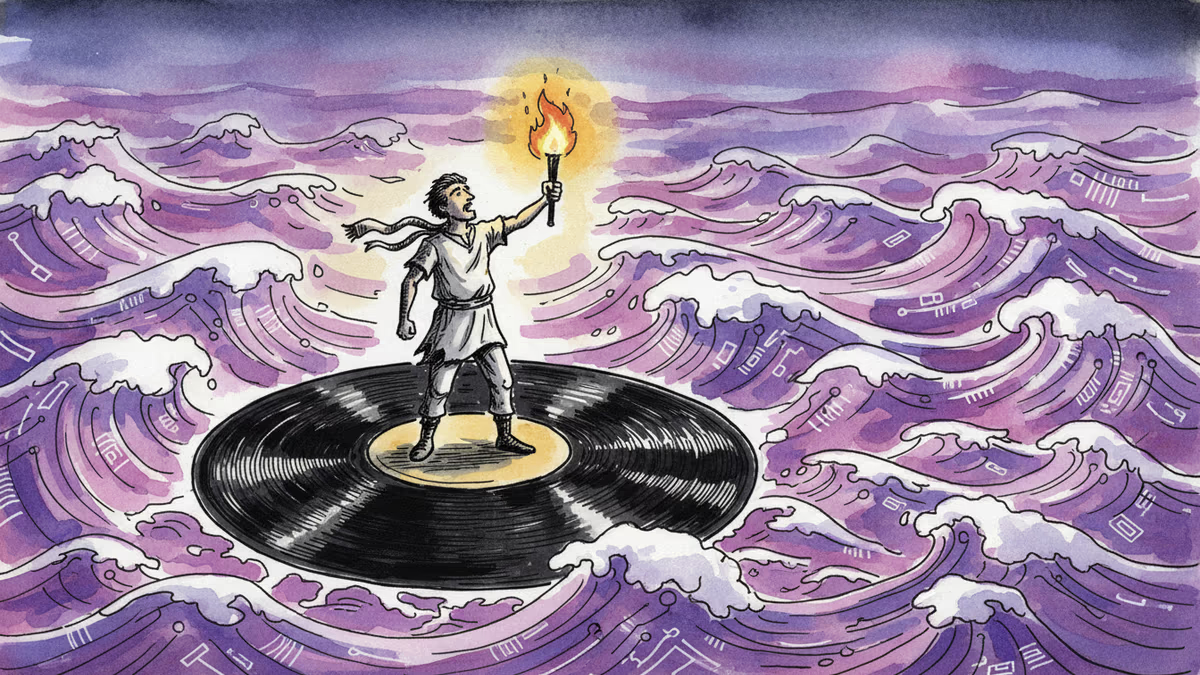
Taeyang's Sales Triple — But What's the Real Signal?
Taeyang's QUINTESSENCE sold over 26,000 copies on release day, tripling his own record. Behind the headline is a story about second-gen K-pop survival economics.
Tripling your own sales record sounds like an unambiguous win. It is — until you ask what the baseline was, and why the gap existed in the first place.
What Happened, and What the Numbers Actually Say
Taeyang dropped his new solo album QUINTESSENCE and its title track 'LIVE FAST DIE SLOW' on May 18, marking his long-awaited return to the solo stage. By the end of release day, the album had moved over 26,000 physical copies — more than three times his previous first-week sales benchmark, making it the strongest solo debut figure of his career.
The number is real. But context matters. In a 2026 K-pop market where fourth-generation acts like aespa or Stray Kids routinely clock first-week sales in the hundreds of thousands, Taeyang's 26,000 is not a volume story — it's a growth-rate story. He wasn't competing against his peers. He was competing against his own ceiling, and he cleared it decisively.
The more useful question is: what drove the spike?
The Economics of a Legacy Act's Comeback

BIGBANG last performed as a full group in 2022 with the single Still Life. Since then, members have scattered across different trajectories — military service, label changes, and the unresolved question of whether a full reunion is viable. Taeyang's solo path has been shaped by all three pressures simultaneously.
The album title QUINTESSENCE — meaning essence or purest form — reads like a deliberate statement from an artist past the midpoint of his career. 'LIVE FAST DIE SLOW' as a title track isn't just a hook; it positions the music somewhere between nostalgia and defiance. Whether that framing reflects genuine artistic intent or savvy marketing positioning is a question the music itself has to answer. As a market strategy, though, it's coherent: lean into the mythology, don't pretend to be new.
For second-generation K-pop artists, solo comebacks operate on a fundamentally different economic logic than debuts. New listener acquisition is not the primary driver. The machine runs on existing fanbase mobilization — fans who've been waiting, who treat physical album purchases as acts of loyalty rather than music consumption. This is why the 26,000 figure tells us the fanbase is still alive and organized. It doesn't necessarily tell us whether the music is reaching anyone new.
The Streaming Gap Problem
Physical album sales and streaming performance have been diverging for years across K-pop, and the gap is most pronounced for legacy acts. YG Entertainment — and Taeyang himself — will be watching the Melon, Spotify, and YouTube Music charts over the coming weeks with arguably more attention than the Hanteo numbers.
If streaming traction holds alongside physical sales, it suggests the comeback has broken out of the fanbase bubble. If physical sales spike and streaming plateaus, the event is better described as a fan rally than a musical moment. The difference matters enormously for what comes next — whether QUINTESSENCE becomes a launchpad for sustained activity or a high-watermark data point in a longer arc of diminishing returns.
For YG, the stakes extend beyond one artist's comeback. Taeyang's solo performance functions as an indirect temperature check on the BIGBANG IP as a whole. A strong showing keeps the brand warm. A weak follow-through raises harder questions about whether the group's cultural moment has passed.
This content is AI-generated based on source articles. While we strive for accuracy, errors may occur. We recommend verifying with the original source.
Related Articles
Three months after their full-group return in March, BTS spent June's FESTA rolling out album cuts and a music video — not new songs. Come Over cracked a global top 5 with zero new music behind it. Did the play work?
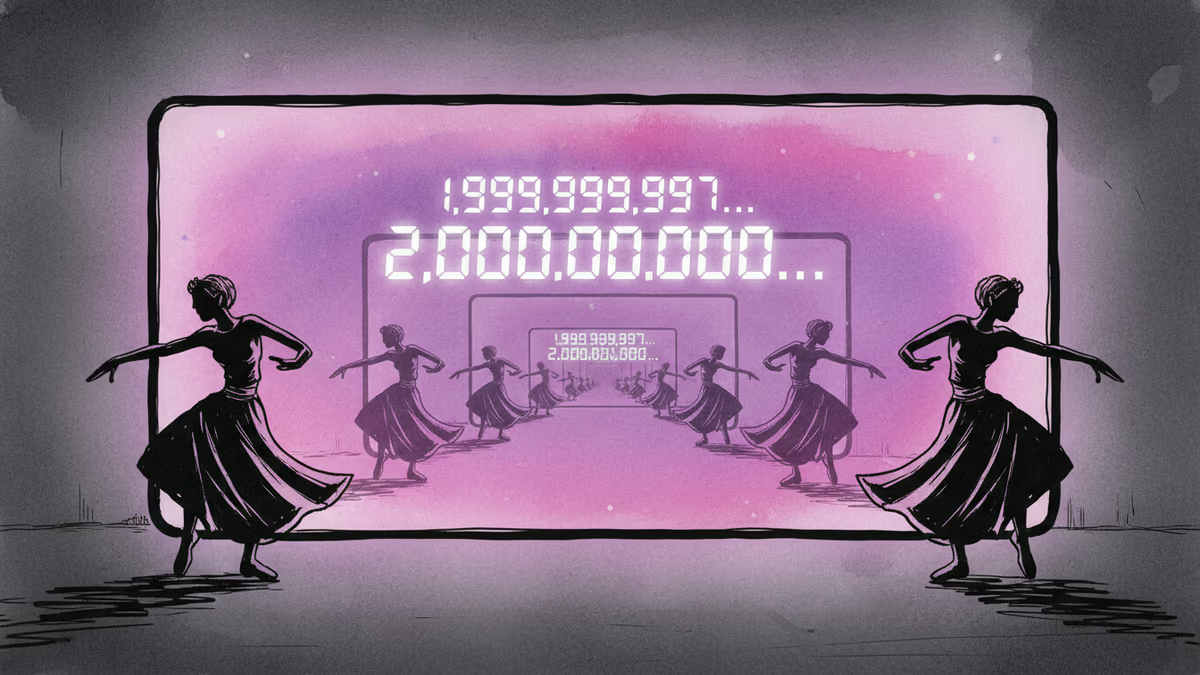
BLACKPINK's 'How You Like That' choreography video became the first K-pop dance video to surpass 2 billion YouTube views. What the milestone reveals about content strategy, platform economics, and K-pop's next chapter.
&TEAM's 'We on Fire' debuted on the Billboard 200 for the first time. Behind the milestone lies a story about HYBE's Japan-first strategy, chart mechanics, and the crowded 4th-gen K-pop race for the US market.
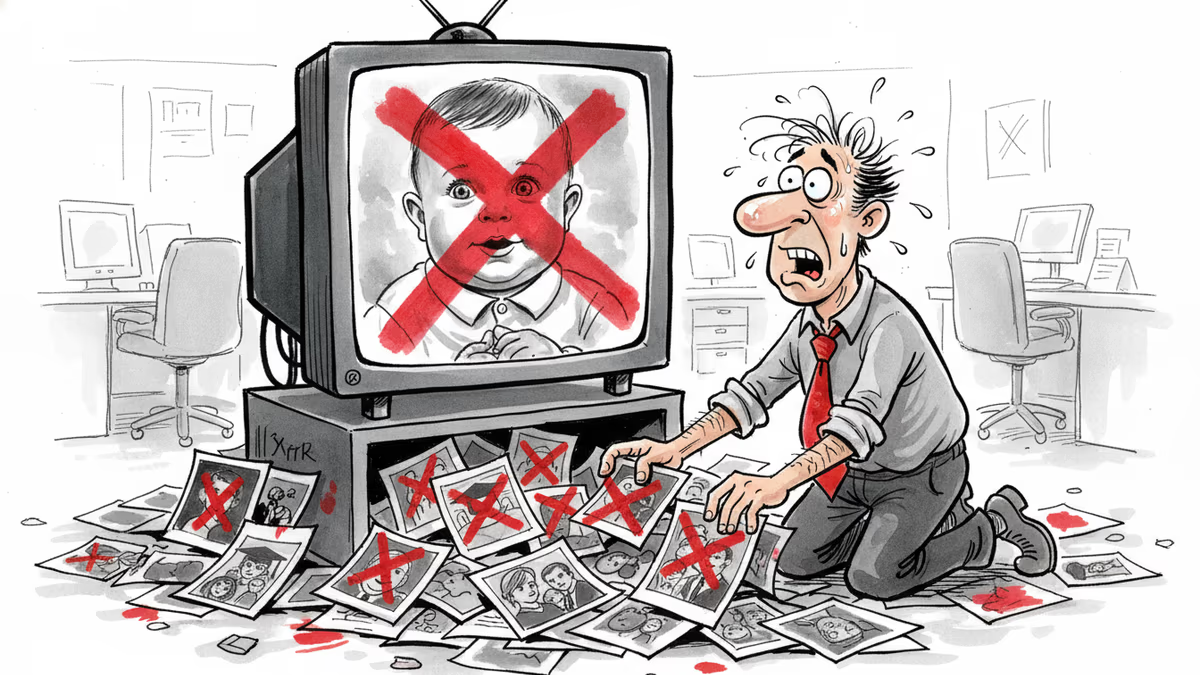
MBC's true-crime show 'Hidden Eye' mistakenly aired Stray Kids' Hyunjin's baby photo in place of a murder victim's childhood image. Five months later, an apology. What does that timeline reveal?
Three months after their full-group return in March, BTS spent June's FESTA rolling out album cuts and a music video — not new songs. Come Over cracked a global top 5 with zero new music behind it. Did the play work?
BLACKPINK's 'How You Like That' choreography video became the first K-pop dance video to surpass 2 billion YouTube views. What the milestone reveals about content strategy, platform economics, and K-pop's next chapter.
&TEAM's 'We on Fire' debuted on the Billboard 200 for the first time. Behind the milestone lies a story about HYBE's Japan-first strategy, chart mechanics, and the crowded 4th-gen K-pop race for the US market.
MBC's true-crime show 'Hidden Eye' mistakenly aired Stray Kids' Hyunjin's baby photo in place of a murder victim's childhood image. Five months later, an apology. What does that timeline reveal?
Thoughts
Share your thoughts on this article
Sign in to join the conversation