
When a Fan's Baby Photo Ends Up on a Murder Segment
MBC's true-crime show 'Hidden Eye' mistakenly aired Stray Kids' Hyunjin's baby photo in place of a murder victim's childhood image. Five months later, an apology. What does that timeline reveal?
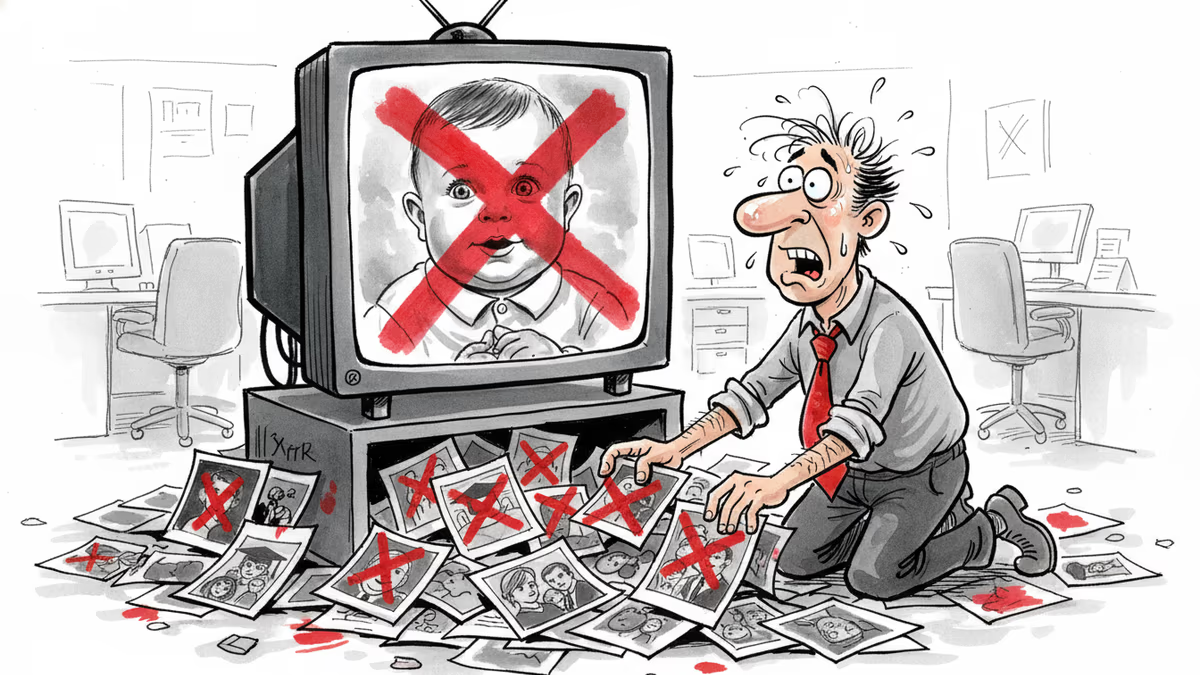
A murder victim's childhood photo was replaced by an idol's baby picture — and it took five months and a fandom to catch it.
MBC's true-crime commentary show 'Hidden Eye' aired a segment in December 2024 profiling a female murder victim killed that same year. During the segment, a baby photo of Stray Kids member Hyunjin appeared on screen where the victim's childhood image should have been. The show issued a formal apology — but only after fans identified and publicized the error, nearly five months after the original broadcast.
What Actually Happened
'Hidden Eye' follows a format common to Korean true-crime commentary: real cases, reconstructed timelines, archival photos of the people involved. For this particular segment, the production team needed a childhood photo of a woman murdered in 2024. What aired instead was an infant photo of Hyunjin, one of the eight members of Stray Kids.
The mechanics of how this happened haven't been officially explained. But the most plausible path isn't hard to reconstruct: a researcher runs an image search, pulls a photo that surfaces under loosely matching criteria, and it clears — or bypasses — whatever internal review exists before broadcast. Hyunjin's baby photos circulate widely across fan communities and social platforms, meaning contaminated search results are a real possibility rather than a fringe scenario.
What's harder to explain is the five-month gap between broadcast and apology. MBC didn't catch this internally. The correction came because fans flagged it.
Two Victims, Two Different Harms

The error created harm in two distinct directions that the apology needs to address separately — and it's worth being precise about this.
Hyunjin's photo was used without consent, in a context associating it with a violent crime. That's an image rights issue, and potentially a reputational one, even if the connection is obviously unintentional. For Stray Kids fans, the reaction was immediate: the photo's misuse felt like a violation of their artist's likeness.
The victim's family faced something different. Their loved one's story was told with someone else's face. In a segment meant to humanize a murder victim — to give viewers a sense of who she was — the production substituted a stranger's image. The dignity concern here sits alongside the factual one.
Whether MBC's apology addressed both parties, or primarily the more publicly visible one, matters. Apologies calibrated to the loudest complaint rather than the full scope of harm are a pattern worth watching.
The Structural Problem Behind the Mistake
Korean broadcast production — particularly in the true-crime and current affairs space — runs on tight deadlines and heavy reliance on subcontracted production teams. Image sourcing for non-public figures (victims, witnesses, ordinary people caught in news events) has no standardized verification protocol at most outlets. Official archives rarely hold childhood photos of private individuals, so researchers default to internet searches, tips, and informal channels.
This isn't unique to MBC, and it isn't unique to Korea. True-crime content globally has a documented problem with accuracy and victim representation — a tension that's sharpened as the genre has expanded across streaming platforms and broadcast television simultaneously. The 'Hidden Eye' incident is a local example of a systemic vulnerability.
What makes the Korean context specific is the scale of idol fandom as an unintentional media watchdog. BTS, BLACKPINK, and now Stray Kids fans have repeatedly caught and corrected factual errors in both domestic and international media coverage of their artists — sometimes faster and more rigorously than editorial teams. That capacity is real, and it's been consequential. But it's an accidental function, not a designed one.
This content is AI-generated based on source articles. While we strive for accuracy, errors may occur. We recommend verifying with the original source.
Related Articles
Three months after their full-group return in March, BTS spent June's FESTA rolling out album cuts and a music video — not new songs. Come Over cracked a global top 5 with zero new music behind it. Did the play work?

MBC's action-comedy Fifties Professionals introduces Kwon Yul as an unpredictable new antagonist. Here's why this drama's premise matters beyond the casting news.
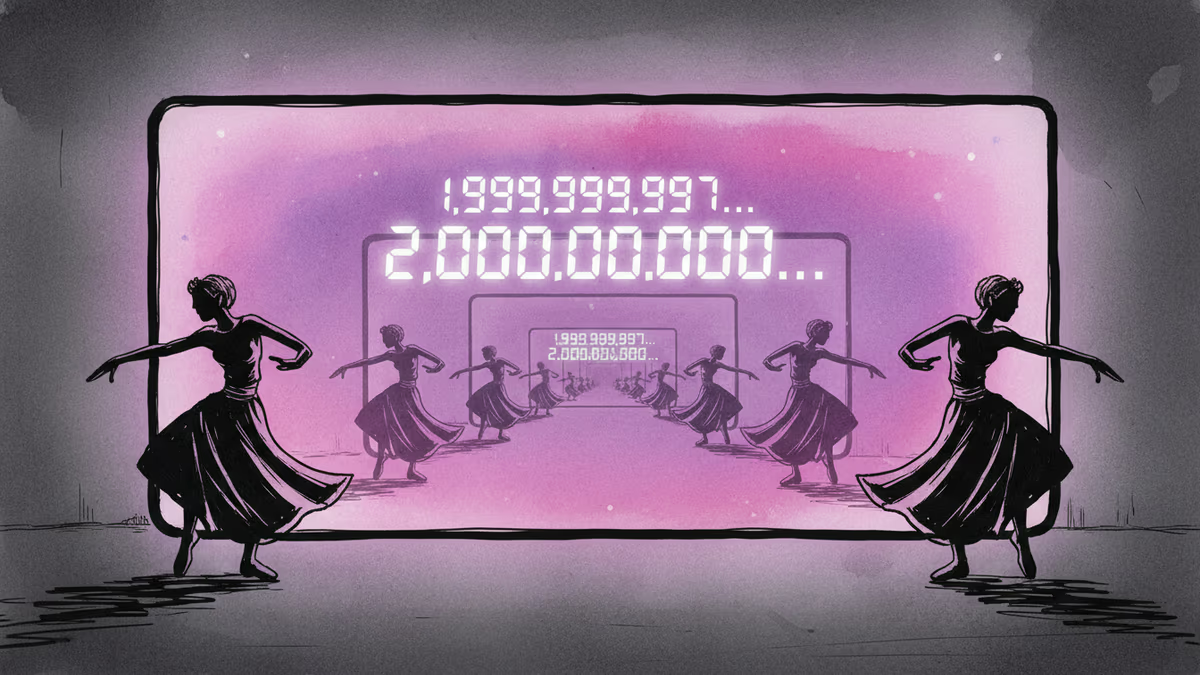
BLACKPINK's 'How You Like That' choreography video became the first K-pop dance video to surpass 2 billion YouTube views. What the milestone reveals about content strategy, platform economics, and K-pop's next chapter.
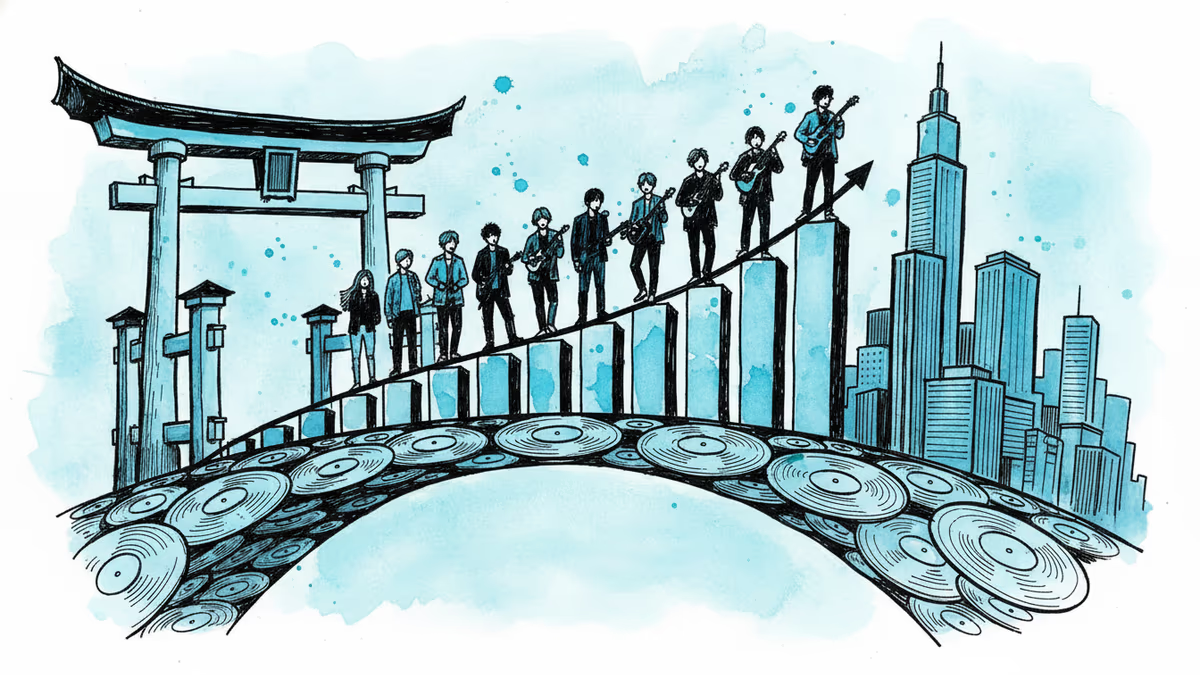
&TEAM's 'We on Fire' debuted on the Billboard 200 for the first time. Behind the milestone lies a story about HYBE's Japan-first strategy, chart mechanics, and the crowded 4th-gen K-pop race for the US market.
Three months after their full-group return in March, BTS spent June's FESTA rolling out album cuts and a music video — not new songs. Come Over cracked a global top 5 with zero new music behind it. Did the play work?
MBC's action-comedy Fifties Professionals introduces Kwon Yul as an unpredictable new antagonist. Here's why this drama's premise matters beyond the casting news.
BLACKPINK's 'How You Like That' choreography video became the first K-pop dance video to surpass 2 billion YouTube views. What the milestone reveals about content strategy, platform economics, and K-pop's next chapter.
&TEAM's 'We on Fire' debuted on the Billboard 200 for the first time. Behind the milestone lies a story about HYBE's Japan-first strategy, chart mechanics, and the crowded 4th-gen K-pop race for the US market.
Thoughts
Share your thoughts on this article
Sign in to join the conversation