
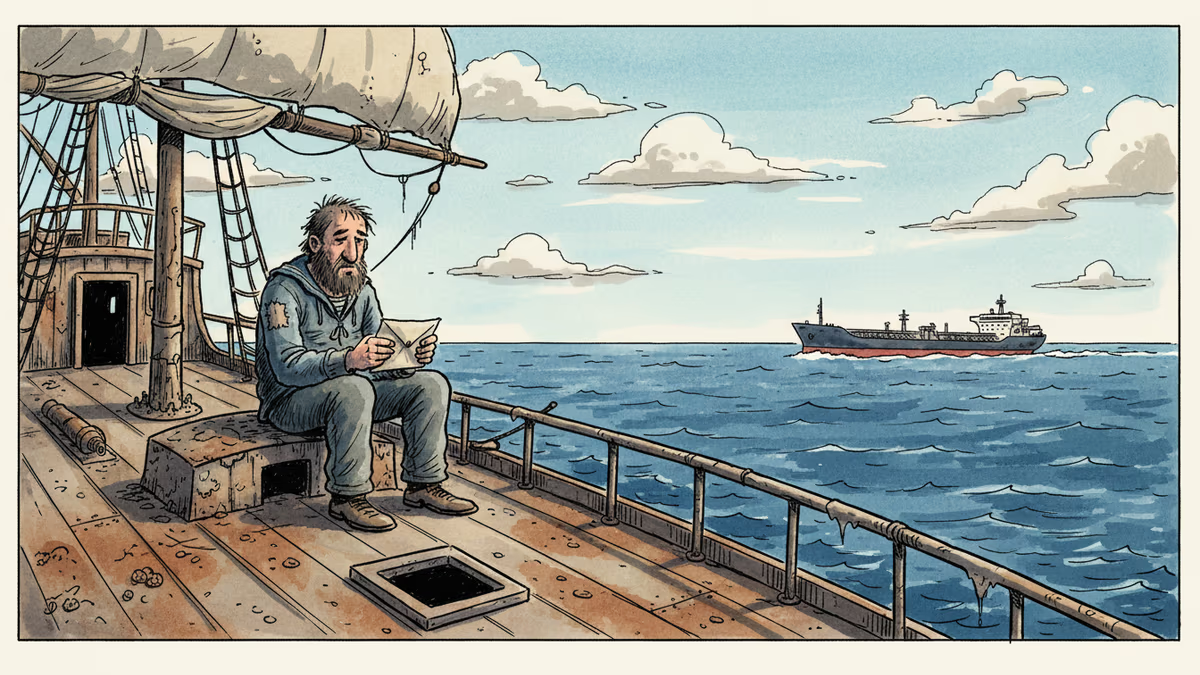
Stranded at Sea: The Hidden Human Cost of Global Shipping
As the Strait of Hormuz closure traps 1,900 vessels, abandoned seafarers reveal a structural flaw at the heart of global trade—no single authority is responsible when things go wrong.
14 months. No pay. No way home. And the ship's owner stopped answering the phone months ago.
PK Vijay, a seafarer from Kerala, India, borrowed money to take a job at sea. He was promised stable work and a monthly salary that would support his family. What he got instead was assignment to a near-derelict vessel called the Mahakal—and a transfer promise that was never kept.
How a Man Gets Trapped on a Ship
Vijay's story follows a pattern that maritime labor organizations know well. The recruitment agent went silent. The ship owner disappeared. His contract ended. But without an official "sign-off" letter from the owner, Vijay cannot legally disembark. There is no authority clearly obligated to intervene. There is no obvious path home.
"I have finished my contract, but have not been paid a single rupee," Vijay says. "It has been 14 months. And they won't even let us leave."
He tries to sound calm when he calls his family. "I try to show them I am happy," he says. "But I am in a very depressing situation."
The Mahakal has documented allegations of labor violations and, according to maritime advocacy groups, is not officially registered with the International Maritime Organization (IMO). That absence of registration is not a technicality—it is a structural escape hatch. Without formal registration, accountability becomes nearly impossible to enforce.
1,900 Ships. 20,000 People. One Closed Strait.
Vijay's situation existed before the latest escalation. The conflict made it worse.
Following joint US and Israeli strikes on Iran, Iran closed the Strait of Hormuz—the narrow waterway through which roughly 20% of the world's seaborne oil passes. Approximately 1,900 commercial vessels are now stranded in the surrounding waters of the Arabian Gulf. The IMO reported at least 18 ship attack incidents in the region through March 24, with confirmed fatalities and injuries.

For the estimated 20,000 seafarers and port workers in the region, the risks are no longer abstract. ITF maritime operations coordinator John Canias describes the distress calls his organization receives daily. "Just recently, we got a video from a seafarer that shows a missile exploding perhaps 10 meters away from the ship," he says. In some documented cases, ships have had their machinery destroyed, leaving crews without fuel or power, adrift in a war zone.
Vijay, for now, has been spared direct attack. "Thankfully, there have been no incidents close to us," he says. "But we are living in fear."
The Architecture of Unaccountability
To understand why thousands of seafarers can be stranded with no clear rescue mechanism, you have to understand how modern shipping is structured—or more precisely, how it is deliberately unstructured.
A single vessel can be owned in one country, registered under a second country's flag (a practice known as flags of convenience), managed by a company in a third country, and crewed by nationals of a fourth. Under normal conditions, this fragmentation keeps costs low and global trade moving. Under crisis conditions, it ensures that when something goes wrong, no single jurisdiction is unambiguously responsible.
The ITF has designated the Arabian Gulf, Strait of Hormuz, and parts of the Gulf of Oman as high-risk areas, urging ship owners to allow seafarers to terminate contracts voluntarily. The ITF also established a Warlike Operations Area Committee when the conflict began. But every one of these measures depends on the cooperation of ship owners—precisely the party that tends to go silent in abandonment cases.
2025 recorded the highest number of ship abandonments ever documented: 409 vessels, more than 6,200 seafarers affected globally. Over 150 of those cases were in the broader Middle East region. Indian nationals were the most affected group, followed by Filipinos and Syrians.
Who Bears the Cost—and Who Doesn't
The stakeholder map here is worth examining carefully.
Cargo shippers and retailers have limited direct incentive to intervene in crew welfare as long as goods arrive. The logistics cost is someone else's problem. Flag states—the countries where ships are registered—often compete to attract vessel registrations by offering low fees and minimal regulation, creating a race to the bottom on labor standards. Recruitment agents in labor-exporting countries like India and the Philippines operate in loosely regulated environments where accountability after placement is difficult to enforce.
The workers themselves—often from lower-income countries, often in debt from recruitment fees—have the least leverage and the most to lose.
For the global companies whose supply chains run through the Strait of Hormuz, the closure is a logistics and cost problem. For Vijay, it is something else entirely.
Authors
Related Articles
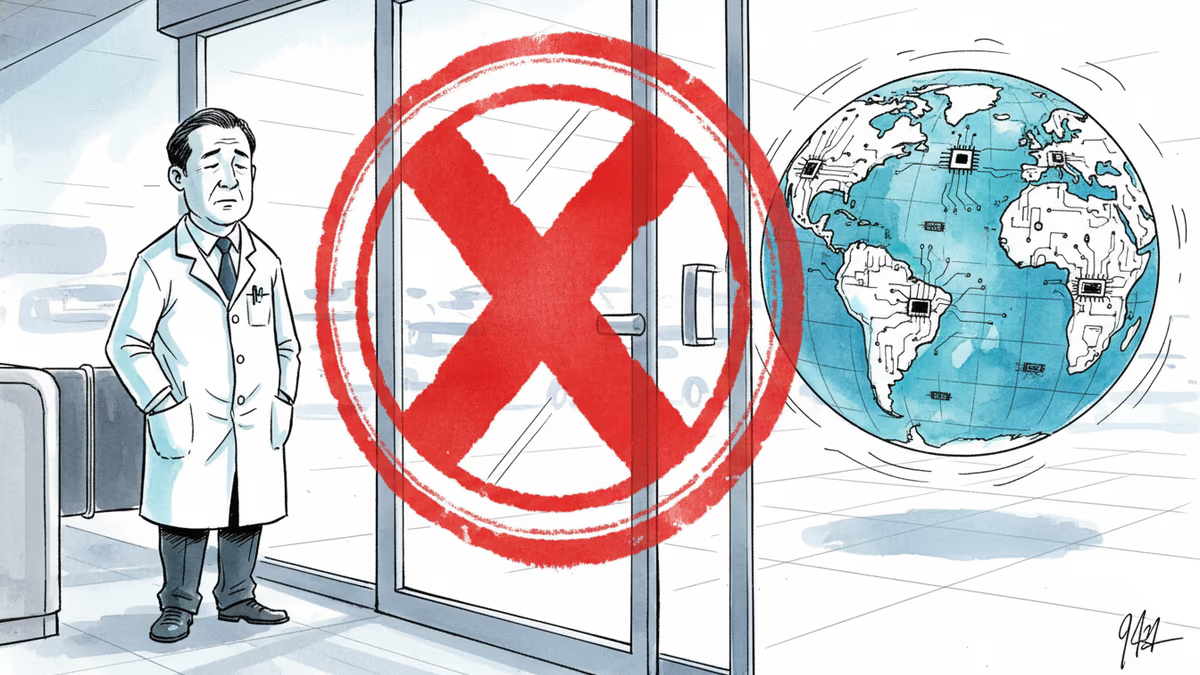
China is restricting AI researchers and startup founders from traveling abroad as the U.S.-China AI performance gap narrows to just 2.7%. What Beijing's talent lockdown means for the global AI race.
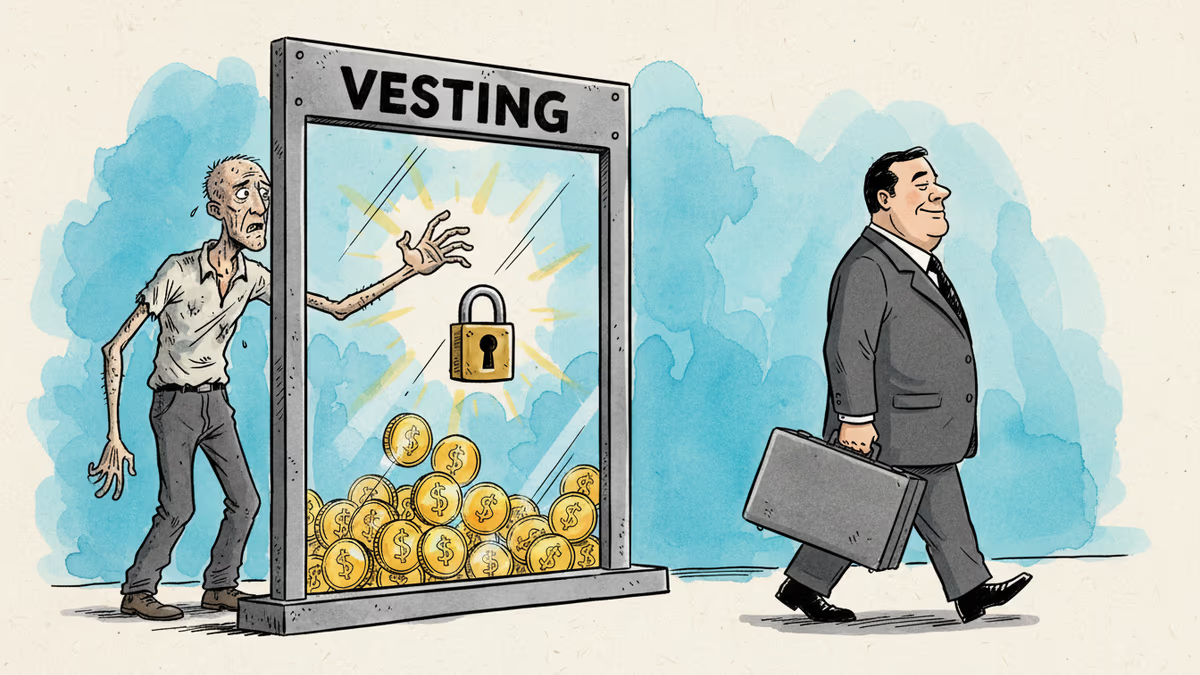
Oracle laid off up to 30,000 workers via email, denied RSU acceleration, and refused to negotiate. What this tells us about tech compensation's hidden power imbalance.
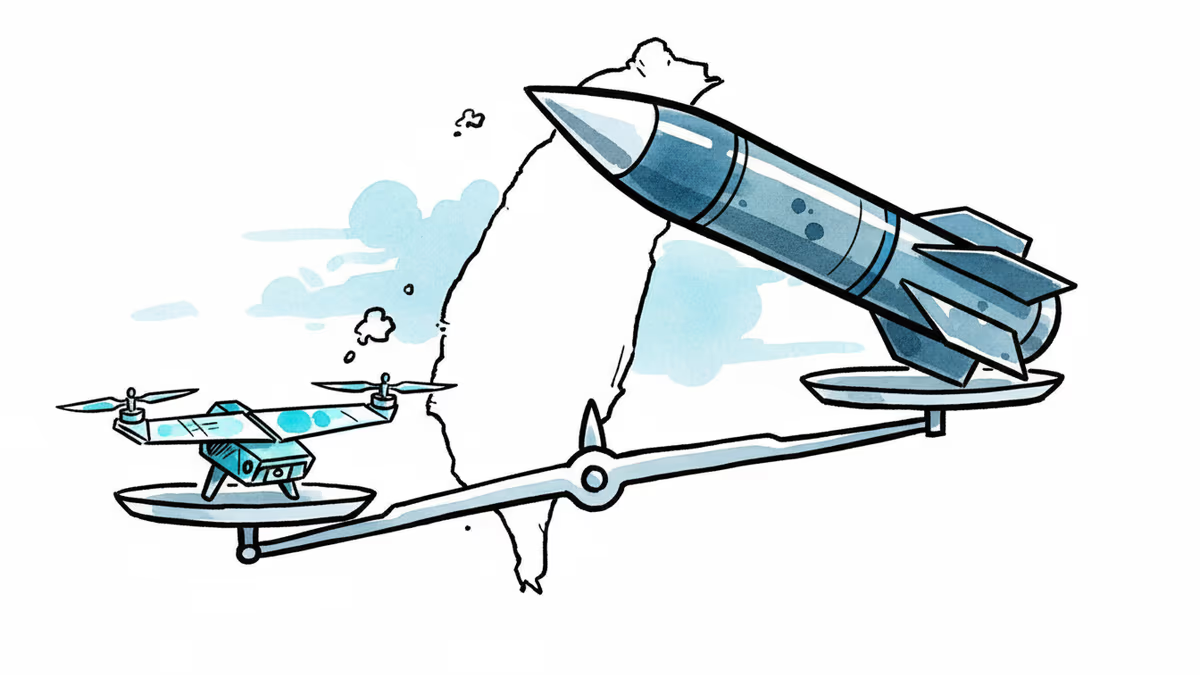
Taiwan's Thunder Tiger became the first Asian firm to win US military drone clearance with a China-free supply chain. As Trump meets Xi, the drone arithmetic reshapes defense strategy.
Apple quietly removed the entry-level $599 Mac Mini, raising the starting price to $799 — just one day after Tim Cook warned of chip supply constraints on the earnings call.
China is restricting AI researchers and startup founders from traveling abroad as the U.S.-China AI performance gap narrows to just 2.7%. What Beijing's talent lockdown means for the global AI race.
Oracle laid off up to 30,000 workers via email, denied RSU acceleration, and refused to negotiate. What this tells us about tech compensation's hidden power imbalance.
Taiwan's Thunder Tiger became the first Asian firm to win US military drone clearance with a China-free supply chain. As Trump meets Xi, the drone arithmetic reshapes defense strategy.
Apple quietly removed the entry-level $599 Mac Mini, raising the starting price to $799 — just one day after Tim Cook warned of chip supply constraints on the earnings call.
Thoughts
Share your thoughts on this article
Sign in to join the conversation