
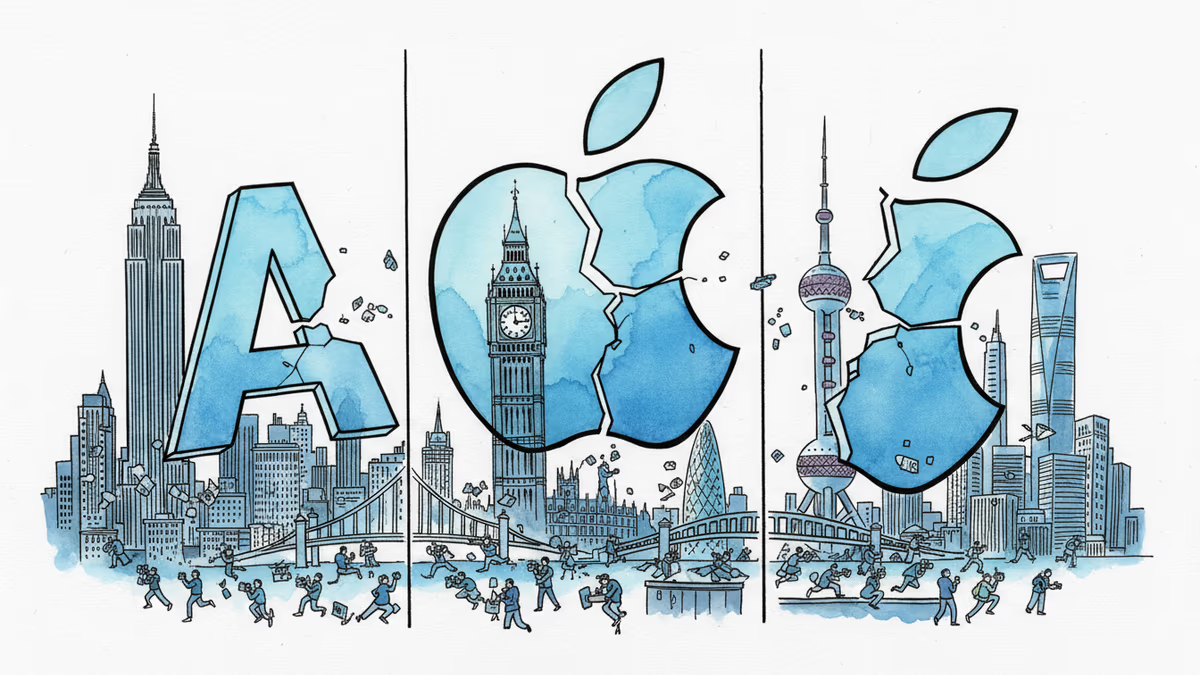
Why Apple Is Breaking Its 17-Year Product Launch Formula
Apple abandons its signature keynote format for a 3-day announcement spree culminating in hands-on experiences across three cities. What's driving this dramatic shift?
The End of an Era?
March 4th isn't just another Apple event date. It might mark the end of the company's most sacred ritual: the single, stage-managed keynote that's defined product launches since the original iPhone.
Instead of one 90-minute spectacle in Cupertino, Apple is orchestrating what Bloomberg's Mark Gurman calls a "three-day flurry of announcements" across New York, London, and Shanghai. At least five products will debut, but they won't share the spotlight.
This isn't just tweaking the format. It's demolishing it.
The Numbers Don't Lie
Apple's keynote viewership peaked at 40 million in 2019. By 2024, that number had halved to 20 million. Meanwhile, #AppleEvent content on TikTok racked up over 3 billion views, most of it bite-sized reactions and commentary rather than the full presentation.
The math is brutal: attention spans are shrinking, but Apple kept serving the same 90-minute main course. Something had to give.

Three Cities, One Strategy
Daring Fireball's John Gruber speculates the March 4th "experience" will be "hands-on with in-person demos." That's significant. Traditional keynotes were about controlled messaging—Steve Jobs on stage, audience in seats, cameras rolling. This new format flips that dynamic.
Journalists won't just watch; they'll touch, test, and form opinions in real-time. It's messier, less controllable, but potentially more authentic. The rumored lineup—budget MacBook, iPhone 17e, M4-powered iPad Air—suggests Apple wants each product to breathe, not compete for attention in a single presentation.
Industry Ripple Effects
Competitors are watching closely. Samsung pivoted to online-first Galaxy Unpacked events in 2022, but Apple's three-city approach raises the stakes. If successful, it could reshape how the entire industry thinks about product launches.
The shift also reflects broader media consumption trends. Gen Z doesn't sit through hour-long presentations—they want digestible moments that translate to social media. Apple's new format seems designed for this reality.
The Risks Are Real
Not everyone's convinced. Apple's keynotes weren't just product announcements—they were cultural events that generated massive earned media. Fragmenting that into multiple smaller moments could dilute impact rather than amplify it.
There's also the execution challenge. Coordinating simultaneous events across three time zones while maintaining Apple's famously tight message control? That's exponentially harder than one perfectly rehearsed Cupertino show.
Authors
Related Articles
After 15 years of fragmented mobile messaging, Apple and Google are rolling out end-to-end encrypted RCS messaging between iPhones and Android devices. Here's what changed, why it took so long, and what it means for your privacy.
Apple agreed to pay $250 million to settle claims it misled iPhone 16 buyers about Apple Intelligence features. What this means for consumers, Big Tech marketing, and the AI industry.
Apple quietly removed the entry-level $599 Mac Mini, raising the starting price to $799 — just one day after Tim Cook warned of chip supply constraints on the earnings call.

Apple names John Ternus, its hardware engineering chief, as the next CEO. The shift from operator to product person signals where Apple thinks its next decade of growth will come from — and raises real questions about what comes next.
After 15 years of fragmented mobile messaging, Apple and Google are rolling out end-to-end encrypted RCS messaging between iPhones and Android devices. Here's what changed, why it took so long, and what it means for your privacy.
Apple agreed to pay $250 million to settle claims it misled iPhone 16 buyers about Apple Intelligence features. What this means for consumers, Big Tech marketing, and the AI industry.
Apple quietly removed the entry-level $599 Mac Mini, raising the starting price to $799 — just one day after Tim Cook warned of chip supply constraints on the earnings call.
Apple names John Ternus, its hardware engineering chief, as the next CEO. The shift from operator to product person signals where Apple thinks its next decade of growth will come from — and raises real questions about what comes next.
Thoughts
Share your thoughts on this article
Sign in to join the conversation