
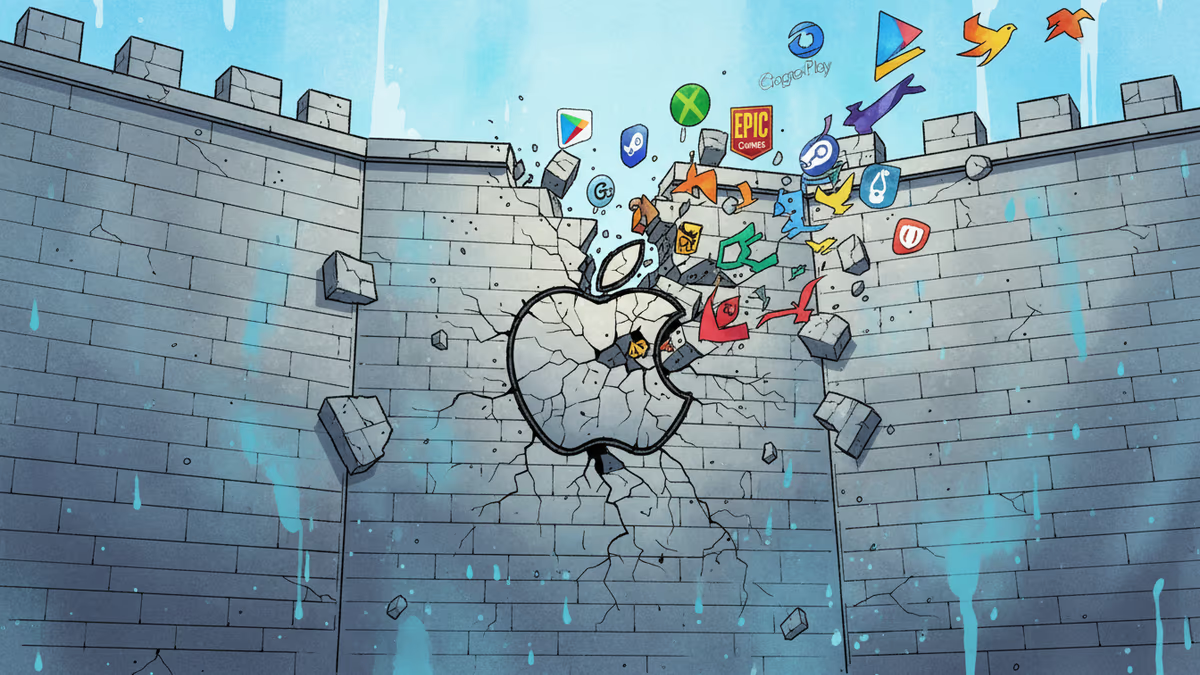
The Great Wall of Apple Has Its First Cracks
EU's Digital Markets Act opened alternative app stores on iOS. Seven new marketplaces challenge Apple's decade-long monopoly, but success stories are mixed.
430 Million Users Can't All Be Wrong
One year after EU users gained the right to download apps outside Apple's walled garden, the numbers tell a story. Aptoide alone serves 430 million users across all platforms, with its iOS store gaining serious traction since launch. This isn't just regulatory compliance—it's the first real crack in Apple's decade-old fortress.
Thanks to the Digital Markets Act (DMA), iPhone users in the EU now have seven alternative app stores to choose from. Each represents a different philosophy about what an app marketplace should be.
The Developers' Dilemma
Epic Games made the most noise, returning to iOS after a four-year exile with Fortnite as its flagship. CEO Tim Sweeney framed it as David vs. Goliath, but the reality is more nuanced.
Setapp told a different story. MacPaw's subscription-based app store shut down in February 2026, citing Apple's "still-evolving and complex business terms." The promise of freedom came with a price: €0.50 per install for the Core Technology Fee, plus commissions up to 21%.
Meanwhile, AltStore PAL chose radical transparency. Co-created by Riley Testut, maker of the Nintendo emulator Delta, it's an open-source marketplace where developers self-host their apps. Users manually add "sources" to access apps—a deliberate friction that ensures only motivated users participate.

Beyond Gaming: The B2B Revolution
The most interesting development might be the quietest. Mobivention targets enterprise customers with internal apps that can't—or shouldn't—be published on Apple's App Store. For companies needing to distribute proprietary tools to employees, this removes a significant bottleneck.
Skich took another approach entirely, creating a Tinder-like interface for app discovery. Users swipe right to "match" with apps, turning app hunting into a social experience.
Japan Joins the Party
This February, Japan's Mobile Software Competition Act (MSCA) brought alternative app stores to Asia. Onside became the first to operate in both EU and Japanese markets, suggesting these regulatory changes might be the new global standard rather than European exceptions.
The timing isn't coincidental. As Apple faces antitrust pressure in multiple jurisdictions, the company seems to be getting ahead of inevitable changes rather than fighting them in court.
The Real Test: Consumer Behavior
Early adoption patterns reveal interesting insights. Power users gravitate toward AltStore PAL for previously banned apps like emulators and torrenting clients. Gamers flock to Epic Games Store for exclusive titles. Enterprise customers quietly embrace Mobivention for internal tools.
But mainstream adoption remains limited. Most iPhone users still default to Apple's App Store, suggesting that convenience often trumps choice.
Authors
Related Articles
After 15 years of fragmented mobile messaging, Apple and Google are rolling out end-to-end encrypted RCS messaging between iPhones and Android devices. Here's what changed, why it took so long, and what it means for your privacy.
Apple agreed to pay $250 million to settle claims it misled iPhone 16 buyers about Apple Intelligence features. What this means for consumers, Big Tech marketing, and the AI industry.
Apple quietly removed the entry-level $599 Mac Mini, raising the starting price to $799 — just one day after Tim Cook warned of chip supply constraints on the earnings call.
Apple names John Ternus, its hardware engineering chief, as the next CEO. The shift from operator to product person signals where Apple thinks its next decade of growth will come from — and raises real questions about what comes next.
After 15 years of fragmented mobile messaging, Apple and Google are rolling out end-to-end encrypted RCS messaging between iPhones and Android devices. Here's what changed, why it took so long, and what it means for your privacy.
Apple agreed to pay $250 million to settle claims it misled iPhone 16 buyers about Apple Intelligence features. What this means for consumers, Big Tech marketing, and the AI industry.
Apple quietly removed the entry-level $599 Mac Mini, raising the starting price to $799 — just one day after Tim Cook warned of chip supply constraints on the earnings call.
Apple names John Ternus, its hardware engineering chief, as the next CEO. The shift from operator to product person signals where Apple thinks its next decade of growth will come from — and raises real questions about what comes next.
Thoughts
Share your thoughts on this article
Sign in to join the conversation