
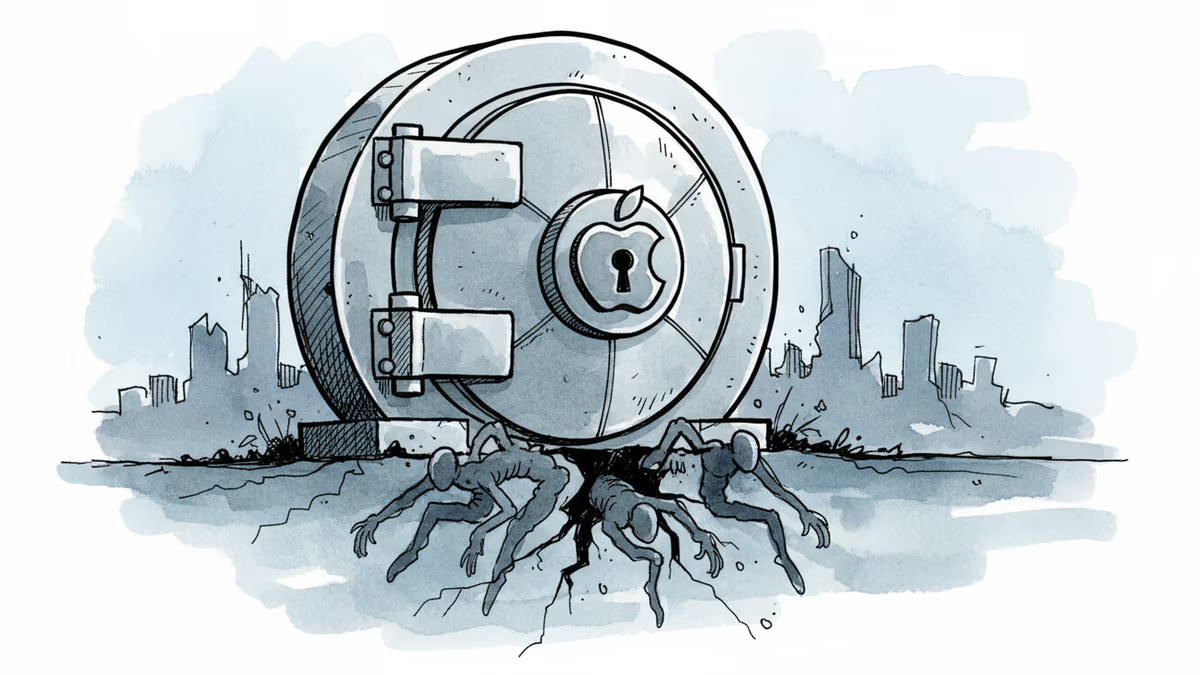
Apple Sued for Abandoning Child Safety for Privacy
West Virginia sues Apple, claiming iCloud became a 'secure avenue' for child abuse material after the company ditched CSAM detection for end-to-end encryption.
When Tech Giants Choose: Privacy or Protection?
In August 2021, Apple made a promise. The company would scan iCloud photos against a database of known child sexual abuse material (CSAM). One year later, that promise was quietly abandoned. Now, West Virginia wants Apple to pay for that decision.
Attorney General JB McCuskey filed a lawsuit Thursday, claiming Apple's choice to prioritize end-to-end encryption over CSAM detection has turned iCloud into a "secure frictionless avenue" for distributing illegal content. The case raises a fundamental question: Can a tech company be sued for choosing privacy over safety?
The Promise That Wasn't
Apple's 2021 CSAM detection plan seemed straightforward. Photos uploaded to iCloud would be checked against a database of known illegal images. If matches were found, Apple would report them to authorities. Child safety advocates applauded.
But privacy experts saw a trojan horse. They argued that once Apple built the infrastructure to scan user content, governments could pressure the company to expand its scope. What starts as child protection could become political censorship.
The backlash was swift and fierce. Digital rights groups, security researchers, and even some Apple employees pushed back. Faced with mounting criticism, Apple made a choice: it scrapped CSAM detection entirely and doubled down on end-to-end encryption for iCloud.
The Technical Impossibility
Here's the rub: you can't have both perfect privacy and perfect content scanning. End-to-end encryption means even Apple can't see what users store in iCloud. It's like putting documents in a safe and throwing away the combination – nobody can access them, not even the safe manufacturer.

This creates what cryptographers call the "going dark" problem. The same technology that protects journalists, activists, and ordinary users from surveillance also protects criminals from detection.
Legal Innovation or Overreach?
West Virginia's lawsuit breaks new ground by framing product design choices as consumer protection violations. The state argues Apple misled consumers by suggesting it was taking child safety seriously while actually making detection impossible.
It's a creative legal theory, but it faces steep challenges. Courts have traditionally been reluctant to second-guess technical design decisions. Plus, Apple never explicitly promised to scan all content forever – it announced a plan, then changed course based on feedback.
The Regulatory Patchwork
This isn't just West Virginia's fight. Republican-led states are increasingly taking aim at Big Tech's content moderation practices, while Democratic states tend to prioritize privacy rights. The result is a patchwork of conflicting pressures that tech companies must navigate.
Meanwhile, the EU is implementing its own rules requiring platforms to detect and remove illegal content. Apple may find itself building different systems for different jurisdictions – privacy-focused in some regions, surveillance-capable in others.
The Bigger Stakes
Beyond the legal drama lies a deeper question about who controls technology's direction. Should companies like Apple make unilateral decisions about the privacy-safety tradeoff? Should governments mandate technical standards? Or should users themselves choose what level of protection they want?
The lawsuit also highlights how child safety has become a powerful political tool. Few people oppose protecting children, making it an effective wedge issue for pushing broader surveillance agendas.
Authors
Related Articles
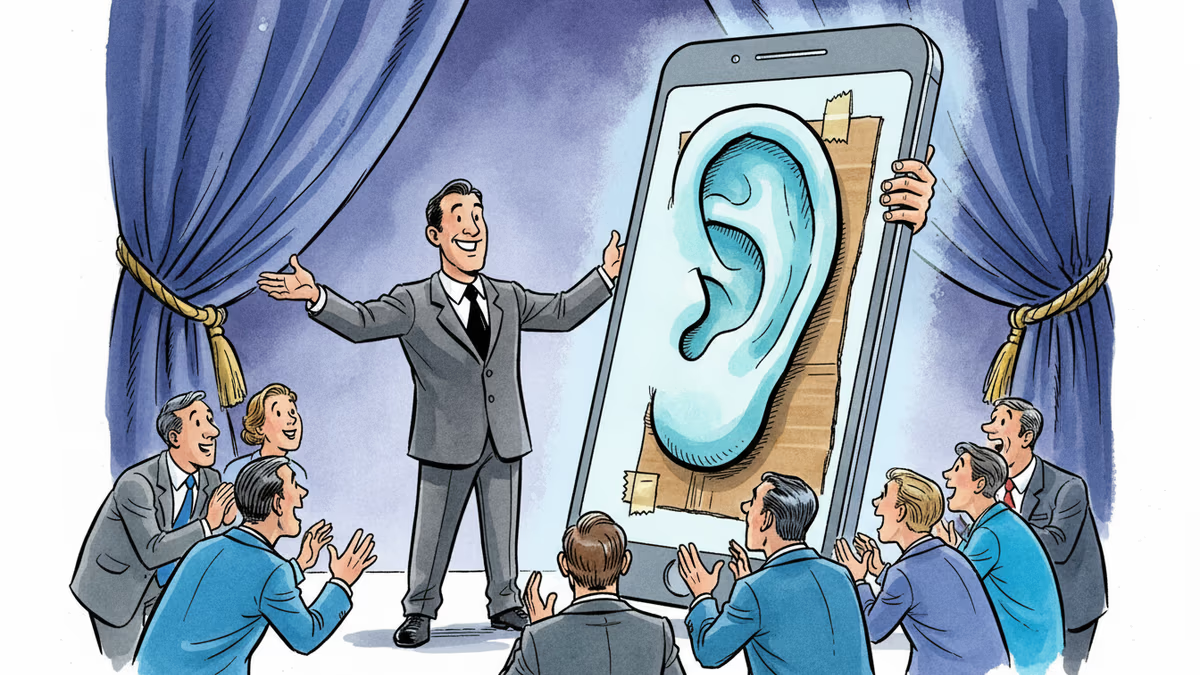
The FTC fined Cox Media and two ad firms $930,000 — not for actually eavesdropping on users, but for falsely claiming they could. The case raises uncomfortable questions about surveillance capitalism.
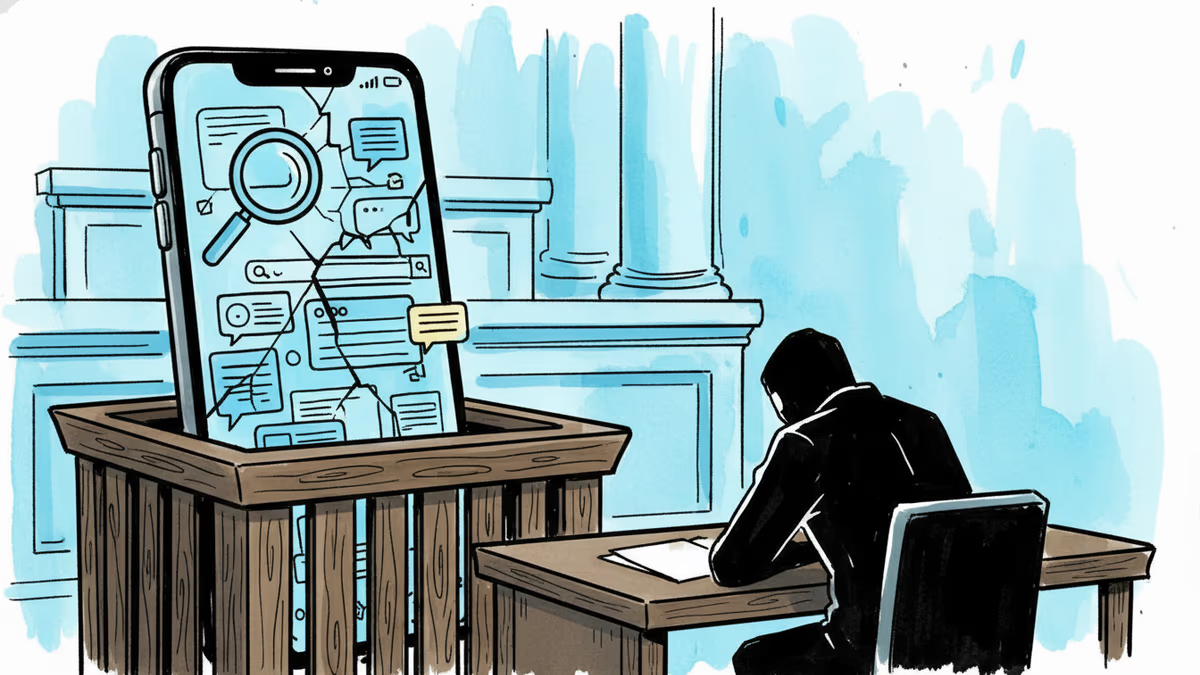
A Utah woman was sentenced to life in prison partly because of her Google searches and deleted texts. The Kouri Richins case reveals how digital footprints have become the courtroom's most reliable witness.
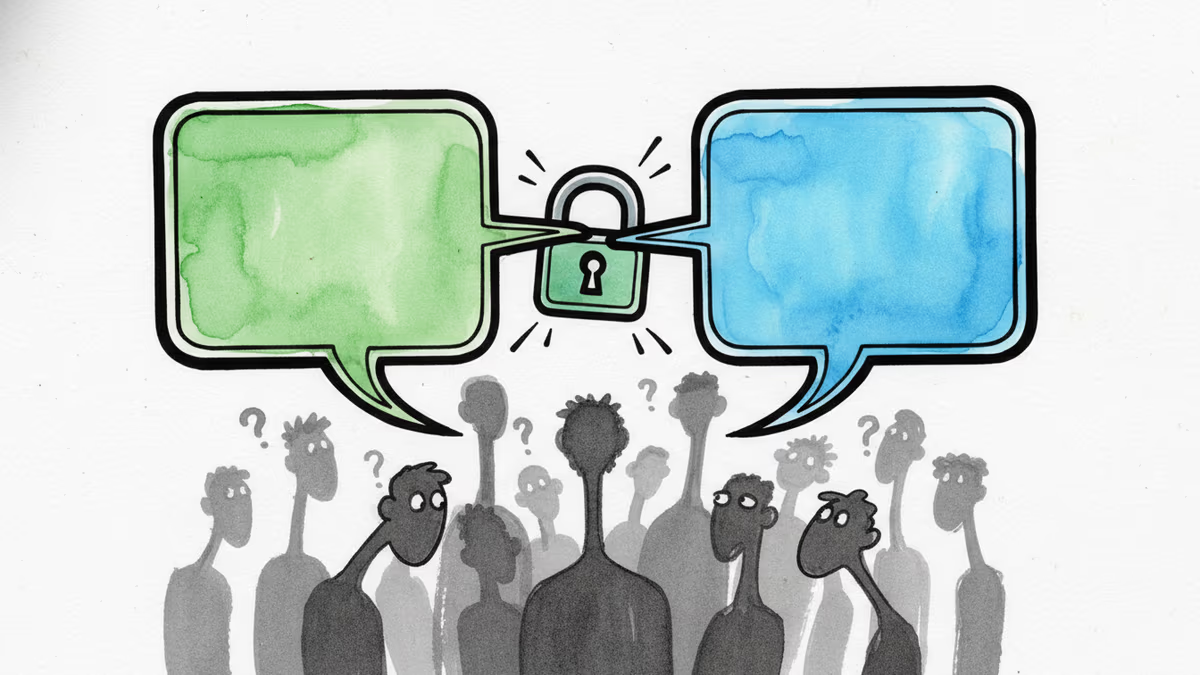
After 15 years of fragmented mobile messaging, Apple and Google are rolling out end-to-end encrypted RCS messaging between iPhones and Android devices. Here's what changed, why it took so long, and what it means for your privacy.
Apple agreed to pay $250 million to settle claims it misled iPhone 16 buyers about Apple Intelligence features. What this means for consumers, Big Tech marketing, and the AI industry.
The FTC fined Cox Media and two ad firms $930,000 — not for actually eavesdropping on users, but for falsely claiming they could. The case raises uncomfortable questions about surveillance capitalism.
A Utah woman was sentenced to life in prison partly because of her Google searches and deleted texts. The Kouri Richins case reveals how digital footprints have become the courtroom's most reliable witness.
After 15 years of fragmented mobile messaging, Apple and Google are rolling out end-to-end encrypted RCS messaging between iPhones and Android devices. Here's what changed, why it took so long, and what it means for your privacy.
Apple agreed to pay $250 million to settle claims it misled iPhone 16 buyers about Apple Intelligence features. What this means for consumers, Big Tech marketing, and the AI industry.
Thoughts
Share your thoughts on this article
Sign in to join the conversation