
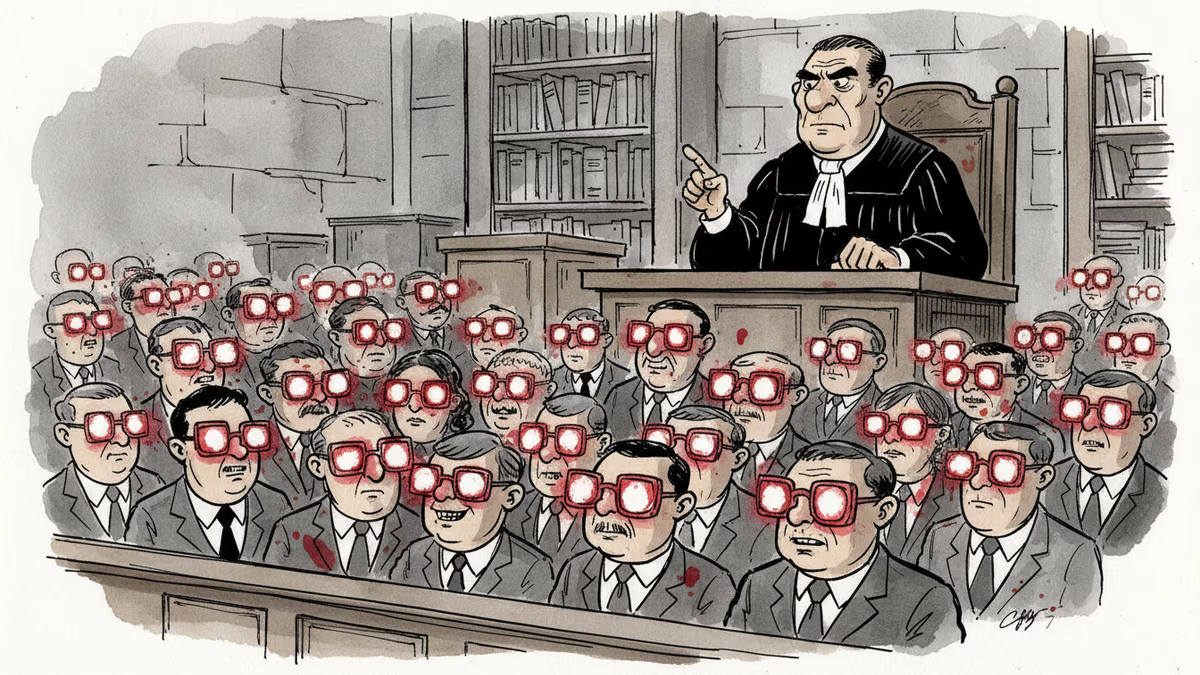
Smart Glasses Banned in Court: Where Do We Draw Privacy Lines?
Meta CEO's trial sees smart glasses ban as wearable recording devices blur boundaries between convenience and privacy invasion in public spaces.
A Glimpse of Tomorrow's Privacy Wars
When Mark Zuckerberg walked into a Los Angeles courthouse Wednesday, his legal team wasn't just carrying briefcases—they were wearing Meta's Ray-Ban smart glasses, complete with built-in cameras. Judge Carolyn Kuhl wasn't having it. "If you have done that, you must delete that, or you will be held in contempt of court," she warned, ordering everyone with AI smart glasses to remove them immediately.
Even after the warning, at least one person was spotted wearing the glasses near jurors in the courthouse hallway. The incident reveals a brewing conflict between cutting-edge convenience and fundamental privacy rights.
The Invisible Recording Revolution
This wasn't just courtroom drama—it's a preview of everyday life in 2026. Meta's Ray-Ban smart glasses have sold over 350,000 units since launch, and they're nearly indistinguishable from regular eyewear. A simple voice command captures photos and videos, often without the subject's knowledge.
Unlike Google Glass's obvious tech aesthetic that sparked the "Glasshole" backlash in 2014, these glasses blend seamlessly into daily interactions. The tiny LED indicator that's supposed to signal recording? It's barely visible in bright light and easily concealed.
Consumers love the hands-free convenience. Privacy advocates see a surveillance nightmare in designer frames.
The Regulatory Scramble
The courthouse ban highlights how unprepared our legal systems are for wearable recording technology. While the EU's GDPR provides some protection against unauthorized recording, most jurisdictions operate in a regulatory gray area.

Law enforcement agencies are split. Some see smart glasses as valuable evidence-gathering tools; others worry about witness intimidation and jury tampering. The legal profession itself is divided—should lawyers be allowed to record depositions through their eyewear?
Meanwhile, tech companies aren't slowing down. Meta recently added real-time AI translation and object recognition. Apple is rumored to launch competing smart glasses this year. The race for your face is accelerating.
Redefining Consent in the Age of Ambient Recording
The fundamental question isn't technical—it's social. In coffee shops, offices, and now courtrooms, how do we maintain meaningful consent when recording devices are invisible?
Traditional privacy frameworks assume you know when you're being recorded. Smart glasses shatter that assumption. Every conversation, every gesture, every unguarded moment could be captured and stored in someone's personal cloud.
Some propose "recording-free zones" in sensitive locations. Others suggest mandatory audio announcements before any recording begins. But enforcement remains nearly impossible when the technology is indistinguishable from regular accessories.
The Trust Economy at Stake
What's really at risk isn't just individual privacy—it's social trust itself. When anyone could be recording at any time, how do we maintain authentic human connections?
Businesses are already adapting. Some restaurants now prohibit smart glasses. Gyms are updating their policies. Even dating apps are adding "no recording devices" to profile preferences.
Yet the technology's benefits are undeniable. For people with disabilities, smart glasses offer unprecedented accessibility. For professionals, they provide seamless documentation and AI assistance.
Authors
Related Articles
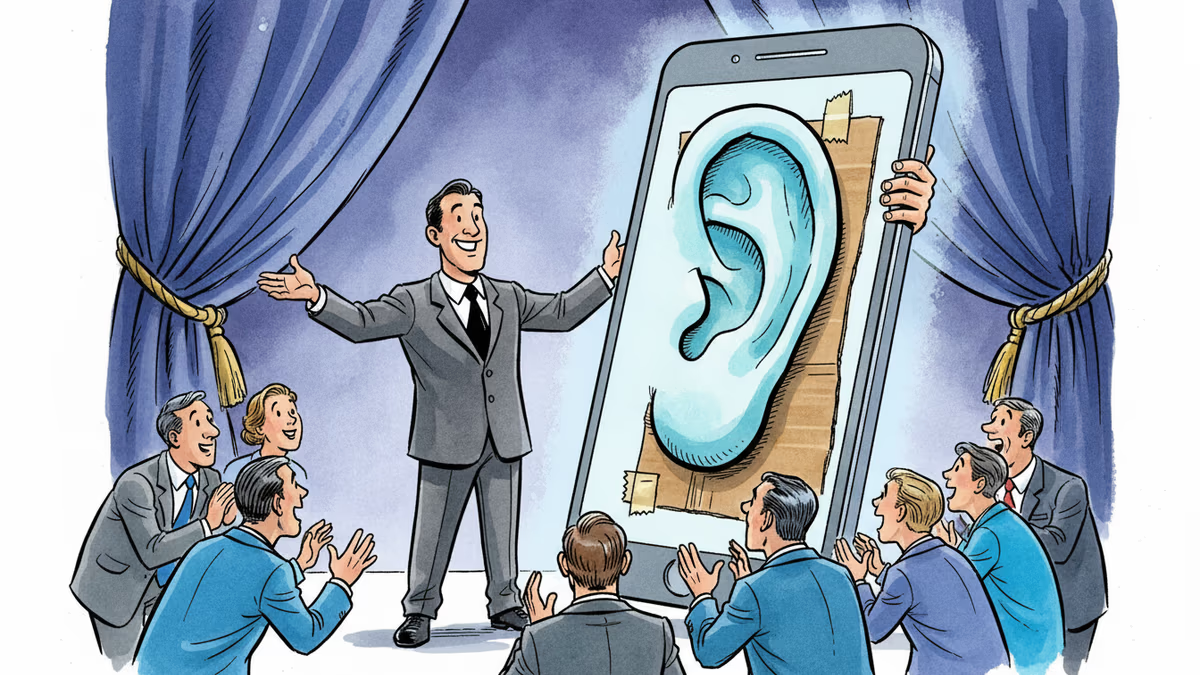
The FTC fined Cox Media and two ad firms $930,000 — not for actually eavesdropping on users, but for falsely claiming they could. The case raises uncomfortable questions about surveillance capitalism.
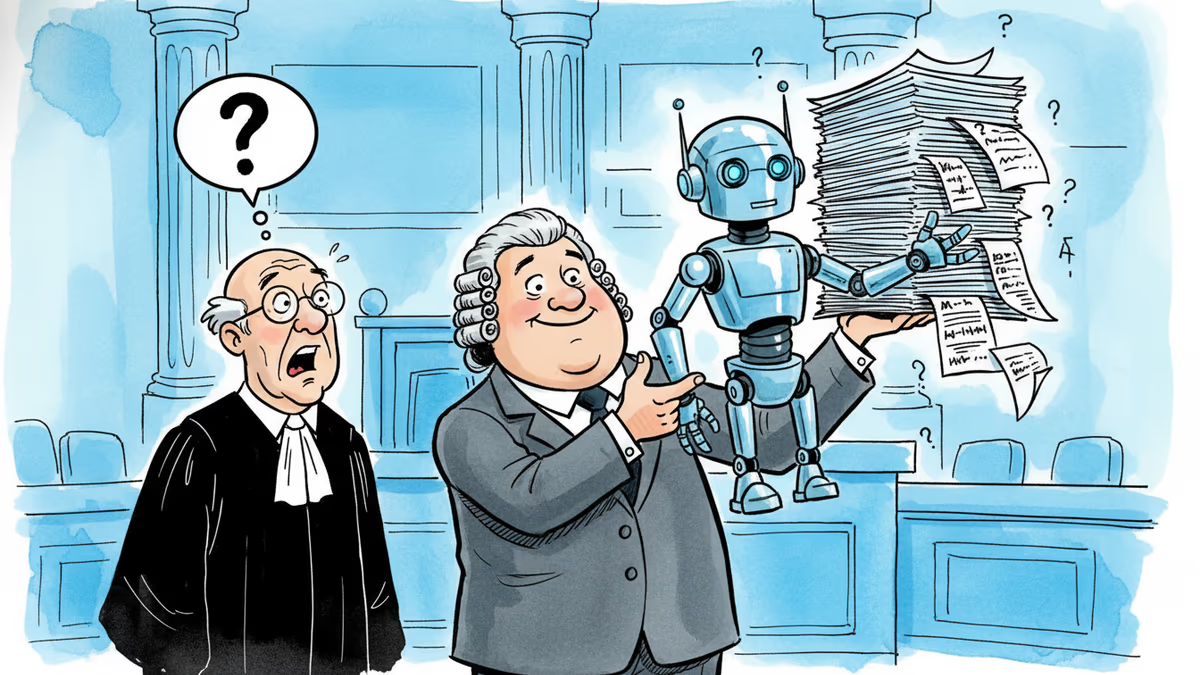
A law firm marketing itself on AI-powered legal success submitted fake citations in a federal appeal. Now its lawyers face sanctions — and the broader AI legal industry faces a credibility crisis.
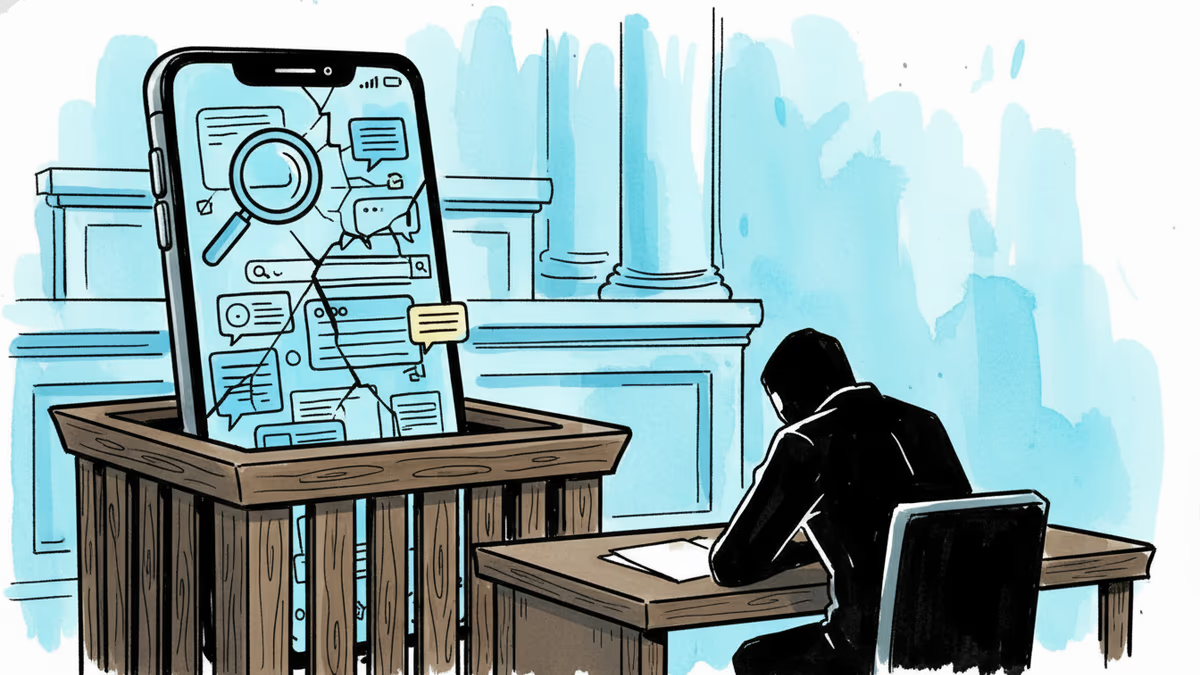
A Utah woman was sentenced to life in prison partly because of her Google searches and deleted texts. The Kouri Richins case reveals how digital footprints have become the courtroom's most reliable witness.
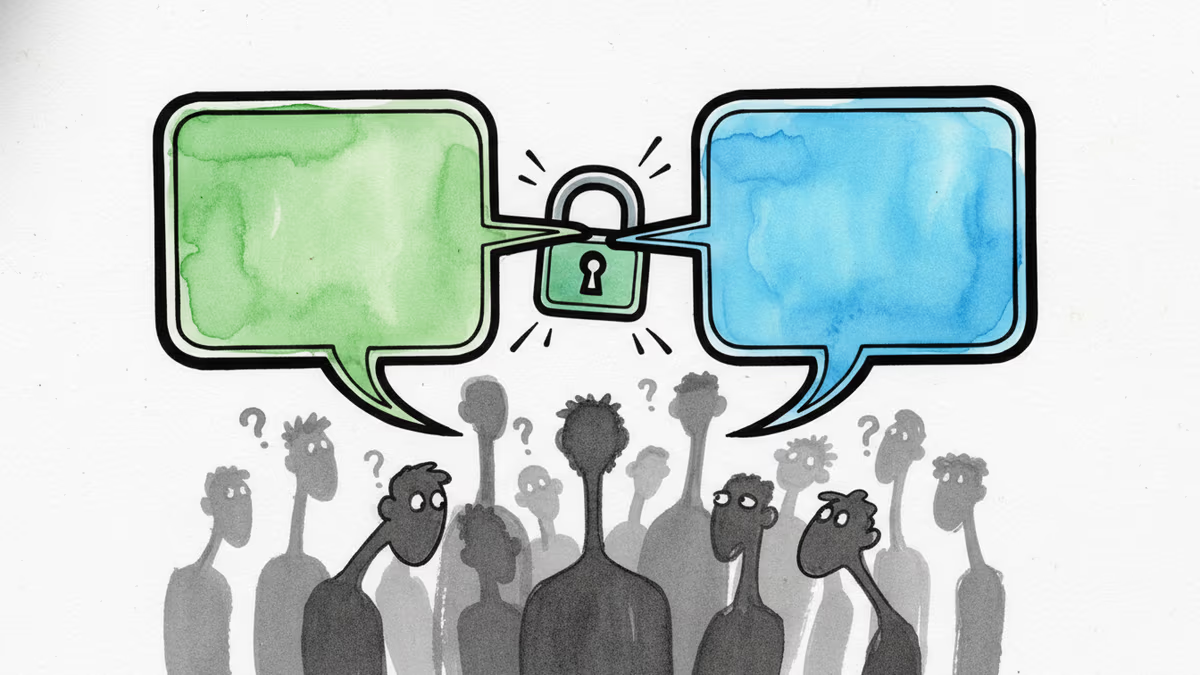
After 15 years of fragmented mobile messaging, Apple and Google are rolling out end-to-end encrypted RCS messaging between iPhones and Android devices. Here's what changed, why it took so long, and what it means for your privacy.
The FTC fined Cox Media and two ad firms $930,000 — not for actually eavesdropping on users, but for falsely claiming they could. The case raises uncomfortable questions about surveillance capitalism.
A law firm marketing itself on AI-powered legal success submitted fake citations in a federal appeal. Now its lawyers face sanctions — and the broader AI legal industry faces a credibility crisis.
A Utah woman was sentenced to life in prison partly because of her Google searches and deleted texts. The Kouri Richins case reveals how digital footprints have become the courtroom's most reliable witness.
After 15 years of fragmented mobile messaging, Apple and Google are rolling out end-to-end encrypted RCS messaging between iPhones and Android devices. Here's what changed, why it took so long, and what it means for your privacy.
Thoughts
Share your thoughts on this article
Sign in to join the conversation