
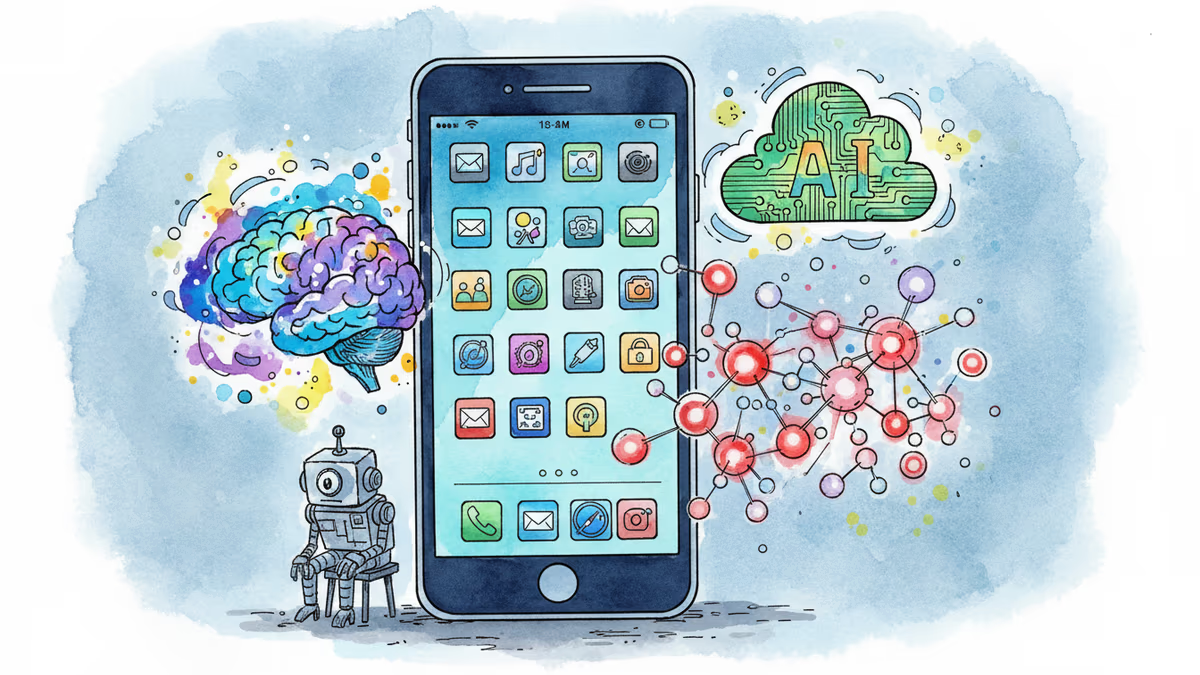
Apple's iOS 26.4 Beta Hints at a Post-Siri World
Apple's latest iOS update packs AI features, encrypted messaging, and video podcasts—but notably skips the promised Siri overhaul. What's the company really prioritizing?
A 25-song playlist generated from "upbeat workout mix." Video podcasts that seamlessly switch to audio mid-episode. Encrypted messaging between iPhones and Androids. Apple's iOS 26.4 beta, released this week, delivers a buffet of AI-powered features—except the one everyone's been waiting for.
Notably absent? The promised next-generation Siri experience that Apple has been teasing since last year's developer conference.
The AI Features Apple Actually Shipped
Apple Music's new Playlist Playground might be the standout feature. Using Apple Intelligence, users can generate custom playlists from text prompts like "calm evening" or "road trip vibes." The AI doesn't just pick songs—it creates matching cover art and allows further refinement.
The music app also gets a visual refresh with full-screen artwork and a Concerts Near You section that filters by date, genre, and location. It's Apple's answer to Spotify's discovery features, but with the company's signature polish.
Meanwhile, the Podcasts app finally embraces video. Following Spotify's aggressive push into video content, Apple now supports seamless switching between audio and video within the same episode. Creators can use HTTP Live Streaming (HLS) to publish video podcasts, complete with dynamic ad insertion capabilities.
Perhaps most significantly for cross-platform communication, iOS 26.4 begins testing end-to-end encryption for RCS messages. When fully rolled out, this could finally make iPhone-to-Android messaging as secure as iMessage—though Apple is currently only testing this between iPhones.

The Siri-Shaped Hole in the Room
What's striking isn't what Apple included, but what it didn't. The company has repeatedly promised a more capable, AI-enhanced Siri experience. Yet iOS 26.4 adds third-party AI services like ChatGPT, Gemini, and Claude to CarPlay instead of upgrading its own assistant.
This feels like a tacit admission: while Apple perfects its voice AI, it's willing to let users access competitors' models for immediate needs. It's pragmatic, but hardly the seamless Apple experience users expect.
The move also raises questions about Apple's AI strategy. Is the company prioritizing features that ship quickly over the ambitious Siri overhaul? Or are the technical challenges of rebuilding Siri proving more complex than anticipated?
Security First, Innovation Second?
Apple's decision to enable Stolen Device Protection by default signals the company's continued emphasis on privacy and security. The feature requires Face ID or Touch ID authentication for sensitive actions, adding friction but reducing risk if a device is stolen and the passcode compromised.
It's classic Apple: prioritizing user protection over convenience. But in an era where competitors ship AI features monthly, this cautious approach might feel sluggish to some users.
The company also enhanced its Camera app with Audio Zoom, which focuses the microphone on subjects as users zoom in—reducing background noise for video recordings. Small touches like these show Apple's attention to detail, even if they don't grab headlines like generative AI features.
Authors
Related Articles

Samsung and SK unveiled a chip and AI investment package worth thousands of trillions of won on June 29. The headline number swings wildly by outlet, but the real contest isn't capital — it's water and power.
Viral videos show 2026 graduates jeering executives who praise AI at commencement ceremonies. It's not just rudeness — it's a signal about who pays for technological optimism.

Filipino virtual assistants using AI to ghost-manage LinkedIn profiles for executives is now a structured industry. 30 comments a day, fake engagement rings, and a platform struggling to tell real from fabricated.
Two commencement speakers learned the hard way that AI enthusiasm doesn't land well with today's graduates. The backlash reveals a widening gap between tech optimism and Gen Z's economic reality.
Samsung and SK unveiled a chip and AI investment package worth thousands of trillions of won on June 29. The headline number swings wildly by outlet, but the real contest isn't capital — it's water and power.
Viral videos show 2026 graduates jeering executives who praise AI at commencement ceremonies. It's not just rudeness — it's a signal about who pays for technological optimism.
Filipino virtual assistants using AI to ghost-manage LinkedIn profiles for executives is now a structured industry. 30 comments a day, fake engagement rings, and a platform struggling to tell real from fabricated.
Two commencement speakers learned the hard way that AI enthusiasm doesn't land well with today's graduates. The backlash reveals a widening gap between tech optimism and Gen Z's economic reality.
Thoughts
Share your thoughts on this article
Sign in to join the conversation