
The Booing Class of 2026
Viral videos show 2026 graduates jeering executives who praise AI at commencement ceremonies. It's not just rudeness — it's a signal about who pays for technological optimism.
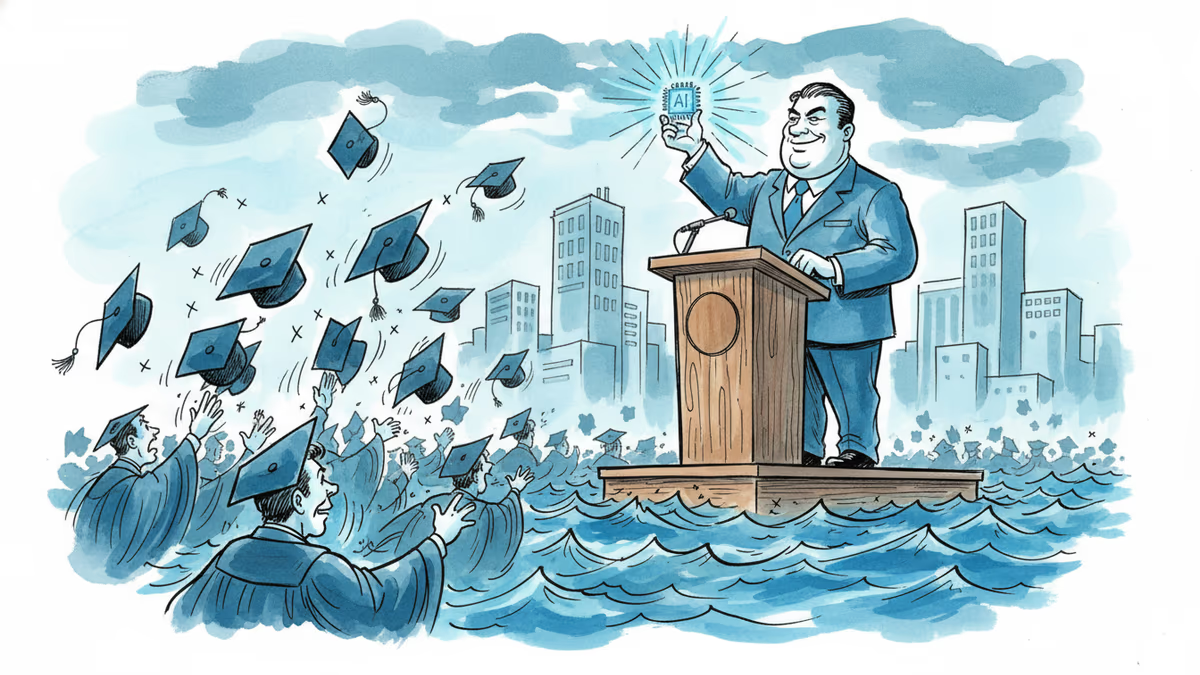
The applause never came. Instead, the moment Eric Schmidt began praising AI as "inevitable and mandatory," the auditorium filled with sustained jeering from hundreds of students in graduation gowns.
This scene — or variations of it — has played out at multiple U.S. commencement ceremonies in spring 2026, producing a string of viral videos that have resonated far beyond campus gates. Corporate executives stepping up to deliver optimistic AI sermons to the graduating class are being met not with polite applause, but with collective noise. And the only people who appear genuinely surprised, according to observers, are the executives themselves.
What's Actually Happening Here
The mechanics are straightforward. High-profile tech leaders and former executives — Schmidt among them — have accepted invitations to deliver commencement addresses at universities across the country. Their speeches, by multiple accounts, have leaned heavily on a familiar script: AI is transformative, AI is unavoidable, embrace it or be left behind.
The students have responded by booing. Loudly. Repeatedly. On camera.
The videos spread immediately across social platforms, accumulating millions of views and generating comment sections that skew heavily toward sympathy for the students. "They deserve everything they're getting," said Penny Oliver, a recent graduate quoted by The Verge — a sentiment that appears to reflect a broad undercurrent of feeling among young people entering today's job market.
A Bleak Market Wearing a Mortarboard
To understand the reaction, you have to understand what these graduates are walking into. The 2026 entry-level job market — particularly in white-collar fields — is measurably tighter than it was three years ago. AI-driven automation has begun compressing the exact roles that college degrees traditionally unlocked: legal research, financial analysis, content production, entry-level coding, customer-facing services.
These aren't hypothetical future disruptions. They're happening now, at the precise moment these students are handing out resumes. Law firms have cut paralegal hiring. Media companies have reduced junior writer positions. Several major tech employers quietly froze new-grad pipelines while simultaneously announcing AI investment rounds.

Into this context steps a former CEO — net worth in the hundreds of millions — to explain that AI is an opportunity, that adaptation is the answer, that history shows technology creates more jobs than it destroys. Every word may be technically defensible. But the messenger and the audience are living in entirely different economic realities, and the gap is audible.
The Credibility Gap
There's a structural irony at the center of these scenes that the viral spread seems to be amplifying. The people most enthusiastic about AI's benefits are, broadly, the people best positioned to capture those benefits: capital holders, senior executives, investors. The people absorbing the transitional costs — compressed job markets, credential devaluation, career uncertainty — are disproportionately the young and the newly credentialed.
This isn't a new dynamic in technological transitions. But the speed and breadth of AI's current encroachment into cognitive work has prompted serious economists to question whether the historical pattern — short-term disruption, long-term job creation — will hold this time. The steam engine replaced physical labor over decades. AI is compressing cognitive labor across industries in years.
The counterargument is real and worth hearing: every major technological shift has generated catastrophist predictions that ultimately proved wrong. New industries emerge. Productivity gains raise living standards. The graduates booing today may, in fifteen years, be managing AI systems in roles that don't yet exist. That's a plausible scenario.
But "plausible in fifteen years" lands differently when your student loan repayment starts in six months.
Who's Reading This Wrong
The executives seem to be interpreting the booing as a failure of communication — if only the message were framed better, the students would understand. This misreads the situation entirely. The students understand the message. They're rejecting the messenger's standing to deliver it.
There's also a critique of the booing itself worth acknowledging. Commencement ceremonies are formal occasions, and collective heckling is a blunt instrument. It forecloses dialogue rather than opening it. Some observers have noted that the same students who boo AI optimism are often heavy users of AI tools in their coursework — a tension that doesn't invalidate their economic anxieties but complicates the narrative of simple resistance.
What these videos have done, regardless of how one evaluates the conduct, is make visible a generational fracture that was previously expressed mostly in private — in group chats, in Reddit threads, in the quiet calculation of whether a four-year degree still pencils out.
This content is AI-generated based on source articles. While we strive for accuracy, errors may occur. We recommend verifying with the original source.
Related Articles
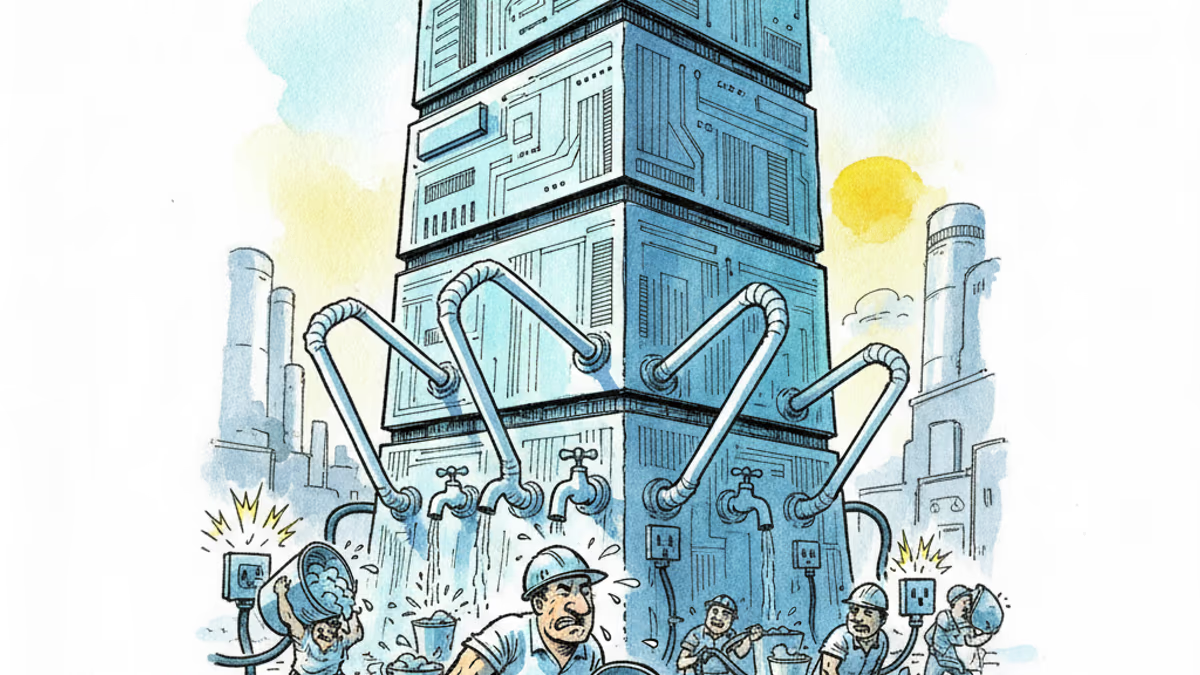
Samsung and SK unveiled a chip and AI investment package worth thousands of trillions of won on June 29. The headline number swings wildly by outlet, but the real contest isn't capital — it's water and power.
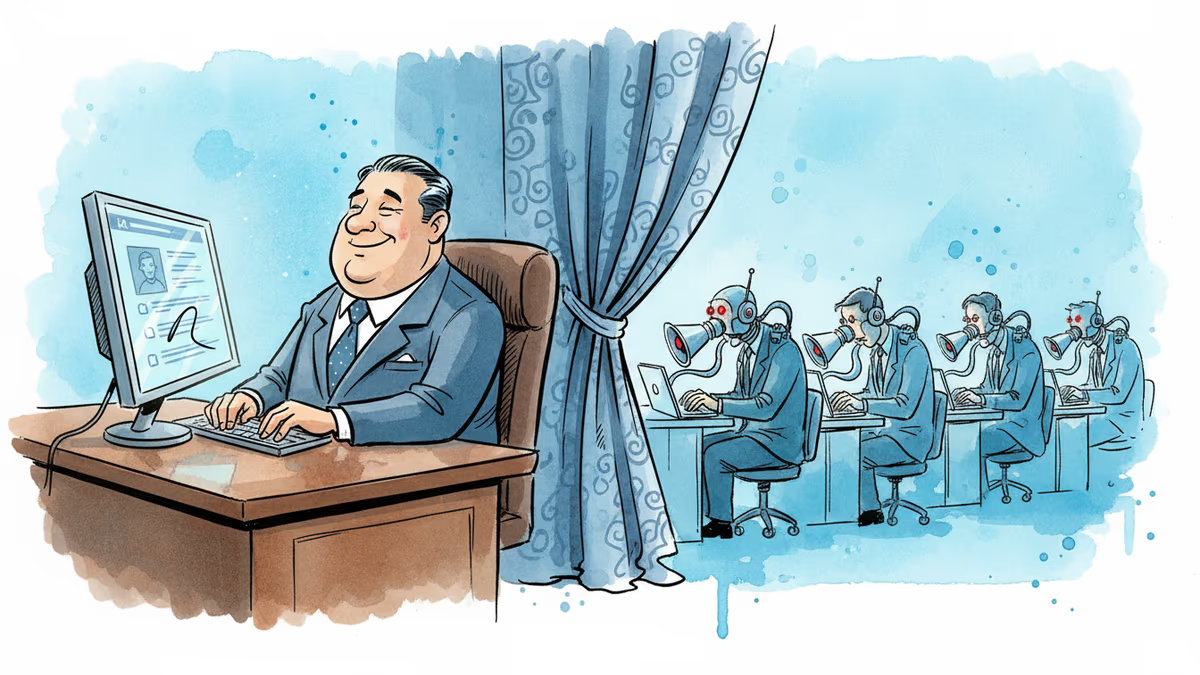
Filipino virtual assistants using AI to ghost-manage LinkedIn profiles for executives is now a structured industry. 30 comments a day, fake engagement rings, and a platform struggling to tell real from fabricated.
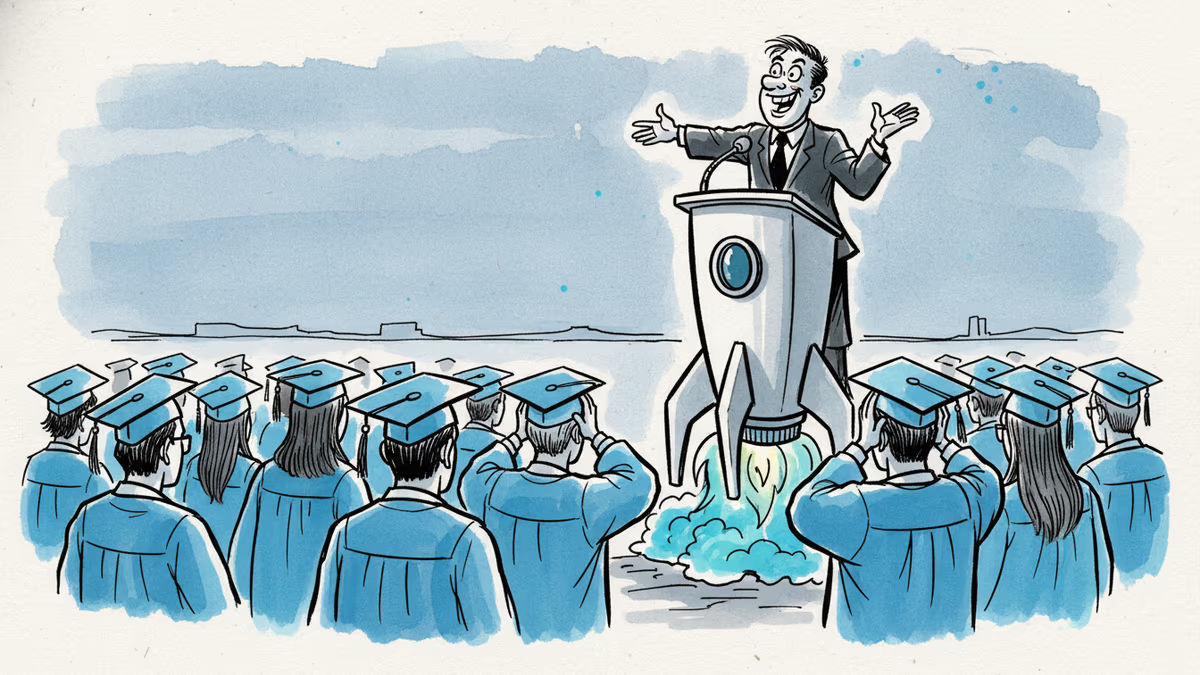
Two commencement speakers learned the hard way that AI enthusiasm doesn't land well with today's graduates. The backlash reveals a widening gap between tech optimism and Gen Z's economic reality.
Over 50 researchers and engineers have left SpaceXAI since February's merger. With the pre-training team nearly gutted, questions mount about whether Musk's AI ambitions can survive his management style.
Samsung and SK unveiled a chip and AI investment package worth thousands of trillions of won on June 29. The headline number swings wildly by outlet, but the real contest isn't capital — it's water and power.
Filipino virtual assistants using AI to ghost-manage LinkedIn profiles for executives is now a structured industry. 30 comments a day, fake engagement rings, and a platform struggling to tell real from fabricated.
Two commencement speakers learned the hard way that AI enthusiasm doesn't land well with today's graduates. The backlash reveals a widening gap between tech optimism and Gen Z's economic reality.
Over 50 researchers and engineers have left SpaceXAI since February's merger. With the pre-training team nearly gutted, questions mount about whether Musk's AI ambitions can survive his management style.
Thoughts
Share your thoughts on this article
Sign in to join the conversation