
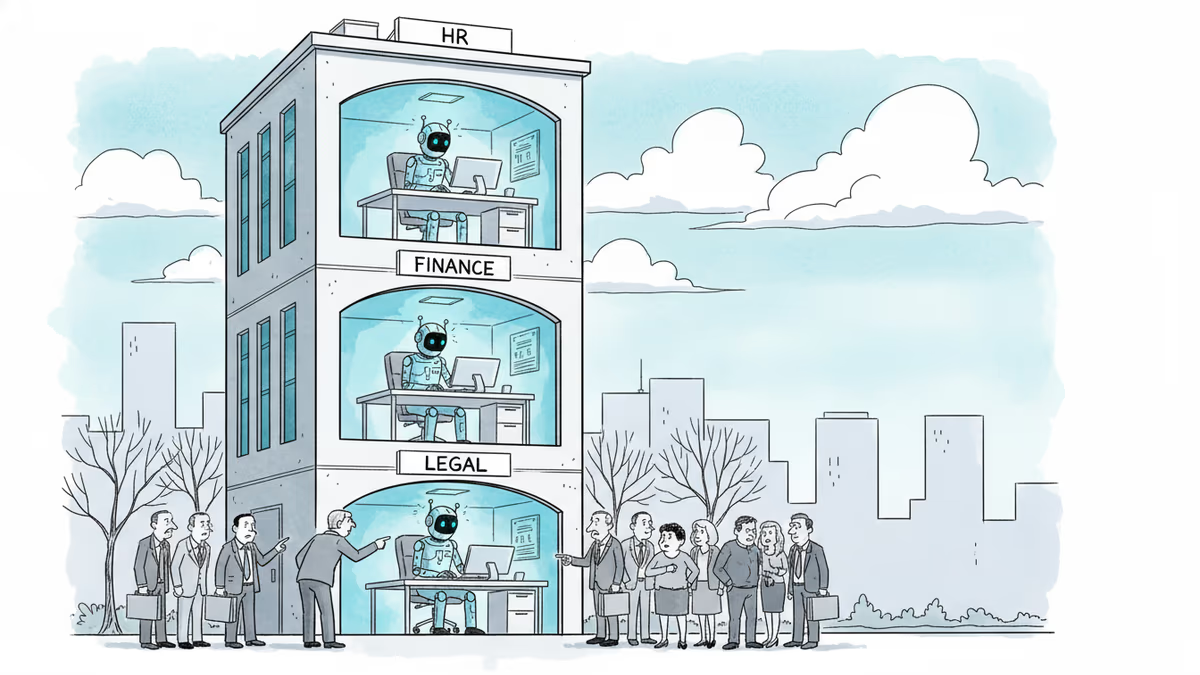
When Your HR Department Becomes a Single AI Plugin
Anthropic's enterprise agents program targets entire corporate departments, threatening SaaS companies and reshaping how we think about workplace automation.
What happens when a 1,000-person company discovers it can replace three departments with 10 AI plugins? That's the uncomfortable question Anthropic dropped on the enterprise software world Tuesday.
"2025 was meant to be the year agents transformed the enterprise, but the hype turned out to be mostly premature," Kate Jensen, Anthropic's head of Americas, told reporters. "It wasn't a failure of effort. It was a failure of approach."
The failure, according to Anthropic, was thinking too small.
From Pilot Projects to Department Replacement
Anthropics new enterprise agents program doesn't just automate tasks—it targets entire corporate functions. The HR plugin handles everything from job descriptions to offer letters. Finance agents perform market research and financial modeling. Legal agents draft contracts and compliance documents.
"We believe that the future of work means everybody having their own custom agent," Matt Piccolella, Anthropic's product officer, told TechCrunch. But the real story isn't individual productivity—it's departmental consolidation.
The system builds on previously announced Claude Cowork and plugin technology, but adds enterprise-grade controls: private software marketplaces, controlled data flows, and IT-approved customization. Translation: your IT department can finally say yes.

The SaaS Extinction Event
For SaaS companies, this isn't competition—it's an existential threat. Why pay $50,000 annually for specialized HR software when an AI agent handles the same tasks for a fraction of the cost?
The new enterprise connectors make it worse. Direct integrations with Gmail, DocuSign, and Clay mean agents can pull data and execute tasks across existing systems without human intervention.
One startup founder, speaking anonymously, called it "the beginning of the end for single-function SaaS." Another disagreed: "There's still value in specialized tools. AI agents are great generalists but terrible specialists."
The Control Paradox
Here's the contradiction: enterprises want AI automation but fear losing control. Anthropic's solution is administrative oversight—IT departments can customize workflows and monitor agent behavior.
But that creates new problems. Who's liable when an AI agent makes a hiring decision that violates employment law? What happens when financial models contain subtle errors that compound over months?
"Admins want to be able to have really, really, really tailored workflows," Piccolella said. The repetition feels intentional—and telling.
The real question isn't whether AI agents will transform enterprises. It's whether we'll still recognize the workplace when they're done.
Authors
Related Articles
Anthropic shipped Claude Sonnet 5, its mid-tier agent model, on June 30. Behind the 'Opus-class power, budget price' headline sits a tokenizer catch and a three-horse race that's only half real. Here's what developers should actually run the numbers on.
Samsung and SK unveiled a chip and AI investment package worth thousands of trillions of won on June 29. The headline number swings wildly by outlet, but the real contest isn't capital — it's water and power.

A small but growing group of developers has gone all-in on AI coding agents like Claude Code and OpenClaw. History suggests the rest of us won't be far behind.
Viral videos show 2026 graduates jeering executives who praise AI at commencement ceremonies. It's not just rudeness — it's a signal about who pays for technological optimism.
Anthropic shipped Claude Sonnet 5, its mid-tier agent model, on June 30. Behind the 'Opus-class power, budget price' headline sits a tokenizer catch and a three-horse race that's only half real. Here's what developers should actually run the numbers on.
Samsung and SK unveiled a chip and AI investment package worth thousands of trillions of won on June 29. The headline number swings wildly by outlet, but the real contest isn't capital — it's water and power.
A small but growing group of developers has gone all-in on AI coding agents like Claude Code and OpenClaw. History suggests the rest of us won't be far behind.
Viral videos show 2026 graduates jeering executives who praise AI at commencement ceremonies. It's not just rudeness — it's a signal about who pays for technological optimism.
Thoughts
Share your thoughts on this article
Sign in to join the conversation