
#Industrial Policy
Total 11 articles
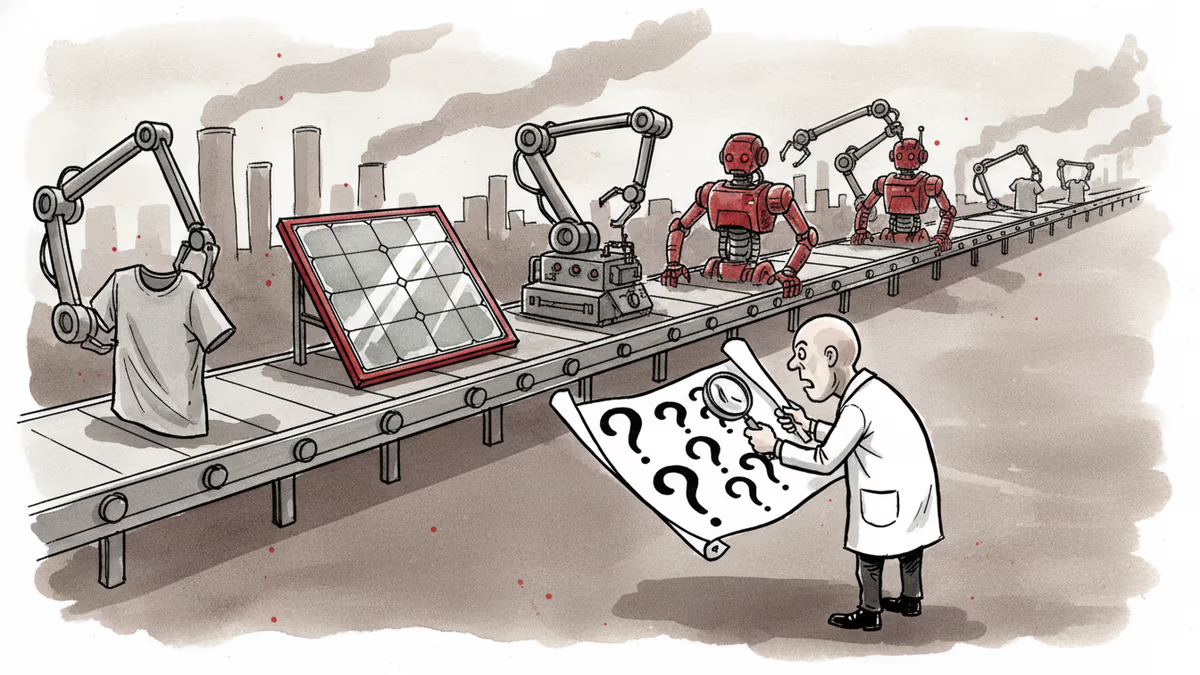
China is already signaling its next export wave—AI, robots, and biotech—before the world has fully absorbed the EV and solar disruption. What's really driving this ascent?
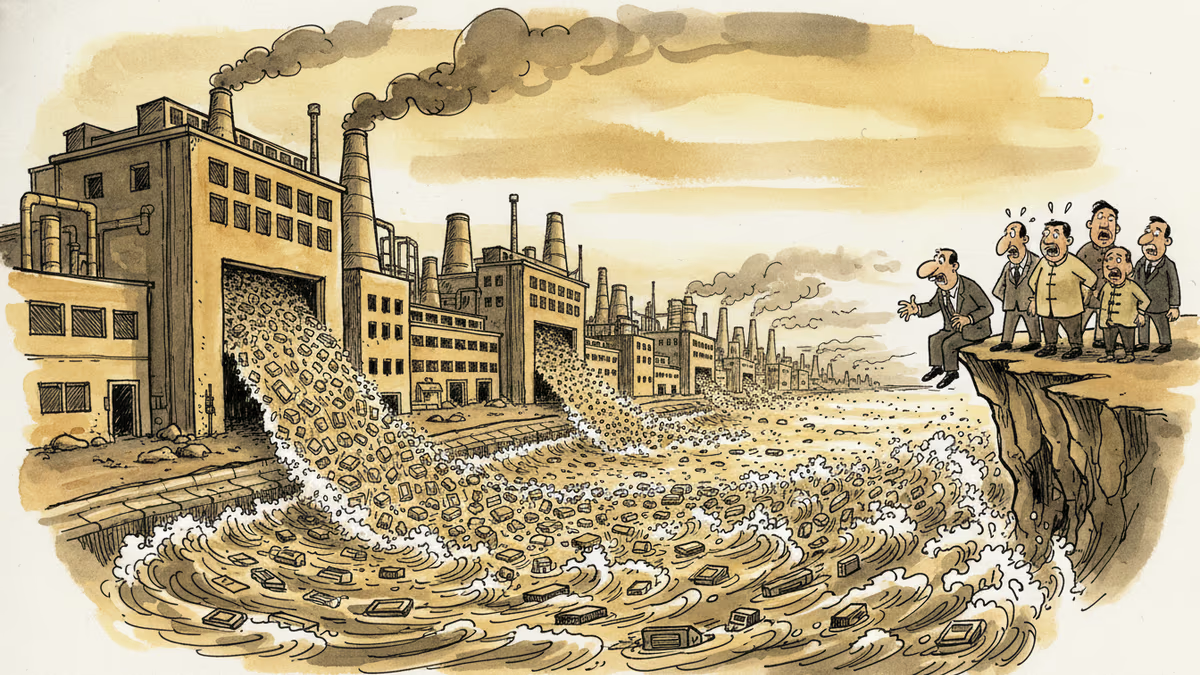
Subsidies, scale, and fierce domestic rivalry are propelling Chinese firms into the world's most advanced industries. Who wins, who loses, and what comes next?
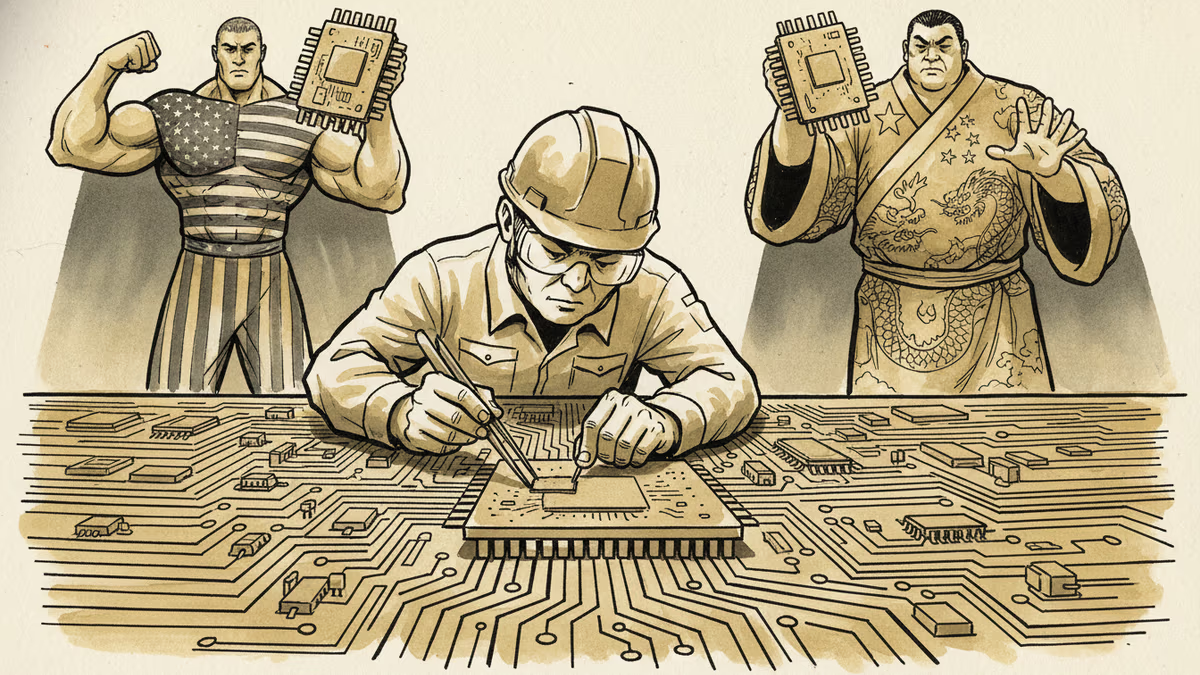
Japan has set a $254 billion domestic semiconductor sales target for 2040, aiming to rival the US and China. But ambition and execution are two very different things. Here's what's really at stake.

PRISM by Liabooks
Place your ad in this space
[email protected]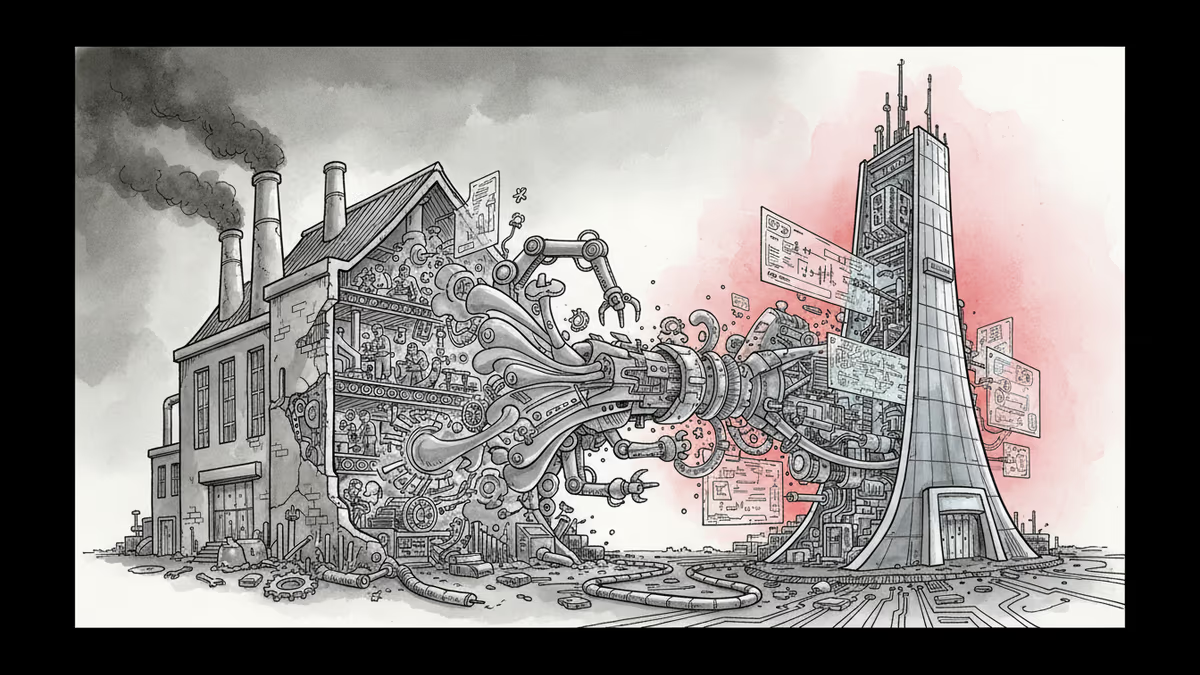
China's strategic shift from low-cost manufacturing to high-value innovation is reshaping global supply chains and challenging established economic hierarchies.
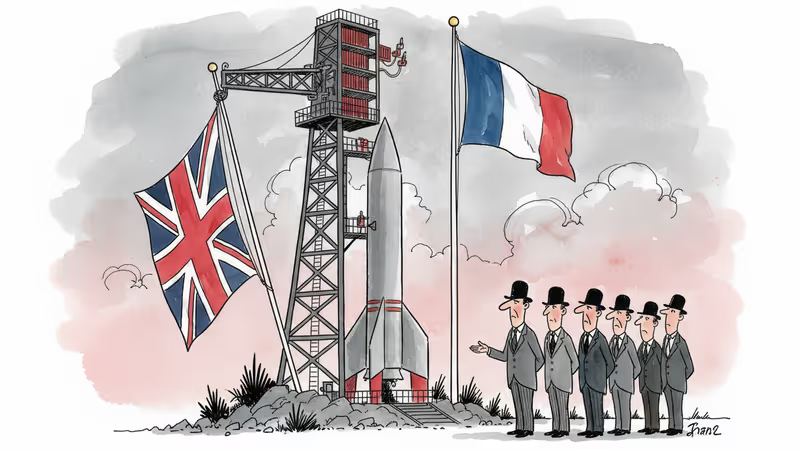
The UK government's sudden reversal on supporting domestic rocket company Orbex reveals the harsh realities of space industry competition and national priorities.
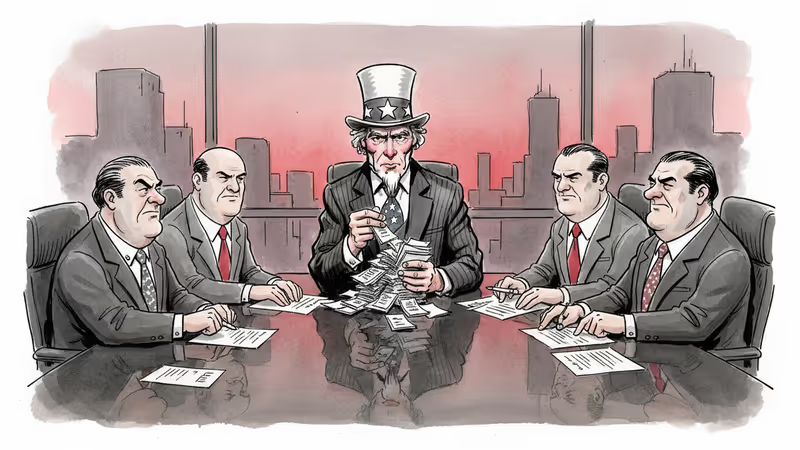
Trump administration takes unprecedented equity stakes in Intel, MP Materials, and other companies, marking a new era of government intervention in private markets.

In 2026, China's rare earth strategy has evolved into a multi-layered approach involving industrial policy and calibrated export controls. Explore how Beijing is responding to G-7 diversification efforts.
PRISM by Liabooks
Place your ad in this space
[email protected]
China has revealed a new catalogue of encouraged industries for foreign investment, effective Feb 2026. The list adds 205 sectors for a total of 1,679, aiming to attract capital into high-tech fields.
China has dropped electric vehicles (EVs) from its list of strategic industries for the first time in a decade, signaling a major policy shift. What does this mean for the global market, and what lessons can the U.S. learn from China's industrial playbook?

South Korea has launched a government-industry partnership to develop proprietary LNG cargo tank technology, aiming to reduce its dependence on foreign firms and cut trillions of won in licensing fees.

South Korea launches a $101.5B Public Growth Fund targeting AI and semiconductors. PRISM analyzes this strategic move in the global tech sovereignty race.
PRISM by Liabooks
Place your ad in this space
[email protected]