
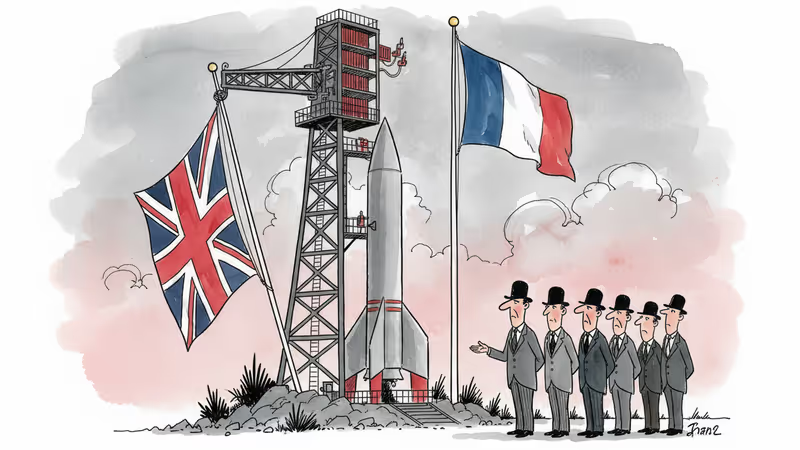
Why Britain Abandoned Its Own Space Dreams
The UK government's sudden reversal on supporting domestic rocket company Orbex reveals the harsh realities of space industry competition and national priorities.
Just months ago, the UK government championed Orbex as the cornerstone of British space independence. The vision was clear: British rockets launching British satellites from British soil. Today, that same government is actively facilitating the Scottish company's sale to French firm The Exploration Company.
What changed so dramatically in such a short time?
From Champion to Abandonment
Orbex represented more than just another startup. It embodied Britain's post-Brexit ambitions for technological sovereignty. The company's small satellite launch vehicles were meant to establish the UK as a serious player in the global space race, reducing dependence on foreign launch capabilities.
Yet according to European Spaceflight, the UK government isn't merely stepping aside—it's actively cooperating in the handover to French ownership. This marks a complete reversal from early 2025, when officials spoke enthusiastically about supporting domestic space capabilities.
The timing raises questions about the government's commitment to the "Global Britain" strategy that has defined post-Brexit industrial policy.
The Unspoken Realities
While official explanations remain vague, several factors likely contributed to this dramatic shift.
Funding appears to be the primary culprit. Space ventures require enormous upfront investments with uncertain returns. Orbex may have struggled to secure the capital needed for full-scale operations, especially as global investors become more cautious about space investments.

Technical challenges also loom large. The small satellite launch market has become brutally competitive, with SpaceX's reusable rocket technology driving down costs. Traditional expendable rockets like Orbex's offering face an increasingly difficult path to profitability.
Political priorities matter too. The UK government faces pressure to fund healthcare, education, and other immediate needs. Long-term space investments may have lost out in budget battles.
The Broader Pattern
This isn't an isolated incident. Across Europe, smaller nations struggle to maintain independent space capabilities against American and Chinese dominance. France's Ariane program survives through European cooperation, while Germany focuses on satellite technology rather than launch vehicles.
The Orbex sale reflects a harsh reality: national pride doesn't guarantee commercial success. Even with government backing, companies must compete in a global market where economies of scale and technological innovation determine winners.
The Exploration Company's acquisition brings French expertise and potentially better funding. But it also means British space ambitions will depend on foreign goodwill.
Lessons for Other Nations
The UK's experience offers sobering lessons for other countries pursuing space independence. Government support alone isn't sufficient—companies need sustainable business models, cutting-edge technology, and access to global markets.
Countries like India and Japan have succeeded by focusing on specific niches rather than trying to compete across all segments. South Korea's recent satellite successes follow a similar targeted approach.
The question isn't whether small nations can compete in space, but whether they can choose their battles wisely.
Authors
Related Articles
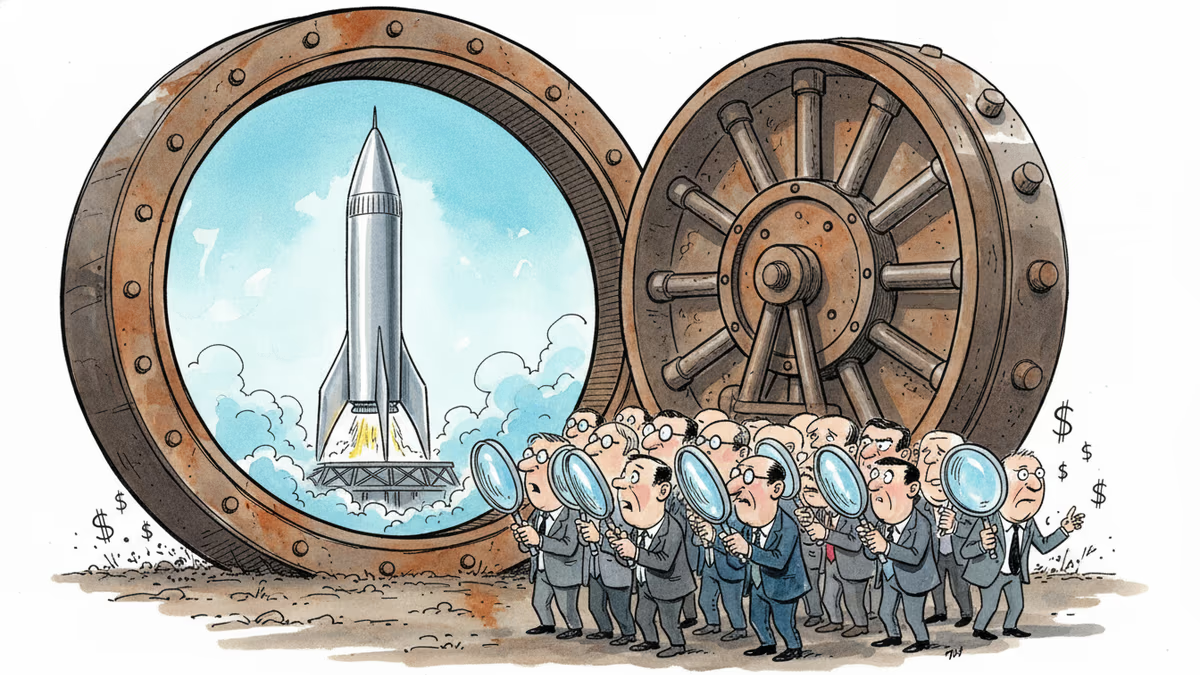
SpaceX filed a nearly 400-page S-1 with the SEC, targeting an IPO as early as June 12. Here's what the filing reveals—and what it doesn't.
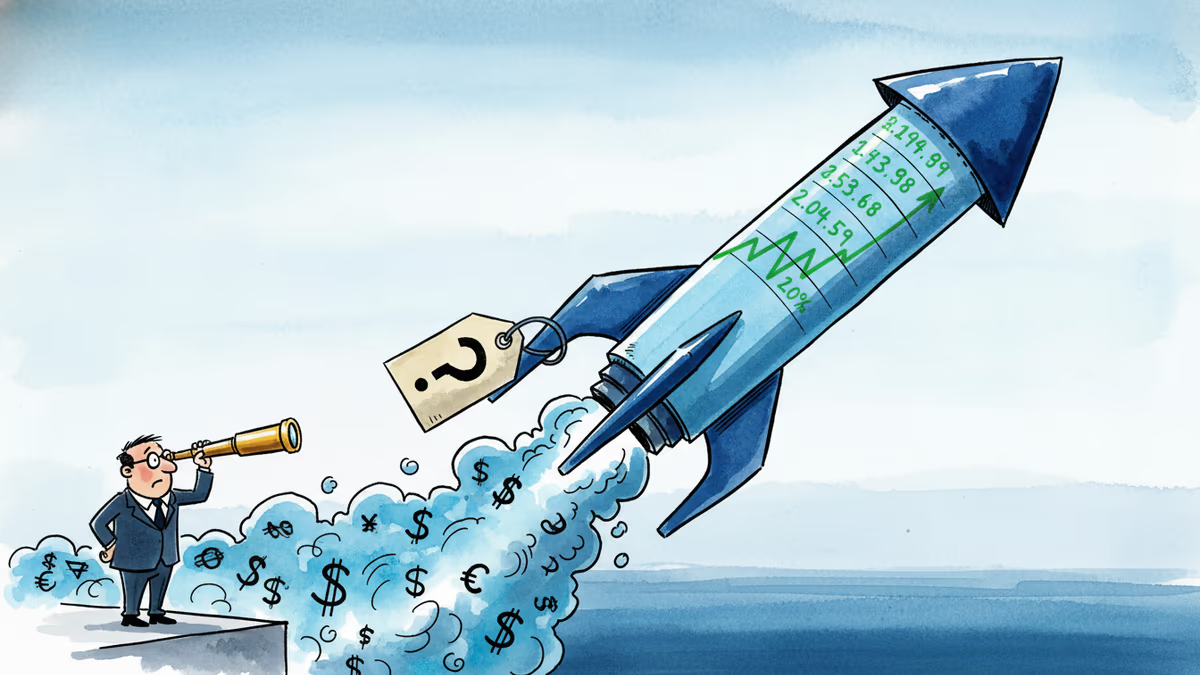
SpaceX has filed its S-1 with the SEC, targeting the Nasdaq under ticker SPCX. With $18.67B in revenue but a $4.9B loss, the IPO forces investors to answer one hard question.
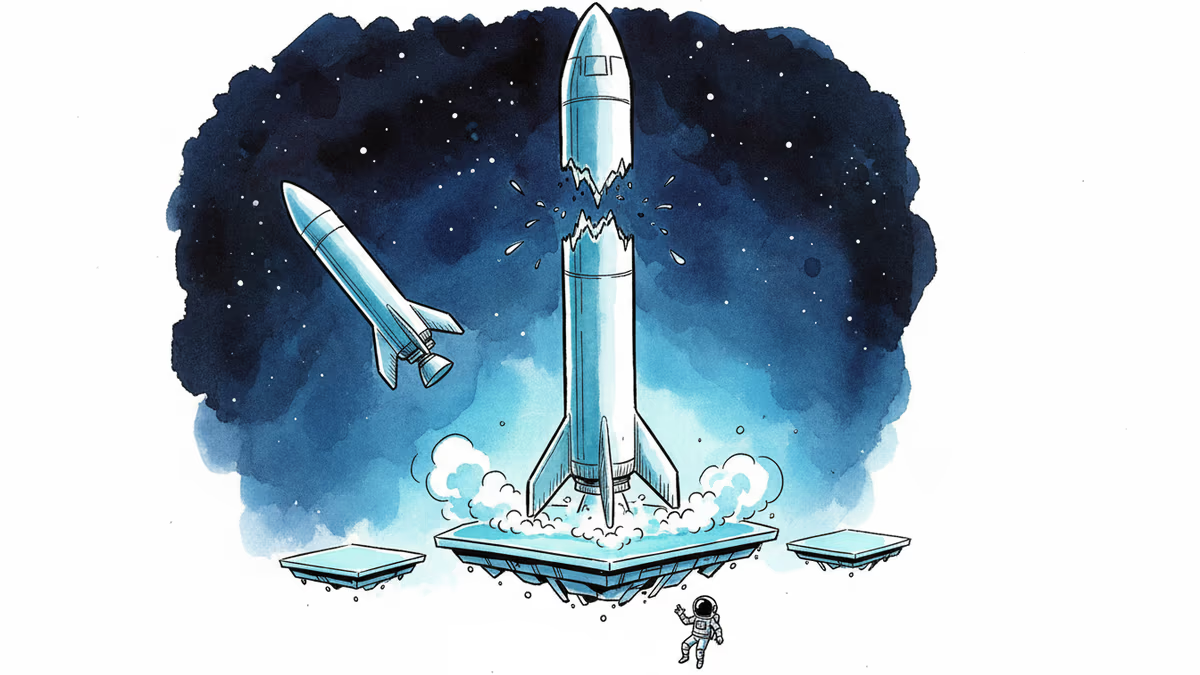
Blue Origin successfully reflew an orbital-class booster for the first time, but New Glenn's upper stage failed on its third mission — raising questions about NASA's Artemis timeline.
Blue Origin's New Glenn rocket nailed its first booster reuse — but lost a customer satellite to a botched upper stage. What this split verdict means for the space industry, NASA's moon plans, and the race against SpaceX.
SpaceX filed a nearly 400-page S-1 with the SEC, targeting an IPO as early as June 12. Here's what the filing reveals—and what it doesn't.
SpaceX has filed its S-1 with the SEC, targeting the Nasdaq under ticker SPCX. With $18.67B in revenue but a $4.9B loss, the IPO forces investors to answer one hard question.
Blue Origin successfully reflew an orbital-class booster for the first time, but New Glenn's upper stage failed on its third mission — raising questions about NASA's Artemis timeline.
Blue Origin's New Glenn rocket nailed its first booster reuse — but lost a customer satellite to a botched upper stage. What this split verdict means for the space industry, NASA's moon plans, and the race against SpaceX.
Thoughts
Share your thoughts on this article
Sign in to join the conversation